
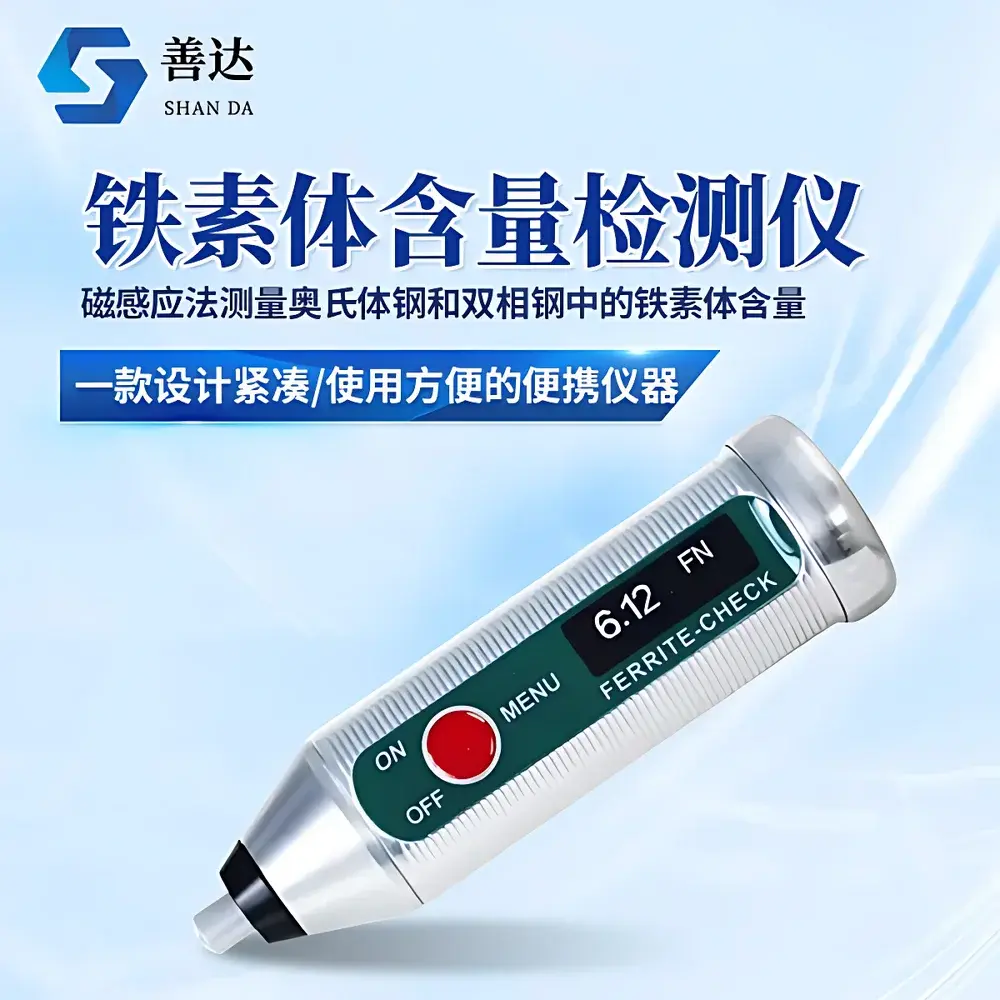
Shanda FERRITE-CHECK 140 Ferrite Content Meter
| Brand | Shanda |
|---|---|
| Origin | Shandong, China |
| Manufacturer Type | Authorized Distributor |
| Country of Origin | China |
| Model | FERRITE-CHECK 140 |
| Price | USD 4,200 (approx.) |
| Measurement Range | 1–100 Fe% / 1–140 Ferrite Number (FN) |
| Accuracy | ±<5% of reading |
| Operating Temperature | 0–50 °C |
| Calibration Standards | Three NIST-traceable ferrite reference standards |
| Power Supply | Rechargeable lithium-ion battery |
| Compliance | DIN EN ISO 8249:2018 |
Overview
The Shanda FERRITE-CHECK 140 Ferrite Content Meter is a handheld, battery-powered instrument engineered for rapid, non-destructive quantification of ferrite phase content in austenitic stainless steels and duplex/super-duplex stainless steels. It operates on the principle of magnetic induction—measuring the perturbation of a low-frequency AC magnetic field induced in the test material by a built-in probe coil. Since ferrite is ferromagnetic while austenite is paramagnetic, the instrument’s output correlates directly with the volumetric fraction of ferrite present. Designed to comply strictly with DIN EN ISO 8249:2018 (“Welding — Determination of ferrite content in austenitic and duplex stainless steels”), the FERRITE-CHECK 140 delivers traceable, repeatable measurements critical for weld quality assurance, material verification, and process validation in fabrication shops, offshore construction, nuclear component manufacturing, and pressure vessel inspection.
Key Features
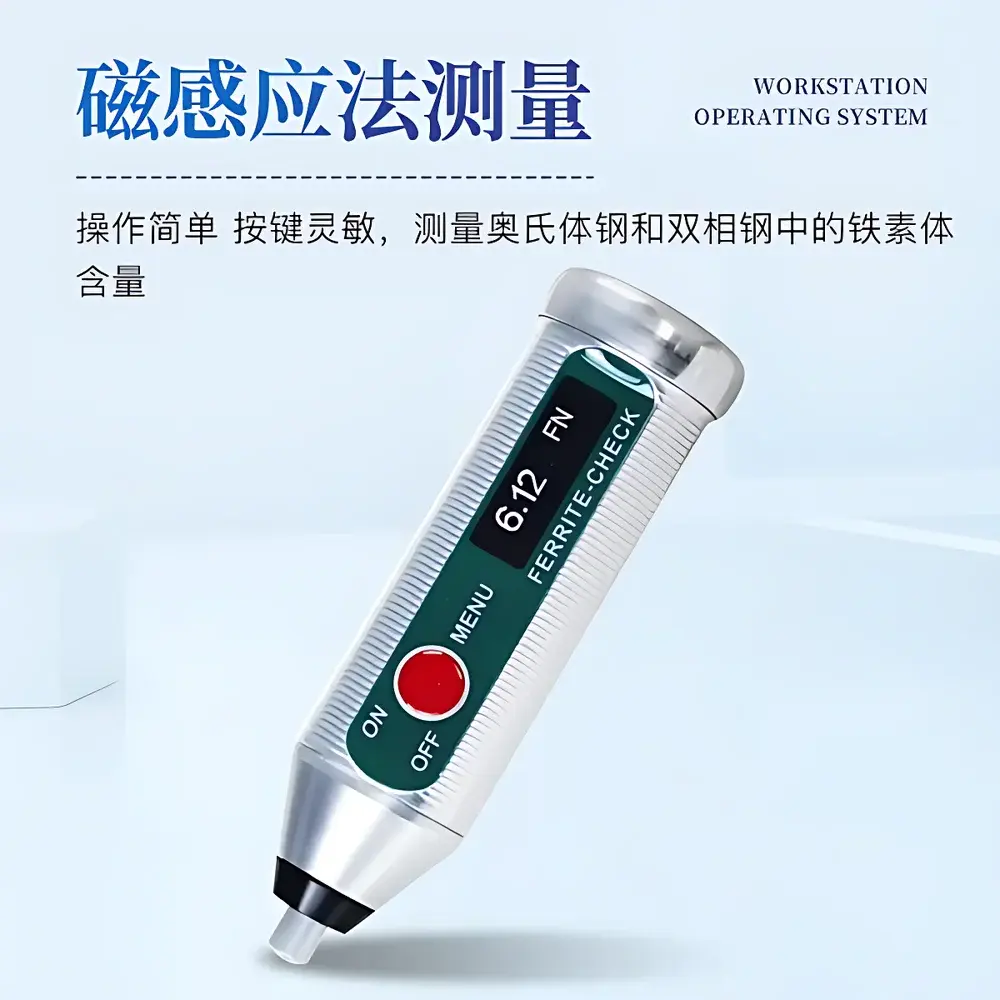
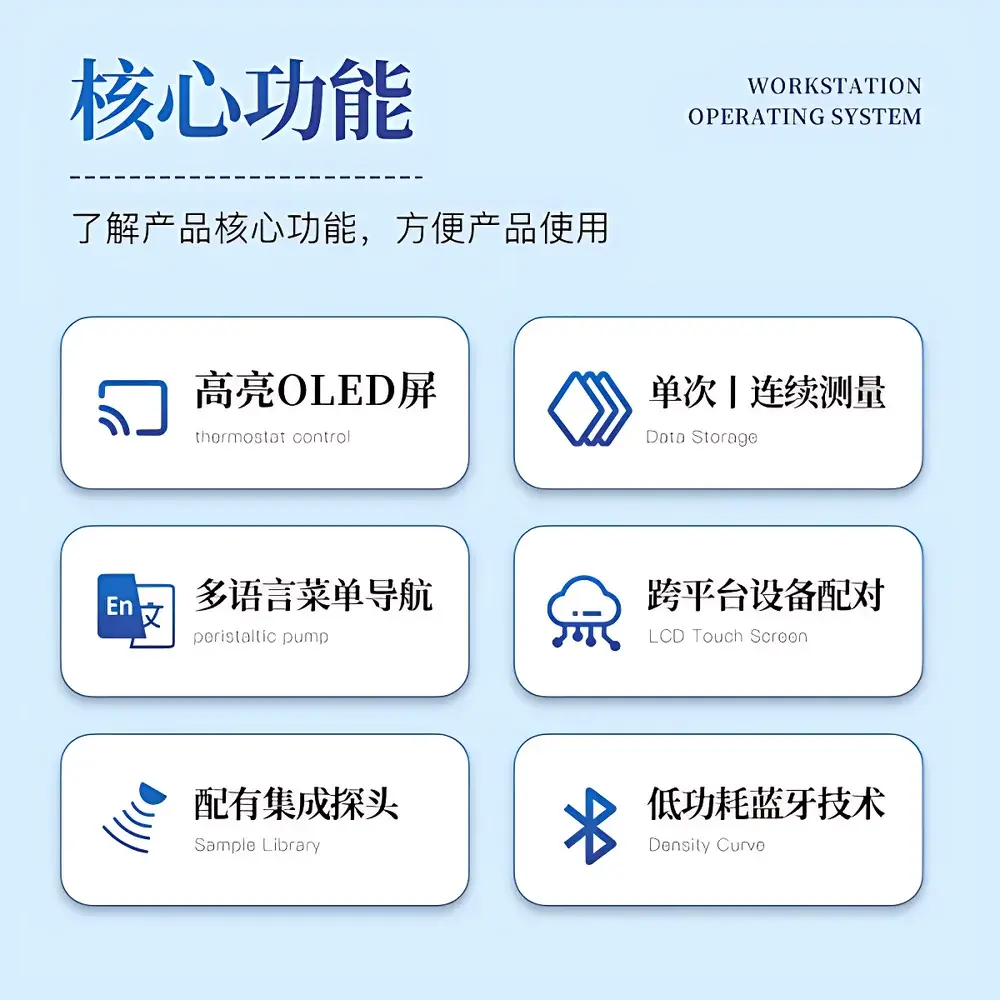
- Compact, ergonomic design with integrated probe—no external cables or separate sensor heads.
- Single-button operation with multilingual menu interface (English, German, French, Spanish, Chinese) supporting global field deployment.
- High-brightness OLED display showing real-time results in either Ferrite Number (FN) or weight-percent ferrite (Fe%), selectable per user preference.
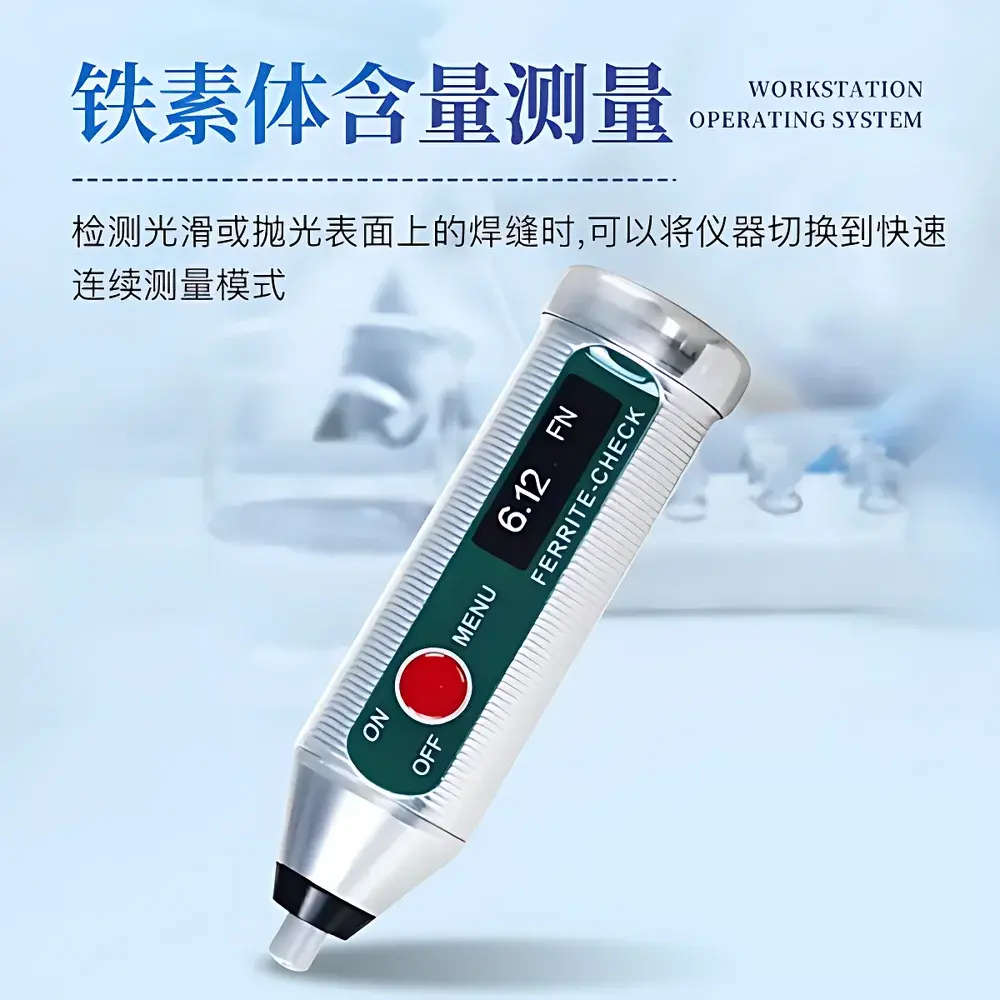
- Dual measurement modes: single-point mode for discrete readings and continuous-scan mode for dynamic profiling across weld beads or heat-affected zones (HAZ).
- In continuous-scan mode, the device automatically records minimum, maximum, and mean values upon probe lift-off—enabling immediate statistical evaluation without external software.
- Rechargeable lithium-ion battery providing >12 hours of continuous operation under typical field conditions.
- IP54-rated enclosure for resistance to dust ingress and water splashing during outdoor or workshop use.
Sample Compatibility & Compliance
The FERRITE-CHECK 140 is validated for use on flat or slightly curved surfaces (radius ≥50 mm) with surface roughness Ra ≤3.2 µm. It is suitable for base metals, weld metal, and HAZ regions in grades including but not limited to AISI 304L, 316L, 2205, 2507, UNS S32760, and ASTM A890 Gr. 4A. Measurements are referenced against three NIST-traceable calibration standards supplied with each unit—certified at nominal FN values of 10, 40, and 80. The instrument’s performance adheres to the metrological requirements defined in DIN EN ISO 8249:2018, including probe lift-off compensation, temperature drift correction within 0–50 °C, and repeatability ≤±2 FN over 20 consecutive readings on a homogeneous reference sample.
Software & Data Management
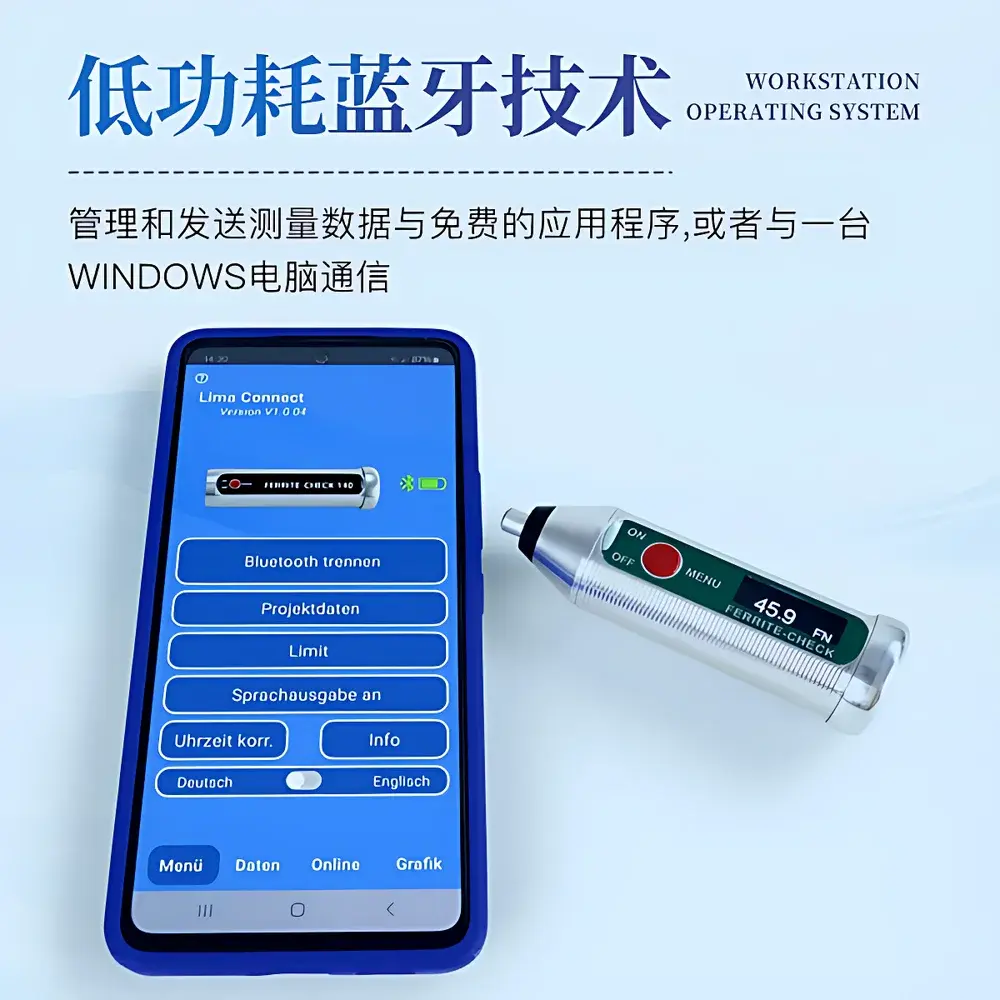
Data export and project-level analysis are enabled via Lima Connect—a free, cross-platform application compatible with Android, iOS, and Windows 10/11. Communication is established using Bluetooth Low Energy (BLE) v5.0, ensuring secure, low-power pairing with no driver installation required. Within Lima Connect, users can:
- Create structured inspection projects with custom identifiers (e.g., weld ID, joint number, location tag).
- Geotag and annotate measurements with timestamped photos captured directly from the mobile device camera.
- Export CSV reports containing raw FN/Fe% values, statistics (min/max/mean/stdev), and metadata (operator, date/time, GPS coordinates if enabled).
- Generate trend charts and histograms for comparative analysis across batches or shifts.
- Apply configurable pass/fail thresholds aligned with client specifications or industry codes (e.g., ASME BPVC Section IX, NORSOK M-101, API RP 582).
All data logs include immutable audit trails compliant with GLP/GMP documentation principles; however, full 21 CFR Part 11 electronic signature functionality requires integration with enterprise-grade LIMS systems.
Applications
- Weld procedure qualification (WPQ) and production weld verification in piping, pressure vessels, and structural components.
- Monitoring ferrite depletion or precipitation during post-weld heat treatment (PWHT) or service-induced aging.
- Quality control of incoming raw materials and semi-finished products (plates, pipes, fittings) prior to fabrication.
- Field inspection of offshore platforms, desalination plants, and chemical processing equipment where duplex stainless steel integrity is mission-critical.
- Educational and R&D use in metallurgy laboratories for correlating ferrite content with mechanical properties (e.g., impact toughness, SCC resistance).
FAQ
What is the difference between Ferrite Number (FN) and Fe%?
FN is a standardized empirical scale defined in ISO 8249, calibrated against physical reference standards; Fe% represents an estimated mass fraction derived from FN using published conversion models. The FERRITE-CHECK 140 displays both, but FN remains the legally accepted metric for compliance reporting.
Can the instrument measure through surface coatings or paint?
No. Non-conductive coatings thicker than 50 µm interfere with magnetic coupling. Surface preparation per ISO 8501-1 (Sa 2½) is recommended prior to measurement.
Is calibration required before each use?
Daily verification using the included reference standards is recommended. Full recalibration is advised every 12 months or after mechanical shock, performed by an accredited service center.
Does the device support multi-language firmware updates?
Yes. Firmware updates—including language packs—are distributed via Lima Connect and applied over BLE without disassembly.
How does temperature affect measurement stability?
Internal thermal compensation ensures <±0.5 FN drift across the specified 0–50 °C operating range. For measurements outside this range, results must be validated per ISO 8249 Annex B.
Related Products





