
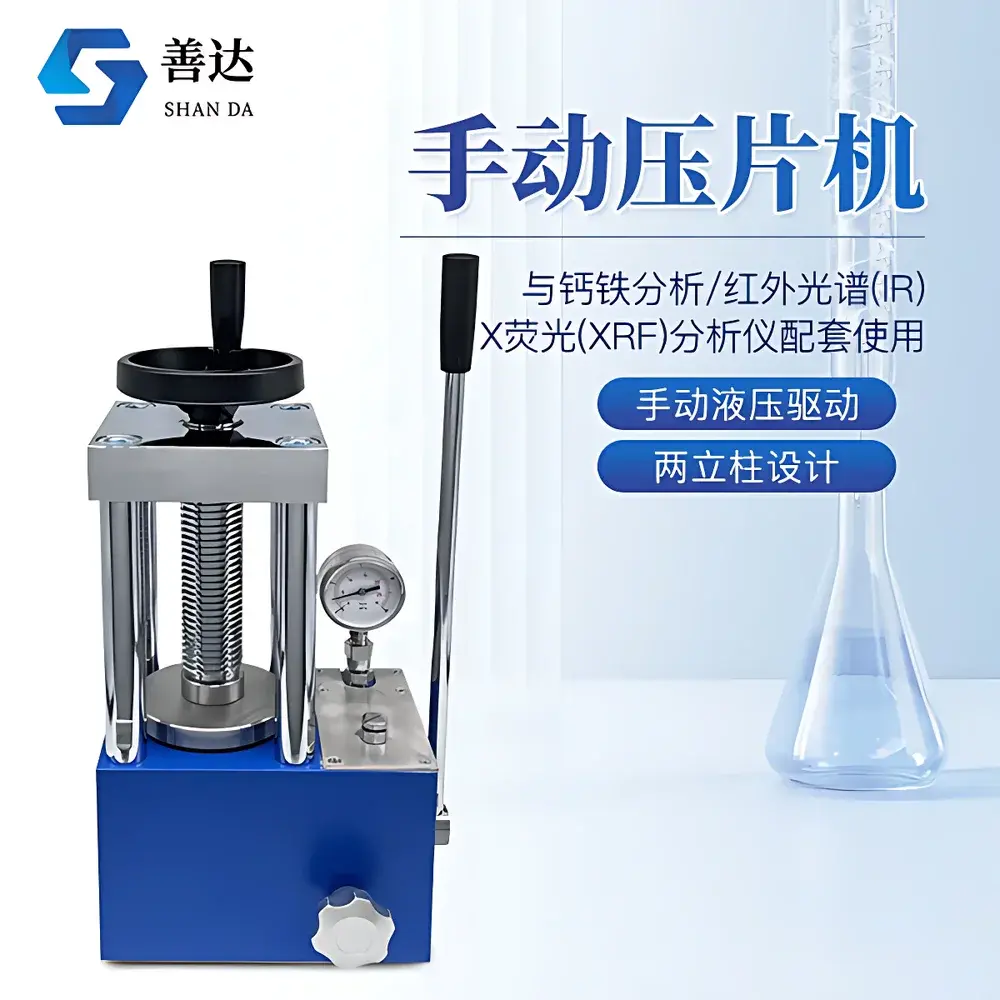
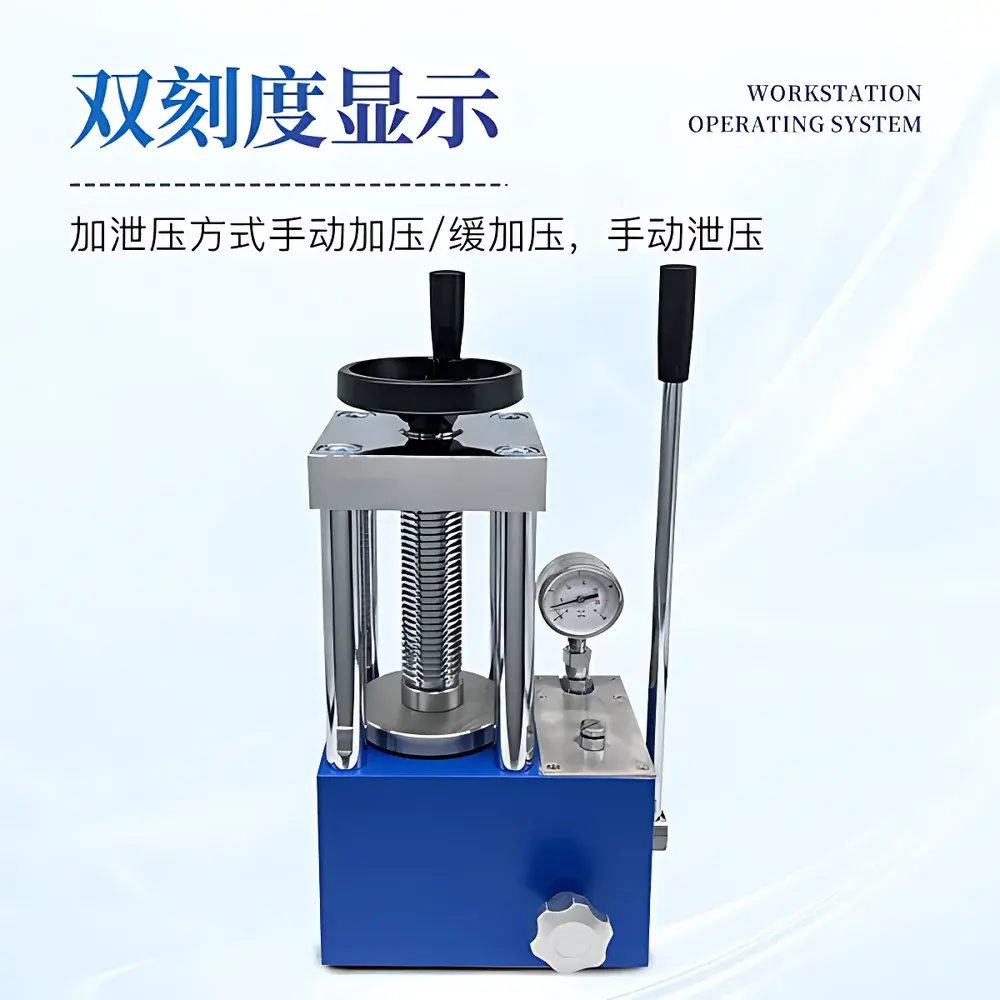
Shanda SD-2TA Manual Hydraulic Powder Press
| Brand | Shanda |
|---|---|
| Model | SD-2TA |
| Type | Manual Hydraulic Powder Press |
| Maximum Pressure | 2 Ton (25 MPa) |
| Piston Diameter | Ø32 mm |
| Max Piston Stroke | <30 mm |
| Pressure Gauge | Analog Dual-Scale (MPa & Ton), Accuracy: ±1 MPa |
| Pressure Stability | ≤1 MPa/10 min |
| Worktable Diameter | Ø70 mm |
| Working Space | 90 × 120 mm |
| Overall Dimensions | 210 × 170 × 370 mm |
| Net Weight | ~11 kg |
| Compliance | Designed for GLP-aligned lab environments |
Overview
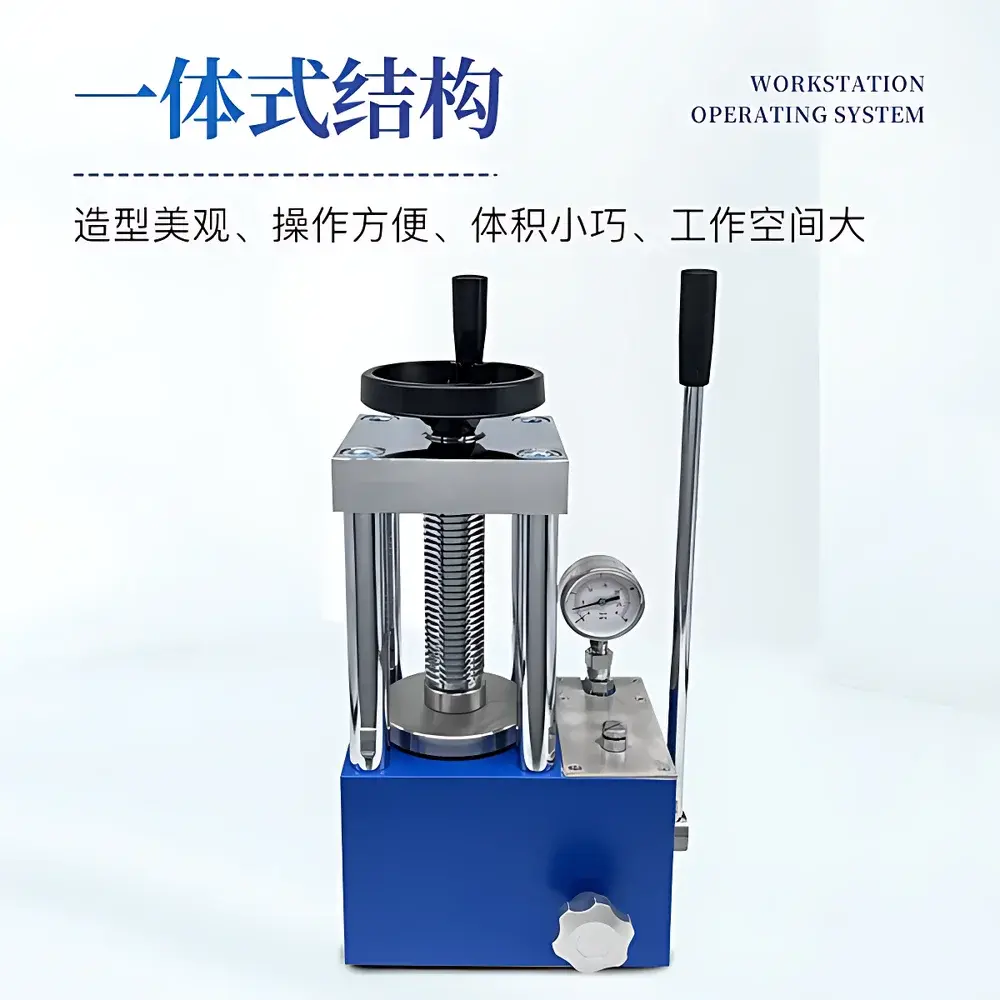
The Shanda SD-2TA Manual Hydraulic Powder Press is an engineered solution for reproducible, low-footprint powder compaction in controlled laboratory settings. Based on the fundamental principle of uniaxial cold pressing—where a manually applied hydraulic force generates uniform compressive stress across a confined powder bed—the SD-2TA delivers precise, repeatable pressure control without electrical or pneumatic infrastructure. Its compact two-column monolithic frame ensures structural rigidity and minimal deflection under load, while the integrated hydraulic cylinder—featuring a Ø32 mm piston and calibrated manual pump—enables stable pressure application up to 25 MPa (equivalent to 2 metric tons). The device is explicitly designed for integration into inert-atmosphere gloveboxes (with internal dimensions ≥220 mm W × 180 mm D × 380 mm H), supporting air- and moisture-sensitive material processing in catalysis, solid-state battery research, pharmaceutical formulation development, and academic materials science.
Key Features
- Monoblock rigid frame construction with dual vertical support columns minimizes lateral deformation and ensures axial load alignment during compression.
- Analog dual-scale pressure gauge displays both MPa and tonnage simultaneously, calibrated to ±1 MPa accuracy—facilitating direct correlation with ASTM E9 and ISO 3951 compression test protocols.
- Manual hydraulic operation eliminates dependency on external power sources or compressed gas lines, enhancing safety and portability in confined or explosion-hazard zones.
- Adjustable stroke limiter and visual height indicator prevent over-extension of the piston beyond 30 mm—critical for preserving seal integrity and maintaining long-term pressure stability (≤1 MPa drift over 10 minutes at rated load).
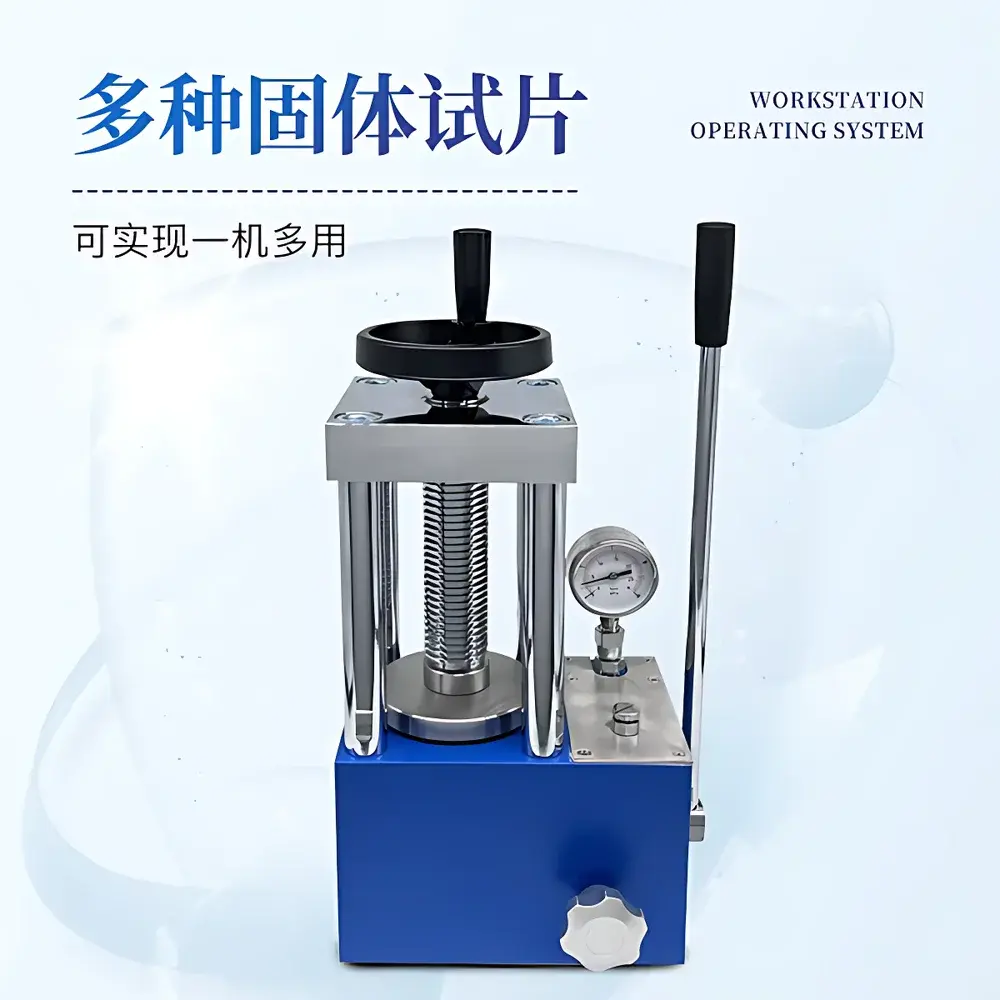
- Optimized working envelope (90 × 120 mm width × depth) accommodates standard die sets (e.g., Ø13 mm, Ø20 mm, Ø25 mm) and custom tooling with flanged or threaded mounting interfaces.
- Lightweight aluminum–steel hybrid housing (~11 kg) enables rapid repositioning between fume hoods, gloveboxes, and analytical workstations without mechanical assistance.
Sample Compatibility & Compliance
The SD-2TA supports dry, free-flowing, and moderately cohesive powders—including metal oxides (e.g., LiCoO₂, TiO₂), ceramic precursors (Al₂O₃, ZrO₂), polymer blends, and API-excipient mixtures—provided particle size distribution falls within the practical range of 0.1–150 µm. It is routinely employed in sample preparation for XRD, FTIR, SEM, and BET surface area analysis per ASTM C1161, ISO 14704, and USP <1051>. While the press itself carries no CE or UL certification (as a Class I non-electric mechanical device), its design adheres to ISO 12100:2010 principles for machinery safety, and all pressure-bearing components comply with ASME B31.3 process piping stress limits at 25 MPa. Documentation packages—including calibration certificates for optional digital pressure transducers—support audit readiness under GLP and ISO/IEC 17025 quality systems.
Software & Data Management
As a fully manual mechanical system, the SD-2TA operates independently of firmware or embedded software. However, it is fully compatible with third-party data acquisition ecosystems: optional digital pressure sensors (e.g., Honeywell ASDX series) can be mounted inline and interfaced via USB or analog 4–20 mA outputs to LabVIEW, MATLAB, or custom Python-based logging platforms. When paired with Shanda’s optional digital readout module (sold separately), real-time pressure values are recorded with timestamped CSV export—enabling traceable, Part 11–compliant audit trails when deployed alongside validated electronic lab notebooks (ELNs) such as LabArchives or Benchling.
Applications
- Preparation of pelletized samples for X-ray diffraction (XRD) and Raman spectroscopy—ensuring consistent density and minimized preferred orientation effects.
- Compaction of catalyst pellets (e.g., Ni/Al₂O₃, Pt/C) for fixed-bed reactor testing under controlled green-density conditions.
- Formulation screening of direct compression tablet blends in early-phase pharmaceutical development, aligned with ICH Q5C and Q8(R2) guidelines.
- Manufacture of solid electrolyte discs for electrochemical impedance spectroscopy (EIS) and lithium-ion battery half-cell assembly.
- Teaching laboratory use in materials engineering courses covering powder metallurgy, ceramic processing, and mechanical behavior of granular media.
FAQ
What is the maximum recommended operating pressure for routine use?
The SD-2TA is rated for continuous operation up to 25 MPa (2 metric tons); however, for optimal seal longevity and pressure repeatability, sustained use above 20 MPa should be limited to ≤5 minutes per cycle.
Can the SD-2TA be used inside an argon-filled glovebox?
Yes—its fully manual hydraulic actuation, absence of outgassing plastics, and compact footprint (210 × 170 × 370 mm) make it ideal for inert-atmosphere integration; verify internal glovebox clearance prior to installation.
Is calibration documentation available for quality assurance purposes?
Factory calibration certificates for the analog pressure gauge are provided with each unit; NIST-traceable recalibration services are available through Shanda’s authorized metrology partners upon request.
Are custom die sets supported?
Yes—Shanda offers OEM-compatible die holders for Ø13 mm, Ø20 mm, Ø25 mm, and Ø30 mm configurations; custom geometries (e.g., rectangular, multi-cavity) can be manufactured per ISO 8062 dimensional tolerancing standards.
Does the SD-2TA meet FDA requirements for pharmaceutical sample prep?
While the press itself is not an FDA-regulated device, its mechanical design, material traceability (304 stainless steel contact surfaces), and compatibility with Part 11–enabled digital add-ons support compliance with FDA 21 CFR Part 211.68 and ICH GCP Annex 11 for documented, auditable sample preparation workflows.





