
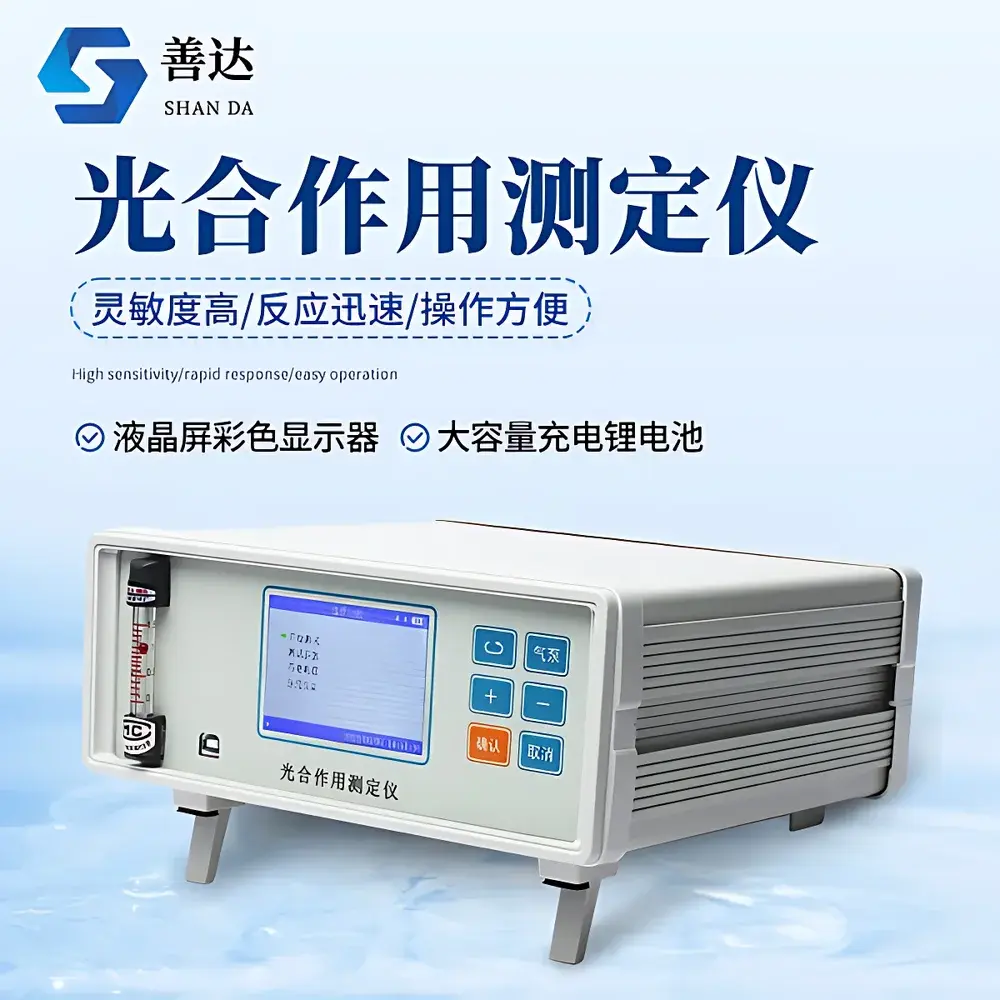
Shanda SD-FS800Z Portable Photosynthesis Measurement System
| Brand | Shanda |
|---|---|
| Model | SD-FS800Z |
| Measurement Principle | Closed-path infrared gas analysis (IRGA) with dual-wavelength CO₂ sensor |
| CO₂ Range | 0–2000 ppm |
| CO₂ Resolution | ≤0.1 ppm |
| CO₂ Accuracy | ±1.5% of reading (temperature-compensated) |
| Air Temperature Range | −20 °C to +60 °C |
| Relative Humidity Range | 0–85% RH (non-condensing) |
| Leaf Temperature Sensor | Thermistor, ±0.2 °C accuracy |
| PAR (Photosynthetically Active Radiation) Sensor | Silicon photodiode, 0–3000 µmol·m⁻²·s⁻¹, ±5% |
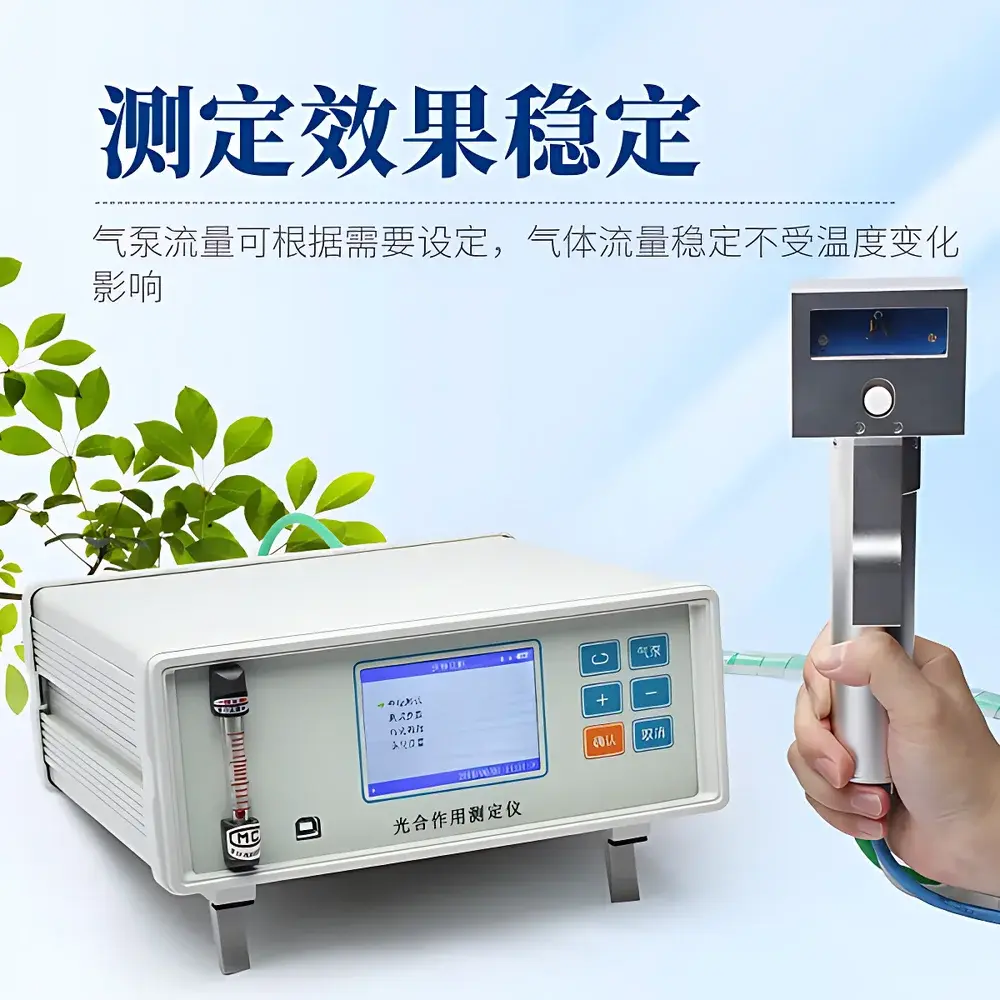
| Flow Rate Control | Adjustable 0–1.0 L·min⁻¹, stability ±1% FS |
| Power Supply | Rechargeable 8.4 V DC Li-ion battery, 15 h continuous operation (no external light source) |
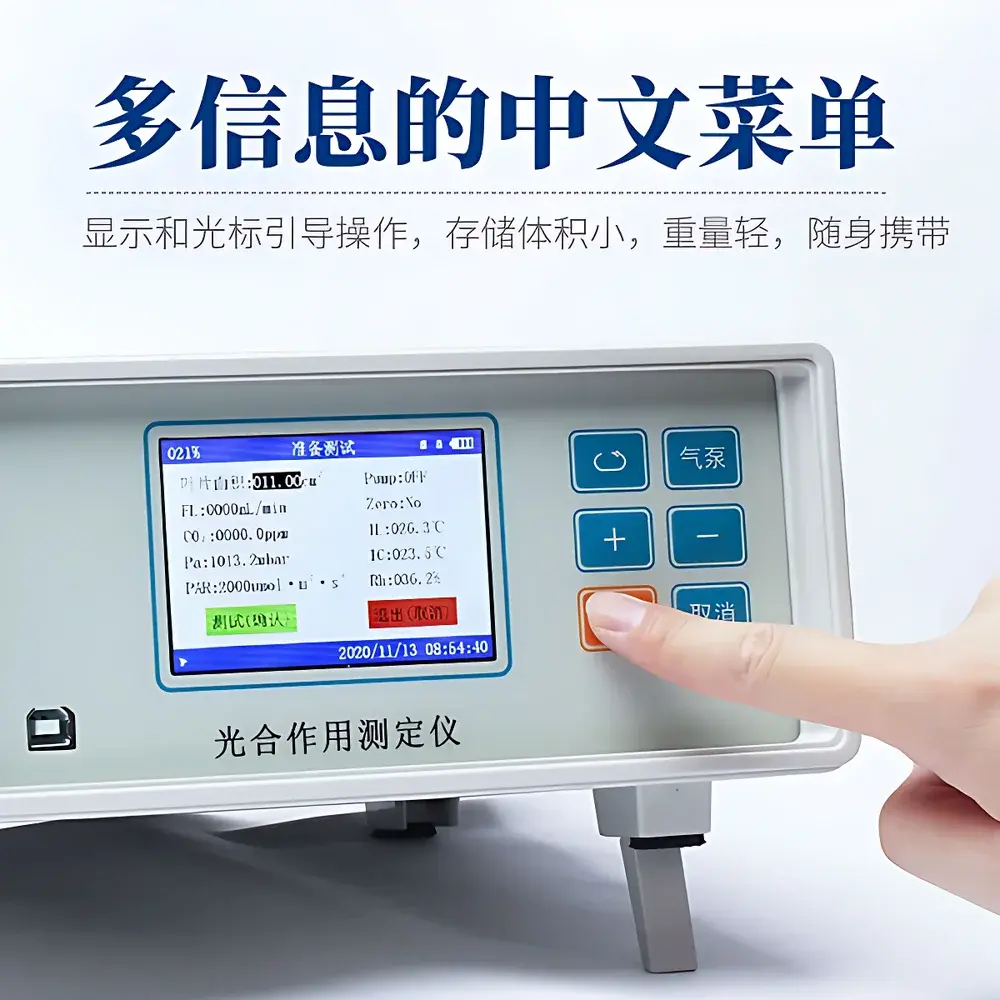
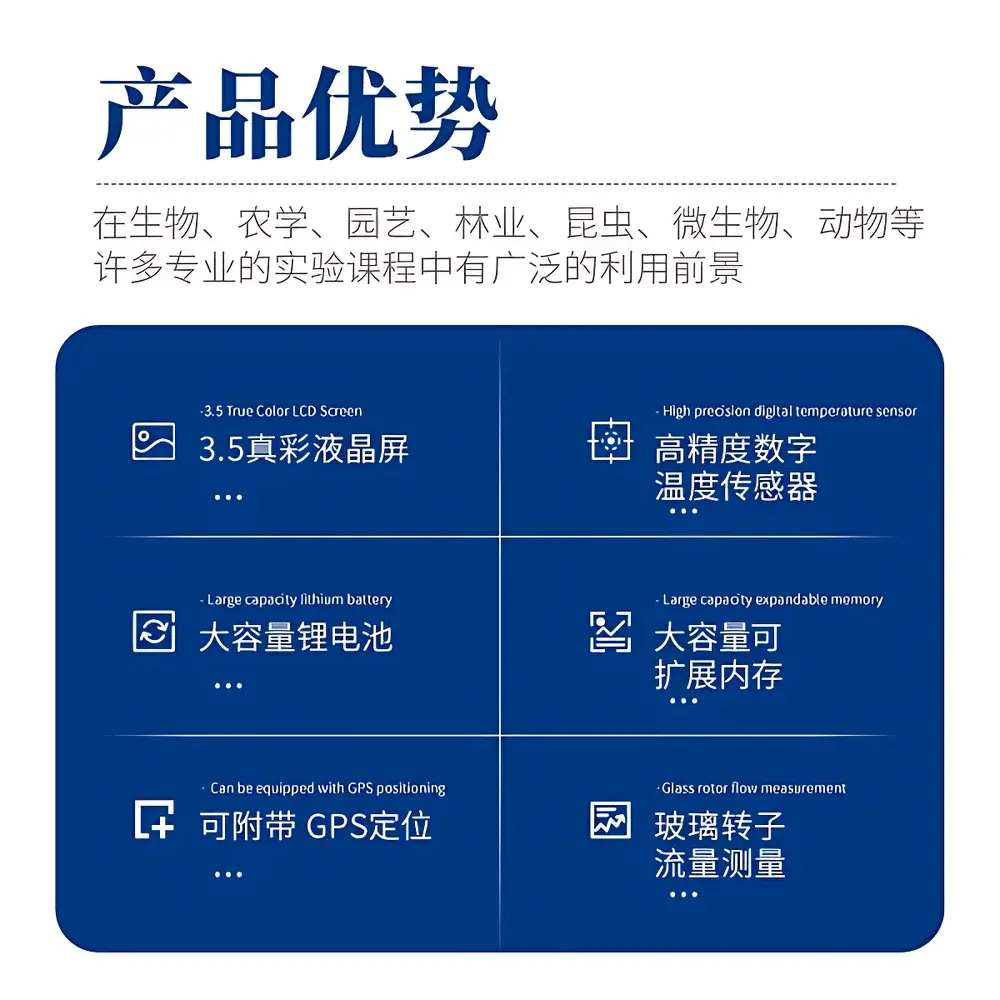
| Display | 3.5″ TFT color LCD, 800×480 resolution |
| Data Storage | Internal 16 GB flash memory (expandable to 32 GB) |
| Interface | USB 2.0 for data export |
| Dimensions | 260 × 260 × 130 mm |
| Weight | 3.25 kg |
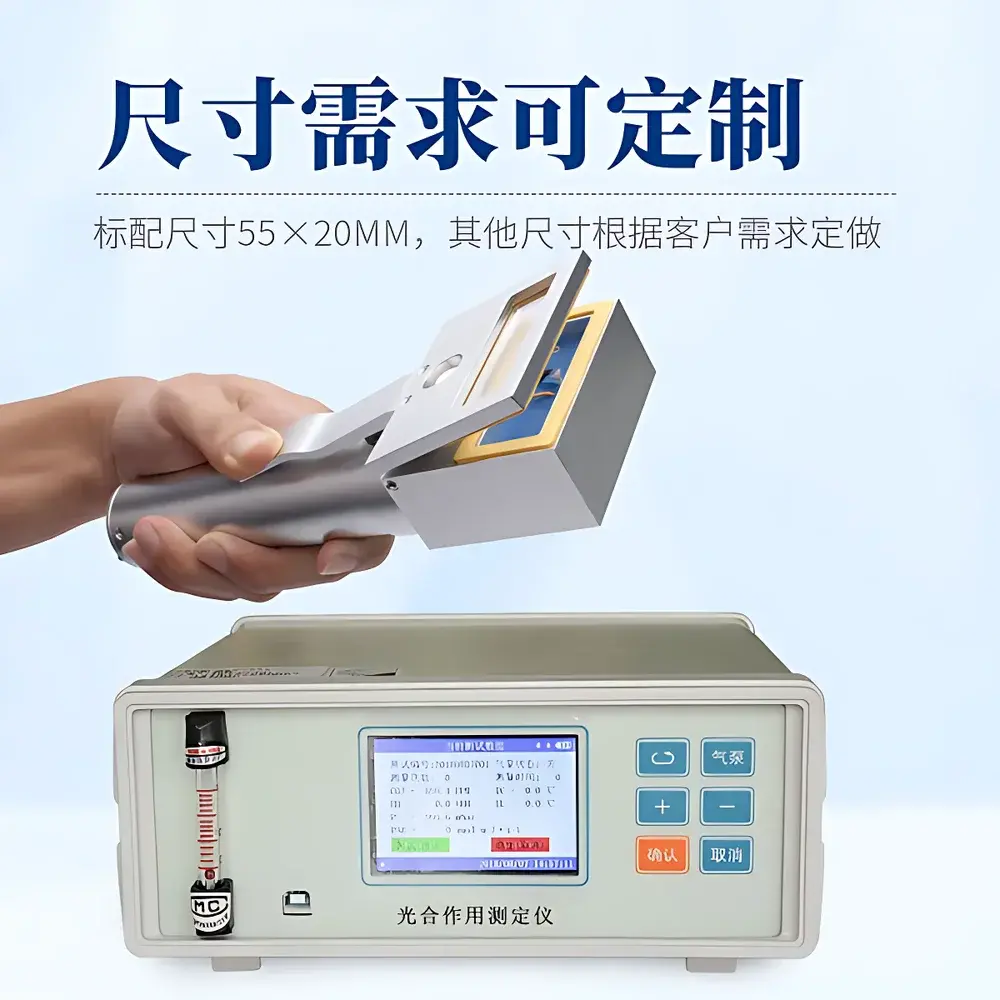
| Leaf Chamber Standard Size | 55 × 20 mm (customizable) |
| Operating Environment | −20 °C to +60 °C, 0–85% RH |
Overview
The Shanda SD-FS800Z Portable Photosynthesis Measurement System is an integrated, field-deployable instrument engineered for quantitative assessment of plant physiological responses under ambient or controlled conditions. It operates on a closed-path infrared gas exchange principle, utilizing a temperature-stabilized dual-wavelength non-dispersive infrared (NDIR) CO₂ analyzer to deliver high-fidelity, real-time measurements of net photosynthetic rate (An), transpiration rate (E), stomatal conductance (gs), intercellular CO₂ concentration (Ci), and intrinsic water-use efficiency (WUEi). The system simultaneously acquires ancillary environmental parameters—including air temperature, relative humidity, leaf temperature, photosynthetically active radiation (PAR), and regulated sample airflow—enabling robust calculation of gas exchange-derived physiological indices without reliance on external calibration gases or reference chambers. Its design adheres to core principles outlined in ASTM E2912-13 (Standard Guide for Gas Exchange Measurements in Plant Physiology) and supports experimental protocols aligned with FAO and CGIAR crop physiology frameworks.
Key Features
- Temperature-compensated dual-wavelength IRGA ensures CO₂ differential measurement stability across −20 °C to +60 °C ambient operating range, eliminating thermal drift artifacts in long-term field deployments.
- Programmable mass flow controller enables precise regulation of sample airflow from 0 to 1.0 L·min⁻¹, facilitating standardized comparisons across species, treatments, or diurnal cycles.
- Integrated thermistor-based leaf temperature sensor (±0.2 °C accuracy) and calibrated silicon photodiode PAR sensor (0–3000 µmol·m⁻²·s⁻¹, ±5%) support energy balance modeling and stomatal response interpretation.
- Onboard 3.5″ high-resolution TFT display (800×480) with sunlight-readable contrast allows real-time visualization of raw sensor outputs, derived parameters, and protocol status—even under full solar irradiance.
- Modular leaf chamber design (standard 55 × 20 mm aperture) accommodates broadleaf, needle, and narrow-form foliage; optional chambers available for soil respiration, seed germination assays, and insect metabolic studies.
- Rechargeable 8.4 V Li-ion battery supports up to 15 hours of continuous operation without external illumination, validated per IEC 62133 safety standards for portable instrumentation.
Sample Compatibility & Compliance
The SD-FS800Z is validated for use with intact leaves from herbaceous crops (e.g., wheat, rice, soybean), woody perennials (apple, grapevine), horticultural species (tomato, lettuce), and native grasses. Optional accessories include soil respiration chambers (for root-zone CO₂ efflux quantification) and micro-chambers for detached tissues or small organisms. All firmware and data logging routines comply with GLP-aligned metadata tagging requirements: each measurement record includes timestamp (UTC), GPS coordinates (when paired with external module), operator ID, chamber ID, and environmental context tags. While not FDA 21 CFR Part 11-certified out-of-box, the system’s audit-trail-capable data export format (CSV/Excel-compatible) supports integration into validated laboratory information management systems (LIMS) used in regulatory agronomy trials.
Software & Data Management
Data acquisition and configuration are managed via embedded firmware with intuitive Chinese/English bilingual menu navigation. All measurements—including raw voltage signals from IRGA, thermistors, and PAR sensors—are logged at user-selectable intervals (1–60 s) and stored in structured CSV format on internal 16 GB flash memory (expandable to 32 GB via microSD). USB 2.0 interface enables direct drag-and-drop file transfer to Windows/macOS/Linux workstations without proprietary drivers. Exported datasets include column headers compliant with Ecological Metadata Language (EML) conventions, facilitating ingestion into R (via photosynthesis or plantecophys packages), Python (Pandas/NumPy), or MATLAB workflows. Firmware updates are delivered via signed binary files to ensure integrity and traceability.
Applications
The SD-FS800Z serves as a primary tool in academic and applied plant science settings: undergraduate and graduate teaching labs use it for hands-on instruction in Farquhar-von Caemmerer-Berry (FvCB) model fundamentals; breeding programs deploy it for high-throughput phenotyping of drought-tolerant germplasm; ecological researchers apply it in transect-based assessments of forest canopy gas exchange gradients; and extension services utilize its portability for on-farm evaluation of irrigation scheduling efficacy. Its ability to quantify instantaneous WUEi and gs dynamics makes it particularly valuable in studies of abiotic stress responses (heat, salinity, ozone) and stomatal optimization strategies under climate change scenarios.
FAQ
What calibration procedures are required before field deployment?
The SD-FS800Z performs automatic zero/span verification using internal reference cells prior to each measurement session. Full two-point CO₂ calibration (0 ppm N₂ and 400 ppm span gas) is recommended weekly for research-grade accuracy; calibration kits and certified gases are available through Shanda authorized service centers.
Can the instrument operate continuously overnight?
Yes—when powered by the standard Li-ion battery and configured for 10-second logging intervals with no external light source, the system achieves >12 hours of unattended operation. For extended monitoring, an optional AC adapter (100–240 V, 50/60 Hz) is supported.
Is leaf chamber temperature actively controlled?
No—the SD-FS800Z measures leaf temperature passively but does not regulate it. Chamber design minimizes boundary layer resistance while avoiding artificial heating/cooling that could perturb stomatal behavior.
Does the system support remote data transmission?
Not natively. However, the USB-exported CSV files can be ingested into third-party IoT gateways (e.g., Raspberry Pi-based edge nodes) for scheduled cloud upload via MQTT or HTTP(S) protocols.
How is data traceability ensured for publication or regulatory submission?
Each dataset file contains embedded metadata headers specifying firmware version, sensor serial numbers, calibration dates, and operator-defined experiment IDs—meeting minimum reporting standards for journals such as Plant, Cell & Environment and Agricultural and Forest Meteorology.




