
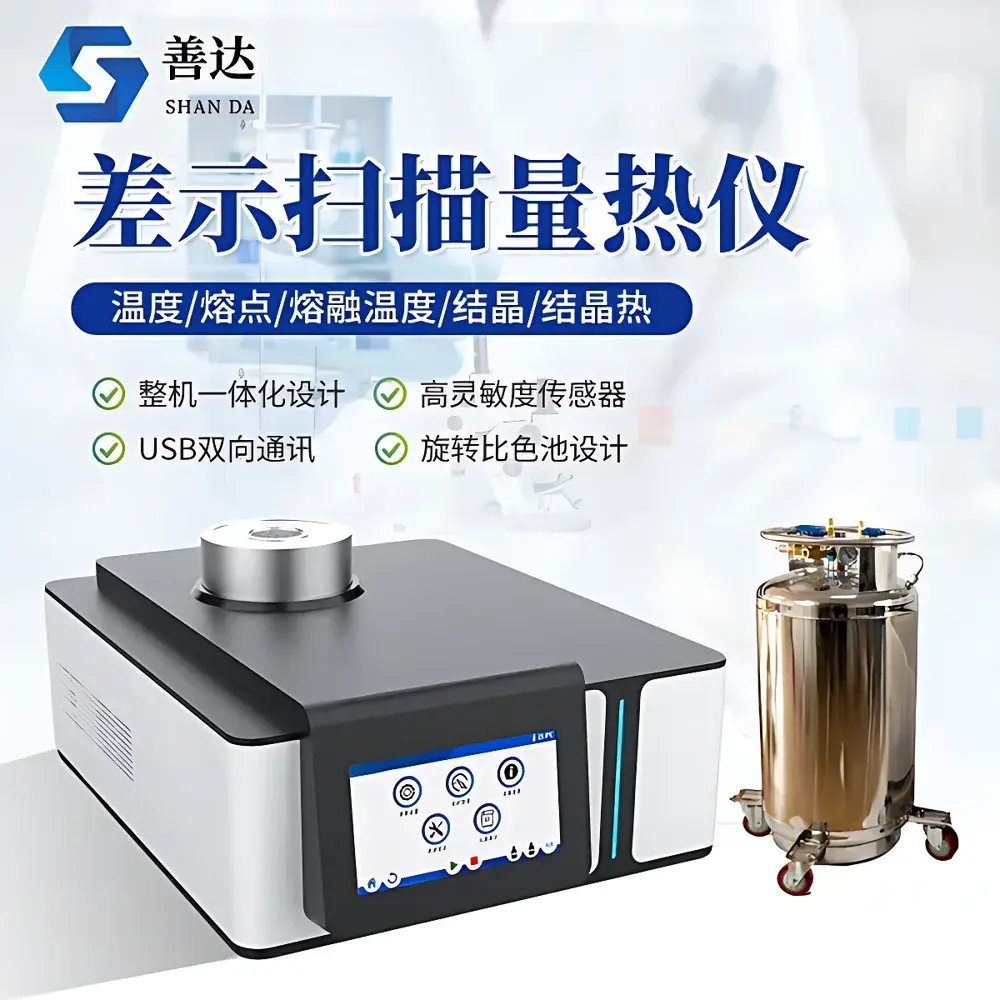

Shanda SD-L2 Differential Scanning Calorimeter
| Brand | Shanda |
|---|---|
| Origin | Shandong, China |
| Manufacturer Type | Authorized Distributor |
| Country of Origin | China |
| Model | SD-L2 |
| Sample Capacity | Multi-sample simultaneous measurement |
| Instrument Type | Heat-Flow DSC |
| Temperature Range | −100 °C to 600 °C |
| Programmable Temperature Control | Heating, Isothermal, Cooling |
| Heating/Cooling Rate | 0.1–100 K/min |
| Scan Modes | Dynamic heating, dynamic cooling, isothermal hold |
| Temperature Accuracy | ±0.01 °C (typical, calibrated per ASTM E794 & ISO 11357-1) |
| Baseline Stability | <0.5 µW over 30 min at 50 °C |
| Sensor Resolution | 0.01 µW |
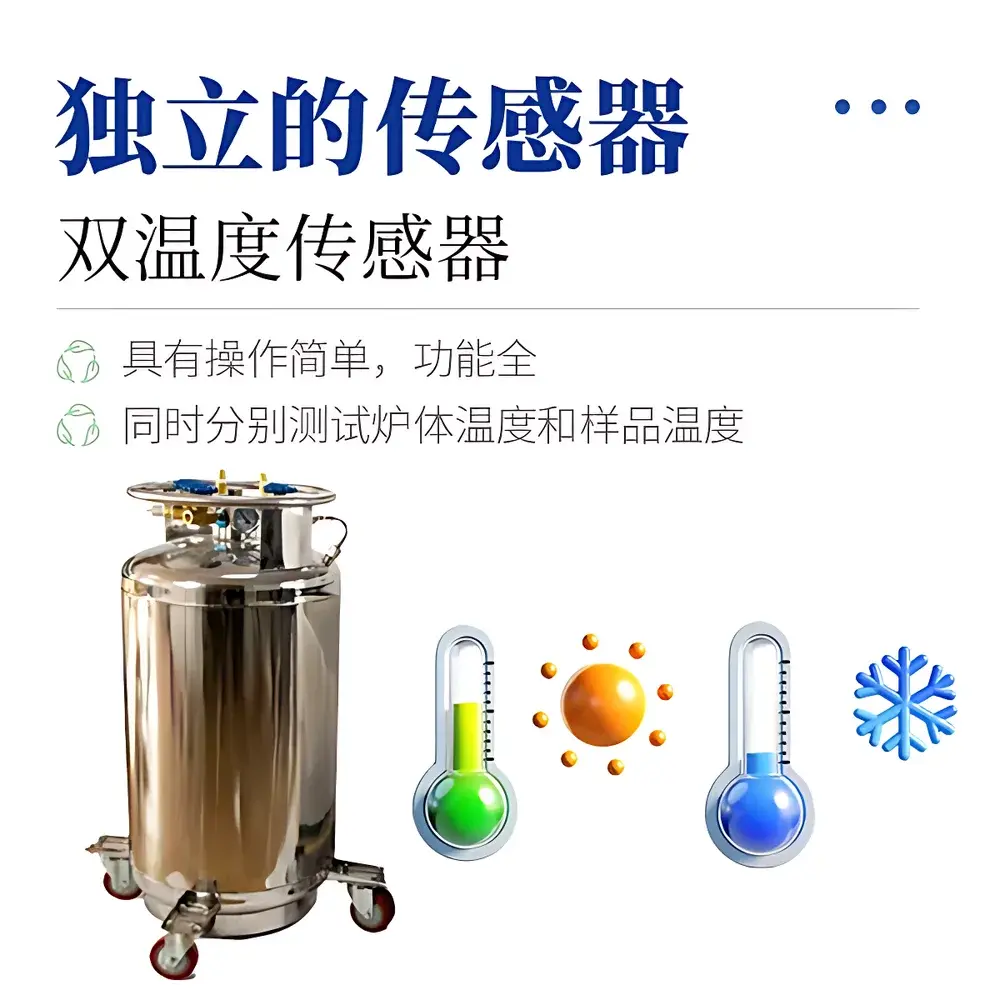
| Temperature Sensing | Dual independent platinum RTD sensors (furnace + sample) |
| Control Algorithm | Adaptive dynamic PID with FTC/STC dual-mode selection |
| Data Acquisition | 1–10 Hz user-selectable sampling rate |
| Communication Interface | USB 2.0 with auto-reconnect protocol |
| Atmosphere Control | Dual independent gas channels (N₂, O₂, Ar, air), software-switched via solenoid valves |
| Calibration Standards | Indium, Zinc, Tin, and Sapphire (per ISO 11357-2) |
Overview
The Shanda SD-L2 Differential Scanning Calorimeter (DSC) is a precision heat-flow-type thermal analysis instrument engineered for quantitative measurement of endothermic and exothermic transitions under controlled temperature programs. Based on the fundamental principle of differential heat flow between a sample and an inert reference—both subjected to identical thermal histories—the SD-L2 delivers high-fidelity thermal event detection across materials science, polymer engineering, pharmaceutical development, and food chemistry applications. Its operational range spans from cryogenic conditions (−100 °C) to high-temperature decomposition (600 °C), supporting dynamic heating, cooling, and extended isothermal protocols. The system complies with core international standards for thermal analysis, including ISO 11357 (Plastics — Differential Scanning Calorimetry), ASTM E794 (Melting and Crystallization Temperatures by DSC), and ASTM E1356 (Assigning Glass Transition Temperatures). Designed for laboratory environments requiring reproducibility, traceability, and method flexibility, the SD-L2 integrates hardware-level temperature integrity with software-driven data processing to support GLP-compliant workflows.
Key Features
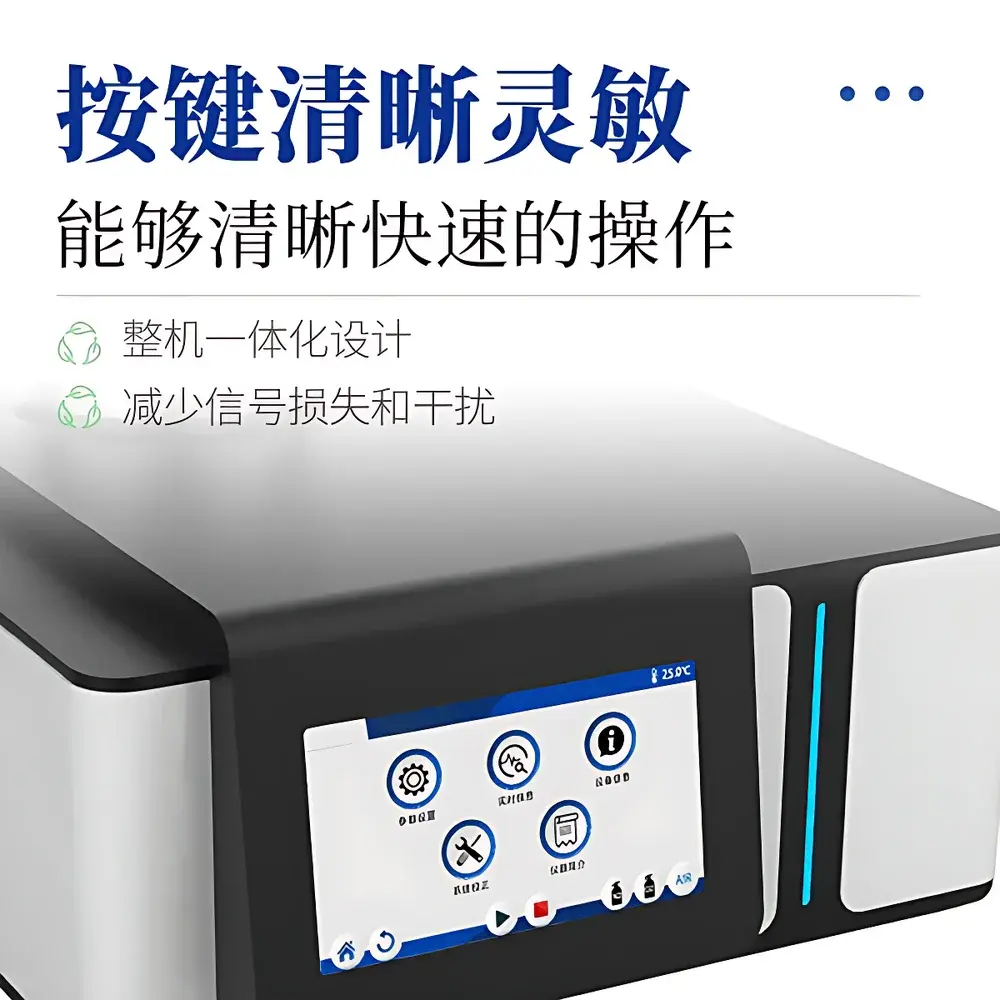
- Monolithic mechanical architecture minimizes thermal lag and electromagnetic interference, ensuring superior baseline stability and signal-to-noise ratio.
- Dual independent platinum resistance temperature detectors (RTDs) continuously monitor furnace and sample temperatures in real time, enabling precise thermal gradient compensation.
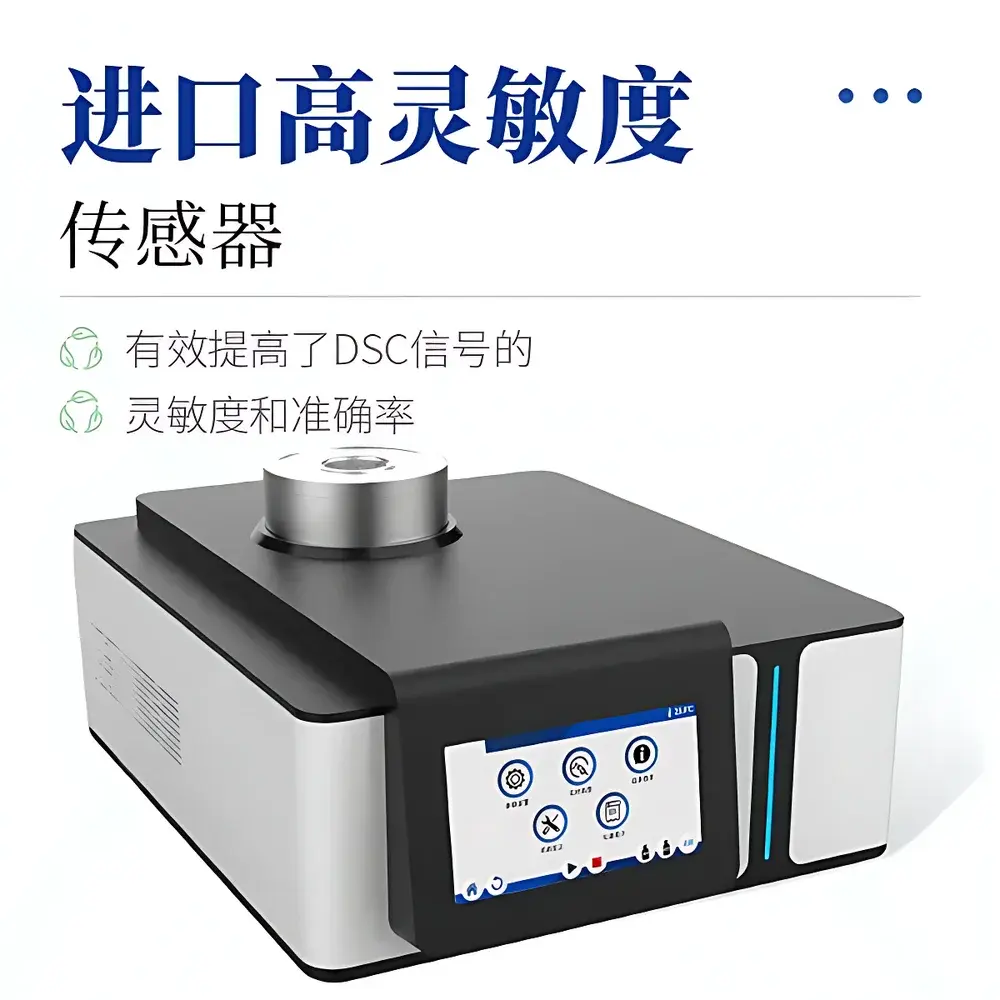
- Imported high-sensitivity thermopile sensor with sub-microwatt resolution (0.01 µW) and programmable acquisition rates (1–10 Hz) for optimized temporal resolution across diverse transition kinetics.
- Adaptive dynamic PID temperature control algorithm eliminates manual tuning; supports both FTC (Furnace Temperature Control) and STC (Sample Temperature Control) modes for application-specific thermal fidelity.
- 12-step programmable temperature profile capability—including ramp, hold, and multi-segment cycles—enables complex thermal protocols such as oxidative induction time (OIT), cold crystallization, and enthalpy recovery studies.
- Dual independent gas inlet system with automated solenoid switching allows seamless atmosphere transitions (e.g., N₂ → O₂) during a single run, critical for oxidation stability or decomposition mechanism analysis.
- Onboard multi-point temperature calibration (furnace and sensor) aligned to certified reference materials (Indium, Zn, Sn, Sapphire), traceable to NIST-traceable standards per ISO 11357-2.
Sample Compatibility & Compliance
The SD-L2 accommodates standard hermetic and vented aluminum pans (50 µL capacity), stainless-steel high-pressure cells (up to 10 bar), and specialized crucibles for reactive or volatile samples. It supports quantitative analysis of polymers (melting point, crystallinity, Tg), pharmaceuticals (polymorph screening, amorphous content, excipient compatibility), inorganic compounds (phase transitions, eutectic behavior), and food matrices (fat solidification profiles, starch gelatinization enthalpies). All firmware and software modules are structured to support audit-ready documentation: automatic timestamping, user authentication logs, electronic signatures, and raw-data immutability—meeting foundational requirements of FDA 21 CFR Part 11 for regulated laboratories conducting QC/QA or stability testing.
Software & Data Management
Bundled ShandaTherm™ v4.x analytical software provides full instrument control, real-time visualization, and post-run evaluation. Key capabilities include automatic baseline subtraction (linear, polynomial, or spline-based), peak integration with onset/onset-tangent/midpoint algorithms, kinetic modeling (Ozawa-Flynn-Wall, Kissinger), and comparative overlay of up to 16 curves. Export formats include CSV, TXT, and universal .QTX (compatible with Origin, MATLAB, and Thermo Scientific™ OMNIC). Data files embed metadata (operator ID, calibration status, gas flow history, PID parameters), ensuring full experimental provenance. Software architecture supports network deployment, role-based access control, and optional LIMS integration via OPC UA or RESTful API endpoints.
Applications
- Determination of glass transition temperature (Tg), melting temperature (Tm), crystallization onset (Tc), and latent heat (ΔH) in thermoplastics and thermosets.
- Polymorph identification and relative stability assessment of active pharmaceutical ingredients (APIs) under variable humidity and thermal stress.
- Oxidative induction time (OIT) and oxidative onset temperature (OOT) measurements per ASTM D3895 and ISO 11357-6 for antioxidant efficacy validation.
- Analysis of phase separation, curing kinetics, and crosslink density in epoxy and silicone formulations.
- Quantification of solid fat content (SFC) profiles in edible oils and dairy fats using low-temperature DSC protocols.
- Thermal degradation profiling of composites, battery electrode materials, and flame-retardant additives.
FAQ
What calibration standards are recommended for routine verification?
Indium (Tm = 156.6 °C, ΔHfus = 28.45 J/g) and zinc (Tm = 419.5 °C) are primary standards for temperature and enthalpy calibration per ISO 11357-2. Sapphire is used for heat capacity calibration.
Does the SD-L2 support modulated DSC (MDSC®) functionality?
No—the SD-L2 implements conventional heat-flow DSC only. MDSC requires proprietary oscillatory temperature modulation hardware not present in this model.
Can the instrument operate under vacuum or inert gas purge simultaneously?
Yes—dual independent mass flow controllers allow concurrent N₂ purge (sample chamber) and Ar purge (furnace cavity), minimizing convective artifacts during low-temperature measurements.
Is raw data export compliant with 21 CFR Part 11 requirements?
Raw DSC thermograms (.qtx) include embedded digital signatures, operator IDs, timestamps, and instrument configuration logs—satisfying ALCOA+ principles when deployed with validated ShandaTherm™ v4.x in a documented IT environment.
What is the typical baseline noise level under isothermal conditions?
Baseline noise is ≤0.3 µW RMS over 30 minutes at 50 °C (measured with empty Al pan, N₂ purge at 50 mL/min), meeting ISO 11357-1 sensitivity criteria for high-resolution transition detection.



