
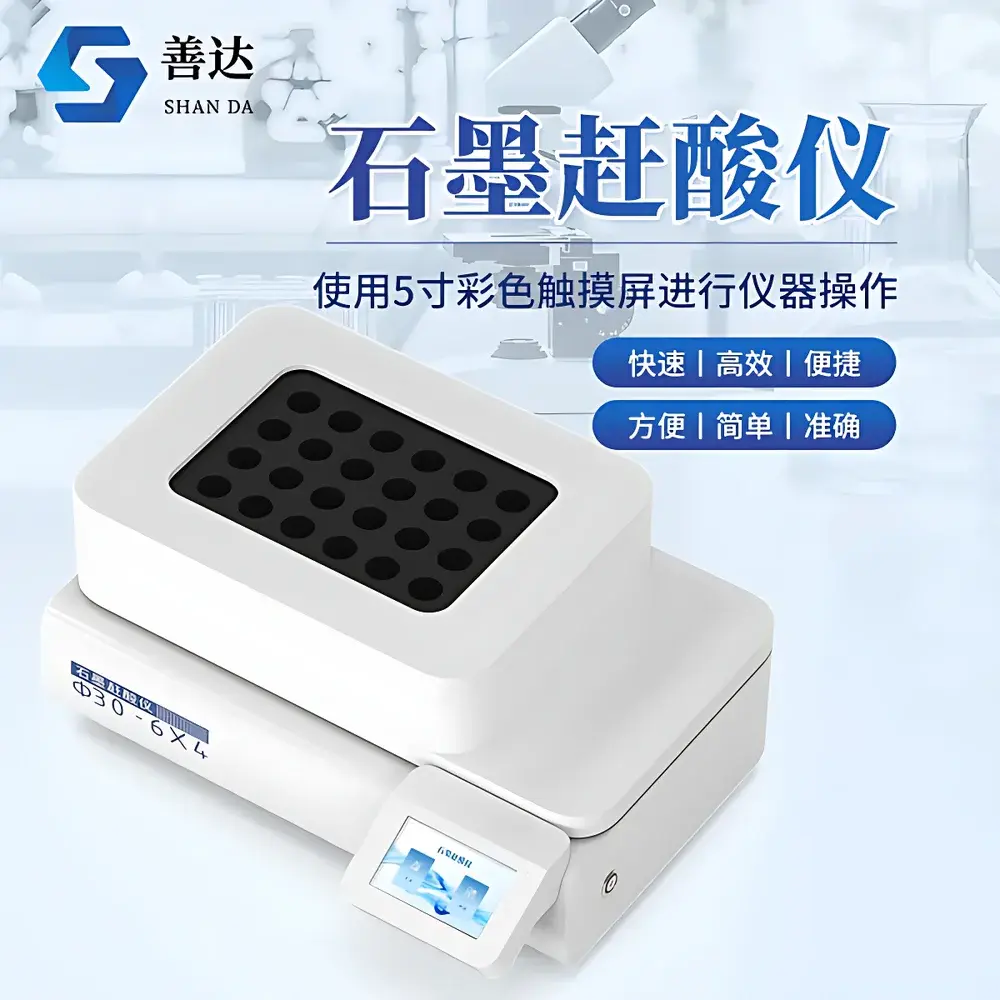
Shanda SD-MS04 Graphite Block Acid Evaporator
| Brand | Shanda |
|---|---|
| Origin | Shandong, China |
| Manufacturer Type | General Distributor |
| Country of Origin | China |
| Model | SD-MS04 |
| Price | USD 630 (approx.) |
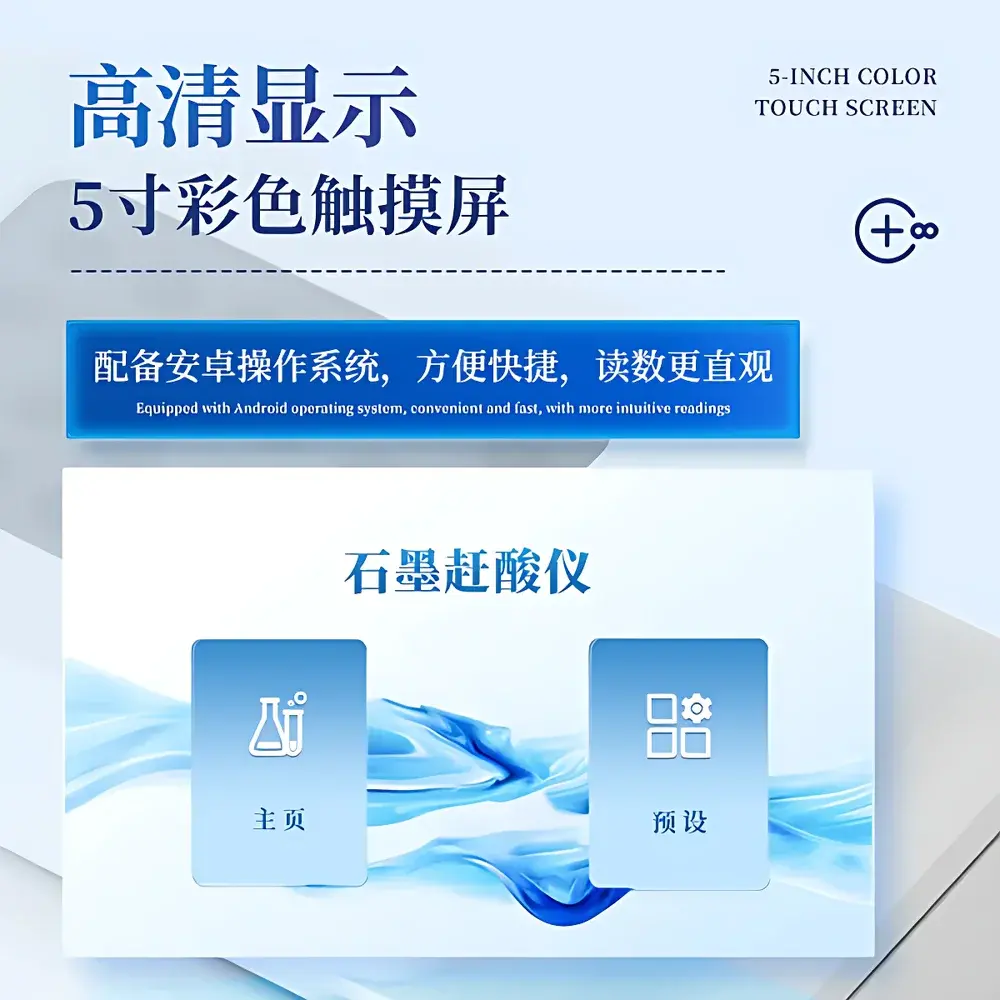
| Touchscreen | 5-inch color capacitive touchscreen |
| Operating System | Android-based embedded UI |
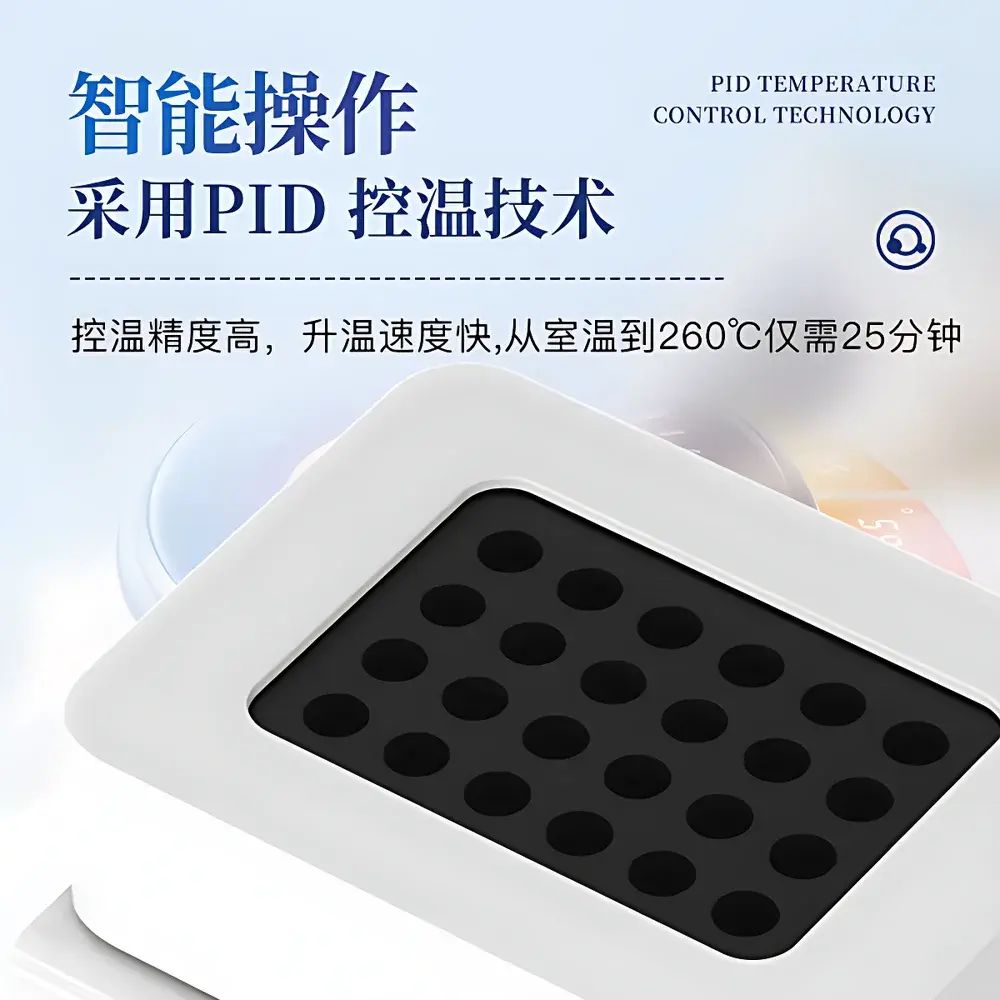
| Temperature Control | PID algorithm |
| Temp Range | Ambient to 260 °C |
| Temp Accuracy | ±1 °C |
| Temp Segments | 1–5 programmable segments |
| Heating Method | Quartz infrared heating tubes |
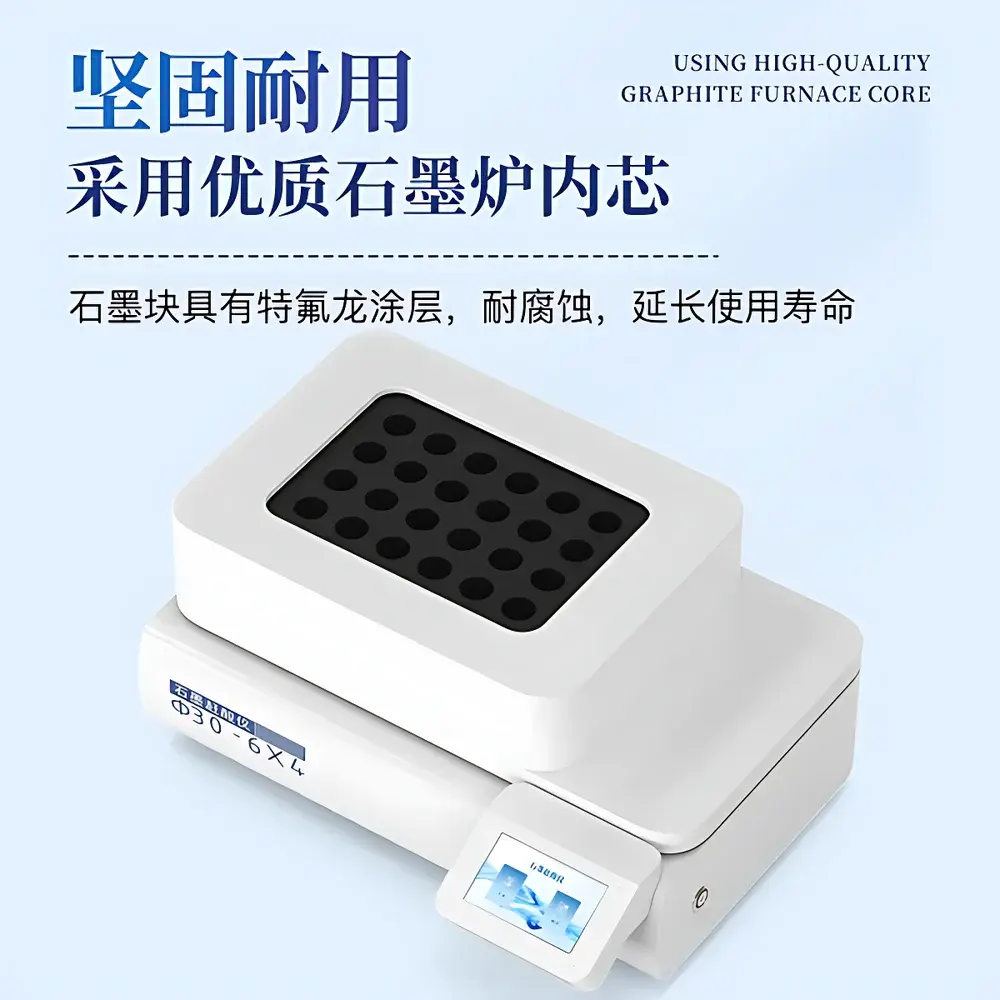
| Graphite Block | High-density graphite core with PTFE coating |
| Well Dimensions | Ø30 mm × 160 mm depth |
| External Dimensions | 387 mm (W) × 371 mm (D) × 168 mm (H) |
| Power Supply | AC 220 V, 50 ±1 Hz |
| Rated Power | 1000 W |
Overview
The Shanda SD-MS04 Graphite Block Acid Evaporator is a precision-controlled, benchtop acid digestion auxiliary instrument engineered for post-microwave digestion sample concentration—commonly referred to as “acid removal” or “acid evaporation.” It operates on the principle of uniform conductive heating via a high-density, PTFE-coated graphite block, coupled with infrared radiant heating from quartz tubes. This dual-mode thermal architecture ensures rapid heat transfer, minimal temperature gradient across sample wells (±1 °C uniformity), and consistent evaporation kinetics—critical for trace metal analysis where residual acid matrix interference must be minimized prior to instrumental quantification. Designed explicitly for compatibility with atomic absorption spectroscopy (AAS), atomic fluorescence spectroscopy (AFS), and inductively coupled plasma atomic emission spectroscopy (ICP-AES), the SD-MS04 bridges the gap between microwave digestion completion and analytical readiness, reducing manual handling and improving reproducibility in regulated sample preparation workflows.
Key Features
- 5-inch high-resolution capacitive touchscreen interface running a dedicated Android-based embedded OS—enabling intuitive parameter entry, real-time temperature curve visualization, and multi-segment program storage.
- PID-driven temperature control system with ±1 °C accuracy across the full 20–260 °C operating range; achieves 260 °C from ambient in ≤25 minutes.
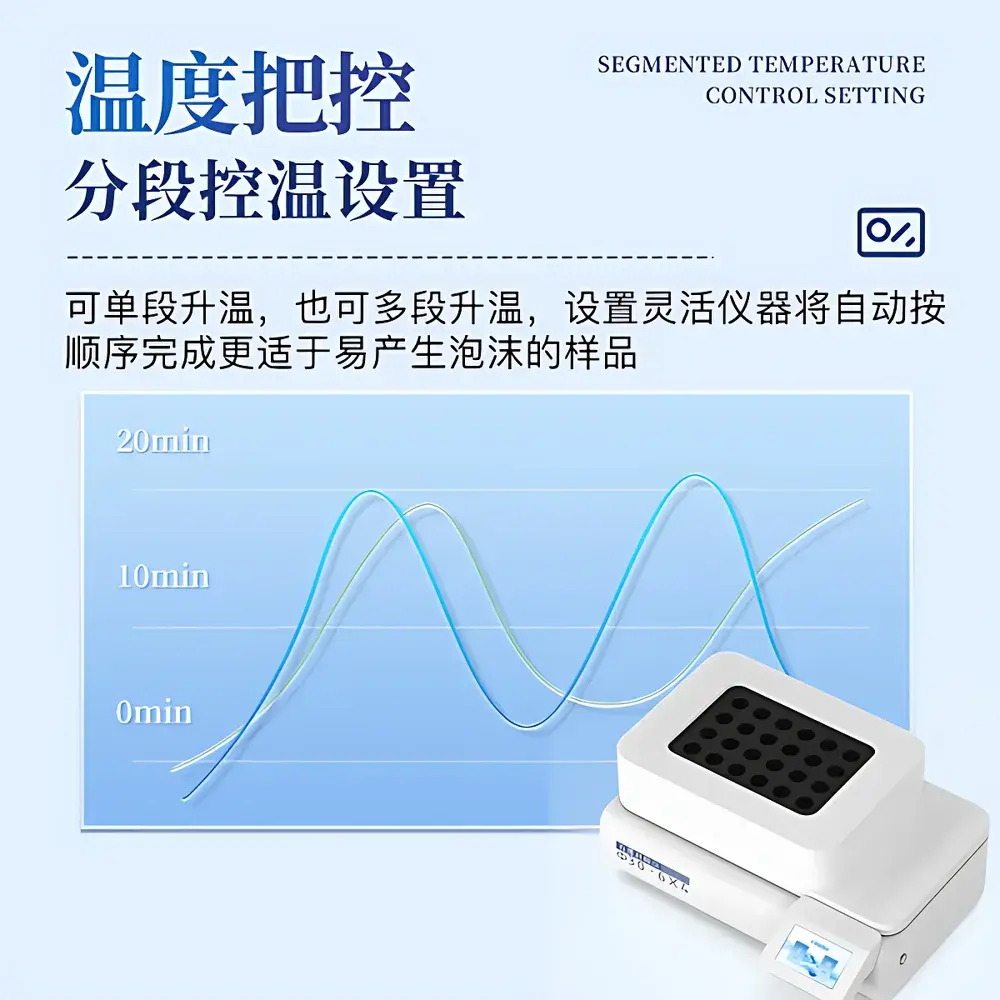
- Programmable 1–5 temperature segments—supporting ramp-hold-cool profiles ideal for volatile or foam-prone matrices (e.g., biological tissues, dairy digests, or high-sugar food extracts).
- Optimized graphite block geometry: 30 mm diameter × 160 mm deep wells accommodate standard 50 mL Teflon or quartz digestion vessels; PTFE coating resists HNO₃, HCl, HF, and aqua regia corrosion over extended operational cycles.
- Quartz infrared heating elements provide rapid, directional thermal input beneath the graphite block—enhancing energy efficiency and minimizing ambient heat dissipation.
- Compact footprint (387 × 371 × 168 mm) and 1 kW power rating enable deployment in shared lab spaces without dedicated circuit upgrades.
Sample Compatibility & Compliance
The SD-MS04 accommodates a broad spectrum of sample types following open-vessel or closed-vessel microwave digestion—including environmental water sludge, pharmaceutical excipients, clinical serum digests, soil extracts, and botanical matrices. Its PTFE-coated graphite construction meets ASTM D5683-22 requirements for acid-resistant sample preparation hardware used in trace elemental analysis. While not an ISO/IEC 17025-accredited instrument per se, its programmable temperature logging (via internal memory) supports GLP-compliant documentation when paired with external audit-trail-enabled LIMS. The device complies with IEC 61010-1:2010 safety standards for laboratory electrical equipment and includes overtemperature cutoff and auto-shutdown on lid open detection.
Software & Data Management
The embedded Android interface stores up to 20 user-defined temperature programs, each with timestamped start/stop logs and real-time thermal profiling. Data export is supported via USB flash drive (FAT32 formatted) in CSV format—compatible with common laboratory data review tools (e.g., Microsoft Excel, LabArchives, or Empower). No cloud connectivity or remote access is implemented, preserving data sovereignty in regulated environments. Audit trail functionality adheres to basic ALCOA+ principles (Attributable, Legible, Contemporaneous, Original, Accurate), though full 21 CFR Part 11 compliance requires integration with validated third-party electronic lab notebook (ELN) systems.
Applications
- Routine acid evaporation after microwave-assisted digestion of food samples prior to Cd, Pb, As determination by GFAAS.
- Concentration of environmental water digests for multi-element ICP-AES analysis under EPA Method 200.8.
- Preparation of pharmaceutical raw material digests for USP <232>/<233> elemental impurities testing.
- Controlled evaporation of high-foaming biological samples (e.g., urine, liver homogenates) using segmented low-ramp protocols.
- QC/QA support in contract testing labs performing ISO 17025-accredited trace metal analysis across food, feed, and cosmetics sectors.
FAQ
What sample vessel types are compatible with the SD-MS04?
Standard 50 mL PTFE, quartz, or borosilicate glass digestion tubes with outer diameters ≤29 mm fit securely into the 30 mm wells. Vessels must be rated for sustained exposure to 260 °C and concentrated mineral acids.
Can the SD-MS04 be used without prior microwave digestion?
Yes—it supports direct open-vessel hotplate-style digestion for low-risk matrices, though microwave pre-digestion is strongly recommended for complex or refractory samples to ensure complete oxidation and minimize acid carryover.
Is calibration certificate included with shipment?
No factory calibration certificate is supplied by default; users are advised to perform initial verification using NIST-traceable RTDs or thermocouples per SOP QCP-012, with annual recalibration recommended.
Does the unit support Ethernet or Wi-Fi connectivity?
No—data transfer is USB-only. Network interfaces are omitted to reduce cybersecurity surface area and align with secure lab infrastructure policies.
What maintenance is required for long-term reliability?
Monthly visual inspection of PTFE coating integrity, quarterly cleaning of quartz heater surfaces with lint-free isopropanol wipes, and annual verification of PID loop response time using step-change testing per manufacturer’s technical bulletin TB-SDMS04-REV3.



