
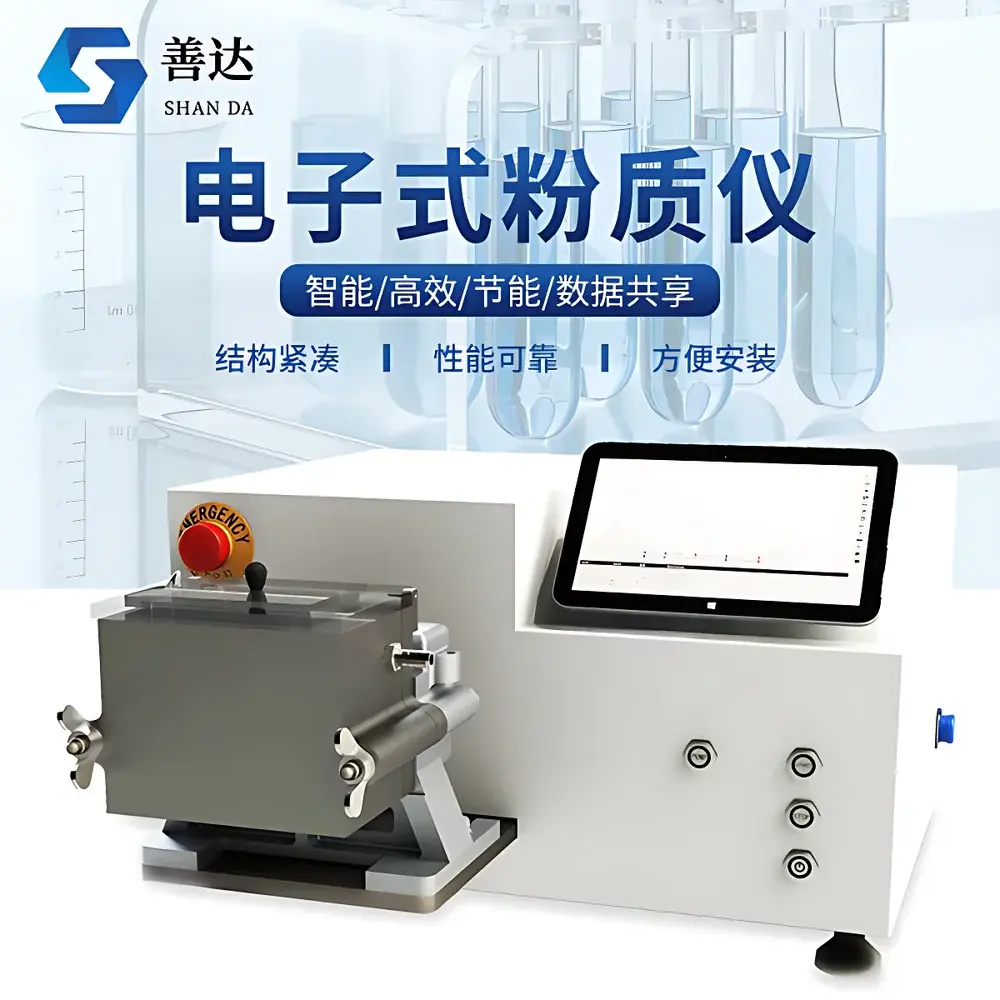
Shanda SD-PE-T Electronic Farinograph
| Brand | Shanda |
|---|---|
| Model | SD-PE-T |
| Type | Electronic Farinograph |
| Power Supply | 220 V AC, 50 Hz |
| Motor Power | 300 W |
| Rotational Speed Range | 2–200 ±1 rpm (adjustable, real-time display) |
| Speed Ratio (Fast/Slow Blades) | 1.5:1 |
| Torque Measurement Range | 0–20 N·m |
| Torque Sensor Accuracy | ≤0.3% FS |
| Bowl Capacity | 300 g |
| Torque Unit Calibration | (9.8 ± 0.2) mN·m per Farinograph Unit (FU) |
| Measuring Range | 0–2000 FU |
| Water Addition Accuracy | ±0.2 mL (for 300 g dough) |
| Water Bath Pressure | ≤340 mbar |
| Water Circulation Flow Rate | 15 L/min (auto-fill enabled) |
| Dough Temperature Control | 30 ± 0.2 °C (PID-controlled water jacket) |
| Temperature Setting Range (Incubation Chamber) | 20–50 °C |
| Chamber Temperature Stability | ±0.2 °C |
| Chamber Power | 1200 W |
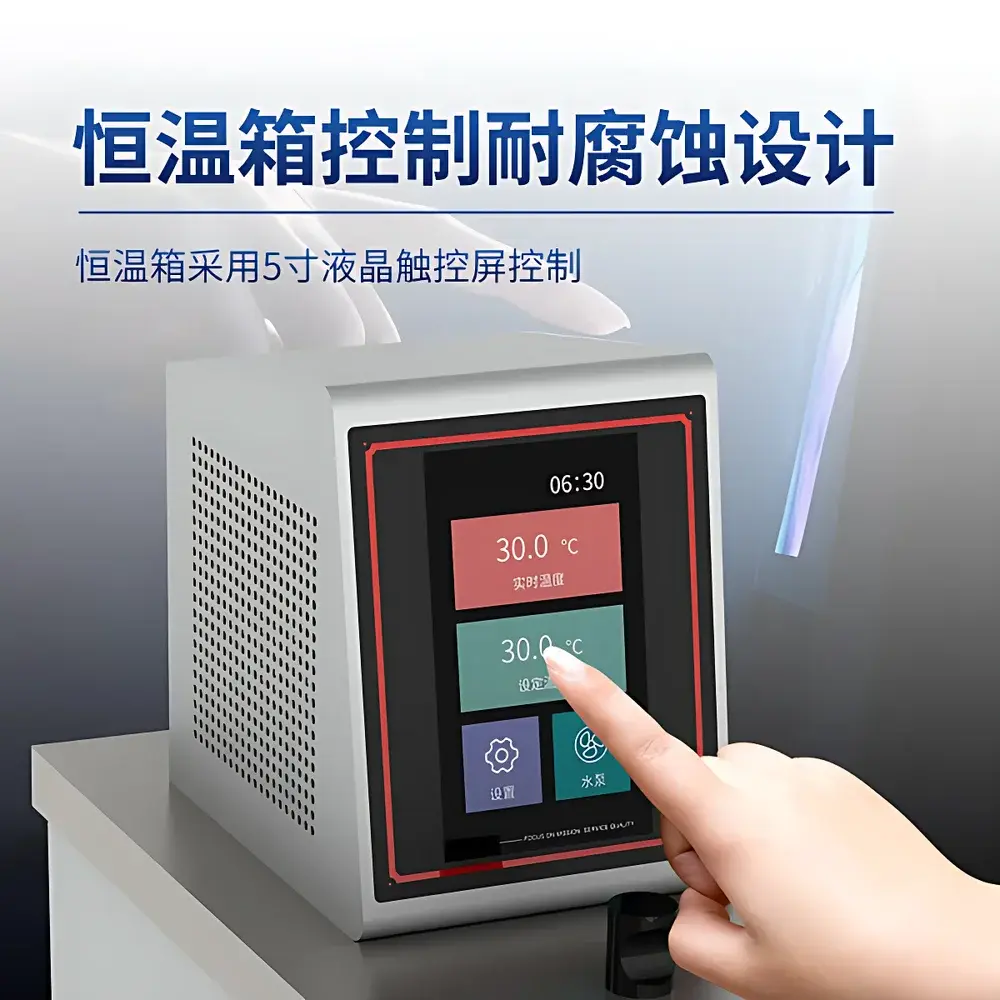
| Chamber Display | 5-inch embedded LCD touch screen |
| Safety Features | Overload protection (bowl), mechanical/electrical interlock (mixer), real-time heating element monitoring, automatic alarm on anomaly |
| Material | Imported stainless steel (bowl & blades), corrosion-resistant surface-treated structural components |
| Compliance Standards | ICC 115/1, AACC 54-21, ISO 5530-1, GB/T 14614 |
| Data Handling | Multi-file curve overlay (unlimited), custom color/name assignment, cross-brand farinogram import (legacy formats), real-time interruption & interim calculation, encrypted storage, export to CSV/Excel, GLP-compliant audit trail (via Smart Pbox integration) |
| Software | Windows 7/10 native, perpetual license, free lifetime updates |
| Service | Annual certified standard-sample calibration (with CNAS-accredited reference material certificate), two free post-warranty calibration & maintenance visits (Years 2–3), third-party performance evaluation report issued by national metrology institute |
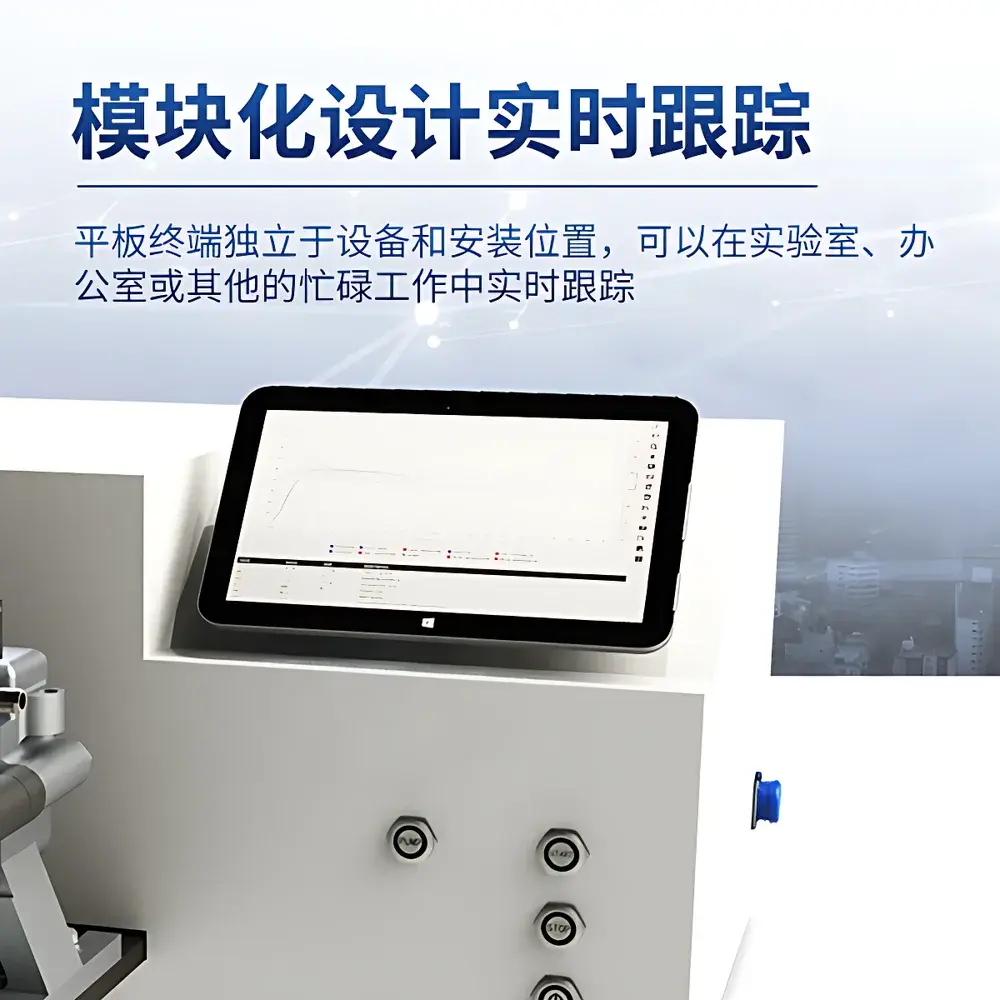
| Connectivity | Real-time multi-terminal data viewing (requires Smart Pbox gateway) |
Overview
The Shanda SD-PE-T Electronic Farinograph is a precision-engineered instrument designed for standardized assessment of wheat flour rheological behavior during hydration and mixing. Based on the classical Brabender principle—measuring torque resistance of dough under controlled shear and temperature—the SD-PE-T quantifies key functional parameters including water absorption, dough development time, stability, and degree of softening. Its operation conforms to internationally harmonized methodologies defined in ISO 5530-1, ICC 115/1, AACC 54-21, and GB/T 14614, enabling direct comparability across global R&D, quality control, and milling laboratories. The system integrates a high-fidelity torque transducer (0–20 N·m, ≤0.3% FS accuracy), PID-regulated water-jacketed bowl (maintained at 30 ± 0.2 °C), and dual-speed impeller assembly (fast/slow ratio 1.5:1) to replicate industrial-scale mixing kinetics within a 300 g sample mass. Unlike legacy analog farinographs, the SD-PE-T digitizes the entire torque-time profile with millisecond resolution, supporting both real-time analysis and retrospective reprocessing.
Key Features
- Precision torque sensing with traceable calibration: factory-aligned to national standard reference materials, verified annually using CNAS-certified CRM (Certificate included)
- Dynamic temperature control architecture: closed-loop water circulation (15 L/min, 340 mbar max pressure) coupled with embedded 5-inch touchscreen interface for chamber setpoint (20–50 °C) and real-time thermal diagnostics
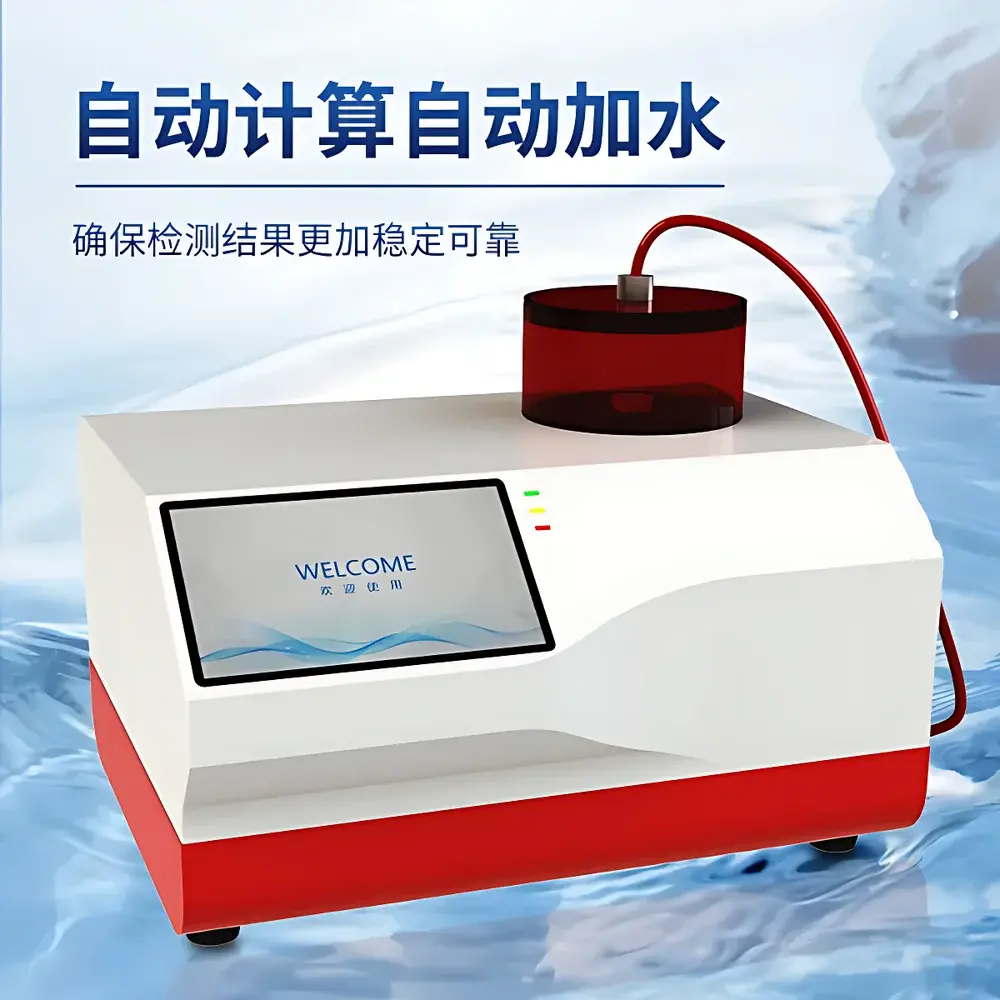
- Intelligent hydration management: automated ±0.2 mL water dosing with visual/audible alerts for deviation from target absorption; integrated zero-torque auto-compensation improves baseline fidelity
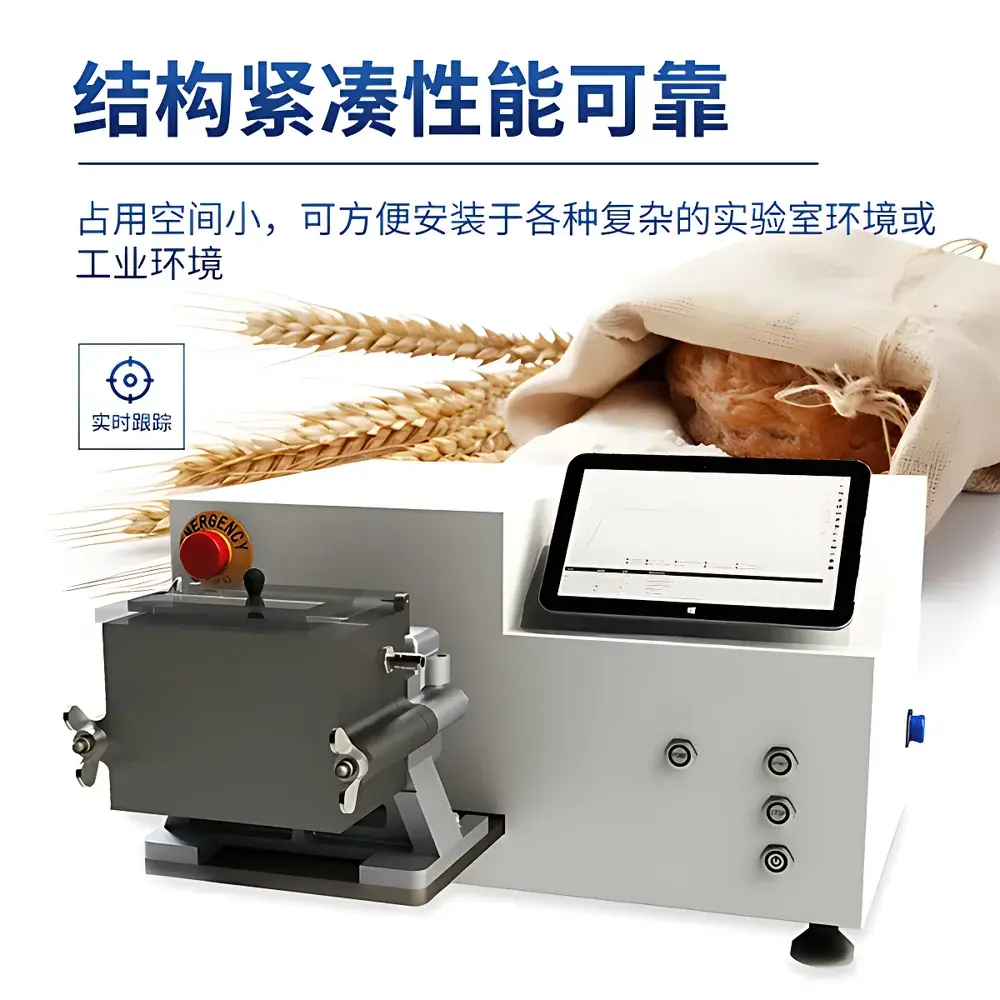
- Robust mechanical design: food-grade imported stainless steel bowl and blades; overload cut-off, dual interlock safety logic, and corrosion-resistant chassis per ISO 8502-3 surface treatment standards
- Advanced software engine: supports concurrent loading of unlimited farinogram files—including legacy formats from Brabender, Chopin, and Foss—enabling longitudinal benchmarking without data migration overhead
- Regulatory-ready data governance: timestamped, encrypted raw datasets with optional Smart Pbox-enabled remote access; full audit trail compliant with GLP and internal QA protocols
Sample Compatibility & Compliance
The SD-PE-T accepts standard 300 g flour samples per ISO 5530-1 Annex A, accommodating whole grain, refined, pre-mixed, and fortified flours. Its torque calibration (9.8 ± 0.2 mN·m/FU) ensures metrological equivalence with primary farinograph references. Instrument validation includes annual verification against GBW(E) 130399 certified wheat flour standards, with deviation in stability time constrained to ≤15% of certified value—documented in third-party test reports issued by provincial-level metrology institutes accredited under CNAS ILAC-MRA. All firmware and software modules are validated for deterministic behavior under Win7/Win10 LTS environments, satisfying FDA 21 CFR Part 11 requirements for electronic records when deployed with Smart Pbox authentication and role-based access controls.
Software & Data Management
The embedded FarinoSoft v4.x platform provides native Windows execution with perpetual licensing and mandatory security patches. Core capabilities include parametric curve annotation (peak time, breakdown index, mixing tolerance), statistical comparison across batches (ANOVA-ready CSV export), and customizable reporting templates aligned with miller’s internal SOPs. Cross-platform interoperability is achieved via open XML-based farinogram schema—allowing ingestion of historical .far, .brf, and .fss files without proprietary conversion utilities. During active testing, users may pause, recalculate, or export interim results without interrupting thermal equilibrium. All data objects retain cryptographic hashes and operator metadata, meeting ISO/IEC 17025 clause 7.5.2 requirements for result integrity.
Applications
- Flour mill quality assurance: rapid screening of incoming wheat lots and finished products against contractual specifications
- Bakery R&D: formulation optimization for pan bread, noodles, and flatbreads through correlation of farinograph indices with loaf volume, crumb structure, and freeze-thaw stability
- Academic cereal science: mechanistic studies of gluten polymerization kinetics under variable hydration and shear histories
- Regulatory submission support: generation of method-validated reports for GB, EU, and USDA export certifications
- Supplier qualification: objective benchmarking of alternative flour sources using identical instrumental protocols
FAQ
Does the SD-PE-T comply with FDA 21 CFR Part 11 for electronic records?
Yes—when configured with Smart Pbox hardware and user-authenticated login, the system enforces electronic signature, audit trail, and record retention policies required under Part 11 Subpart B.
Can I import farinograms from older Brabender instruments?
Yes—FarinoSoft natively reads .brf and .far files; additional format translators are available upon request for legacy Foss and Chopin exports.
What maintenance is covered under the extended service plan?
Years 2 and 3 include on-site calibration verification, torque sensor linearity check, water bath thermal mapping, and firmware validation—performed by Shanda-certified metrologists with documented traceability.
Is temperature uniformity validated across the bowl volume?
Yes—thermal profiling per ISO/IEC 17025 Annex C confirms ≤0.3 °C spatial gradient during steady-state operation at 30 °C.
How is data security implemented in offline mode?
Local database encryption uses AES-256; all exported files contain embedded digital signatures verifiable via standalone hash utility provided with installation media.




