
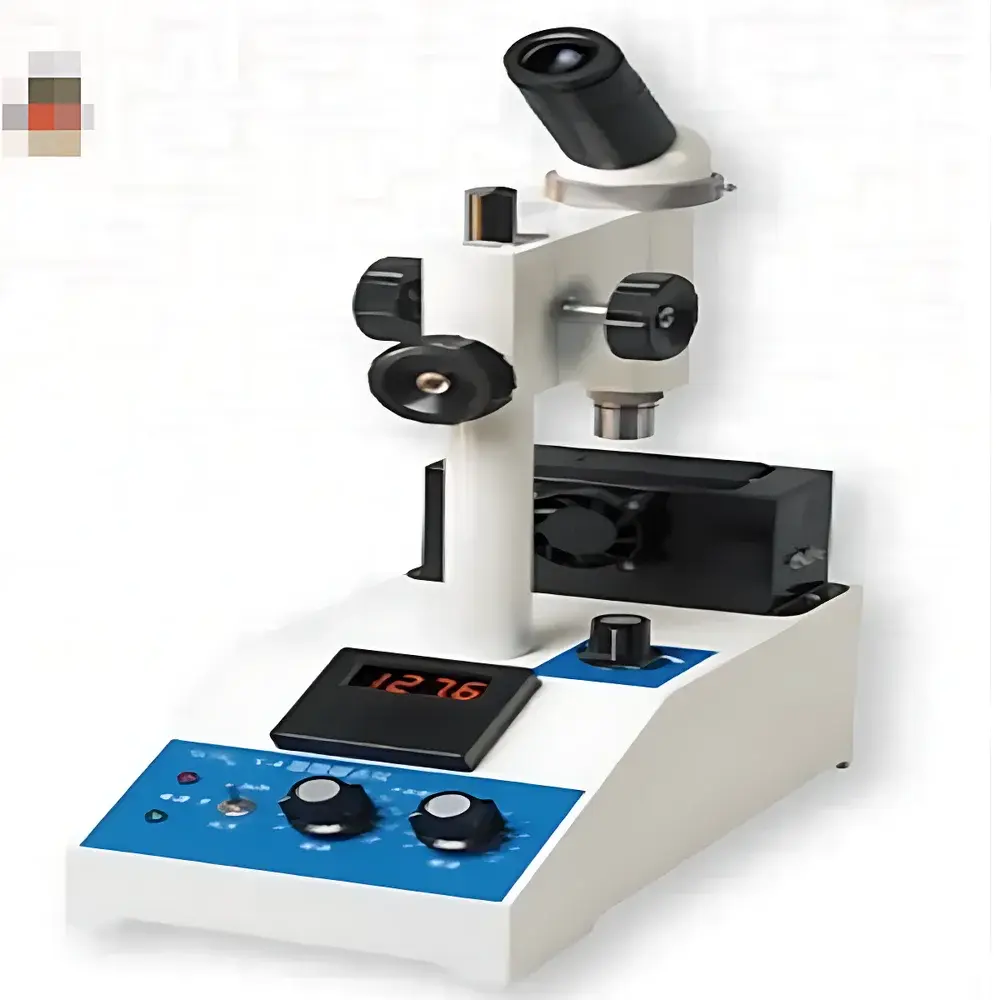
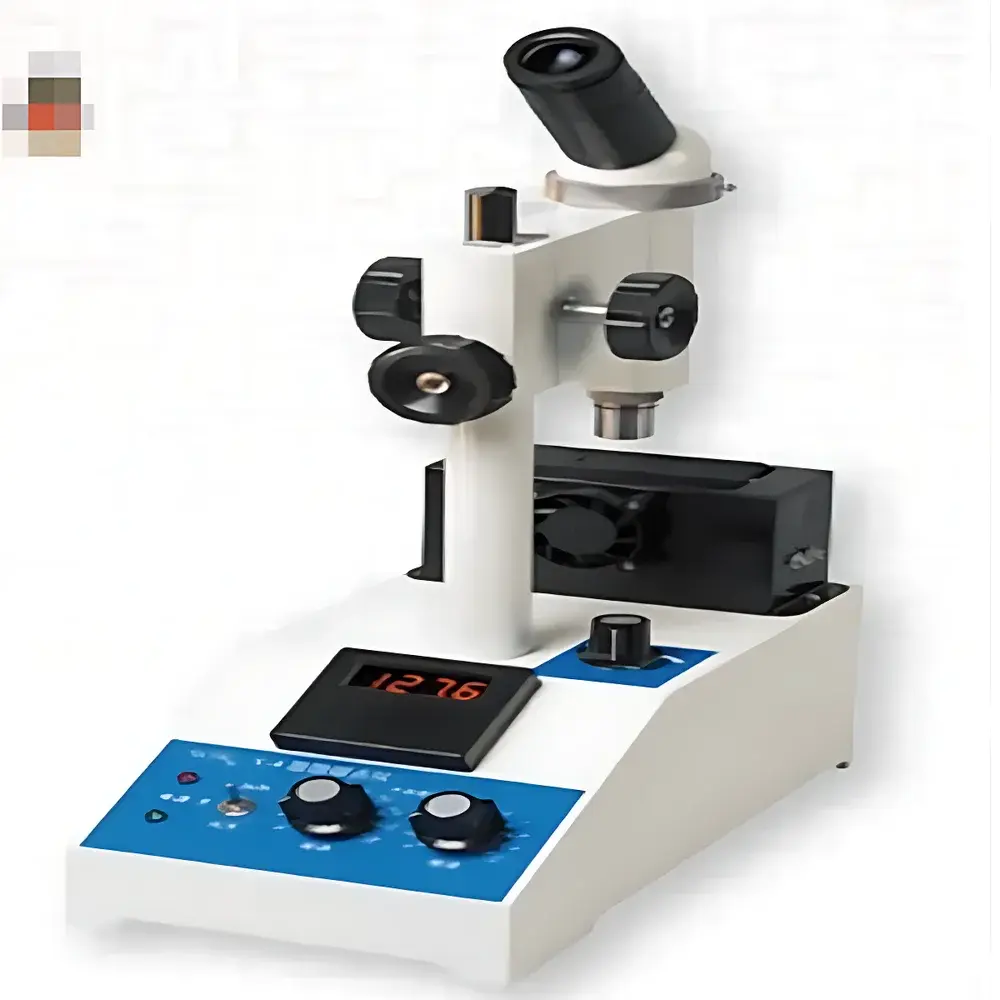
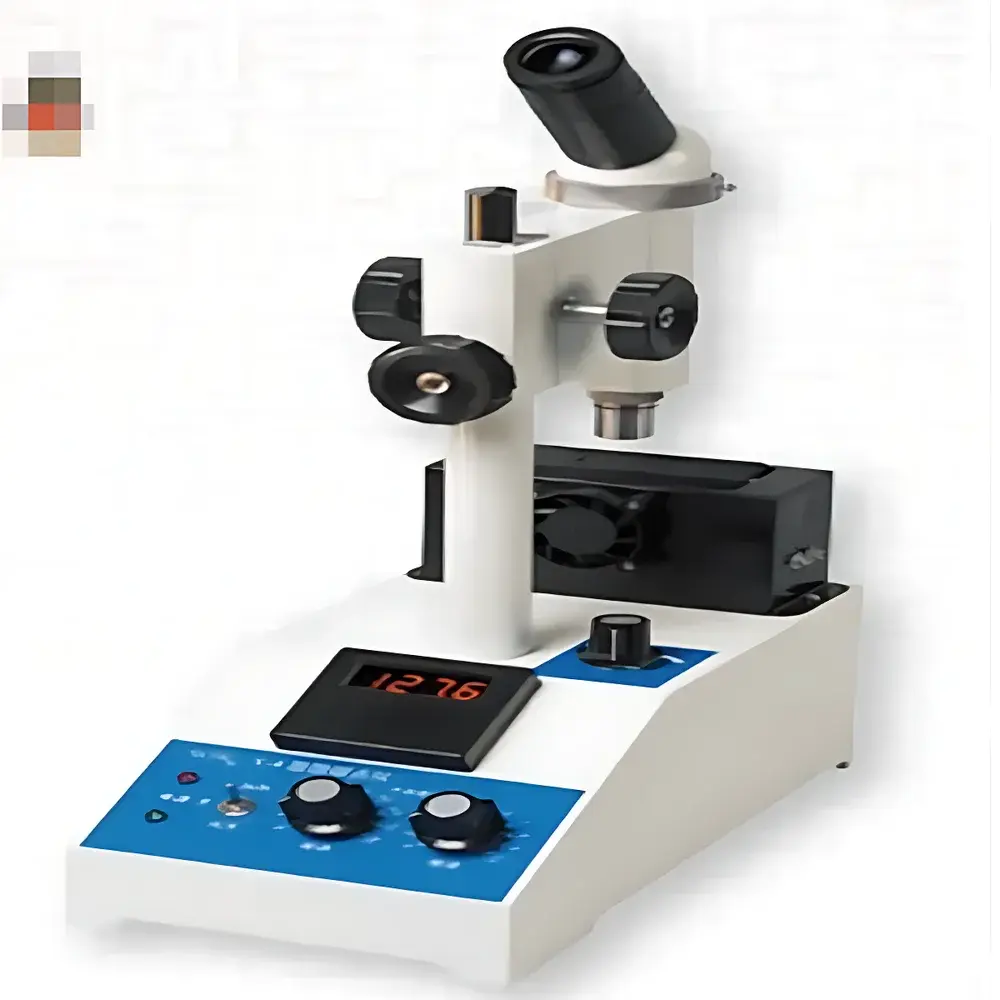
Shanghai Physical Optics SGW®X-4 Microscopic Melting Point Apparatus
| Brand | YDWG (Shanghai Physical Optics) |
|---|---|
| Origin | Shanghai, China |
| Model | SGW®X-4 |
| Temperature Range | Ambient to 360 °C |
| Heating Rate | Adjustable, up to 320 °C |
| Temperature Repeatability | ±1 °C (<200 °C), ±2 °C (≥200 °C) |
| Temperature Accuracy | ≤±1 °C (<200 °C) |
| Capillary Tube Length | 90 mm |
| Sample Capacity | 1 sample |
| Temperature Resolution | 1 °C |
| Display | LED digital readout (0.1 °C minimum increment) |
| Power Supply | 220 VAC, 50 Hz |
| Power Consumption | 80 W |
| Optical Configuration | Binocular stereomicroscope with 45° inclined dual eyetubes, adjustable interpupillary distance and right-eye diopter compensation |
| Total Magnification | 40× (4× objective + 10× eyepiece) |
| Working Distance | Optimized for thermal stage integration |
Overview
The Shanghai Physical Optics SGW®X-4 Microscopic Melting Point Apparatus is a benchtop thermal analysis instrument engineered for precise determination of solid–liquid phase transition temperatures in crystalline organic compounds. It operates on the principle of visual observation under magnification during controlled thermal ramping—leveraging either capillary tube or hot-stage (slide-and-cover slip) methodology. The integrated binocular stereomicroscope provides upright, three-dimensional imaging with depth perception critical for detecting subtle morphological changes—such as meniscus formation, sintering, shrinkage, and complete liquefaction—across the melting interval. Designed for routine quality control and research-grade characterization, the SGW®X-4 delivers traceable temperature performance across its full operating range (ambient to 360 °C), with documented accuracy and repeatability aligned with widely accepted laboratory practices for pharmaceutical and fine chemical applications.
Key Features
- Binocular stereomicroscope with 45° inclined optical path, adjustable interpupillary distance, and independent right-eye diopter correction for ergonomic, fatigue-resistant observation
- Dual measurement modes: standard capillary method (90 mm tubes) and hot-stage method using standard glass slides and cover slips
- LED digital temperature display with 0.1 °C resolution and real-time readout synchronized with thermal events
- Continuously adjustable heating rate—optimized at 1 °C/min for pharmacopeial compliance; calibrated via front-panel potentiometer and range selector
- Robust thermal stage architecture with uniform heat distribution and minimal thermal lag, ensuring stable temperature gradients across the observation zone
- Compact monolithic design integrating optics, heating element, and control electronics—minimizing alignment drift and operational complexity
Sample Compatibility & Compliance
The SGW®X-4 accommodates small-volume solid samples (typically 0.1–1 mg) in crystalline or powdered form. It is routinely deployed for melting point verification of active pharmaceutical ingredients (APIs), intermediates, dyes, fragrances, polymers, and agrochemical standards. While not certified to ISO/IEC 17025 or ASTM E324, its temperature performance meets the practical requirements outlined in USP , EP 2.2.14, and JP 2.60 for manual melting point determination. The instrument supports GLP documentation workflows when paired with external lab notebooks or electronic lab notebooks (ELNs); however, it does not include audit trail, user access control, or 21 CFR Part 11-compliant electronic signature functionality.
Software & Data Management
The SGW®X-4 is a standalone analog-digital hybrid instrument with no embedded firmware-based data logging or PC connectivity. All temperature readings are displayed in real time on the front-panel LED screen. Users record observations manually—including onset, clear point, and any intermediate transitions—alongside corresponding temperature values. For laboratories requiring digital traceability, integration with external USB thermal loggers or video capture systems (e.g., microscope-mounted CMOS cameras synchronized with thermal profiles) is feasible via third-party hardware. No proprietary software suite is provided; instrument operation relies entirely on physical controls and visual interpretation.
Applications
- Pharmaceutical QC: Identity confirmation and purity assessment of drug substances per pharmacopeial monographs
- Organic synthesis: Reaction monitoring and intermediate characterization in academic and industrial R&D labs
- Materials science: Thermal stability screening of crystalline pigments, liquid crystals, and specialty waxes
- Forensic chemistry: Comparative analysis of unknown crystalline evidence against reference standards
- Education: Hands-on instruction in thermal behavior, polymorphism, and eutectic system identification
FAQ
What is the recommended heating rate for pharmacopeial compliance?
A heating rate of 1 °C/min is recommended for USP, EP, and JP methods. This rate balances resolution and reproducibility while minimizing superheating artifacts.
Can the instrument detect polymorphic transitions?
Yes—when combined with careful visual observation, the SGW®X-4 can identify distinct melting endotherms associated with different polymorphs, though it does not provide thermodynamic quantification like DSC.
Is calibration traceable to national standards?
The unit is factory-calibrated using NIST-traceable reference materials (e.g., pure benzoic acid, urea, indium). Users may perform periodic verification using certified melting point standards.
Does the instrument support automated image capture or video recording?
No native capability exists—but standard C-mount adapters allow attachment of compatible digital microscopes or USB cameras for external documentation.
How does ambient temperature affect heating rate stability?
At fixed potentiometer settings, lower ambient temperatures reduce effective heating rate due to increased thermal dissipation; users should reconfirm rate calibration after significant environmental shifts.



