
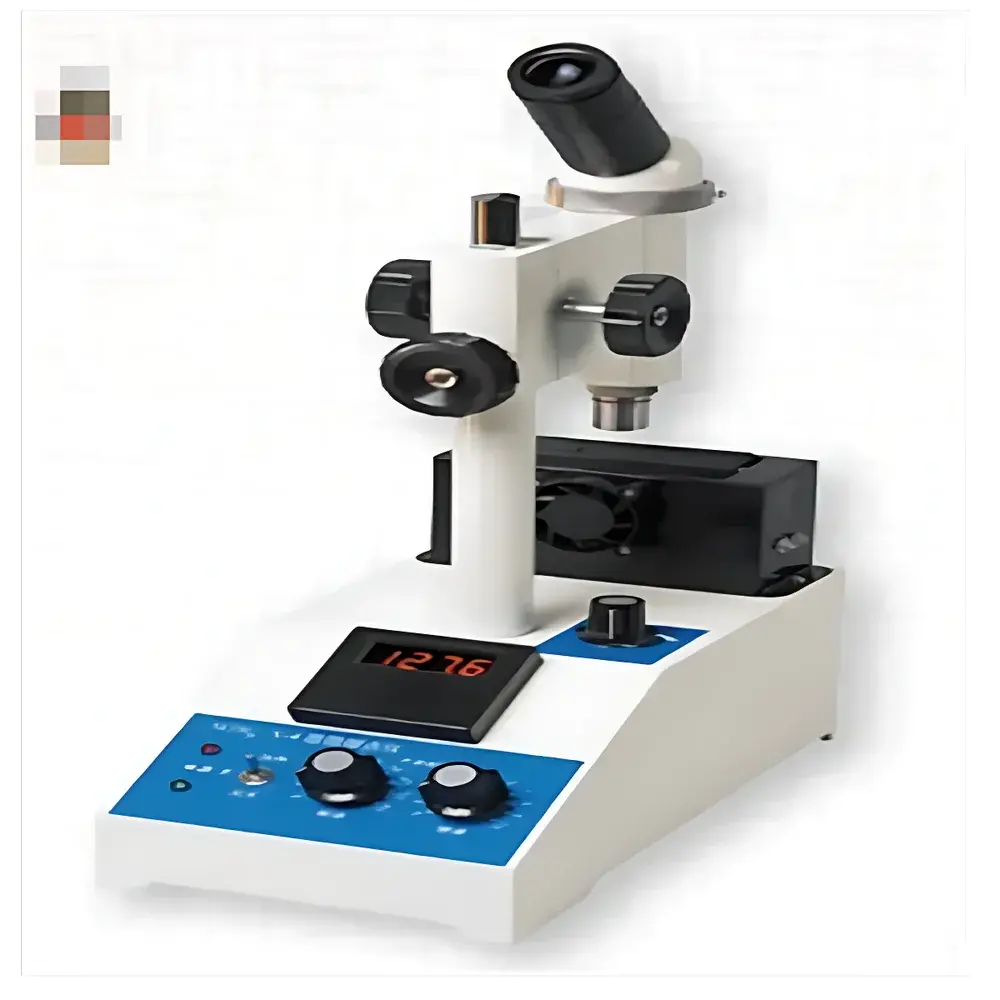
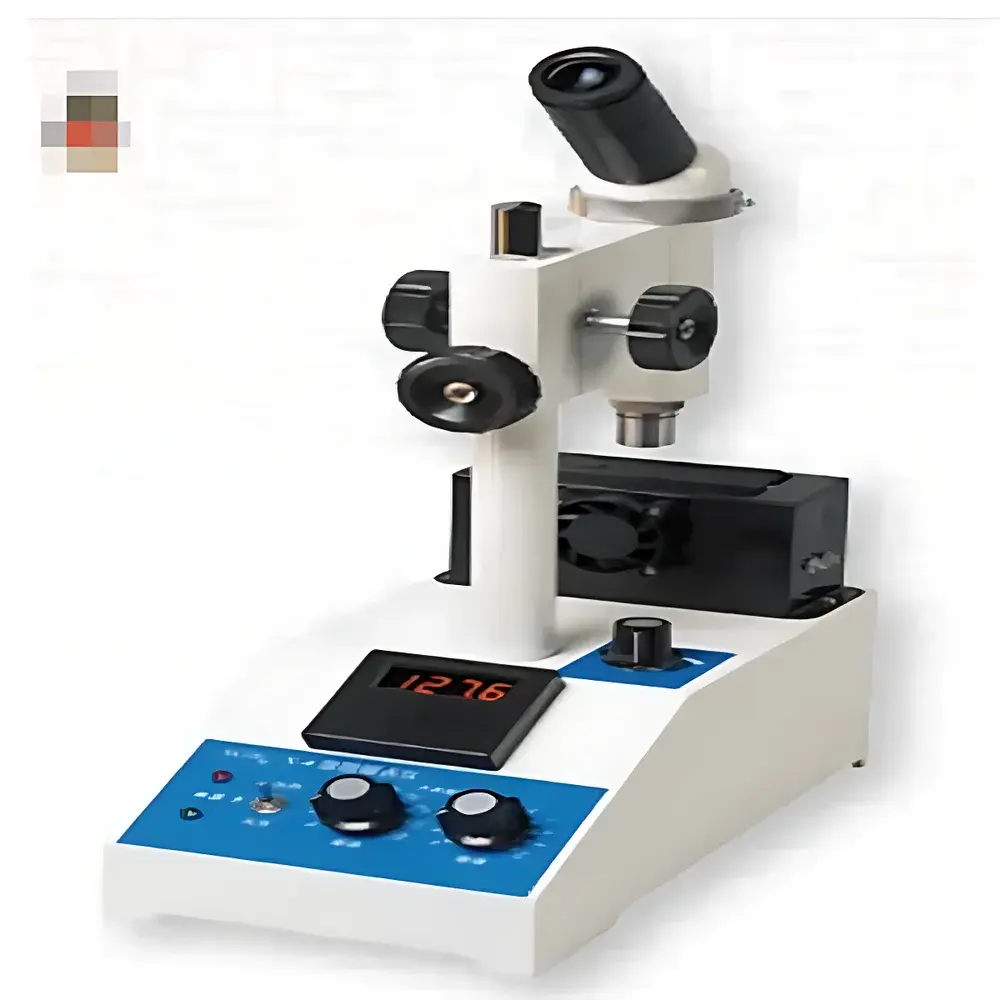
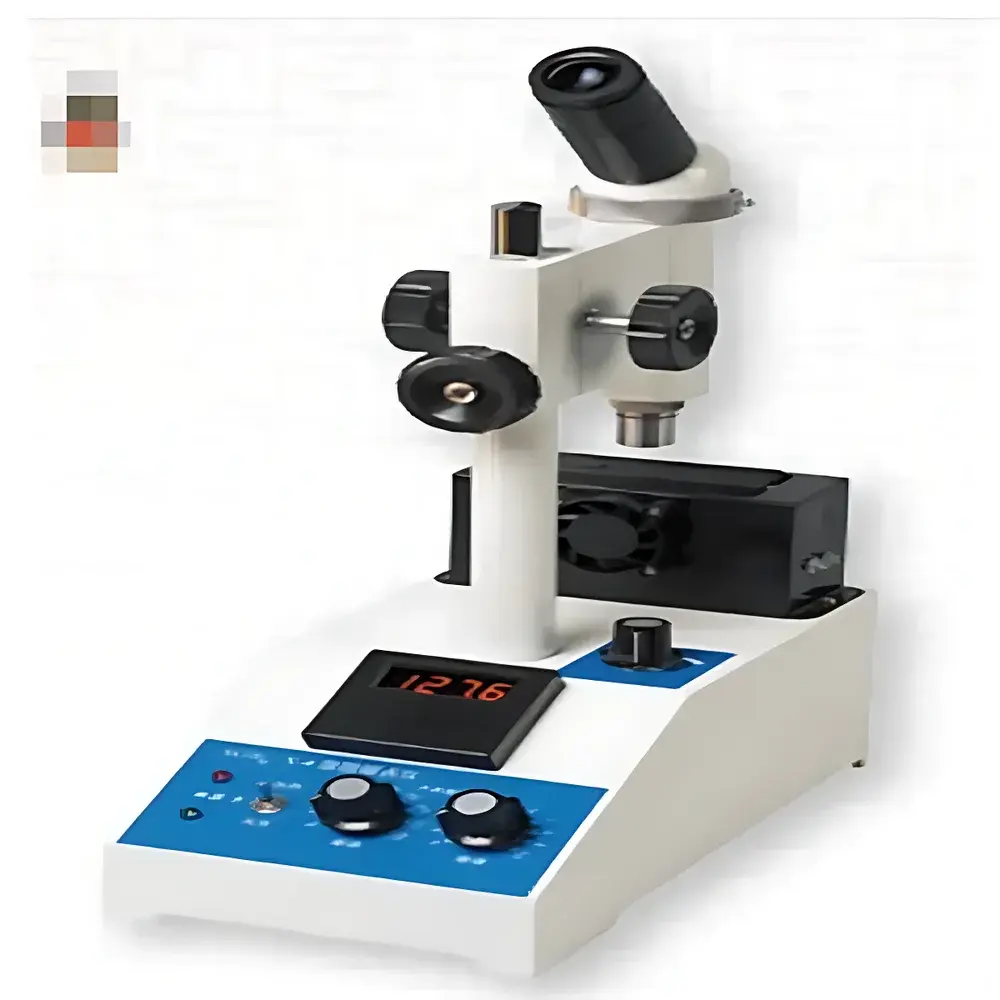
Shanghai Physical Optics SGW®X-4A Microscopic Melting Point Apparatus
| Brand | YDWG |
|---|---|
| Origin | Shanghai, China |
| Model | SGW®X-4A |
| Temperature Range | Ambient to 360 °C |
| Heating Rate | 0.5–20 °C/min |
| Temperature Repeatability | ±1 °C (<200 °C), ±2 °C (≥200 °C) |
| Temperature Accuracy | ±0.5 °C |
| Capillary Dimensions | OD Φ1.4 mm, ID Φ0.9 mm |
| Sample Capacity | 3 samples |
| Temperature Resolution | 0.1 °C |
Overview
The Shanghai Physical Optics SGW®X-4A Microscopic Melting Point Apparatus is a dual-mode thermal analysis instrument engineered for precise determination of melting onset, softening behavior, and phase transition characteristics of crystalline organic solids. It operates on the principle of controlled thermal ramping combined with real-time optical observation via an integrated high-magnification microscope—enabling simultaneous visual monitoring of morphological changes (e.g., birefringence loss, sintering, discoloration, and collapse) during heating. Unlike automated digital melting point analyzers that rely solely on photometric detection, the SGW®X-4A preserves full operator visibility throughout the entire thermal event, making it indispensable for method development, reference standard qualification, and failure analysis where visual corroboration is required by pharmacopoeial or internal SOP protocols.
Key Features
- Dual-sample introduction capability: supports both pharmacopeia-compliant capillary tube method (USP & EP Chapter 2.2.14) and hot-stage microscopy using standard glass slides and coverslips—ideal for opaque, deeply pigmented, or thermally unstable compounds that exhibit poor light transmission in capillaries.
- Digitally calibrated LED temperature display with 0.1 °C resolution and traceable accuracy of ±0.5 °C across the full operating range (ambient to 360 °C).
- Continuously adjustable heating rate from 0.5 to 20 °C/min, optimized for reproducible endpoint detection; recommended default setting is 1 °C/min per ICH Q5B and USP general chapter <741> guidance for polymorph screening and identity verification.
- Integrated thermal stage and microscope assembly ensures mechanical stability and minimal thermal lag between sensor and sample plane—critical for minimizing overshoot and improving repeatability (±1 °C below 200 °C; ±2 °C above).
- Three independent sample positions allow parallel testing under identical thermal conditions—enhancing throughput for batch release or comparative studies without sequential instrument reconfiguration.
- Rugged aluminum alloy housing and solid-state heating control provide long-term operational consistency, even under variable ambient laboratory conditions (compensated via manual potentiometer fine-tuning as described in user manual Section 4.2).
Sample Compatibility & Compliance
The SGW®X-4A accommodates a broad spectrum of thermally sensitive organic materials, including pharmaceutical intermediates, dyes, polymer additives, rubber accelerators, agrochemical actives, and fragrance compounds. Its open optical architecture permits direct observation of decomposition, charring, sublimation, or recrystallization phenomena preceding or following melting—supporting root-cause investigations aligned with ASTM E325-22 (Standard Practice for Performing Melting Point Determinations). Capillary dimensions (OD 1.4 mm, ID 0.9 mm) conform to ISO 11357-3 Annex A specifications for differential thermal analysis reference geometry. While not fully 21 CFR Part 11 compliant out-of-the-box, the instrument’s analog control architecture allows integration into GLP/GMP environments when paired with validated procedural controls, audit-trail documentation, and periodic calibration against NIST-traceable reference standards (e.g., indium, caffeine, phenacetin).
Software & Data Management
The SGW®X-4A is a standalone benchtop instrument with no embedded software or data logging capability. All measurements are recorded manually or via external documentation systems (e.g., electronic lab notebooks or LIMS). Temperature readings are displayed on a fixed-segment LED screen; no USB, RS-232, or Ethernet interface is provided. This design prioritizes operational simplicity, electromagnetic immunity, and regulatory transparency—eliminating concerns related to firmware validation, cybersecurity, or software lifecycle management. Users requiring automated data capture may integrate the unit with third-party thermal imaging cameras or digital microscopes equipped with timestamped video export functionality.
Applications
- Pharmaceutical QC/QA: Identity confirmation of active pharmaceutical ingredients (APIs) and excipients per USP <741>, EP 2.2.14, and JP 2.60.
- Polymer science: Detection of eutectic behavior, polymorphic transitions, and thermal degradation onset in specialty resins and elastomers.
- Chemical R&D: Screening of reaction purity, isolation of crystalline fractions, and optimization of recrystallization solvents.
- Academic teaching labs: Visual demonstration of solid-state phase transitions, kinetic vs. thermodynamic melting behavior, and impurity depression effects.
- Regulatory submissions: Generation of raw observational data supporting CMC sections in IND/NDAs, particularly for legacy compounds lacking DSC characterization history.
FAQ
What capillary tube specifications are compatible with the SGW®X-4A?
Standard thin-walled capillaries with outer diameter 1.4 mm and inner diameter 0.9 mm, as specified in USP <741> and EP 2.2.14.
Can the instrument be used for decomposition temperature assessment?
Yes—the real-time microscopic view enables identification of discoloration, bubbling, charring, or gas evolution prior to or concurrent with melting, supporting qualitative thermal stability evaluation.
Is calibration traceable to national standards?
Yes—calibration is performed using certified reference materials (e.g., NIST SRM 721b indium) and documented per ISO/IEC 17025 requirements when conducted by accredited service providers.
Does the unit meet GMP requirements for pharmaceutical manufacturing?
It satisfies core functional requirements for melting point testing under GMP; however, users must establish and validate associated procedures—including equipment qualification (IQ/OQ), calibration frequency, and analyst training—to ensure compliance with Annex 15 and FDA guidance.
How does ambient temperature affect heating rate stability?
At fixed potentiometer and band-switch settings, lower ambient temperatures reduce effective heating power due to increased thermal dissipation; minor recalibration is recommended after seasonal lab temperature shifts or relocation.



