
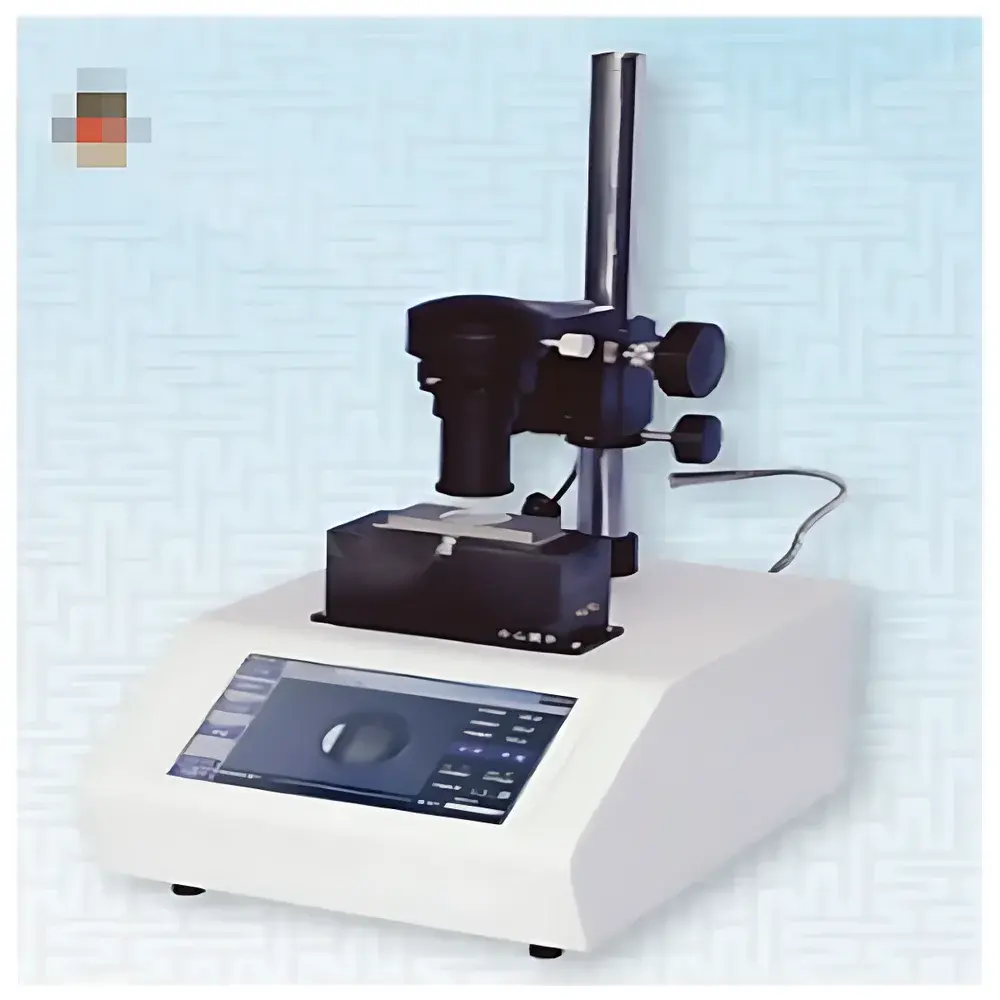
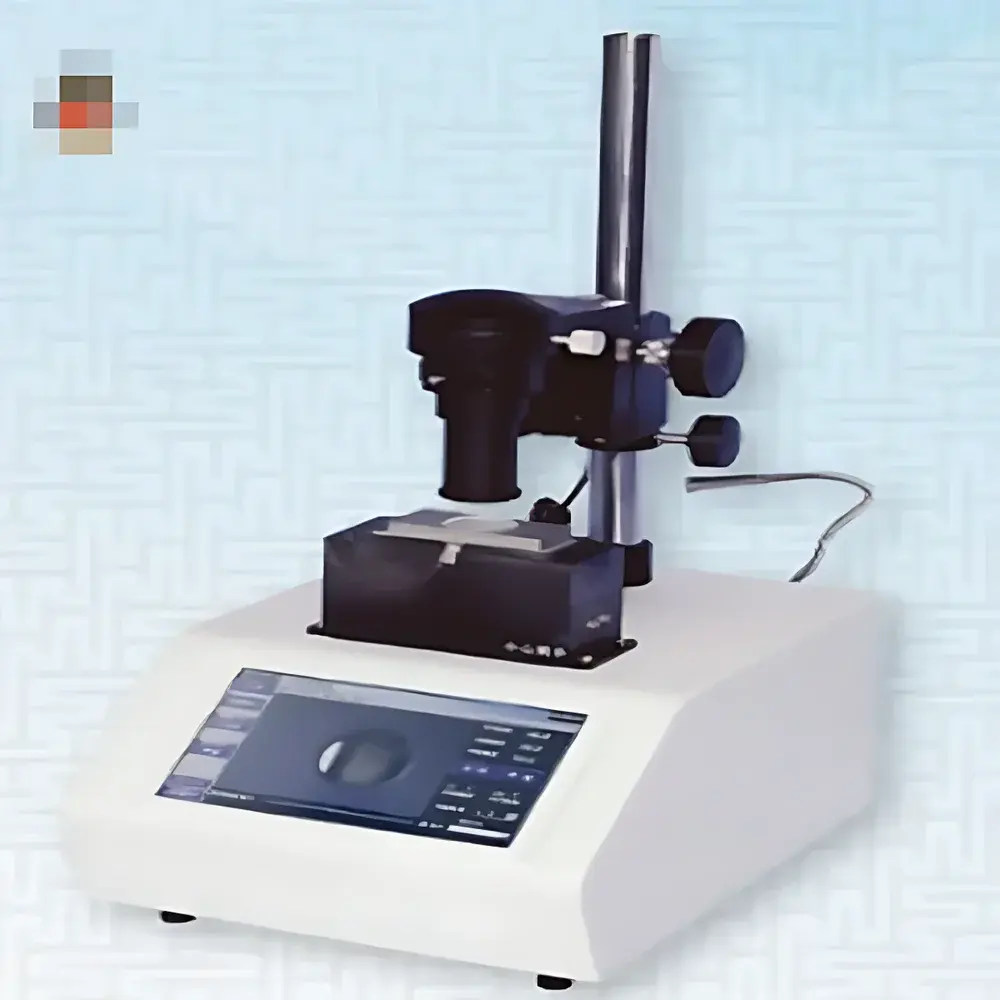
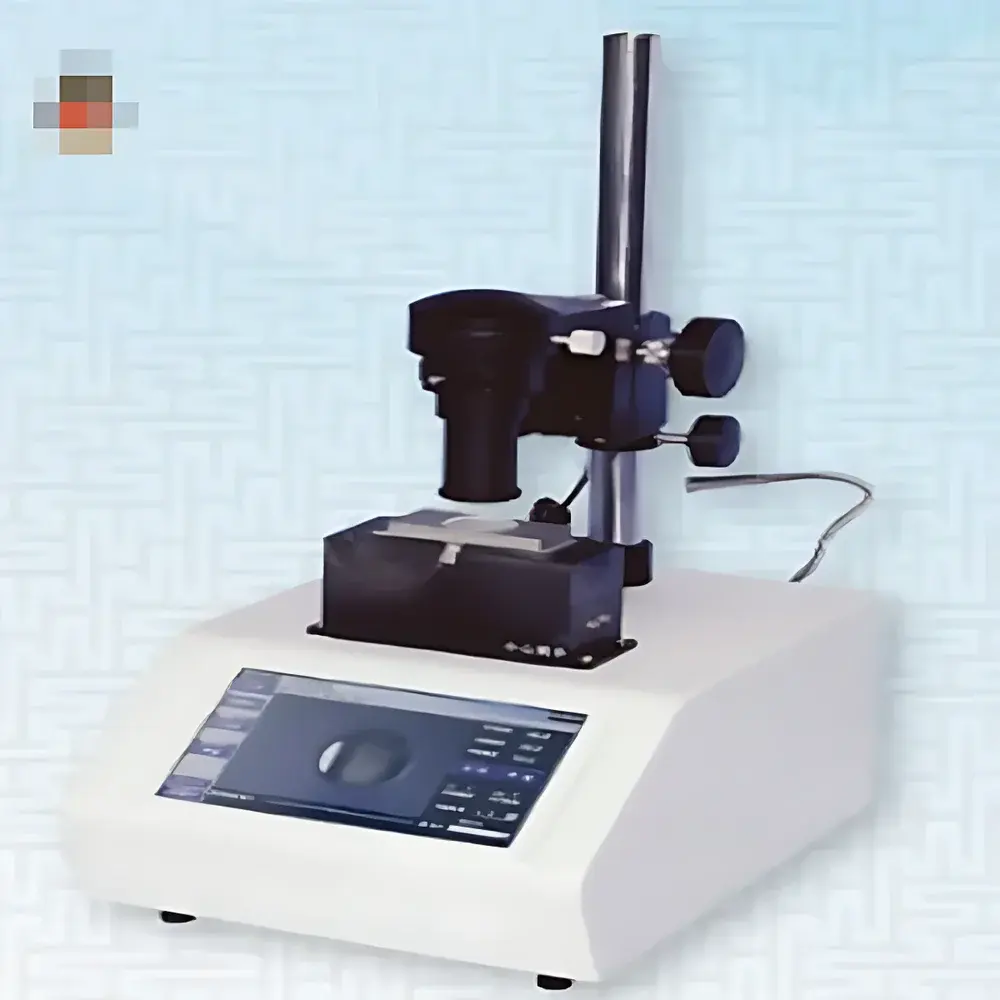
Shanghai Physical Optics SGW®X-5 Microscopic Melting Point Apparatus
| Brand | YDWG |
|---|---|
| Origin | Shanghai, China |
| Model | SGW®X-5 |
| Temperature Range | Ambient to 360 °C |
| Heating Rate | 0.1–20 °C/min |
| Temperature Repeatability | ±1 °C (<200 °C), ±2 °C (≥200 °C) |
| Temperature Accuracy | ±0.5 °C (<200 °C), ±1 °C (≥200 °C) |
| Capillary Dimensions | OD 1.4 mm, ID 0.9 mm |
| Sample Capacity | 3 samples |
| Temperature Resolution | 0.1 °C |
Overview
The Shanghai Physical Optics SGW®X-5 Microscopic Melting Point Apparatus is a precision thermal analysis instrument engineered for accurate, real-time observation and quantitative determination of solid-phase transition temperatures in crystalline organic compounds. It operates on the fundamental principle of optical detection of phase change under controlled thermal ramping—specifically, the onset and completion of melting as visualized through an integrated high-resolution microscope system. Unlike conventional capillary-based melt point testers, the SGW®X-5 integrates a calibrated heating stage with simultaneous microscopic imaging, enabling direct correlation between thermal profile and morphological evolution. This dual-mode capability supports both classical capillary tube analysis and hot-stage microscopy of bulk or thin-film specimens, making it suitable for routine QC testing, pharmaceutical polymorph screening, and academic research in physical chemistry and materials science.
Key Features
- PID-controlled heating system ensures stable, programmable temperature ramps from ambient to 360 °C at selectable rates (0.1–20 °C/min), minimizing thermal overshoot and improving reproducibility.
- Integrated digital microscope with color CMOS camera and 7-inch capacitive touchscreen display provides real-time, magnified visualization of sample morphology during heating—critical for identifying subtle events such as sintering, decomposition, or eutectic formation.
- Dual measurement modes: standard capillary method (using Φ1.4 mm OD / Φ0.9 mm ID glass tubes) and hot-stage method (for slides or pellets), accommodating diverse sample forms including powders, crystals, and amorphous solids.
- On-screen temperature annotation allows manual or semi-automated capture of characteristic thermal events—including initial melting (onset), clear point (end), and intermediate transitions—with timestamped storage of up to 100 test records internally.
- USB 2.0 interface enables data export to Windows-based PCs for post-processing; optional thermal printer support facilitates GLP-compliant hard-copy documentation.
- Thermal insulation hood minimizes convective interference and improves measurement stability in non-climate-controlled laboratory environments.
Sample Compatibility & Compliance
The SGW®X-5 accommodates a broad range of thermally stable organic and inorganic crystalline materials, including APIs, excipients, dyes, fragrances, and polymer additives. Its capillary geometry conforms to ASTM E324 and ISO 6178 standards for melting point determination by capillary method. While not certified for GMP production environments, the instrument’s data logging, user-accessible calibration verification, and traceable temperature control align with general laboratory practices under GLP frameworks. Temperature accuracy and repeatability specifications meet typical requirements for method validation per USP <741> and Ph. Eur. 2.2.17, supporting use in pre-formulation studies and identity/purity assessments.
Software & Data Management
Data acquisition and annotation are managed entirely through the embedded Linux-based firmware. Each test session stores raw temperature-time profiles alongside annotated event markers (e.g., “onset”, “clear”, “decomposition”). Internal memory retains up to 100 complete test histories with date/time stamps, operator ID fields, and environmental notes. Exported CSV files contain time-stamped temperature readings at 0.5-second intervals, compatible with common analytical software (e.g., OriginLab, MATLAB, Excel). No proprietary drivers or cloud services are required—data transfer occurs via standard mass-storage USB mode. Audit trail functionality is limited to manual log entries; for full 21 CFR Part 11 compliance, integration with external LIMS or ELN systems is recommended.
Applications
- Pharmaceutical quality control: Identity confirmation and purity estimation of active pharmaceutical ingredients (APIs) and intermediates.
- Polymorph screening: Differentiation of crystalline forms based on distinct melting behavior and thermal hysteresis.
- Organic synthesis validation: Verification of product identity and absence of low-melting impurities in reaction workups.
- Materials characterization: Thermal stability assessment of dyes, pigments, and specialty chemicals used in coatings and textiles.
- Academic instruction: Hands-on demonstration of solid-liquid phase equilibria, eutectic systems, and kinetic vs. thermodynamic melting behavior.
FAQ
What sample preparation methods are supported?
The SGW®X-5 supports both capillary tube loading (standard for powders and small crystals) and direct placement on a glass slide (hot-stage mode), ideal for larger crystals, films, or hygroscopic materials.
Can the instrument be calibrated using certified reference standards?
Yes—users may perform two-point calibration using NIST-traceable melting standards (e.g., indium, tin, bismuth) across the operating range; calibration offsets are stored in non-volatile memory.
Is external lighting required for optimal image clarity?
An optional LED auxiliary lamp is provided for capillary mode; ambient light reduction is recommended during hot-stage observation to enhance contrast.
How is temperature uniformity ensured across the heating stage?
The aluminum alloy heating block features optimized thermal mass and symmetrical heater element layout, validated to maintain ≤±0.8 °C spatial gradient across the 12 mm observation zone at steady state.
Does the device comply with international electrical safety standards?
It meets IEC 61010-1:2010 for laboratory electrical equipment, with CE marking for EMC and low-voltage directive compliance.



