
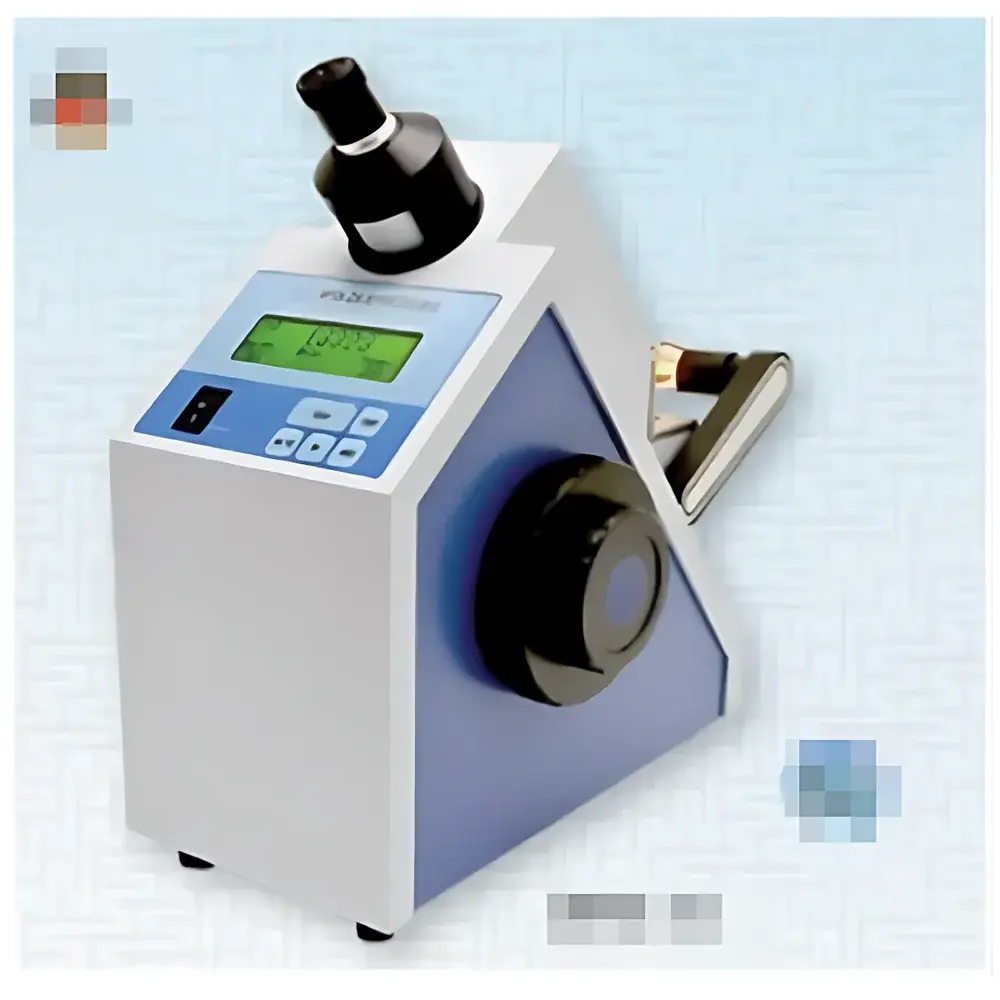
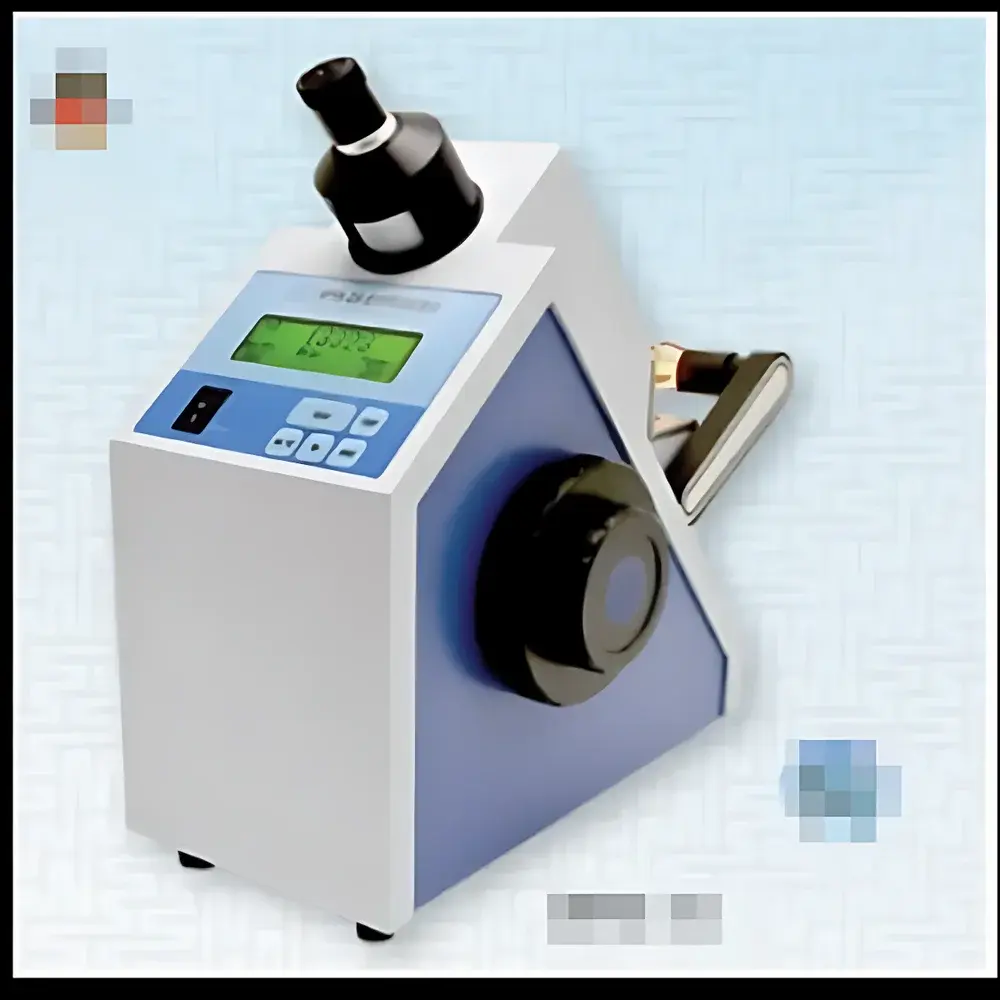
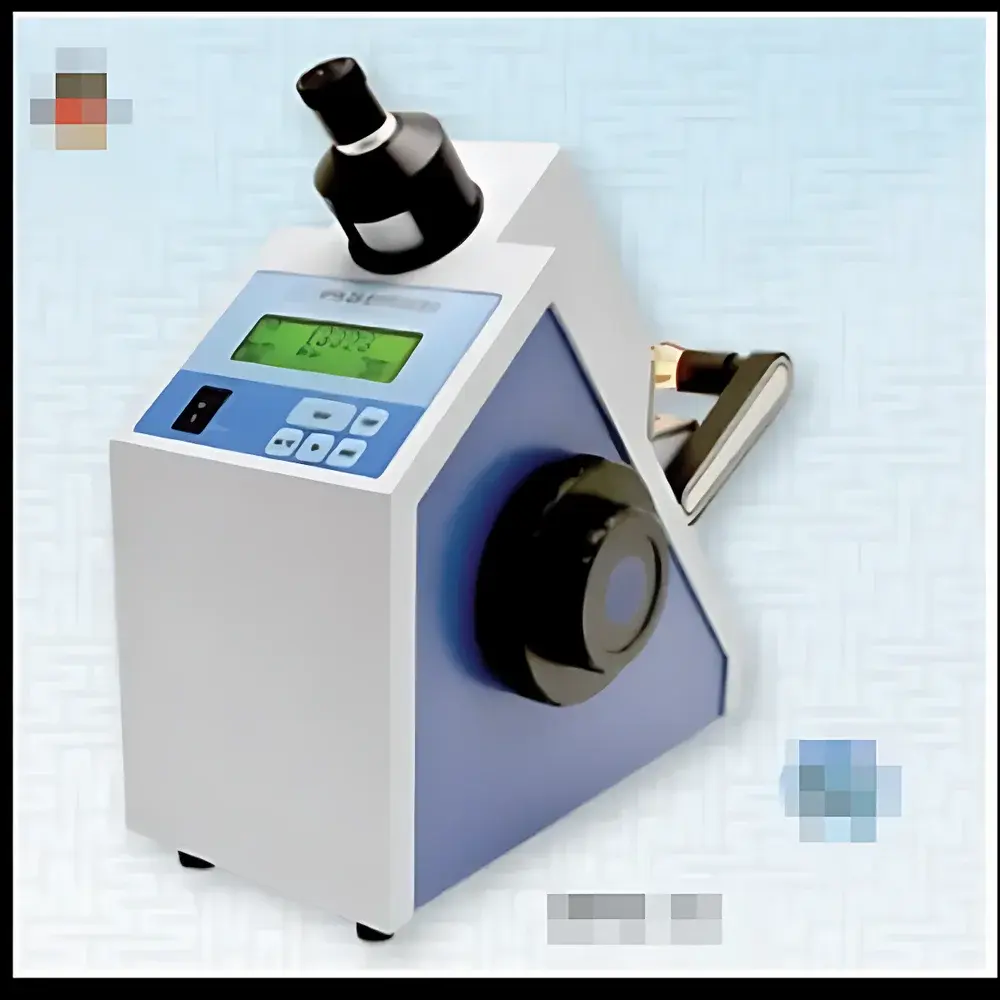
Shanghai Physical Optics WYA-2S Digital Abbe Refractometer
| Brand | YDWG (Yidian Wuguang) |
|---|---|
| Origin | Shanghai, China |
| Model | WYA-2S |
| Product Type | Benchtop Digital Abbe Refractometer |
| Temperature Control | Yes (Peltier-assisted, ±0.1 °C stability) |
| Digital Display | Yes (LCD, 4-digit resolution) |
| Measurement Range | n<sub>D</sub> = 1.3330–1.3900 |
| Brix | 0–35% |
| Accuracy | ±0.0003 in refractive index |
| Wavelength | 589.3 nm (Na-D line) |
| Prism Material | Hardened optical glass (BK7-type, chemically resistant and scratch-resistant) |
| Sample Volume | < 0.5 mL |
| Calibration Standards | Distilled water (n<sub>D</sub> = 1.3330 at 20 °C) or certified NIST-traceable glass reference blocks |
Overview
The Shanghai Physical Optics WYA-2S Digital Abbe Refractometer is a precision benchtop instrument engineered for accurate, repeatable determination of the refractive index (nD) of transparent and semi-transparent liquids and solids, operating on the fundamental principle of critical angle measurement. Utilizing a monochromatic sodium D-line light source (589.3 nm), the instrument projects collimated light onto the interface between a high-stability hardened BK7 prism and the sample. The resulting total internal reflection boundary—observed via an integrated telescope and dispersion-compensated ocular system—is precisely captured and converted into angular data by a high-resolution encoder. This angular signal undergoes real-time digitization and linear calibration mapping to yield direct digital readouts of nD with 0.0001 resolution and Brix concentration (0–35%) based on the ICUMSA 1974 sucrose conversion algorithm. Built-in Peltier temperature control maintains prism-sample thermal equilibrium within ±0.1 °C, enabling automatic temperature compensation per ISO 21748 and ASTM D1218 standards—critical for traceable, inter-laboratory comparable results in regulated environments.
Key Features
- Hardened optical glass prism with enhanced chemical resistance and surface durability for long-term stability in aggressive solvents (e.g., ethanol, acetone, organic acids)
- Integrated Peltier-based temperature regulation (15–30 °C range) with digital sensor feedback and auto-compensation for nD and Brix values
- High-contrast LCD display showing simultaneous nD, Brix (%), and sample temperature (°C) with 0.1 °C resolution
- Optimized optical path design minimizing chromatic aberration and parallax error; includes built-in dispersion correction lens assembly
- Minimal sample requirement (< 0.5 mL) — suitable for high-value, low-volume samples including pharmaceutical intermediates and natural extracts
- Manual fine-tuning capability via calibrated dispersion adjustment screw for periodic verification against reference standards
Sample Compatibility & Compliance
The WYA-2S accommodates a broad spectrum of homogeneous liquid samples—including aqueous sugar solutions, hydrocarbon fractions, glycerol/water mixtures, essential oils, and polymerizable monomers—as well as polished solid specimens (e.g., optical glasses, plastics) when coupled with immersion liquid. It complies with core international test methodologies: ISO 21748 (repeatability and reproducibility of refractive index measurements), ASTM D1218 (standard test method for refractive index of hydrocarbon liquids), and ICUMSA Method GS2/3-14 (for sucrose Brix determination). Its temperature-controlled operation supports GLP-compliant workflows, and the digital output architecture allows integration into laboratory information management systems (LIMS) for audit-trail-ready documentation.
Software & Data Management
While the WYA-2S operates as a standalone instrument with no embedded PC software, its digital output interface (RS-232 port, optional USB adapter) enables seamless data logging into third-party acquisition platforms compliant with FDA 21 CFR Part 11 requirements. Timestamped measurement records—including nD, Brix, temperature, operator ID, and calibration status—can be exported in CSV or TXT format. Internal memory retains up to 100 recent measurements with full traceability. For regulatory validation, the instrument supports documented calibration procedures using NIST-traceable water (nD = 1.3330 at 20 °C) or certified glass standards (e.g., Schott RG10, nD = 1.4736), with calibration logs stored externally per ISO/IEC 17025 clause 7.7.
Applications
- Quality control of sucrose concentration in beverage, confectionery, and fruit juice production per ICUMSA guidelines
- Concentration monitoring of ethylene glycol, propylene glycol, and urea solutions in antifreeze and de-icing formulations
- Refractive index verification of solvents (e.g., toluene, xylene, THF) in petrochemical QC labs
- Batch release testing of active pharmaceutical ingredients (APIs) and excipients where nD serves as identity or purity indicator (USP )
- Research-grade characterization of colloidal dispersions, ionic liquids, and biopolymer solutions under controlled thermal conditions
- Educational use in university physics and analytical chemistry laboratories for teaching optical metrology fundamentals
FAQ
What is the standard wavelength used for nD measurement on the WYA-2S?
The instrument uses a stabilized 589.3 nm sodium D-line LED source, conforming to the internationally accepted definition of nD.
Can the WYA-2S measure samples with suspended particles or high turbidity?
No — it requires optically homogeneous, transparent, or semi-transparent samples; particulates or air bubbles will distort the critical angle boundary and invalidate results.
How often should calibration be performed?
Daily verification with distilled water is recommended before first use; full recalibration with certified reference materials is required after maintenance, relocation, or if drift exceeds ±0.0003 nD.
Is temperature compensation applied automatically during Brix measurement?
Yes — the Peltier-regulated prism temperature is continuously monitored, and the ICUMSA 1974 algorithm applies real-time correction to reported Brix values.
Does the instrument support GLP/GMP documentation requirements?
When paired with validated data capture software and external audit-log storage, the WYA-2S meets foundational GLP/GMP data integrity expectations for traceability, calibration history, and operator accountability.




