
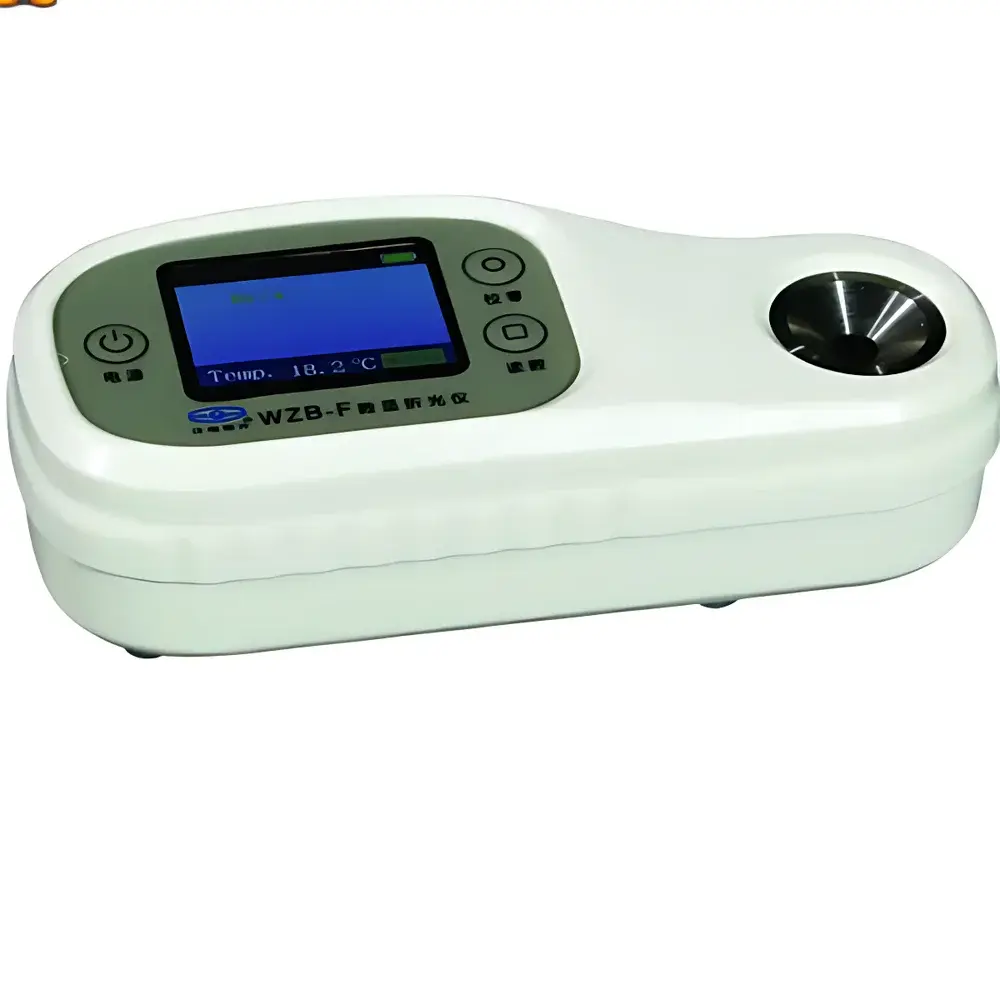
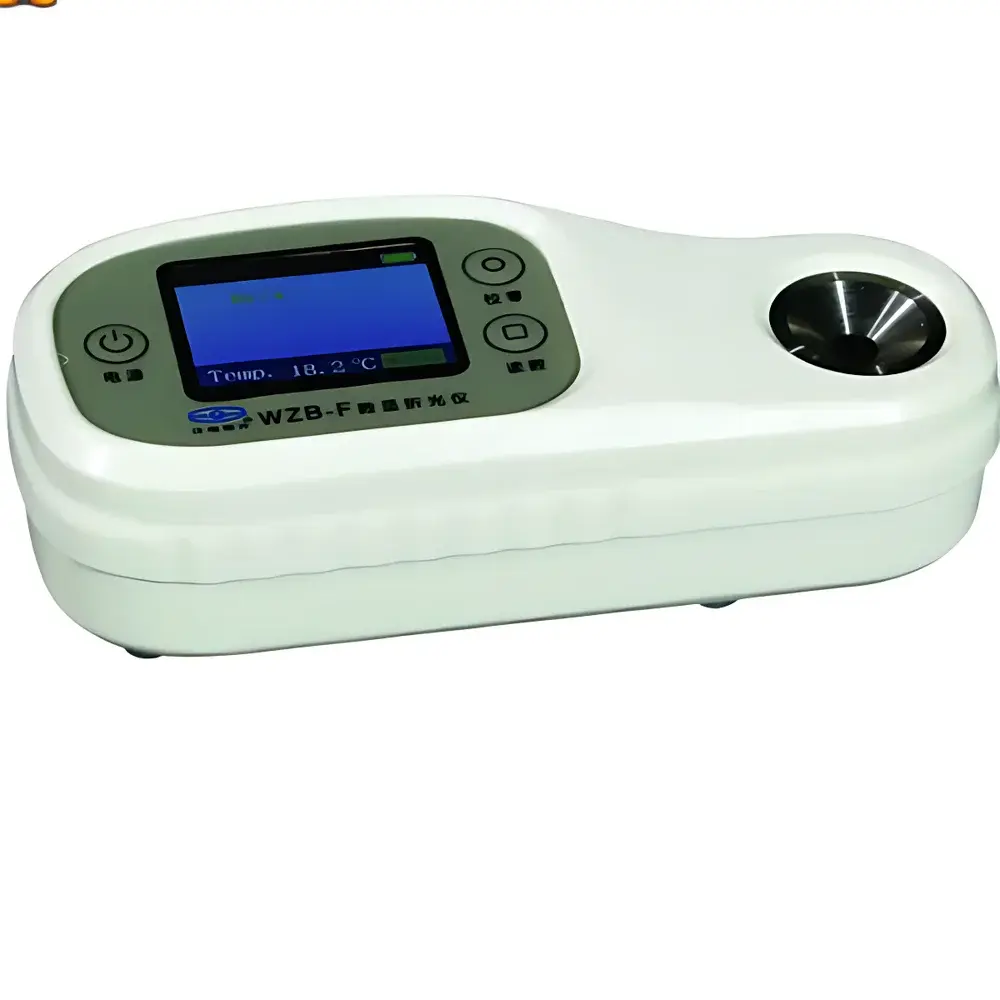
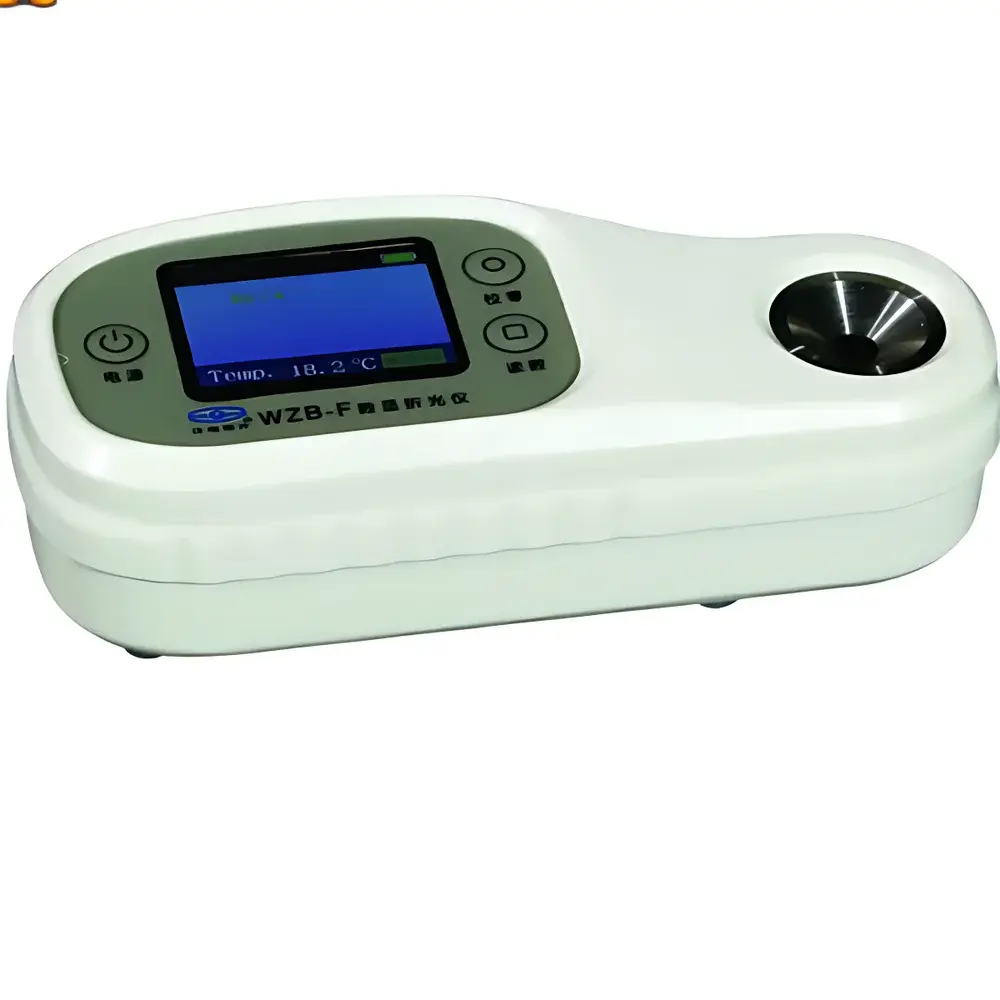
Shanghai Physical Optics WZB-F(S1) Portable Digital Refractometer
| Brand | YDWG (Shanghai Physical Optics) |
|---|---|
| Origin | Shanghai, China |
| Model | WZB-F(S1) |
| Type | Handheld Refractometer |
| Temperature Control | Yes |
| Digital Display | Yes |
| Operating Temperature Range | 0–40 °C (30–104 °F) |
| Temperature Accuracy | ±0.5 °C (±1 °F) |
| Temperature Compensation Range | 5–40 °C (41–104 °F) |
| Sample Volume | 0.3 mL |
| Dimensions | 145 × 67 × 38 mm |
| Net Weight | 185 g |
Overview
The Shanghai Physical Optics WZB-F(S1) Portable Digital Refractometer is an optical instrument engineered for rapid, field-deployable measurement of refractive index (nD) in transparent or semi-transparent liquid samples. Based on the principle of total internal reflection at the prism–sample interface, it determines refractive index with high reproducibility across a calibrated scale traceable to aqueous standards. Unlike traditional analog Abbe refractometers, the WZB-F(S1) integrates a precision temperature-sensing thermistor adjacent to the sapphire measuring prism, enabling real-time automatic temperature compensation (ATC) within 5–40 °C. This eliminates manual correction and ensures compliance with standard reference conditions (e.g., 20 °C per ISO 21748 and ASTM D1218). Its compact, IP-rated housing—featuring sealed optical pathways and splash-resistant construction—supports operation in non-laboratory environments including food processing lines, aquaculture sites, orchards, and quality control checkpoints.
Key Features
- High-contrast color LCD display with intuitive menu navigation and multi-parameter readout (refractive index, Brix %, salinity %, specific gravity)
- Integrated ATC system with ±0.5 °C accuracy, compliant with ISO 21748 temperature reporting requirements
- Optical path built around a wear-resistant sapphire prism (Vickers hardness >2000 HV), ensuring long-term calibration stability
- Minimal sample requirement of only 0.3 mL—ideal for precious or low-volume samples
- Zero-point calibration function using deionized water (nD = 1.3330 at 20 °C), supporting GLP-aligned verification protocols
- Battery-powered operation (4 × AAA, ~10,000 measurements per set) with auto-power-off and sleep-mode retention
- Ergonomic, one-handed design (145 × 67 × 38 mm; 185 g) optimized for extended field use
Sample Compatibility & Compliance
The WZB-F(S1) is validated for aqueous solutions including sucrose, sodium chloride, glycerol, ethylene glycol, and fruit juice extracts. It is not suitable for strongly acidic, alkaline, or volatile organic solvents that may etch or swell the prism sealant. All measurements conform to the fundamental definition of refractive index per ISO 17025-accredited metrology practice. The instrument meets CE marking requirements for electromagnetic compatibility (EN 61326-1) and environmental robustness (IEC 60529 IPX4). While not FDA 21 CFR Part 11–certified as a standalone system, its calibration log and zero-check functionality support audit-ready documentation under GMP/GLP frameworks when paired with lab-controlled SOPs.
Software & Data Management
The WZB-F(S1) operates as a self-contained, embedded-system device with no external software dependency. All calibration events—including timestamped zero-point verification—are retained in non-volatile memory for up to 60 seconds post-calibration and can be recalled via the display interface. No proprietary drivers, USB connectivity, or cloud synchronization are implemented, minimizing cybersecurity exposure and ensuring uninterrupted operation in regulated or offline environments. For laboratory integration, users may manually record readings into LIMS or Excel using standardized templates aligned with ISO/IEC 17025 data integrity guidelines.
Applications
- Food & Beverage: Rapid Brix quantification in fruit juices, syrups, honey, and soft drinks per AOAC 932.12 and ICUMSA methods
- Aquaculture & Marine Science: Salinity monitoring in hatcheries and recirculating aquaculture systems (RAS) using NaCl equivalence curves
- Agriculture: Maturity assessment of grapes, tomatoes, and citrus via soluble solids content correlation
- Chemical Manufacturing: Concentration verification of glycol-based antifreeze, cleaning agents, and coolant formulations
- Education & Field Training: Undergraduate optics labs and extension service demonstrations requiring portable, low-maintenance instrumentation
FAQ
How often should zero-point calibration be performed?
Calibration is recommended before each measurement session or after ambient temperature shifts exceeding ±3 °C. Daily verification against certified water standard is advised for QC-critical applications.
Can the instrument measure viscous or particulate-containing samples?
No. Suspended solids, air bubbles, or high-viscosity fluids (>100 mPa·s) will scatter light and impair prism contact—leading to erroneous nD values. Filtration or centrifugation is required prior to analysis.
Is the sapphire prism replaceable by the user?
The prism is factory-integrated and not field-replaceable. Any physical damage or persistent haze requires return to Shanghai Physical Optics authorized service centers.
Does the device comply with USP or Ph. Eur. 2.2.22?
While it supports refractive index determination per general chapter principles, it lacks automated validation reports, electronic audit trails, or certified reference material traceability required for full pharmacopoeial compliance.
What maintenance is required to ensure long-term accuracy?
Wipe the prism surface with lens tissue and reagent-grade isopropanol after each use; avoid abrasive cleaners or compressed air. Store in a dry, shaded location with silica gel desiccant to prevent condensation-related drift.





