
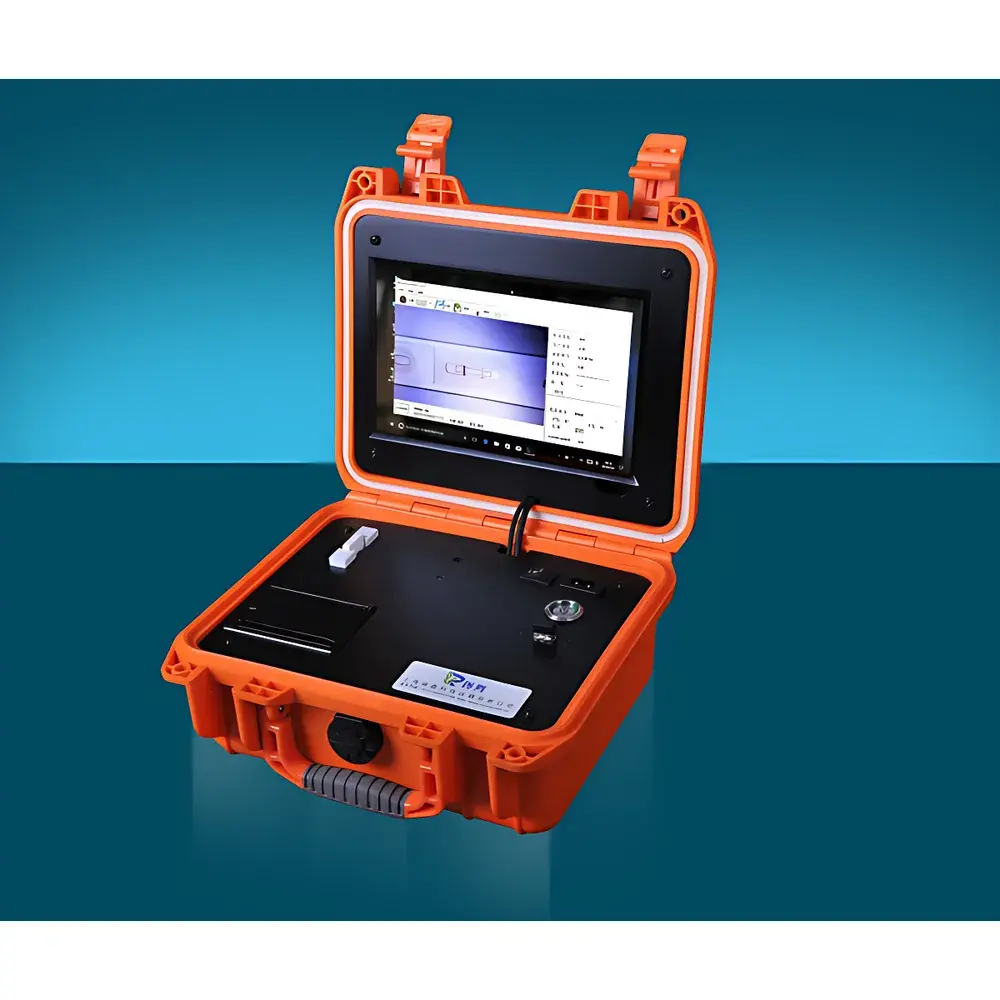
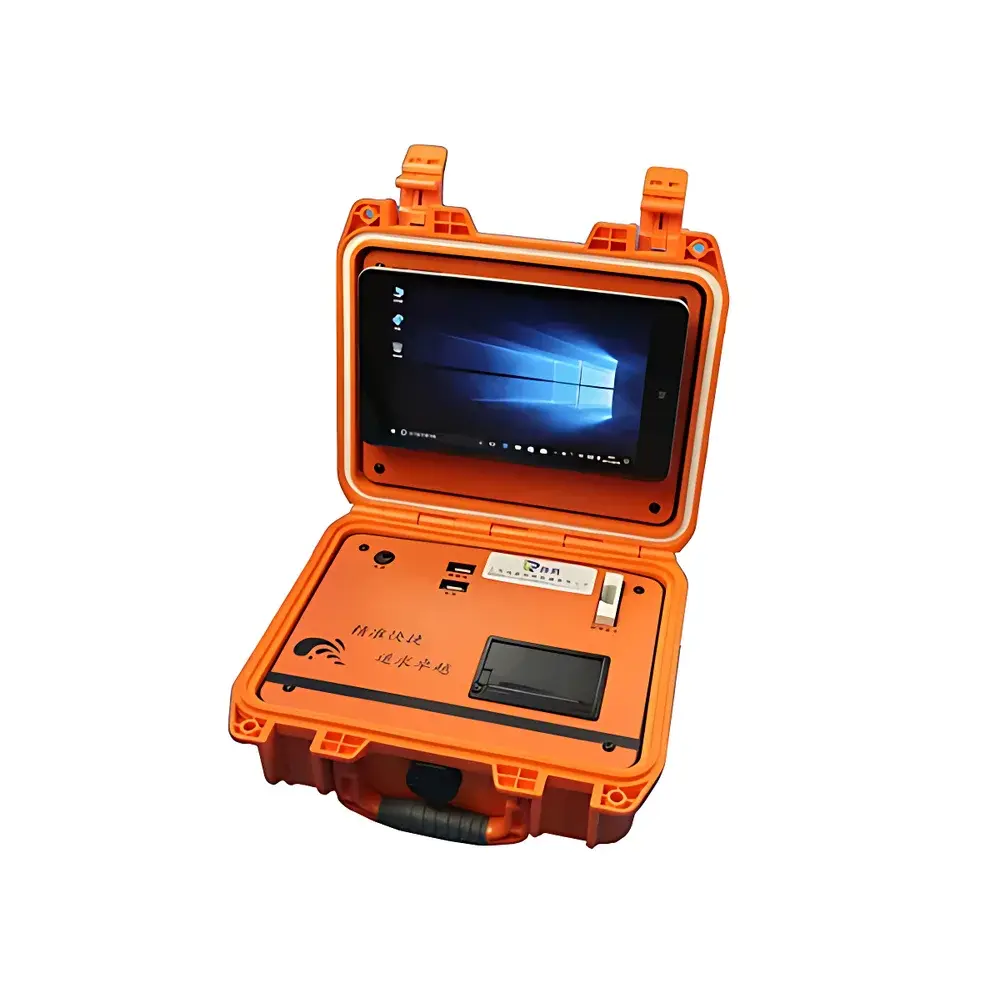
Shanghai Ruixin JT-102M Deoxynivalenol (DON) Rapid Immunoassay Analyzer
| Brand | Ruixin |
|---|---|
| Origin | Shanghai, China |
| Model | JT-102M |
| Detection Principle | Colloidal Gold Immunochromatographic Assay (CGIA) with CCD-based quantitative optical densitometry |
| Wavelength Range | 380–680 nm |
| Detection Time | ≤8 min per sample |
| Repeatability (CV) | ≤1% (standard test strip) |
| Inter-batch Variation | <3% |
| Detection Channels | Single-channel |
| Quantitative Output | T/C ratio, colorimetric intensity, line intensity calibration |
| LOD for DON | 200 ppb |
| Quantitative Range for DON | 200–8000 ppb |
| Data Storage | ≥100,000 records (32 GB internal SSD) |
| Connectivity | Wi-Fi 5 (802.11ac), Bluetooth 4.2, USB 2.0, optional 4G LTE module |
| Power Supply | AC 220 V / DC 5 V / Internal Li-ion battery (≥24 h standby) |
| Display | 8.1″ capacitive touchscreen (1280×800), Windows OS |
| Processor | Intel quad-core (14 nm), 2 GB RAM, integrated graphics |
| Compliance | Designed for GLP-aligned workflows |
Overview
The Shanghai Ruixin JT-102M Deoxynivalenol (DON) Rapid Immunoassay Analyzer is a dedicated, field-deployable optical quantification system engineered for the accurate, standardized interpretation of colloidal gold immunochromatographic test strips. It operates on the principle of reflectance photometry—measuring optical density at discrete wavelengths (380–680 nm) across the control (C) and test (T) lines of lateral flow assays. Unlike qualitative visual readouts, the JT-102M employs a high-resolution CCD sensor coupled with proprietary image registration algorithms to auto-correct strip misalignment, normalize background interference, and compute calibrated T/C ratios with traceable linearity. This enables reliable semi-quantitative to quantitative analysis of mycotoxins—including deoxynivalenol (DON), aflatoxin B1, zearalenone, fumonisin B1, T-2 toxin, and aflatoxin M1—in complex matrices such as cereal grains, animal feed, edible oils, traditional Chinese medicinal herbs, and condiments. Its design prioritizes operational robustness in non-laboratory environments: grain elevators, procurement stations, cold-storage facilities, and mobile food safety inspection units.
Key Features
- High-fidelity CCD imaging system with auto-focus and geometric correction—ensures precise localization and pixel-intensity mapping of C/T lines even under suboptimal strip placement.
- Integrated Windows-based computing platform (Intel quad-core, 2 GB RAM, 32 GB SSD) enabling local data processing, report generation, and firmware updates without external PC dependency.
- Multi-modal data output: T/C ratio, absolute colorimetric intensity (RGB channel decomposition), and binary pass/fail classification—all traceable to NIST-traceable reference strips.
- On-device data management: Stores full-resolution strip images, raw intensity values, metadata (operator ID, timestamp, GPS coordinates), and final concentration estimates—each record cryptographically timestamped.
- Secure wireless interoperability: Dual-band Wi-Fi and Bluetooth 4.2 support encrypted transmission to cloud-hosted food safety surveillance platforms compliant with ISO/IEC 27001 data handling protocols.
- Regulatory-ready architecture: Supports user authentication, electronic signatures, and audit-log generation aligned with FDA 21 CFR Part 11 Annex 11 expectations for electronic records in food quality assurance.
Sample Compatibility & Compliance
The JT-102M is validated for use with commercially available colloidal gold lateral flow assays certified for mycotoxin detection in accordance with national and international standards—including GB 5009.111-2023 (China), AOAC Official Method 2012.02 (DON in wheat), and EN 14123-2:2021 (zearalenone in maize). Sample preparation follows standardized extraction protocols (e.g., 70% methanol/water for cereals; acetonitrile/water for oilseed meals) prior to centrifugation and dilution. The instrument itself does not perform extraction but interfaces seamlessly with common ancillary lab equipment—mini-centrifuges, vortex mixers, analytical balances, and pipettes—as listed in the standard configuration. All hardware components meet IEC 61010-1 safety requirements for electrical equipment used in measurement, control, and laboratory applications.
Software & Data Management
The embedded software provides a dual-language (English/Chinese) GUI with role-based access control (administrator, technician, auditor). It features built-in calibration verification using reference test strips, automatic drift compensation via daily blank scans, and configurable reporting templates compliant with HACCP documentation standards. Raw image files are saved in lossless PNG format; quantitative results export as CSV or PDF with embedded digital signatures. Cloud synchronization uses TLS 1.2 encryption and supports RESTful API integration with enterprise LIMS or government food safety monitoring systems (e.g., China’s National Food Safety Risk Monitoring Platform). Firmware updates are delivered over-the-air and digitally signed to ensure integrity.
Applications
- On-site screening of harvested wheat, barley, and corn at grain receiving points to enforce DON action limits (e.g., EU Regulation (EC) No 1881/2006: 1250 µg/kg for unprocessed cereals).
- Quality control in compound feed mills verifying compliance with EC Directive 2006/576/EC thresholds for multiple mycotoxins.
- Batch release testing of herbal raw materials in GMP-certified TCM manufacturing facilities.
- Regulatory surveillance by provincial food and drug administrations conducting routine market sampling.
- Research applications requiring rapid comparative analysis of mycotoxin prevalence across geographic regions or storage conditions.
FAQ
What mycotoxins can the JT-102M quantify beyond deoxynivalenol?
It supports validated test strips for aflatoxin B1 (LOD 0.5 ppb), zearalenone (LOD 20 ppb), fumonisin B1 (LOD 50 ppb), T-2 toxin (LOD 20 ppb), and aflatoxin M1 (LOD 0.5 ppb) — all using the same optical engine and software interface.
Is the instrument suitable for GLP-compliant laboratories?
Yes — when deployed with defined SOPs, user training records, and periodic performance verification using control strips, it meets core GLP criteria for instrument qualification (IQ/OQ) and data integrity per OECD Principles of GLP.
Does the device require annual recalibration by the manufacturer?
No — it performs self-diagnostic checks at startup and includes user-executable optical validation using supplied reference strips; formal recalibration is recommended every 12 months or after 10,000 measurements.
Can raw image data be exported for third-party reanalysis?
Yes — full-resolution PNG images of each scanned strip, along with metadata JSON files, are exportable via USB or encrypted cloud link for independent algorithmic reprocessing.
What power options enable true field portability?
The integrated lithium-ion battery supports ≥24 hours of standby and >120 consecutive tests per charge; DC 5 V input allows operation from portable power banks or vehicle adapters.





