
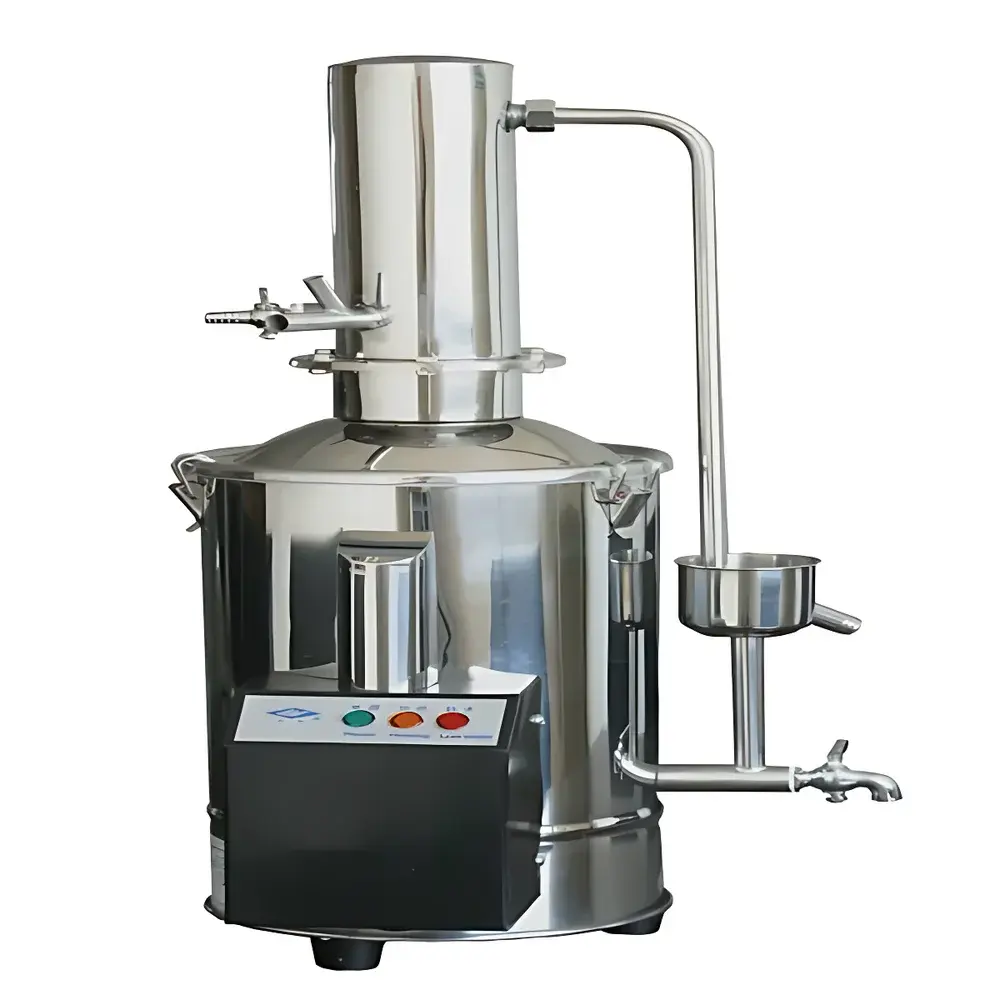
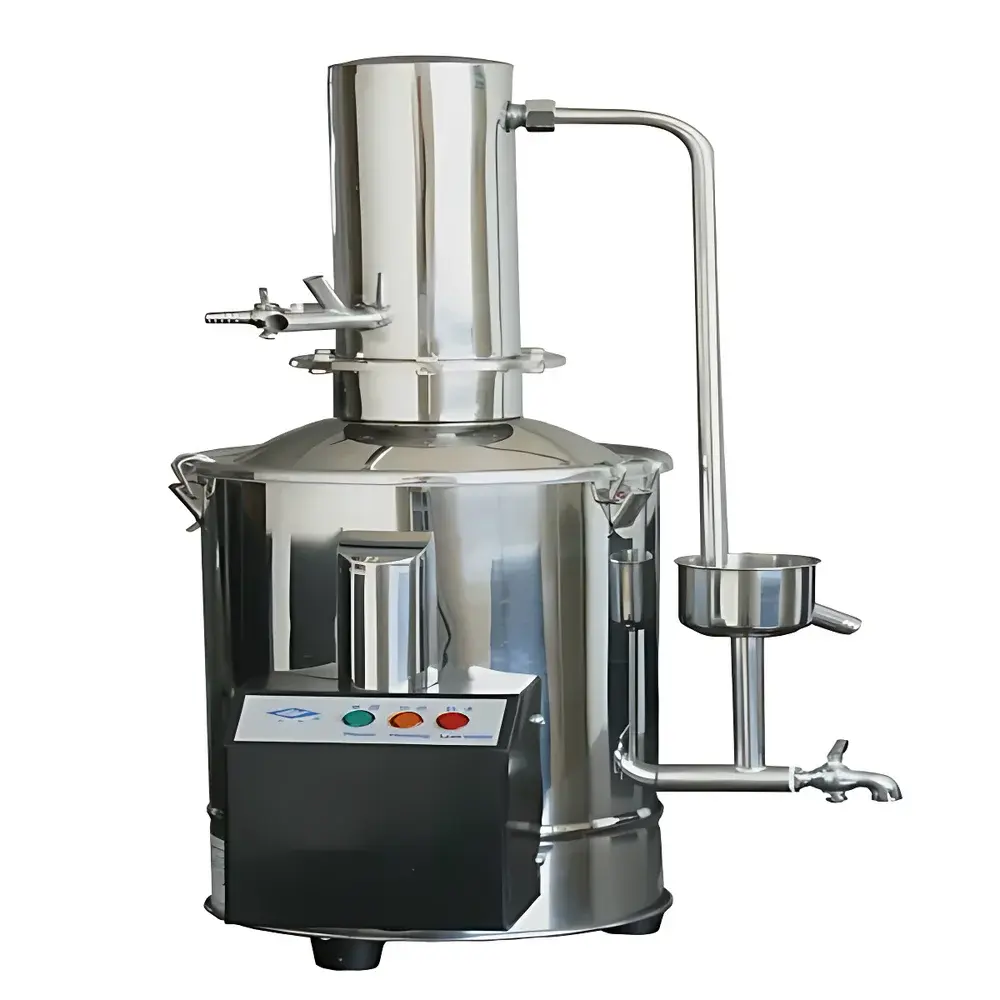
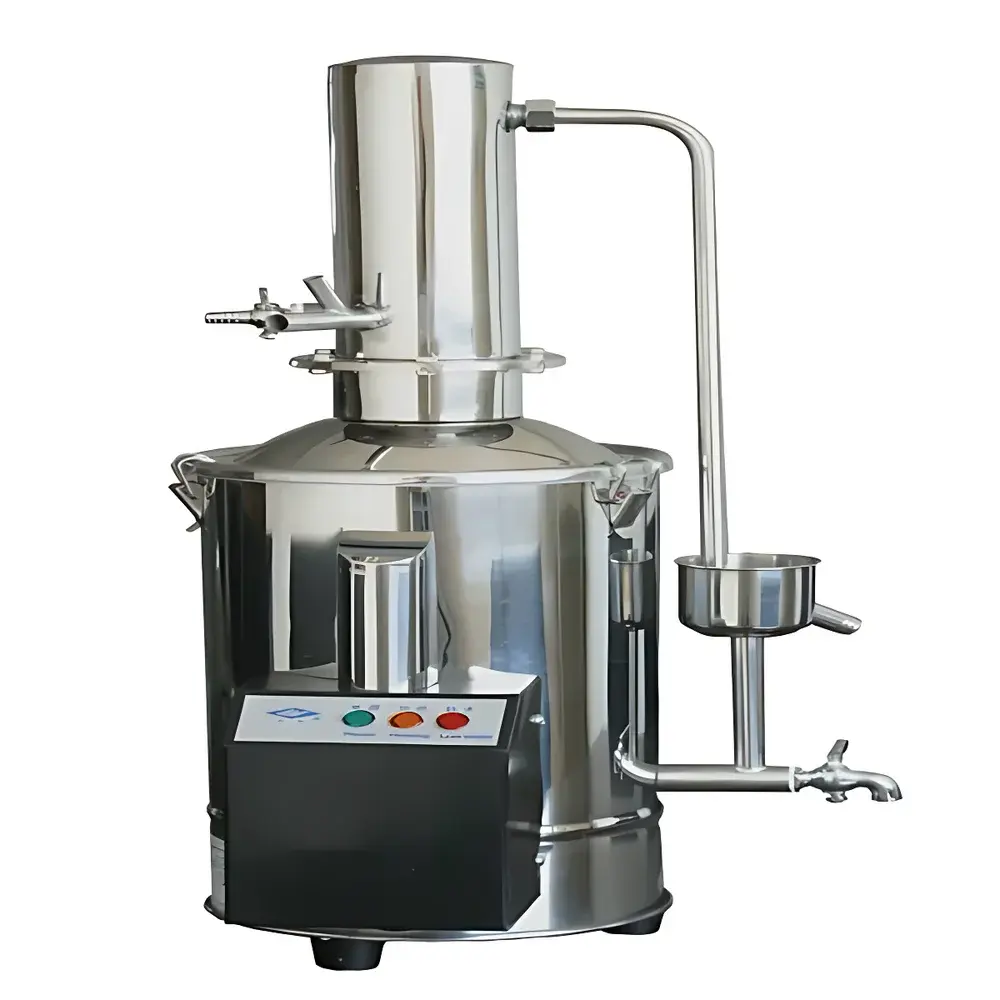
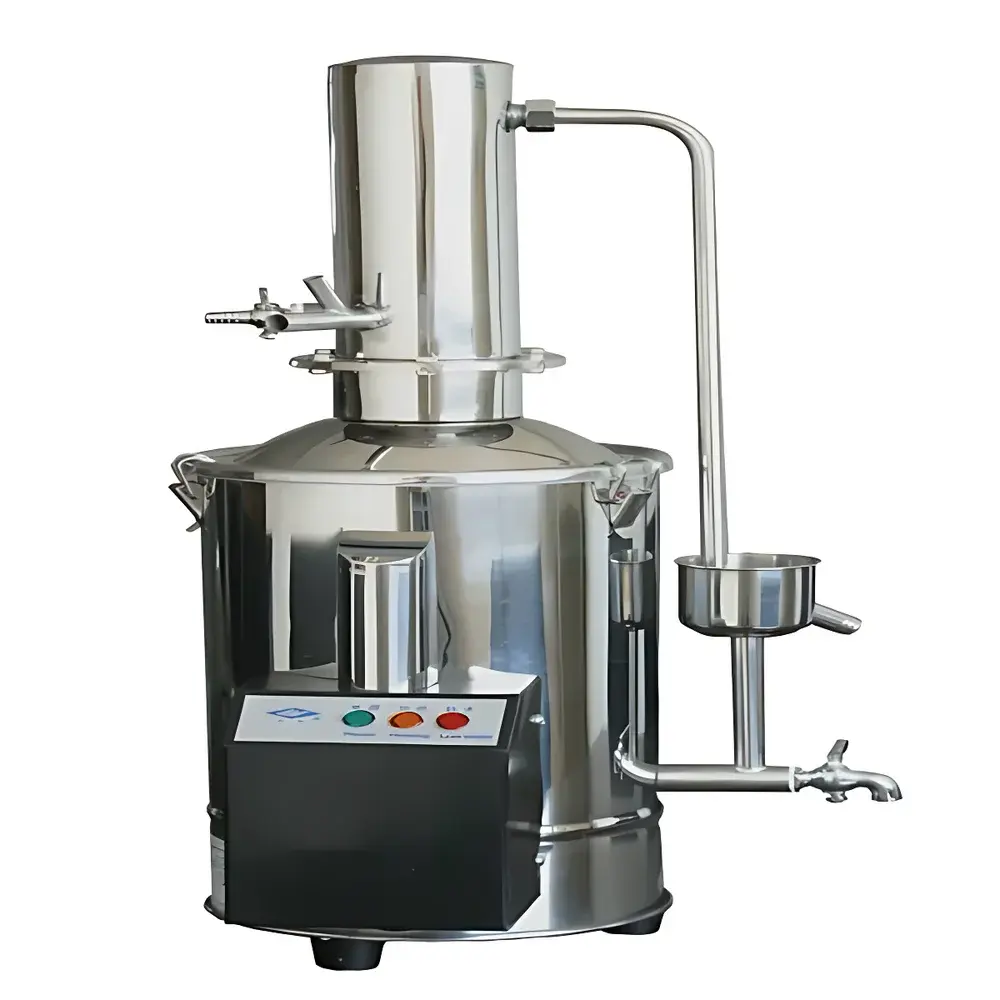
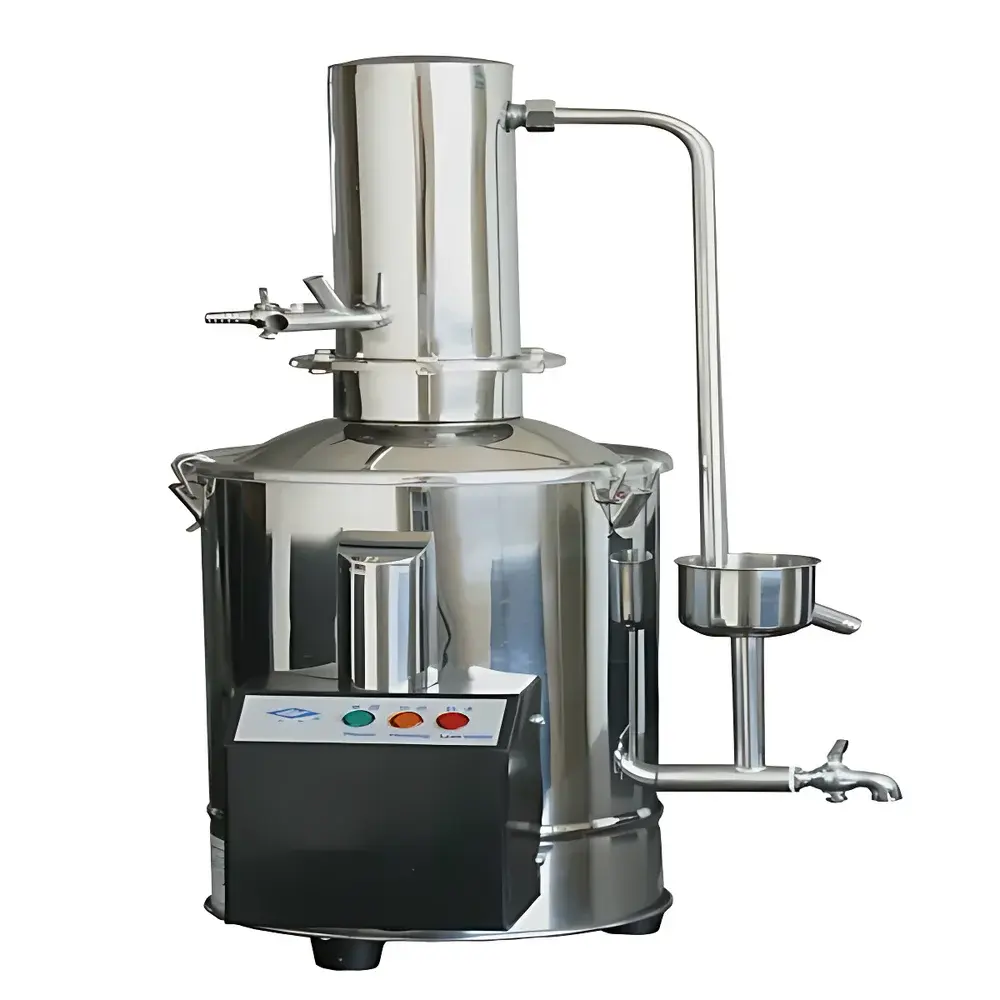
Shanghai Shen DZ5Z Stainless Steel Electrically Heated Distillation Apparatus
| Brand | Shanghai Shen |
|---|---|
| Origin | Shanghai, China |
| Model | DZ5Z |
| Instrument Type | Sub-boiling Distiller |
| Heating Method | Electric (Stainless Steel Immersion Heater) |
| Cooling Method | Tap Water Circulation |
| Distillation Rate | 5 L/h |
| Warm-up Time | 20–30 min |
| Endpoint Control | Manual |
| Power Supply | AC 220 V / 50 Hz |
| Rated Power | 4.5 kW |
| Safety Feature | Automatic Dry-run Protection (Water-Level-Dependent Power Cutoff) |
| Condenser Type | Coiled Tube Design |
| Water Recovery | Condensate Return to Evaporation Chamber |
| Drain Valve | Integrated Concentrate Drain |
| Construction Material | Full 304 Stainless Steel Body and Components |
| Net Weight | 7 kg |
| Packing Dimensions | 35 × 34 × 78 cm |
Overview
The Shanghai Shen DZ5Z Stainless Steel Electrically Heated Distillation Apparatus is a laboratory-grade sub-boiling distiller engineered for the reliable, continuous production of high-purity distilled water in research, clinical, pharmaceutical, and quality control environments. Unlike conventional boiling-type stills, the DZ5Z operates under controlled thermal conditions that minimize vapor-phase entrainment of volatile impurities and non-volatile particulates—achieving purity levels suitable for applications requiring low conductivity (< 1 µS/cm), low total organic carbon (TOC), and minimal ion residue. Its core principle relies on gentle, sustained evaporation below the atmospheric boiling point, followed by efficient condensation via a stainless steel coiled-tube condenser cooled by ambient tap water. The unit’s fully welded 304 stainless steel construction ensures corrosion resistance against aggressive feedwater chemistries and long-term compatibility with stringent cleaning protocols.
Key Features
- Full 304 stainless steel fabrication—including evaporation chamber, condenser coil, collection vessel, and structural frame—for superior chemical inertness and mechanical durability.
- Sub-boiling thermal design reduces foaming, splashing, and carryover of silica, cations, and volatile organics commonly observed in rapid-boil systems.
- Integrated coiled-tube condenser maximizes heat exchange surface area and thermal efficiency, enabling stable 5 L/h output at consistent temperature differentials.
- Automatic dry-run protection circuitry monitors water level in real time; power to the 4.5 kW immersion heater is interrupted immediately upon detection of insufficient feedwater, resuming only after refill to operational threshold.
- Condensate recovery loop returns unevaporated cooling water back into the evaporation chamber, reducing overall tap water consumption by up to 40% compared to once-through cooling configurations.
- Front-mounted drain valve facilitates periodic removal of concentrated scale-forming residues (e.g., CaCO₃, Mg(OH)₂), extending service intervals and maintaining thermal transfer efficiency.
Sample Compatibility & Compliance
The DZ5Z accepts municipal tap water, deionized water, or pretreated feedstock as input—provided total dissolved solids (TDS) do not exceed 500 ppm to prevent accelerated scaling. It complies with general laboratory safety standards for Class I electrical appliances (IEC 61010-1) and meets material biocompatibility requirements per ISO 10993-5 for indirect contact with pharmaceutical process water. While not certified to USP Purified Water or WFI specifications out-of-the-box, the DZ5Z serves as a primary purification stage in multi-step water systems validated under GMP/GLP frameworks. Its manual endpoint control and absence of digital logging preclude full 21 CFR Part 11 compliance; however, it remains widely deployed in non-regulated QC labs, teaching facilities, and preparative chemistry workflows where trace metal and anion suppression are prioritized over audit-trail functionality.
Software & Data Management
The DZ5Z is a standalone analog instrument with no embedded microprocessor, touchscreen interface, or data export capability. All operational parameters—including heating activation, water level status, and manual collection termination—are managed via front-panel mechanical switches and visual indicators. This architecture eliminates firmware vulnerabilities, minimizes maintenance dependencies, and ensures uninterrupted operation in environments with electromagnetic interference or unstable network infrastructure. For laboratories requiring documentation, external temperature loggers (e.g., calibrated RTD probes) may be installed at the condensate outlet, and batch records can be manually entered into LIMS or paper-based SOP logs aligned with ISO/IEC 17025 documentation practices.
Applications
- Preparation of reagent-grade water for spectrophotometry (UV-Vis, AAS), chromatography mobile phase dilution, and buffer formulation.
- Feedstock supply for ultrapure water systems (Type II or III per ISO 3696) where further polishing via ion exchange or UV oxidation is applied downstream.
- Steam sterilizer reservoir replenishment in small-scale biomedical labs and veterinary clinics.
- Calibration standard preparation in environmental testing labs performing EPA Method 1600-series analyses.
- Educational use in undergraduate chemistry and biology laboratories to demonstrate phase-change thermodynamics and separation principles.
FAQ
What feedwater quality is recommended for optimal performance?
Tap water with TDS < 500 ppm and free chlorine < 2 mg/L is advised; pretreatment with activated carbon filtration improves heater longevity and reduces scaling frequency.
Can the DZ5Z produce water compliant with CLSI EP22 or ASTM D1193 Type II specifications?
Yes—when operated with appropriate feedwater and maintained per manufacturer guidelines, its output typically meets or exceeds conductivity ≤ 1.0 µS/cm and silica ≤ 0.02 mg/L, satisfying Type II requirements.
Is the condenser compatible with recirculating chillers?
No—the unit is designed exclusively for passive tap water cooling; retrofitting with closed-loop chillers may impair pressure balance and void the safety certification.
How often should the evaporation chamber be descaled?
Frequency depends on feedwater hardness; typical intervals range from monthly (hard water) to quarterly (softened water), using citric acid or phosphoric acid-based descalants approved for stainless steel contact.
Does the DZ5Z include a built-in water level sensor for remote monitoring?
It features a local float-switch-based cutoff mechanism but provides no analog or digital output signals for integration into building management or SCADA systems.



