
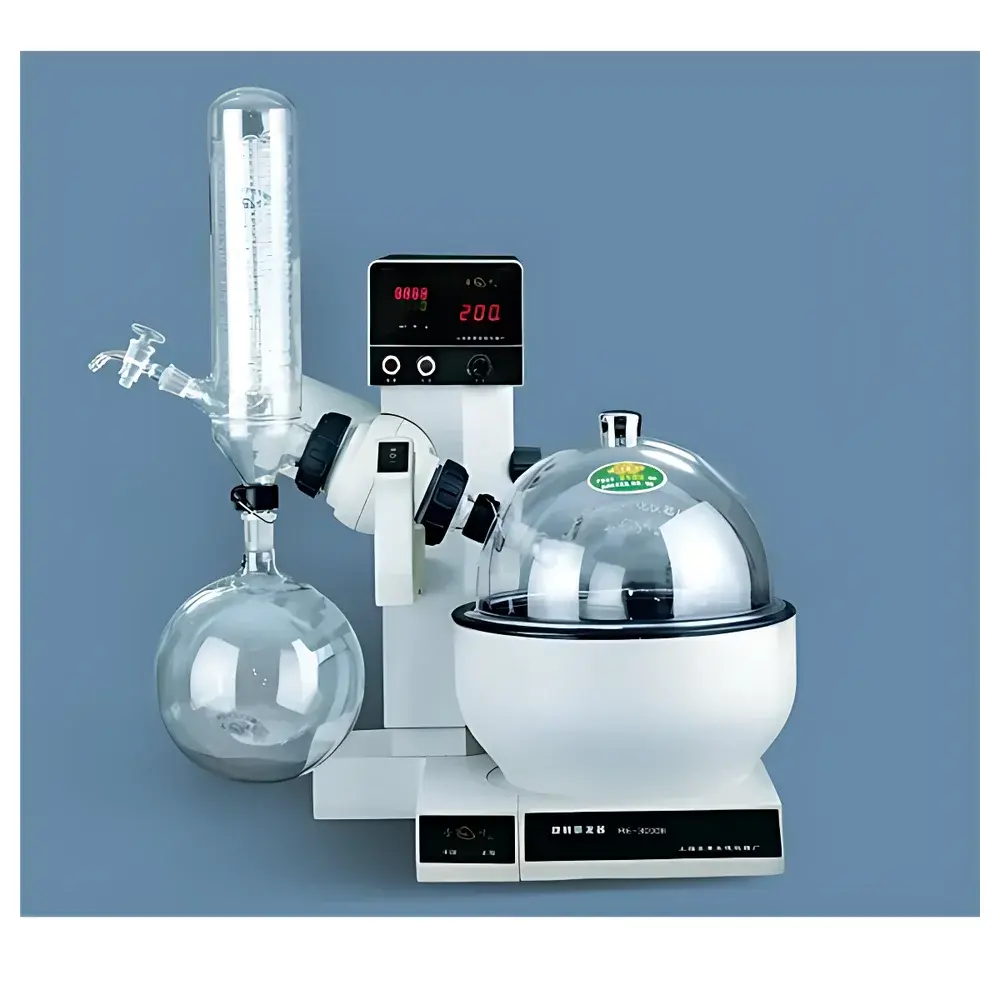
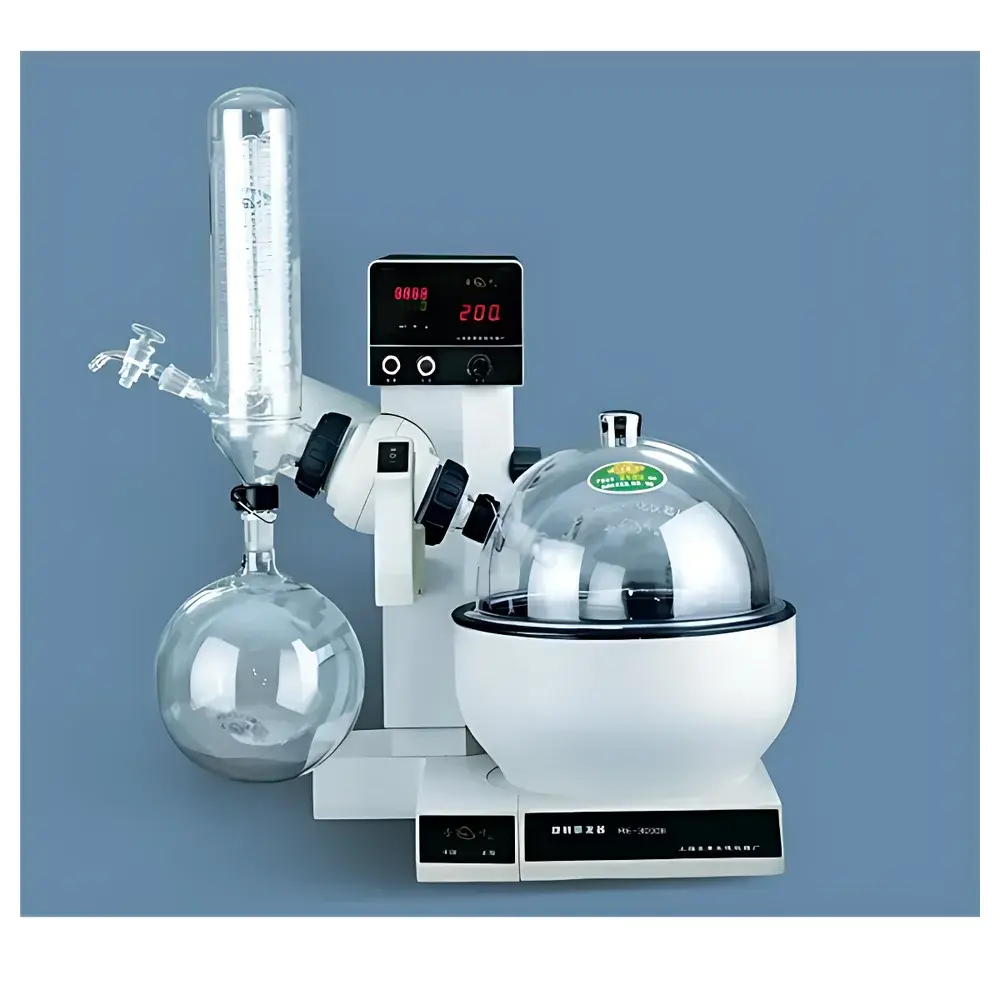
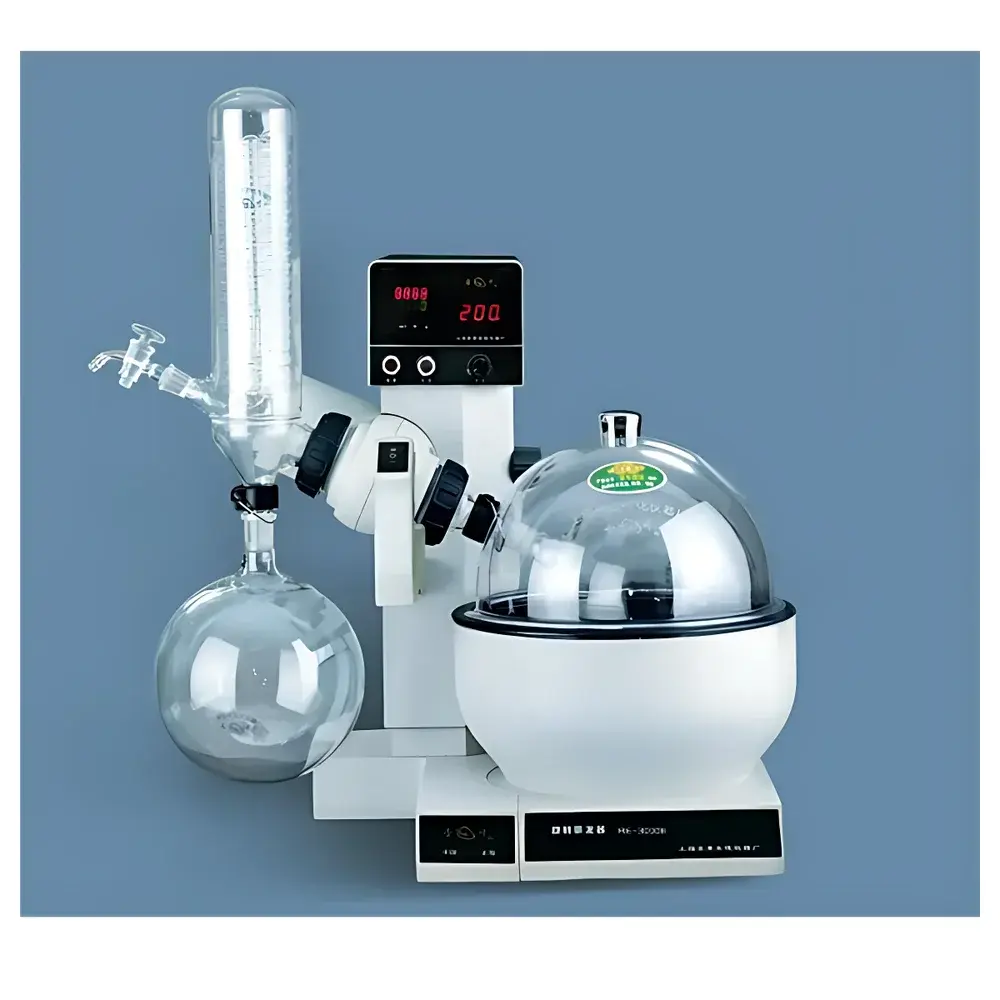
Shanghai Yarong RE-3000C Rotary Evaporator
| Brand | Shanghai Yarong / Yarong |
|---|---|
| Origin | Shanghai, China |
| Manufacturer Type | Authorized Distributor |
| Country of Origin | China |
| Model | RE-3000C |
| Price | Upon Request |
| Evaporation Flask Capacity | 50–3000 mL |
| Rotation Speed | 0–200 rpm (electronically controlled, stepless) |
| Heating Bath | 8 L PTFE-coated stainless steel bath with fully enclosed 1.2 kW heater |
| Temperature Control | Digital display, ambient to 99 ±1 °C |
| Lift Range | 0–150 mm (motorized, automatic vertical adjustment) |
| Power Supply | 220 V, 50 Hz |
| Overall Dimensions | 450 × 420 × 850 mm |
| Condenser | Horizontal dual-spiral coil, high-temp borosilicate glass, standard taper joints (24/29 or 29/32) |
| Feed System | Valve-type addition tube with PTFE tubing and flow baffle ring |
| Sealing | Fluoroelastomer (FKM) vacuum gaskets |
| Control Interface | Rocker-switch panel for lift actuation |
| Motor Power | 40 W |
| Vacuum Compatibility | Designed for stable operation under reduced pressure (typically 10–100 mbar) |
Overview
The Shanghai Yarong RE-3000C Rotary Evaporator is an engineered solution for efficient, reproducible solvent removal and concentration of heat-sensitive samples under reduced pressure. Based on the fundamental principle of rotary evaporation—where a rotating flask increases surface area while simultaneous vacuum lowers boiling points—the RE-3000C enables gentle yet rapid distillation of low-boiling-point solvents such as ethanol, acetone, diethyl ether, and ethyl acetate. Its horizontal configuration, dual-spiral condenser geometry, and precisely regulated bath temperature ensure high condensation efficiency and minimal bumping or foaming. Designed for routine use in synthetic chemistry labs, natural product extraction workflows, and QC/QA laboratories, the system prioritizes operational stability, user safety, and compatibility with standard ground-glass jointed glassware (24/29 and 29/32 taper sizes).
Key Features
- Motorized Vertical Lift Mechanism: 0–150 mm travel range with programmable auto-rise/auto-lower function, activated via intuitive rocker switch—upper depression raises the assembly, lower depression lowers it.
- Stepless Electronic Speed Control: Precise 0–200 rpm regulation using a calibrated rotary knob, ensuring consistent film formation across diverse viscosities and flask sizes (50–3000 mL).
- PTFE-Coated Heating Bath: 8 L capacity, fully enclosed 1.2 kW heating element with digital PID temperature control (ambient to 99 ±1 °C), minimizing thermal gradients and enabling uniform heat transfer.
- Dual-Spiral Horizontal Condenser: Manufactured from high-purity borosilicate 3.3 glass; optimized geometry maximizes cooling surface area and condensate return efficiency under continuous vacuum operation.
- FKM Vacuum Sealing System: Fluoroelastomer gaskets provide chemical resistance to common organic solvents and maintain reliable vacuum integrity down to ≤10 mbar.
- Ergonomic Mechanical Design: Quick-release bayonet-style rotation flask coupling (via knurled retaining nut), adjustable inclination angle (secured by locking knob), and transparent polycarbonate safety shield compliant with laboratory splash protection standards.
Sample Compatibility & Compliance
The RE-3000C accommodates standard evaporation flasks (50–3000 mL), collection flasks, and auxiliary vessels conforming to ISO 380 and ASTM E2875 specifications for ground-glass joint dimensions. Its construction materials—including PTFE-lined bath, FKM seals, and borosilicate glass condenser—ensure compatibility with a broad spectrum of organic solvents, mild acids, and bases. While not certified for GMP manufacturing environments, the system supports GLP-aligned documentation practices through manual logbook entries. Vacuum performance is compatible with common lab-grade diaphragm and oil-sealed rotary vane pumps meeting ISO 8573-1 Class 4 purity requirements.
Software & Data Management
The RE-3000C operates as a standalone analog-digital hybrid instrument without embedded firmware or network connectivity. All operational parameters—including bath temperature, rotation speed, and lift position—are monitored and adjusted manually via front-panel controls with real-time LED readouts. For traceability in regulated settings, users may integrate external data loggers (e.g., USB-connected thermocouple interfaces or PLC-based vacuum monitors) to record time-stamped process variables. The system’s mechanical reliability and absence of proprietary software reduce validation burden under FDA 21 CFR Part 11 when used in non-critical preparative steps.
Applications
- Concentration of reaction mixtures post-synthesis in organic and medicinal chemistry
- Removal of volatile solvents during natural product isolation (e.g., plant extracts, essential oils)
- Preparative-scale solvent exchange (e.g., CH₂Cl₂ → hexane) prior to chromatography
- Lyophilization feedstock preparation requiring low-residue solvent elimination
- QC testing of residual solvents per ICH Q3C guidelines (as part of sample prep workflow)
- Teaching laboratories demonstrating phase equilibrium, vapor pressure, and colligative properties
FAQ
What vacuum level is recommended for optimal operation?
For most low-boiling solvents (bp < 100 °C at 1 atm), a stabilized vacuum between 15–30 mbar is ideal—achievable with a two-stage diaphragm pump equipped with a cold trap.
Can the RE-3000C be used with corrosive solvents like concentrated HCl or HF?
No. While FKM seals resist many organics, they are incompatible with strong oxidizers, hydrohalic acids, and amines. Use only with solvents listed in the DuPont Viton® Chemical Resistance Guide.
Is the heating bath fluid-fill requirement specified?
Yes. The 8 L bath requires water or silicone oil (up to 200 cSt viscosity); glycerol-based fluids are not recommended due to thermal degradation above 80 °C.
Does the unit include a vacuum controller or pressure sensor?
No. Vacuum regulation must be performed externally using a manual bleed valve or electronic vacuum controller (sold separately).
What maintenance intervals are advised for long-term reliability?
Inspect FKM seals every 6 months; replace if cracked or swollen. Clean condenser coils after each solvent class change using appropriate rinsing protocol (e.g., acetone → isopropanol → air dry).



