
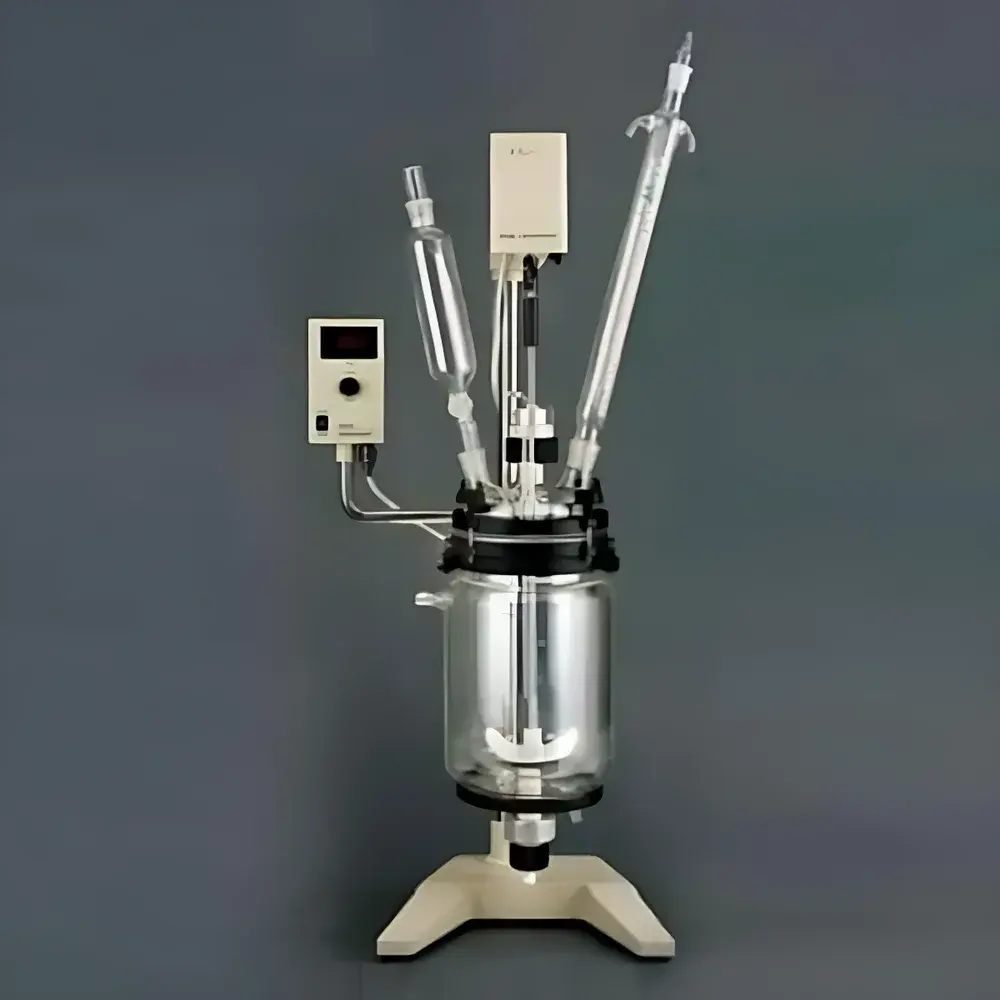
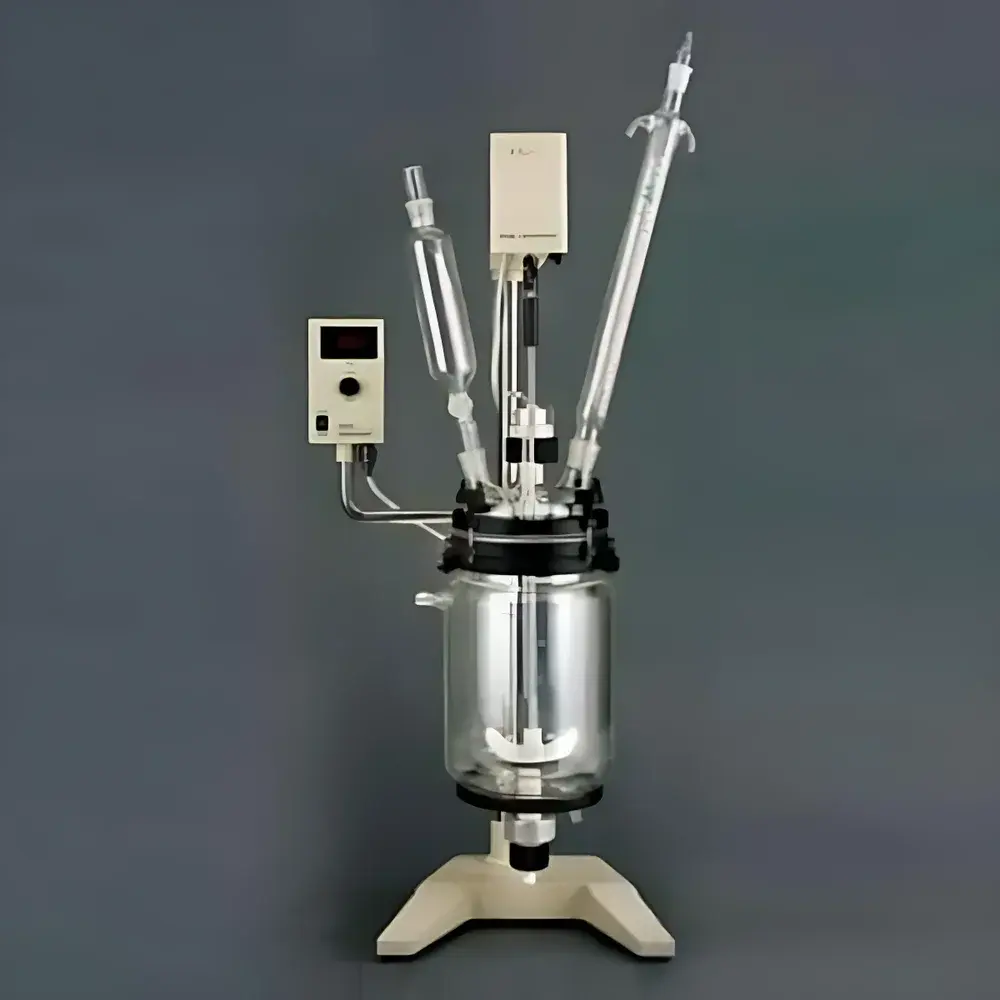
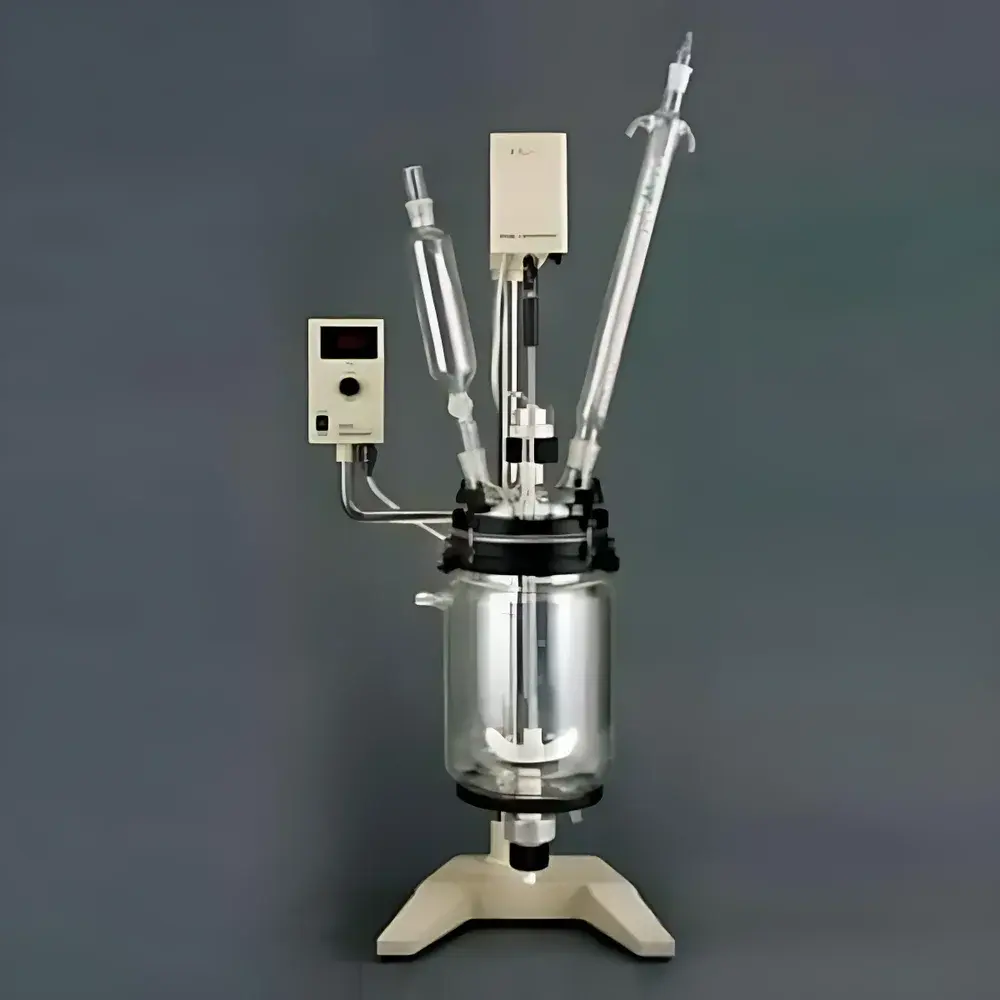
Shanghai Yarong RV-605 Vacuum Jacketed Glass Reactor
| Brand | Yarong |
|---|---|
| Origin | Shanghai, China |
| Manufacturer Type | Authorized Distributor |
| Country of Origin | China |
| Model | RV-605 |
| Instrument Category | Jacketed Glass Reactor |
| Usable Volume | 5 L |
| Construction Material | GG17 Borosilicate Glass |
| Operating Pressure Range | Atmospheric to –0.098 MPa (absolute) |
| Jacket Type | Double-layer Circulating Jacket |
| Stirring Speed | 100–1400 rpm |
| Motor Power | 90 W (120 W peak) |
| Torque | 6000 g·cm |
| Drive System | Brushless AC Speed-Controlled Motor with Digital Frequency Converter |
| Sealing System | PTFE–Glass Dual-Stage Rotary Seal |
| Port Configuration | Five Standard Ground-Glass Ports (NS29/32 & NS24/29), Large-Diameter Bottom Discharge Valve |
| Temperature Control | External Circulating Fluid (e.g., coolant, hot oil, or water) via Jacket |
| Compliance | Designed for GLP-compliant laboratory synthesis workflows |
Overview
The Shanghai Yarong RV-605 Vacuum Jacketed Glass Reactor is an engineered platform for controlled, scalable chemical synthesis under variable pressure and temperature conditions. Built around a monolithic GG17 borosilicate glass vessel with double-wall jacketing, it enables precise thermal management via external fluid circulation—supporting both exothermic quenching and endothermic activation across –20 °C to +200 °C (dependent on circulating medium). Its core operational principle relies on mechanical stirring within a sealed, pressure-regulated environment: the reactor operates stably at atmospheric pressure or under vacuum down to 0.098 MPa absolute (≈2 mbar), facilitating solvent reflux, fractional distillation, vacuum concentration, and moisture-sensitive reactions. The absence of motor brushes eliminates sparking hazards—critical for flammable solvent handling—and ensures long-term rotational stability without speed drift. All wetted surfaces are chemically inert glass or PTFE, making the system compatible with strong acids, bases, halogenated solvents, and organometallic reagents.
Key Features
- 5 L working volume reactor vessel fabricated from ASTM E438 Type I, Class A GG17 borosilicate glass—resistant to thermal shock (ΔT ≤ 120 °C), hydrolytic attack, and alkali corrosion
- Double-jacketed design with integrated inlet/outlet ports for seamless connection to external chillers, heating circulators, or oil baths
- Digital frequency-controlled brushless AC motor delivering consistent torque (6000 g·cm) across full speed range (100–1400 rpm), with real-time RPM feedback and overload protection
- Five standardized ground-glass joints (NS29/32 × 3, NS24/29 × 2) enabling modular attachment of condensers, addition funnels, thermowells, gas inlets, and vacuum manifolds
- Large-bore bottom discharge valve with zero dead-volume geometry and PTFE-coated glass seat—ensuring quantitative transfer and residue-free cleaning
- Proprietary dual-stage rotary seal combining PTFE stator and precision-ground glass rotor—tested to maintain integrity at ≤0.098 MPa vacuum for >500 hours continuous operation
Sample Compatibility & Compliance
The RV-605 accommodates heterogeneous and homogeneous reaction mixtures including slurries, viscous polymerizations, catalytic hydrogenations (with optional H2 inlet), and air-sensitive Grignard or lithiation sequences when paired with Schlenk-line adapters. Its all-glass/PTFE fluid path meets USP and ISO 10993-1 biocompatibility screening prerequisites for non-invasive process development. While not certified to ASME BPVC Section VIII, the reactor is designed and tested per GB/T 21445–2008 (Chinese national standard for laboratory glass apparatus) and conforms to general laboratory safety requirements outlined in ANSI Z9.5–2022 (Laboratory Ventilation). Vacuum performance aligns with ASTM D2879 for low-pressure distillation applications.
Software & Data Management
The RV-605 operates as a standalone analog-digital hybrid instrument: the digital speed controller provides local setpoint adjustment and RPM readout but does not include onboard data logging or USB/Ethernet connectivity. For regulatory traceability, users integrate the reactor into validated environments using external PLCs or acquisition systems (e.g., LabVIEW, DeltaV, or Siemens Desigo) that record stirrer speed, external bath temperature, and vacuum transducer output. When deployed in GMP or GLP settings, the system supports audit-trail-capable workflows through third-party SCADA integration—meeting FDA 21 CFR Part 11 requirements for electronic records when paired with appropriate validation protocols and user access controls.
Applications
- Batch synthesis of fine chemicals and pharmaceutical intermediates under inert or reduced-pressure conditions
- Controlled crystallization studies requiring precise supersaturation management via simultaneous cooling and agitation
- Catalyst screening experiments involving gas–liquid–solid triphasic systems (e.g., Pd/C hydrogenation with inline H2 flow control)
- Essential oil extraction via steam distillation or solvent-based maceration with simultaneous condensate recovery
- Polymerization kinetics monitoring—including free-radical, condensation, and ring-opening mechanisms—with in situ sampling ports
- Acid-catalyzed esterification and transesterification reactions benefiting from reflux-enabled water removal
FAQ
What is the maximum allowable jacket pressure for the RV-605?
The double-wall glass jacket is rated for ≤0.4 MPa (60 psi) internal pressure when using heat transfer fluids—never exceed this limit; always consult fluid compatibility charts before selecting circulating media.
Can the RV-605 be used for hydrogenation reactions?
Yes—when equipped with a gas-tight inlet adapter, pressure-rated septum cap, and compatible palladium or Raney nickel catalysts; ensure all seals are inspected pre-use and vacuum integrity verified prior to H2 introduction.
Is the motor compatible with 230 V / 50 Hz power supplies outside China?
The supplied drive unit accepts 220–240 V AC, 50/60 Hz input; no voltage conversion is required for EU, UK, or AU mains; verify plug type and fuse rating prior to commissioning.
How often should the PTFE–glass rotary seal be replaced?
Under continuous vacuum operation at ≤0.098 MPa, the seal demonstrates ≥12 months service life; inspect visually for scoring or leakage every 200 operating hours and replace if PTFE surface shows >10 µm wear depth.
Does the reactor include temperature measurement capability?
No built-in sensor is provided; users must install a calibrated Pt100 or thermocouple probe via a dedicated port—recommended immersion depth is ≥1/3 of liquid height for representative bulk temperature reading.



