
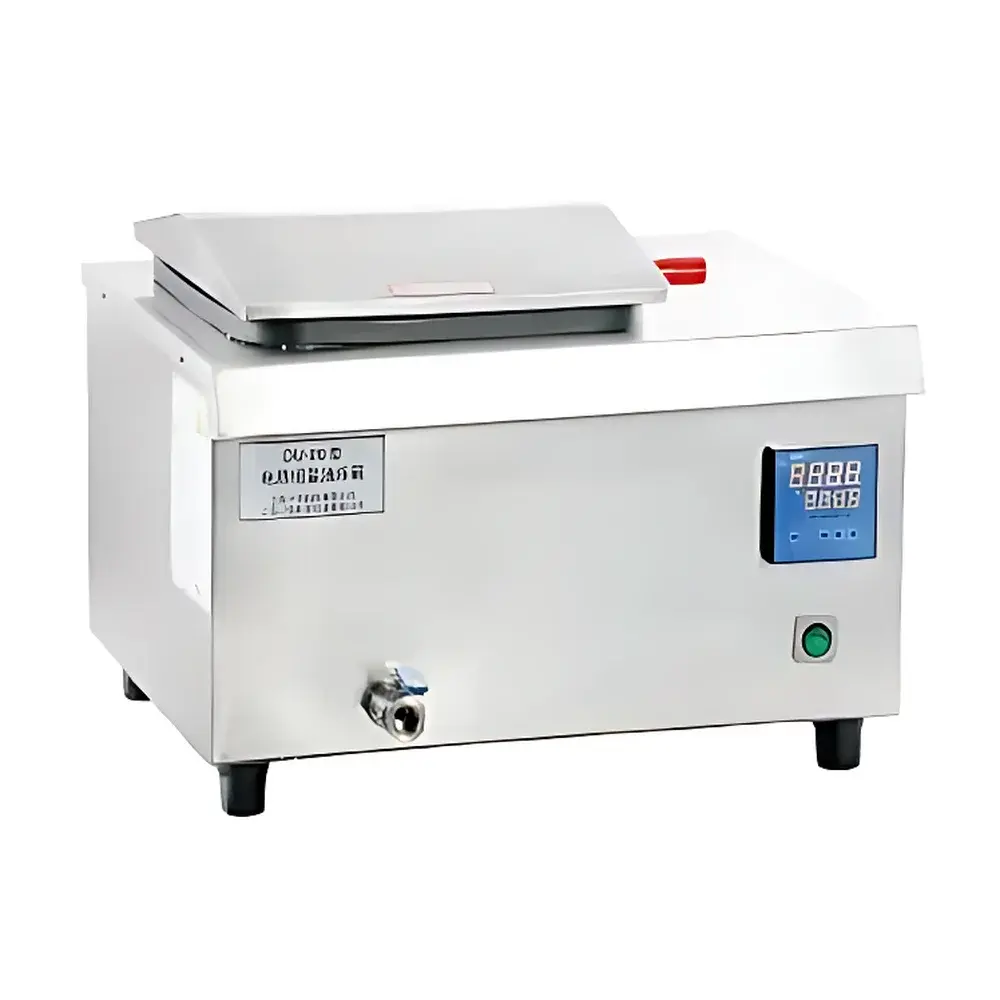
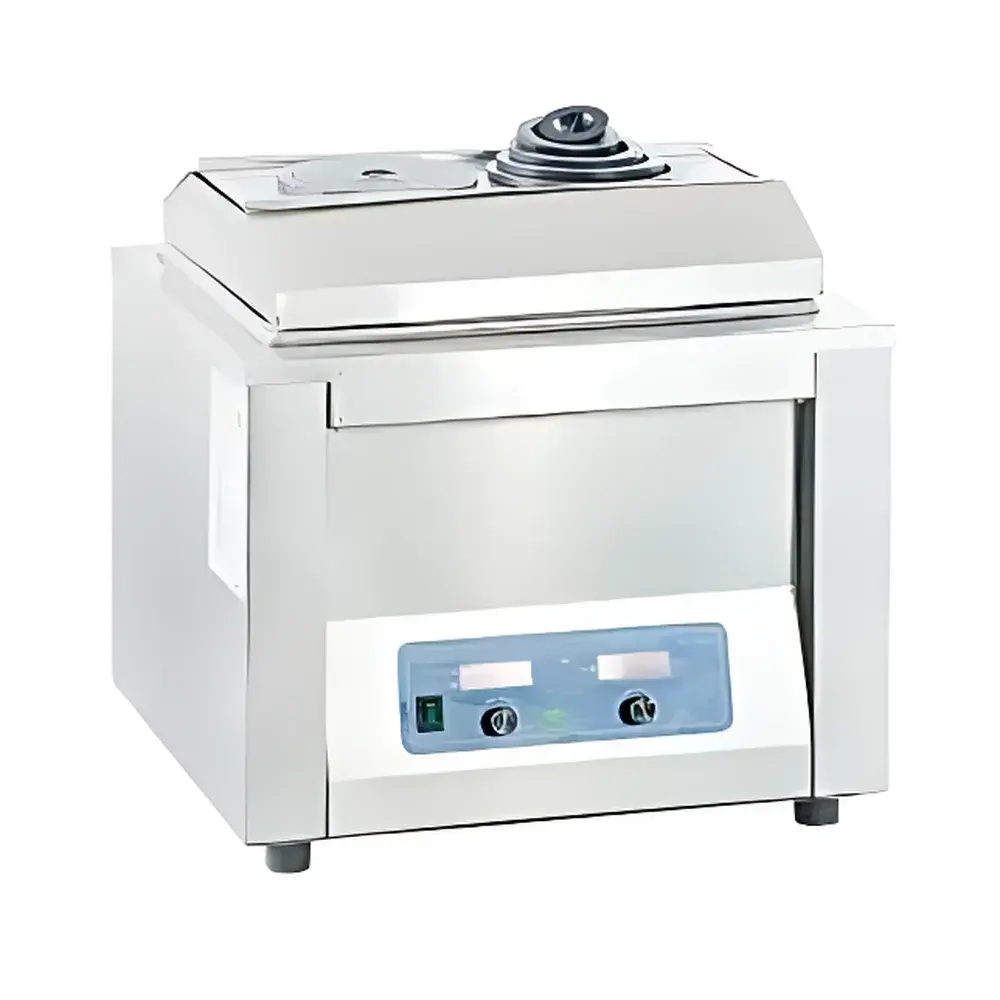
Shanghai Yiheng DU-20 / DU-30 / DU-30G Digital Oil Bath Circulator with Magnetic Stirring
| Brand | Shanghai Yiheng |
|---|---|
| Origin | Shanghai, China |
| Model | DU-20 / DU-30 / DU-30G |
| Bath Volume | 12 L / 20 L |
| Temperature Range | RT+20 °C to 200 °C |
| Temperature Stability | ±0.5 °C |
| Control Mode | Heating-only PID |
| Circulation Type | Internal & External |
| Stirring | Magnetic (DU-20G/DU-30G only) |
| Power Input | 1000 W (DU-20/DU-20G/DU-30G), 1600 W (DU-30) |
| Timer Range | 0–9999 min |
| Alarm Threshold | +2 °C above setpoint |
| Inner Chamber Dimensions (W×D×H) | 250×250×200 mm (DU-20/DU-20G), 400×250×200 mm (DU-30/DU-30G) |
Overview
The Shanghai Yiheng DU-Series Digital Oil Bath Circulators are precision-engineered laboratory thermal platforms designed for stable, uniform heating of samples immersed in silicone oil or other high-boiling-point heat-transfer media. Operating on the principle of resistive heating combined with forced convection via internal/external circulation, these units maintain temperature setpoints within ±0.5 °C across their full operational range (RT+20 °C to 200 °C). Unlike water baths, oil bath circulators enable elevated temperature applications beyond 100 °C without phase transition, making them essential for polymerization kinetics, catalyst activation, solvent reflux setups, and viscosity standardization protocols. The DU-20 and DU-30 models provide fixed-volume thermostatic environments (12 L and 20 L respectively), while the G-suffix variants integrate a digitally controlled magnetic stirrer—ensuring homogenous thermal distribution even under high-viscosity conditions. All units feature a corrosion-resistant 304 stainless steel inner tank and outer casing, engineered for long-term chemical resistance and routine cleaning in QC and R&D laboratories.
Key Features
- Microprocessor-based PID temperature controller with adjustable timer (0–9999 minutes), enabling unattended operation and repeatable thermal profiles.
- Double-walled stainless steel construction (inner tank and outer housing) ensures mechanical durability, thermal insulation, and compatibility with organic solvents and acidic/basic media.
- Over-temperature safety cutoff with audible/visual alarm (triggered at +2 °C above setpoint), protecting both samples and bath medium from thermal degradation.
- Integrated dual-mode circulation system: internal recirculation for bath homogeneity and external port for connection to auxiliary jackets, reactors, or condensers.
- G-series models (DU-20G/DU-30G) incorporate a brushless DC magnetic stirrer with torque-regulated speed control (0–1200 rpm), maintaining consistent agitation regardless of viscosity changes during heating.
- Modular well design allows flexible positioning of reaction vessels; standard round-bottom flask openings accommodate common labware sizes without adapter requirements.
Sample Compatibility & Compliance
These circulators support a wide range of sample containers—including glass beakers, jacketed flasks, test tubes, and custom immersion probes—provided maximum external dimensions fit within the specified inner chamber (e.g., 400×250×200 mm for DU-30/DU-30G). The 200 °C upper limit permits use with silicone oils (e.g., Dow Corning 200 Fluid, viscosity grade 50–100 cSt), mineral oils, and glycerol-based media. Units comply with IEC 61010-1:2010 for electrical safety in laboratory equipment and meet CE marking requirements for electromagnetic compatibility (EMC Directive 2014/30/EU). While not certified to ISO/IEC 17025 or GLP-specific validation standards out-of-the-box, the PID controller’s digital logging capability (via optional RS232/USB interface) supports traceable temperature records required under FDA 21 CFR Part 11 when integrated into validated workflows.
Software & Data Management
The embedded controller provides real-time display of setpoint, actual bath temperature, stirring speed (G-series), and elapsed timer. Though standalone operation is standard, optional communication modules enable ASCII protocol-based data export to PC-based acquisition software (e.g., LabVIEW, MATLAB, or custom Python scripts). This facilitates automated temperature ramping, event-triggered logging, and integration into LIMS environments. Audit trails—including operator ID, parameter changes, and alarm events—can be generated when paired with compliant third-party software meeting ALCOA+ principles (Attributable, Legible, Contemporaneous, Original, Accurate, Complete, Consistent, Enduring, Available).
Applications
- Controlled-temperature synthesis of metal-organic frameworks (MOFs) and nanomaterials requiring prolonged heating at 150–180 °C.
- Calibration of viscometers and rheometers using NIST-traceable silicone oil standards.
- Accelerated stability testing per ICH Q1A(R3) guidelines for pharmaceutical formulations.
- Enzyme assay incubation where precise thermal control above 100 °C is needed (e.g., thermophilic protease characterization).
- Distillation and Soxhlet extraction setups utilizing external circulation to jacket condensers or fractionating columns.
- Pre-heating of gas chromatography inlet liners and detector components prior to system bake-out.
FAQ
What is the maximum recommended operating temperature for continuous use?
Continuous operation at 200 °C is supported when using thermally stable silicone oils rated for >200 °C service life; users must verify bath medium specifications and replace fluid per manufacturer-recommended intervals.
Can the external circulation port be used with closed-loop chillers?
Yes—the 1/4″ BSP external outlet/inlet ports are compatible with standard silicone tubing (ID 6 mm) and support integration with recirculating chillers for temperature ranges extending below ambient, provided the chiller’s minimum inlet temperature exceeds the bath’s lower limit (RT+20 °C).
Is calibration certificate included with shipment?
No factory calibration certificate is supplied by default; however, the unit includes a two-point verification procedure (at 25 °C and 100 °C) documented in the user manual, and third-party ISO/IEC 17025-accredited calibration services are available upon request.
How does magnetic stirring affect temperature uniformity in high-viscosity media?
The G-series stirrer’s closed-loop speed regulation compensates for drag-induced deceleration, sustaining rotational energy input and minimizing thermal stratification—validated by ASTM D2196-compliant temperature mapping showing ≤0.3 °C axial/radial deviation at 150 °C in 500 cSt silicone oil.
Are replacement parts such as heaters or PID controllers available separately?
Yes—Shanghai Yiheng supplies OEM-certified spare parts including heating elements, PT100 sensors, control boards, and stainless steel tank assemblies, all covered under a 12-month limited warranty against material and workmanship defects.



