
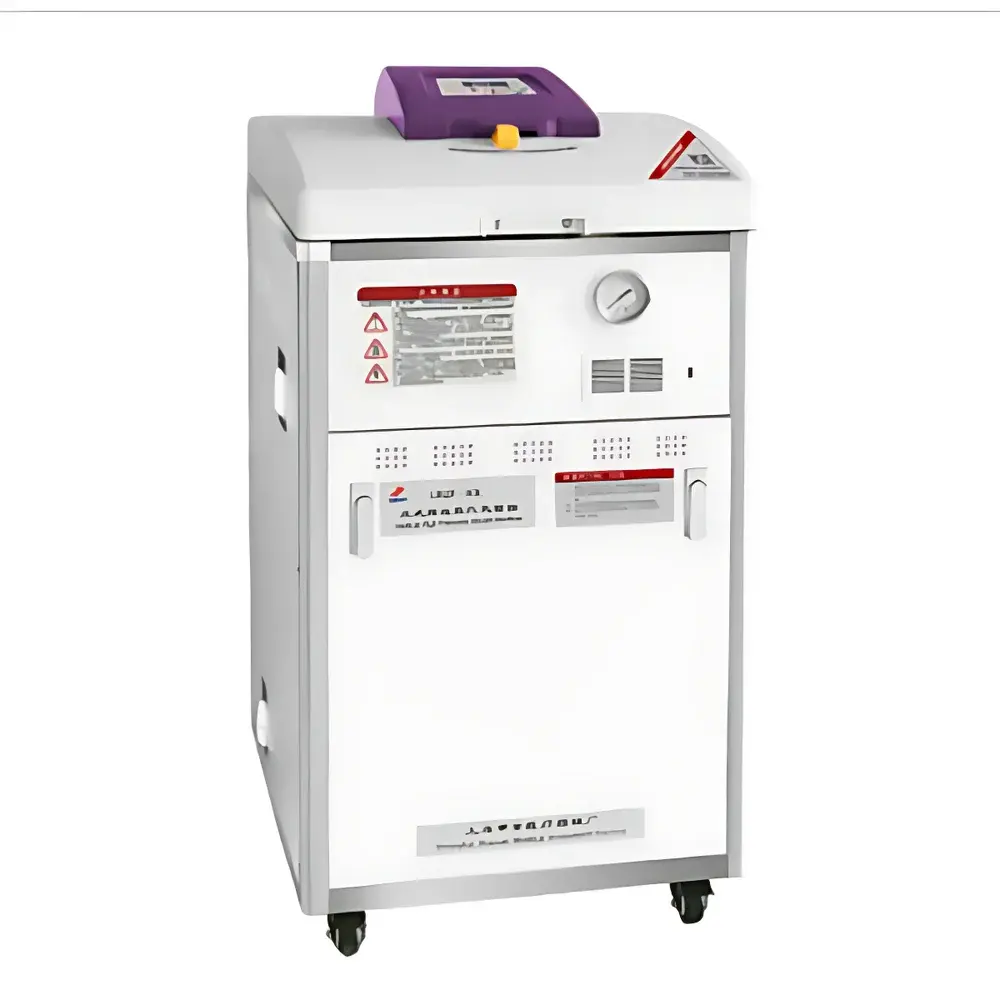
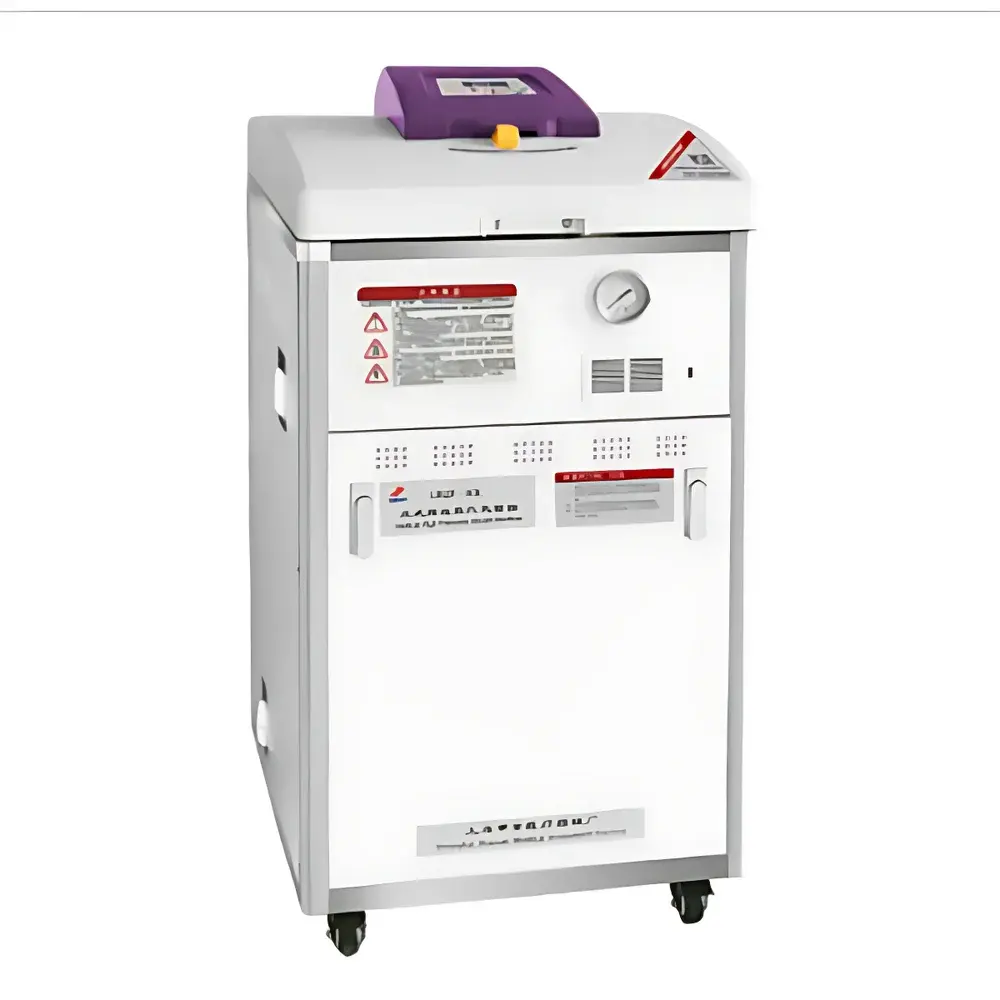
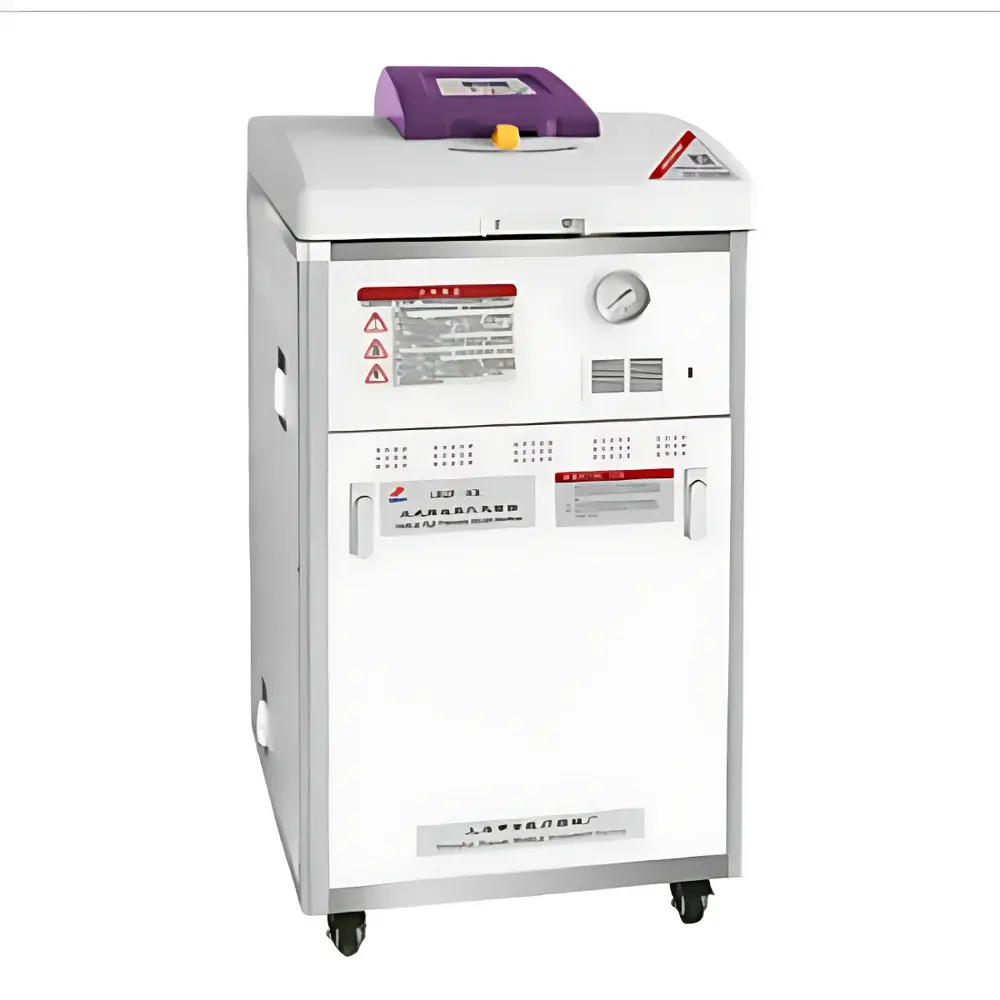
Shean LDZF-50KB-II Vertical Steam Autoclave
| Brand | Shean Medical Devices |
|---|---|
| Origin | Shanghai, China |
| Model | LDZF-50KB-II |
| Instrument Type | Vertical Autoclave |
| Max Temperature | 50–134 °C |
| Max Working Pressure | 0.217 MPa |
| Chamber Dimensions | Ø350 × 550 mm |
| Chamber Volume | 50 L |
| External Dimensions | 660 × 780 × 1160 mm |
| Net Weight | 98 kg |
| Power Supply | 220 V / 50 Hz |
| Rated Power | 3.5 kW |
| Safety Design Pressure | 0.24 MPa |
| Sterilization Time Range | 0–99 h |
| Temperature Setting Resolution | 1 °C |
| Time Setting Resolution | 1 min |
| Cooling Method | Forced-air rapid cooling |
| Interface Options | USB data logging port (optional), validation port, optional thermal printer |
Overview
The Shean LDZF-50KB-II is a CE-compliant vertical steam autoclave engineered for reliable, repeatable moist-heat sterilization in academic laboratories, clinical research facilities, and quality control environments. Operating on the fundamental principle of saturated steam under controlled pressure and temperature, this unit achieves microbial inactivation—including spores—through irreversible protein denaturation and nucleic acid disruption. Designed to meet ISO 17665-1 (Sterilization of health care products — Moist heat) and aligned with key requirements of EN 285 (Large steam sterilizers) and USP , the LDZF-50KB-II delivers precise process control across a validated temperature range of 50–134 °C at up to 0.217 MPa working pressure. Its 50-liter stainless-steel chamber (304 grade) supports batch processing of wrapped instruments, culture media, glassware, and porous loads while maintaining thermal uniformity and pressure stability throughout each cycle.
Key Features
- Multi-link toggle mechanism for smooth, low-effort lid actuation with synchronized sealing engagement—designed to minimize operator fatigue and mechanical wear.
- Self-sealing silicone gasket system that expands radially under pressure to ensure leak-tight integrity without manual torque adjustment.
- LED-based digital controller with dynamic cycle progress indicators, real-time parameter display (temperature, pressure, elapsed time), and audible end-of-cycle alarm.
- One-touch program selection for common load types: solid instruments, liquid media, and porous materials—with pre-configured default parameters compliant with standard sterilization protocols.
- Forced-air rapid cooling system reduces post-cycle cooldown time by up to 40%, enabling earlier access to sterilized contents while preserving heat-sensitive media integrity.
- Dual-layer safety architecture: electromechanical interlock prevents lid opening during pressurized operation; redundant overpressure protection includes both spring-loaded mechanical relief valve and electronic pressure cutoff.
- Comprehensive fault diagnostics with on-screen error codes (e.g., E01: water level low; E03: temperature sensor failure) and automatic shutdown for dry-run, overtemperature, or pressure deviation events.
- Automatic air removal via gravity displacement and vacuum-assisted pulse venting ensures complete steam penetration into porous and hollow loads.
- Programmable start delay (up to 24 hours) supports unattended operation for overnight or off-shift sterilization scheduling.
Sample Compatibility & Compliance
The LDZF-50KB-II accommodates a broad spectrum of laboratory materials including stainless-steel surgical tools, borosilicate glassware, autoclavable plastics (e.g., polypropylene containers), agar and broth media, textile packs, and filter membranes. Its chamber geometry (Ø350 × 550 mm) permits vertical stacking of standard instrument trays and compatibility with ISO/IEC 17025-accredited validation protocols. The unit includes a dedicated validation port for thermocouple or data logger integration, supporting IQ/OQ/PQ documentation required under GLP and GMP frameworks. All electrical components comply with IEC 61010-1 safety standards; pressure vessel construction adheres to PED 2014/68/EU guidelines (Category III, Group 1 Fluid).
Software & Data Management
While the base configuration features embedded firmware with non-volatile cycle memory (retains ≥100 completed runs), optional USB interface enables direct connection to Windows-based PCs for real-time monitoring and export of time-stamped temperature/pressure/time logs in CSV format. An optional thermal printer module provides hard-copy records compliant with FDA 21 CFR Part 11 Annex 11 traceability requirements—each printout includes cycle ID, operator code, sterilization date/time, setpoints, actual profiles, and pass/fail status. Audit trail functionality captures all user-initiated parameter changes, ensuring full accountability during regulatory inspections.
Applications
This autoclave serves critical functions across biosafety level 1–2 laboratories, pharmaceutical QC labs, veterinary clinics, and university teaching facilities. Typical use cases include terminal sterilization of microbiological growth media prior to pour-plating; decontamination of biohazardous waste before disposal; preparation of sterile surgical kits; validation of packaging integrity for medical devices; and routine sterilization of reusable lab consumables. Its adjustable hold times (0–99 h) and fine-resolution temperature control support specialized applications such as low-temperature sterilization of thermolabile solutions and extended cycles for high-bioburden loads.
FAQ
What is the maximum allowable operating pressure and corresponding temperature?
The rated working pressure is 0.217 MPa, corresponding to a saturated steam temperature of 134 °C at equilibrium.
Does the unit support validation with third-party data loggers?
Yes—a dedicated validation port allows insertion of calibrated thermocouples or wireless sensors for temperature mapping per ISO 13485 and EN 554.
Is the chamber volume verified per ISO 17665 Annex B?
Chamber volume is specified as 50 L based on internal geometric calculation (π × r² × h); volumetric verification can be performed using water-fill method during installation qualification.
Can the autoclave be integrated into a centralized lab management system?
Via optional USB-to-serial adapter and provided SDK, it supports Modbus RTU communication for integration with building automation or LIMS platforms.
What maintenance intervals are recommended for long-term reliability?
Daily: check water level and door seal condition. Monthly: inspect gasket elasticity and clean chamber drain filter. Annually: recalibrate temperature/pressure sensors and verify safety valve setpoint—performed by certified service technician.



