
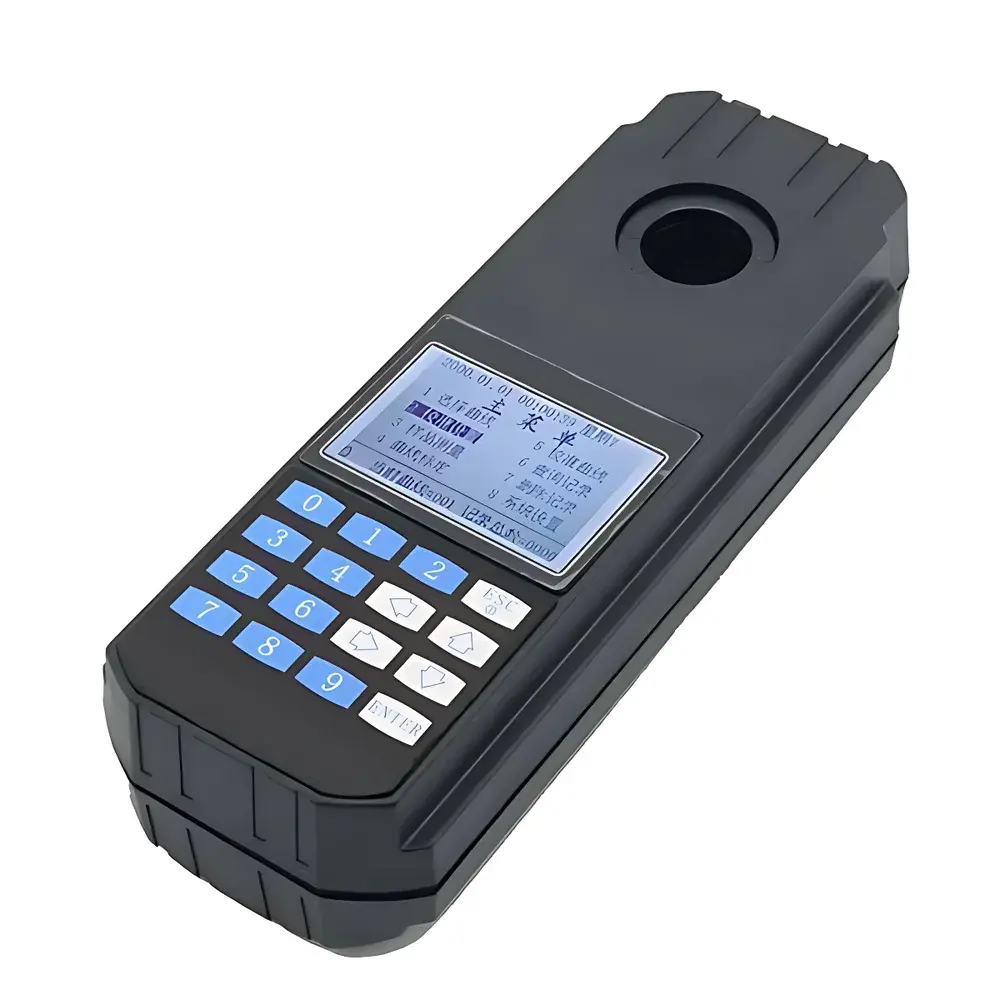
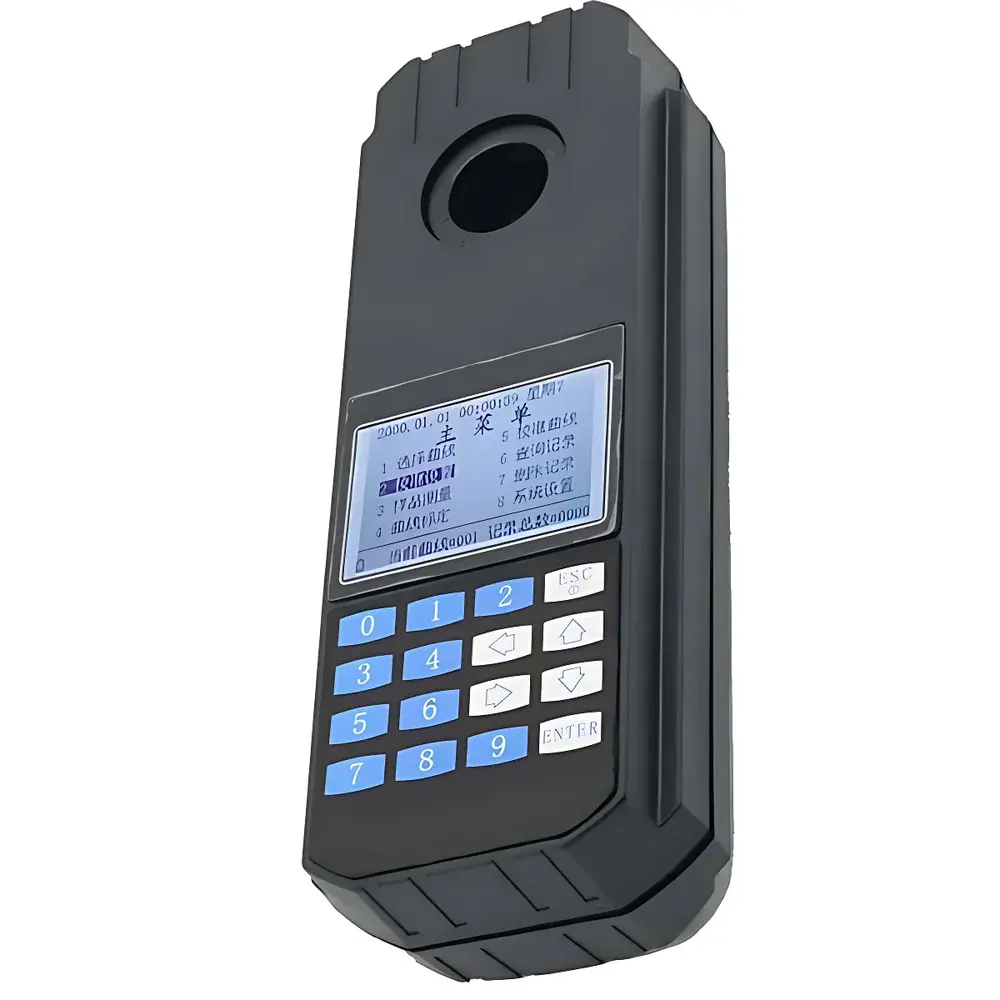
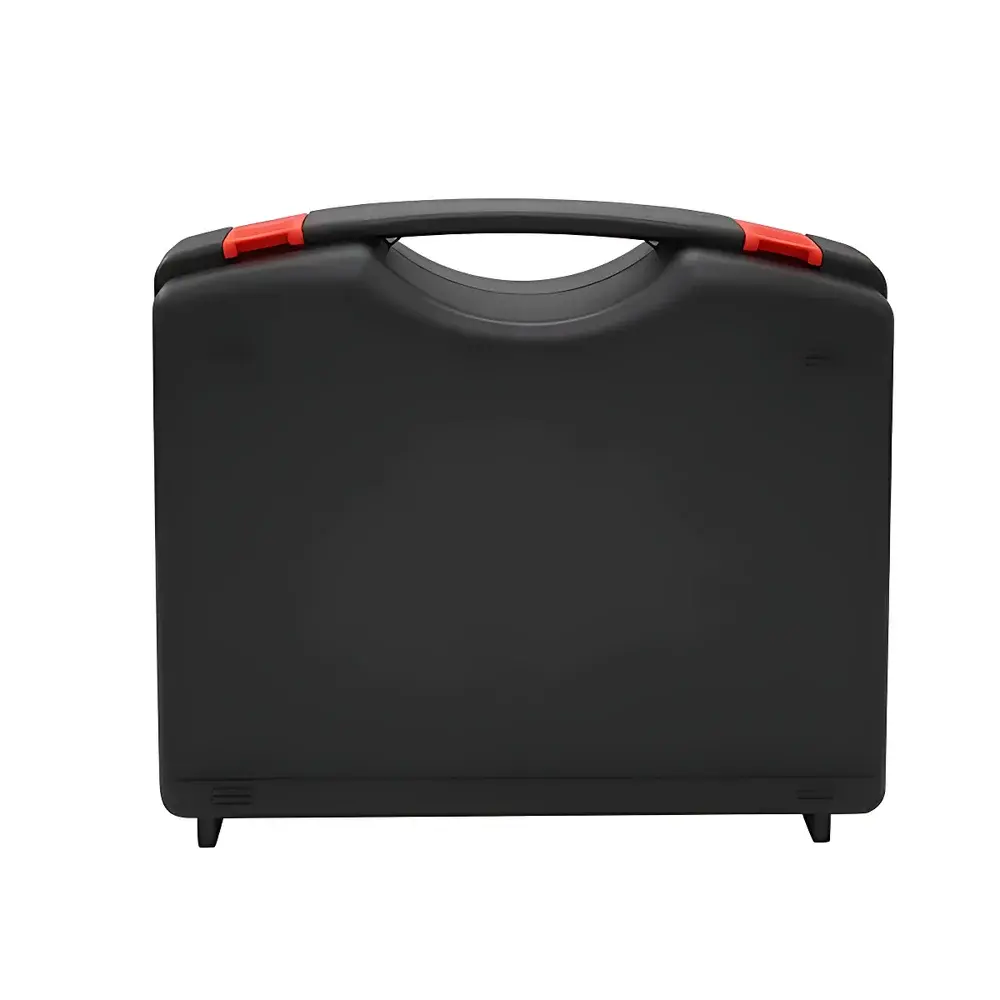
Shenchanghong CHCL-223 Portable Chlorine Dioxide Analyzer
| Brand | Shenchanghong |
|---|---|
| Origin | Guangdong, China |
| Manufacturer Type | Direct Manufacturer |
| Product Category | Domestic |
| Model | CHCL-223 |
| Instrument Type | Portable |
| Measurement Principle | DPD Colorimetric Method (Standardized for ClO₂) |
| Measured Parameter | Chlorine Dioxide (ClO₂) |
| Measurement Range | 0.05–20.00 mg/L |
| Accuracy | ≤ ±3% of Full Scale (F.S.) |
| Repeatability | ≤ 3% RSD |
| Resolution | 0.01 mg/L |
| Detection Limit | 0.05 mg/L |
| Display | Backlit LCD (128 × 64 pixels) |
| Power Supply | 4 × AA alkaline batteries (operational life ≥6 months in standby) |
| Dimensions | 80 × 230 × 55 mm |
| Weight | 500 g |
| Environmental Operating Conditions | 5–40 °C, ≤85% RH (non-condensing) |
| Enclosure Rating | IP65 |
| Data Storage | 199 measurement records with timestamp (YYYY-MM-DD hh:mm:ss), absorbance, transmittance, and calibration curve ID (up to 20 curves) |
| Optical System | LED cold light source with narrow-band interference filter (center wavelength 420 nm), fixed optical path length (10 mm), drift <0.001 A/30 min |
| Memory Protection | Non-volatile flash memory with auto-save and power-fail recovery |
| Housing Material | Molded ABS polymer with chemical-resistant surface finish |
Overview
The Shenchanghong CHCL-223 Portable Chlorine Dioxide Analyzer is a field-deployable, photometric instrument engineered for rapid, on-site quantification of aqueous chlorine dioxide (ClO₂) concentration in drinking water, distribution systems, food processing rinse water, wastewater effluents, and disinfection validation protocols. It operates on the standardized N,N-diethyl-p-phenylenediamine (DPD) colorimetric method—specifically adapted for ClO₂ via selective oxidation in acidic medium, generating a stable pink-colored quinoneimine dye measurable at 420 nm. Unlike amperometric or electrochemical sensors, this optical system eliminates electrode fouling, calibration drift from flow rate or temperature gradients, and cross-sensitivity to free chlorine or chloramines when properly buffered and timed. The CHCL-223 conforms to the fundamental analytical framework outlined in Standard Methods for the Examination of Water and Wastewater (Method 4500-ClO₂ D) and aligns with ISO 7888:2021 (Water quality — Determination of chlorine dioxide — Photometric method using DPD), supporting routine compliance verification under national drinking water regulations.
Key Features
- Optimized optical architecture: High-stability LED cold light source coupled with precision narrow-band interference filter (±2 nm bandwidth at 420 nm) ensures consistent spectral selectivity and minimizes stray light interference.
- Robust portable design: IP65-rated ABS housing resists water ingress, dust accumulation, and incidental chemical splashes; drop-tested to 1 m per IEC 60068-2-32.
- Extended operational autonomy: Ultra-low-power 16-bit microcontroller enables >6 months of standby time on four standard AA alkaline cells; no external charger required.
- Traceable data integrity: Each stored result includes full timestamp (year/month/day/hour/minute/second), raw absorbance (A), percent transmittance (%T), user-assigned sample ID, and active calibration curve index.
- Embedded memory protection: Flash-based non-volatile storage retains all calibration curves (max. 20) and measurement records (max. 199) during battery replacement or unexpected power loss.
- Human-centered interface: Large backlit monochrome LCD (128 × 64 pixel matrix) supports clear visualization under ambient light or low-illumination field conditions.
Sample Compatibility & Compliance
The CHCL-223 is validated for use with clarified, low-turbidity (<5 NTU) aqueous samples—including potable water, filtered process water, swimming pool recirculation lines, and hospital sterilization rinse solutions. Turbidity correction is not implemented; users must pre-filter samples exceeding 5 NTU using 0.45 µm membrane filters. Interference testing confirms minimal response to ≤2.0 mg/L free chlorine (Cl₂), ≤1.0 mg/L combined chlorine (NH₂Cl), and ≤0.5 mg/L ozone when DPD reagent addition sequence and reaction timing (exactly 120 s post-mixing) are strictly followed. The analyzer supports GLP-compliant documentation workflows: all stored data are exportable via manual transcription or optional IR link (not included); audit trails are maintained through immutable timestamps and curve versioning. While not 21 CFR Part 11 certified out-of-box, its deterministic measurement logic, locked calibration parameters, and tamper-evident memory structure facilitate internal validation for GMP-aligned environmental monitoring programs.
Software & Data Management
No proprietary PC software is bundled; data management relies on built-in firmware functionality. Calibration curves are generated in-field using certified ClO₂ reference standards (e.g., NIST-traceable potassium chlorate–iodide titration-derived solutions). Up to 20 independent 3-point or 5-point curves may be stored, each tagged with date, operator ID, and standard lot number. Measurement records include numeric ClO₂ concentration (mg/L), absorbance (A), transmittance (%T), and full ISO 8601 timestamp. Export requires manual entry into LIMS or Excel; future firmware updates may support USB-C mass storage mode (subject to regional regulatory review). All calibrations and measurements adhere to documented SOPs aligned with ISO/IEC 17025:2017 clause 7.7 (Sampling) and clause 7.8 (Ensuring validity of results).
Applications
- Real-time verification of ClO₂ residual in municipal water distribution networks during emergency disinfection events.
- Process control in bottled water and beverage production facilities where ClO₂ is used for equipment sanitization.
- Validation of ClO₂ dosing efficacy in cooling tower water treatment and HVAC condensate management.
- Field screening of ClO₂ decay kinetics in wastewater disinfection contact basins.
- Regulatory compliance sampling for state-level drinking water reporting requirements (e.g., U.S. EPA Guidance Manual for Disinfectants, Annex D).
- Academic and research laboratories conducting comparative studies of oxidant stability under varying pH and organic load conditions.
FAQ
What is the recommended sample preparation procedure before analysis?
Samples must be collected in clean, amber glass or HDPE bottles, kept at 4 °C if not analyzed within 30 minutes, and filtered through a 0.45 µm membrane if turbidity exceeds 5 NTU.
Does the instrument require daily calibration?
No—calibration is performed only when changing reagent lots or after extended storage (>30 days); verification with a mid-range standard (e.g., 5.00 mg/L ClO₂) is advised prior to each sampling session.
Can the CHCL-223 measure free chlorine simultaneously?
No—this model is dedicated exclusively to chlorine dioxide. Free chlorine quantification requires separate instrumentation or a multi-parameter platform.
Is the DPD reagent supplied with the unit stable under field conditions?
Yes—the included reagent kit is vacuum-sealed and desiccated; unopened vials retain potency for ≥18 months at 25 °C; opened vials must be refrigerated and used within 30 days.
How is traceability ensured for regulatory audits?
Each measurement record contains immutable ISO 8601 timestamp, operator-entered sample ID, and reference to the specific calibration curve used—all retained in non-volatile memory without overwrite capability until manually cleared.
Related Products







