

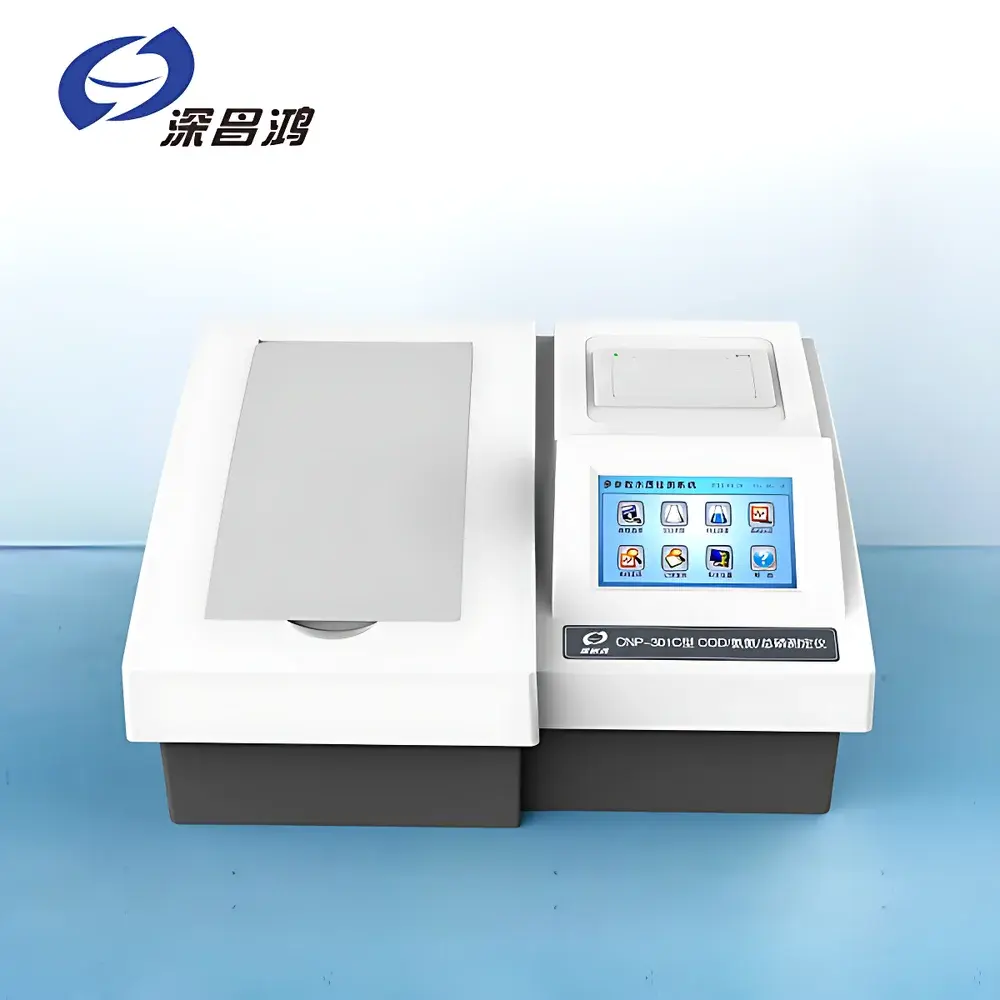
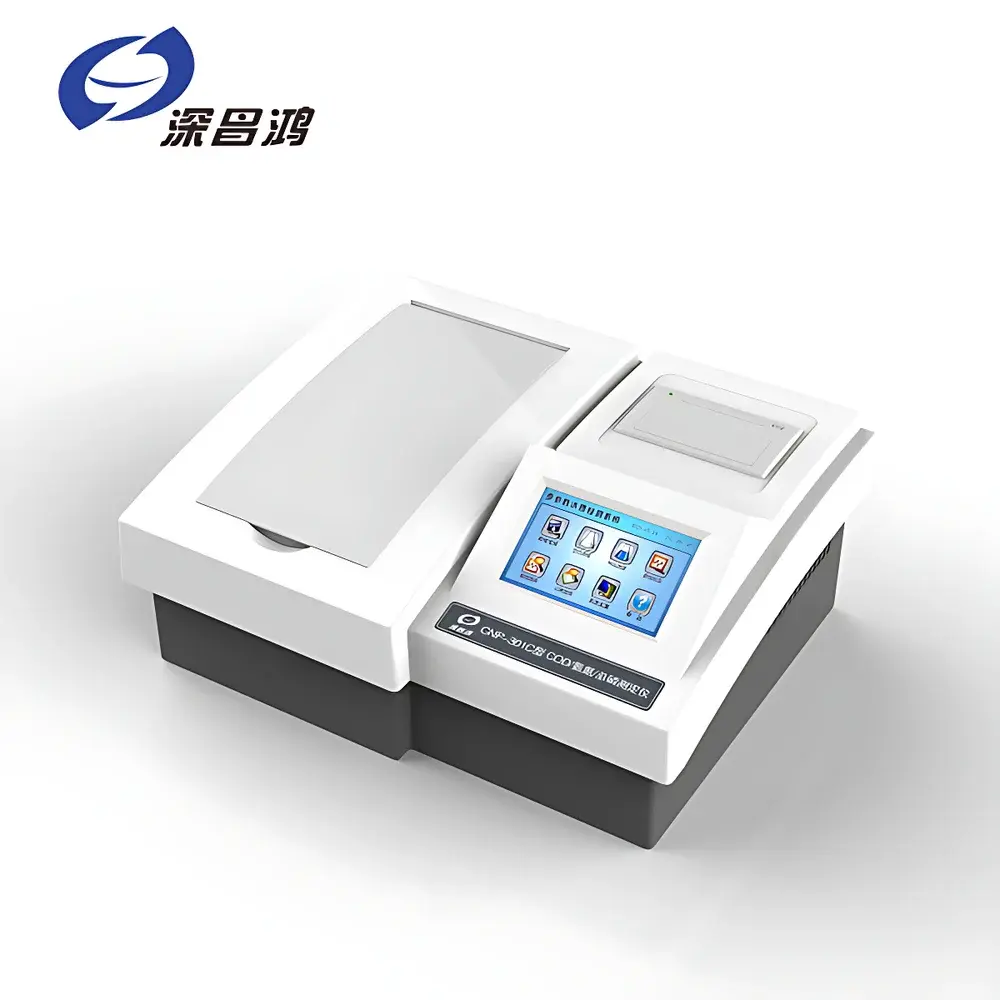
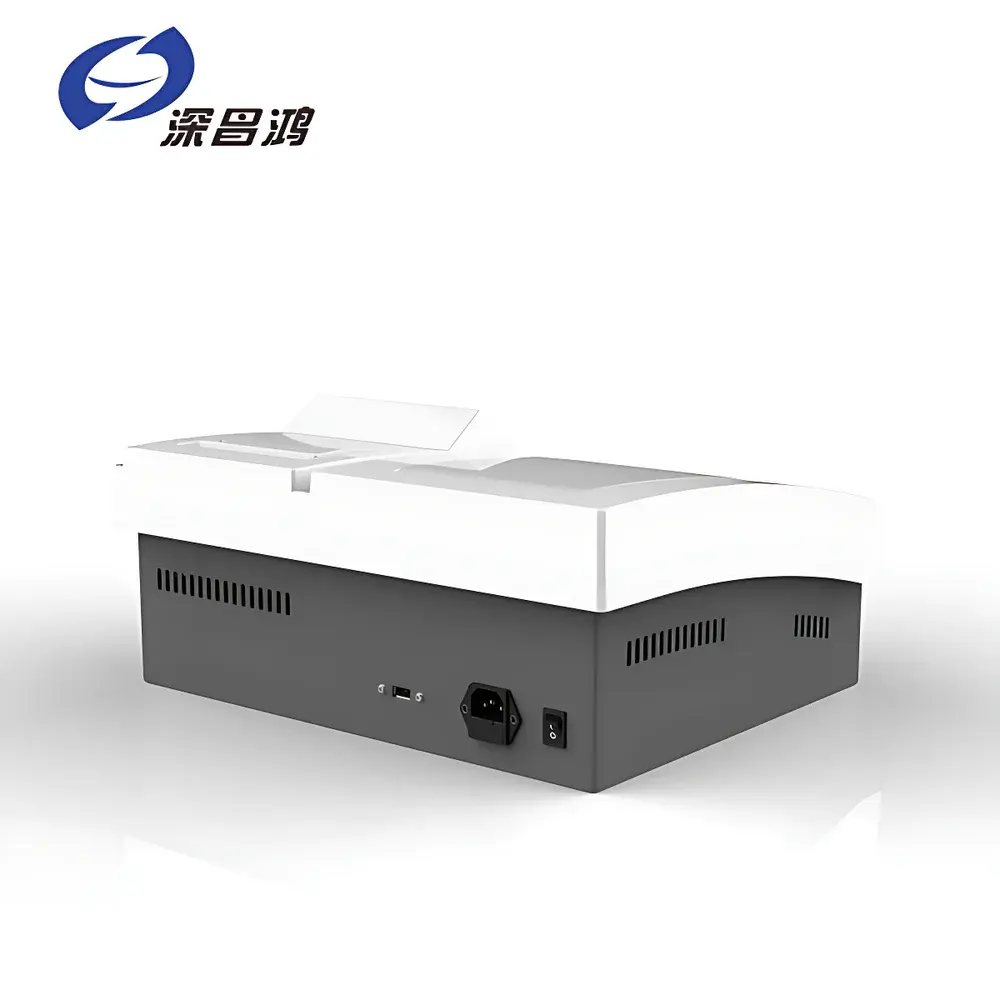
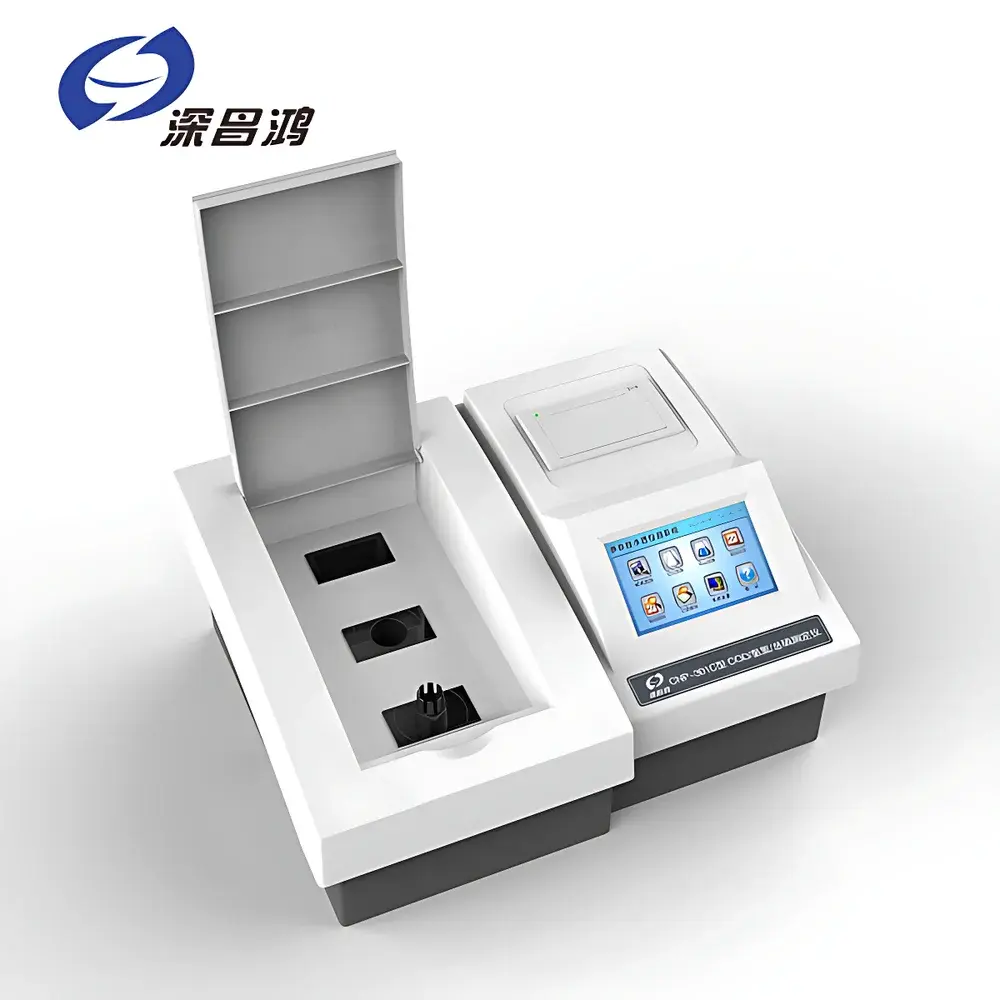
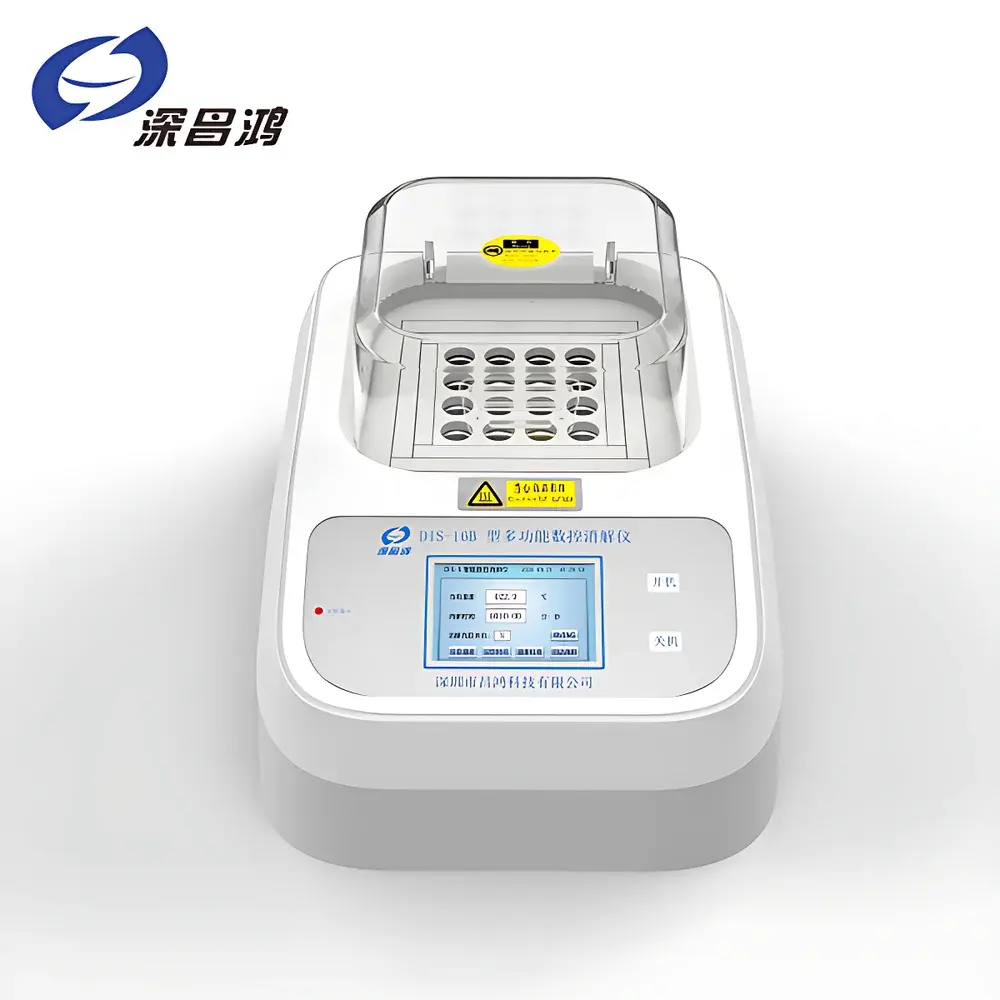
Shenchanghong CNP-301C/D Multi-Parameter Water Quality Analyzer for COD, Ammonia Nitrogen & Total Phosphorus
| Brand | Shenchanghong |
|---|---|
| Origin | Guangdong, China |
| Manufacturer Type | Direct Manufacturer |
| Product Origin | Domestic (China) |
| Model | CNP-301C/D |
| Instrument Type | Laboratory Water Quality Analyzer |
| Measured Parameters | COD, Ammonia Nitrogen, Total Phosphorus |
| COD Range | 5–2000 mg/L (extendable to 20,000 mg/L) |
| Ammonia Nitrogen Range | 0.02–25 mg/L |
| Total Phosphorus Range | 0.00–10 mg/L |
| COD Accuracy | ≤±5% FS |
| Ammonia Nitrogen Accuracy | ≤±3% FS |
| Total Phosphorus Accuracy | ≤±5% FS |
| Chloride Interference Tolerance (COD) | ≤2000 mg/L |
| COD Digestion Temp | 165 °C |
| Ammonia Nitrogen Digestion Temp | Not required (Nessler method) |
| Total Phosphorus Digestion Temp | 120 °C |
| COD Digestion Time | 15 min |
| Total Phosphorus Digestion Time | 30 min |
| Temperature Control Range | Ambient to 200 °C |
| Temperature Control Accuracy | ≤±1.0 °C |
| Optical Stability | ≤0.002 A/20 min |
| Repeatability | ≤±3% |
| Sample Throughput | 16 samples/batch (optional 20/25/36) |
| Digestion Unit Display | Color touchscreen with bilingual (CN/EN) interface |
| Dimensions (Analyzer) | 400 × 310 × 158 mm |
| Dimensions (Digestion Unit, w/o shield) | 260 × 355 × 135 mm |
| Weight (Analyzer) | 4 kg |
| Weight (Digestion Unit) | 5.5 kg |
| Data Interface | USB port |
| Output | Built-in thermal printer |
| Standard Curves | 20 preloaded (user-configurable) |
| Data Storage | 200–1000 measurement records |
| Power Backup | Battery-backed memory retention |
Overview
The Shenchanghong CNP-301C/D is a dedicated laboratory-grade multi-parameter water quality analyzer engineered for precise, simultaneous quantification of chemical oxygen demand (COD), ammonia nitrogen (NH₃-N), and total phosphorus (TP) in environmental, municipal, and industrial wastewater samples. It integrates three standardized analytical methodologies—rapid digestion spectrophotometry for COD, Nessler reagent-based colorimetry for ammonia nitrogen, and molybdenum blue spectrophotometry for total phosphorus—within a single, modular platform. Unlike integrated all-in-one systems, the CNP-301C/D employs a physically separated digestion unit and optical measurement module to eliminate thermal cross-talk and preserve long-term photometric stability. Its optical architecture utilizes high-intensity, long-life cold light sources coupled with narrow-band interference filters, ensuring minimal spectral drift and high signal-to-noise ratio across repeated measurements. Designed for compliance-driven laboratories, the instrument supports traceable calibration, audit-ready data logging, and adherence to core methodology references including ISO 6060 (COD), ISO 7150-1 (ammonia nitrogen), and ISO 6878 (total phosphorus).
Key Features
- Modular design: Independent digestion unit and photometer prevent thermal interference and enhance optical system longevity.
- PID-controlled digestion temperature regulation (ambient to 200 °C) with ±1.0 °C accuracy and programmable timing for method flexibility beyond standard protocols.
- Preloaded calibration curves: 20 user-accessible, editable standard curves—10 for COD, 5 for NH₃-N, and 5 for TP—with support for custom curve import via USB.
- Dual-mode data handling: Internal storage capacity of up to 1000 test records with timestamp, operator ID, and method identifier; exportable in CSV format via USB to PC.
- Dedicated digestion–colorimetric tubes: High-strength borosilicate glass tubes rated for ≥50 autoclave cycles, eliminating disposable tube costs and reducing plastic waste.
- Bilingual touchscreen interface (English/Chinese) on the digestion unit and LCD display on the analyzer enable intuitive operation in multilingual lab environments.
- Thermal printer integration allows immediate hard-copy reporting of results, supporting GLP documentation requirements without external peripherals.
- Power-loss protection: Non-volatile memory retains calibration data, method settings, and recent measurements during unexpected shutdowns.
- Optical stability verified at ≤0.002 A over 20 minutes—critical for low-concentration ammonia nitrogen analysis where baseline drift directly impacts detection limit reliability.
Sample Compatibility & Compliance
The CNP-301C/D accepts aqueous liquid samples within standard regulatory viscosity and turbidity limits (up to 50 NTU for NH₃-N and TP; ≤2000 mg/L chloride for COD). It accommodates common sample preservation protocols (e.g., H₂SO₄ acidification for COD, refrigeration for NH₃-N) and is validated for use with EPA-approved reagent kits (Nessler reagents per Method 350.1; ascorbic acid–molybdate reagents per Method 365.4). While not certified to ISO/IEC 17025 out-of-the-box, its traceable calibration architecture—including factory-certified reference standards and documented linearity verification—supports laboratory accreditation workflows. The instrument’s data structure includes mandatory fields for analyst ID, sample ID, date/time stamp, and method version—enabling alignment with FDA 21 CFR Part 11 requirements when paired with controlled electronic record procedures.
Software & Data Management
Data acquisition and reporting are managed through an embedded microprocessor with real-time calculation engine compliant with ASTM D1252 (COD), ASTM D1426 (NH₃-N), and ASTM D515 (TP). Measurement values are automatically corrected for blank subtraction, dilution factor, and path-length normalization. All raw absorbance readings (at 620 nm for COD, 420 nm for NH₃-N, and 700 nm for TP) are stored alongside final concentration outputs. USB export generates time-stamped CSV files containing sample metadata, measured absorbance, calculated concentration, and QC flags (e.g., “out-of-range”, “low signal”, “calibration expired”). No proprietary software installation is required—files open natively in Excel or LIMS-compatible platforms. Audit trail functionality logs all parameter changes, calibration events, and firmware updates with immutable timestamps.
Applications
This analyzer serves routine monitoring in municipal wastewater treatment plants (influent/effluent QA/QC), environmental testing laboratories conducting surface water surveys (rivers, lakes, reservoirs), and industrial pretreatment facilities verifying discharge compliance per local effluent limits (e.g., China’s GB 8978-1996, EU Urban Wastewater Directive Annex I). It is routinely deployed for process control in biological nutrient removal (BNR) systems, where rapid NH₃-N and TP feedback informs aeration and coagulant dosing decisions. Educational institutions utilize the CNP-301C/D for undergraduate environmental chemistry labs due to its method transparency, reproducible hands-on digestion protocols, and direct linkage to textbook-standard analytical principles.
FAQ
Does the CNP-301C/D comply with international standard methods?
Yes—it implements core principles aligned with ISO 6060 (COD), ISO 7150-1 (ammonia nitrogen), and ISO 6878 (total phosphorus), and its operational parameters meet the instrumental requirements specified in ASTM D1252, D1426, and D515.
Can the digestion temperature and time be customized for non-standard analytes?
Yes—the digestion unit supports fully programmable temperature (ambient to 200 °C) and time (1–120 min) settings, enabling adaptation for alternative digestion-based assays such as total Kjeldahl nitrogen (TKN) or heavy metal leaching protocols.
What is the minimum detectable concentration for ammonia nitrogen?
Based on the Nessler method’s inherent sensitivity and the instrument’s optical resolution, the practical lower limit of quantitation (LLOQ) is 0.02 mg/L NH₃-N, consistent with ISO 7150-1 performance criteria.
Is the instrument suitable for field deployment?
No—it is designed exclusively for controlled laboratory environments. The separate digestion unit requires stable AC power, benchtop space, and ventilation; it lacks battery operation or ruggedized housing for outdoor use.
How is calibration traceability maintained?
Each unit ships with NIST-traceable calibration verification standards for all three parameters. Users perform daily zero and span checks using supplied reference solutions, with results logged automatically and exportable for internal QA review.
Related Products







