
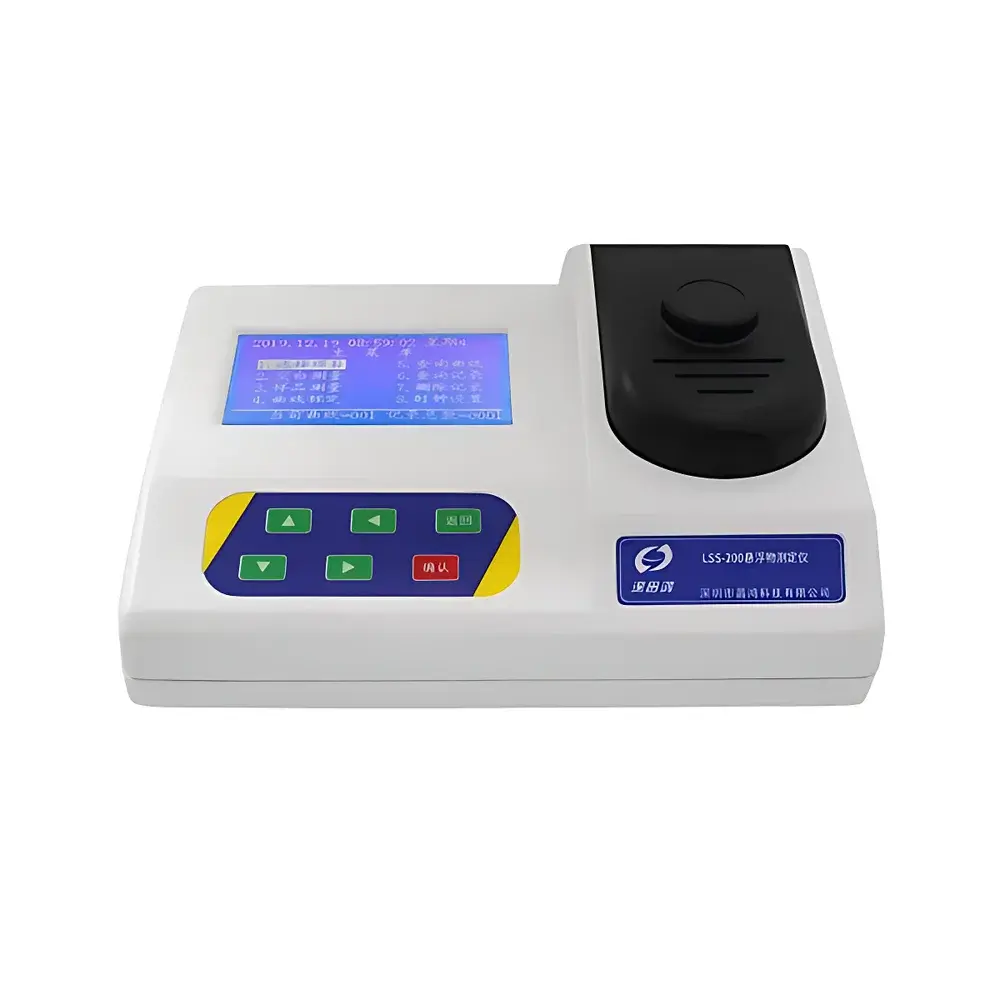
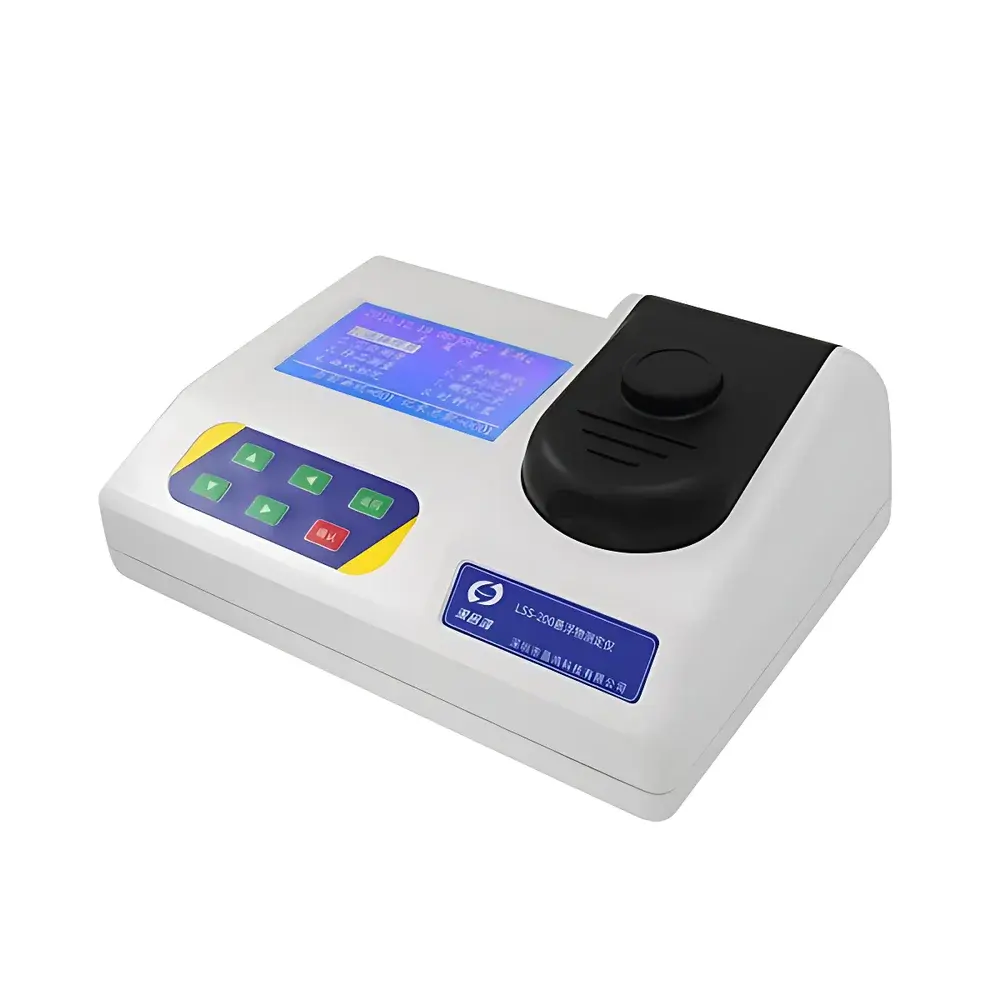
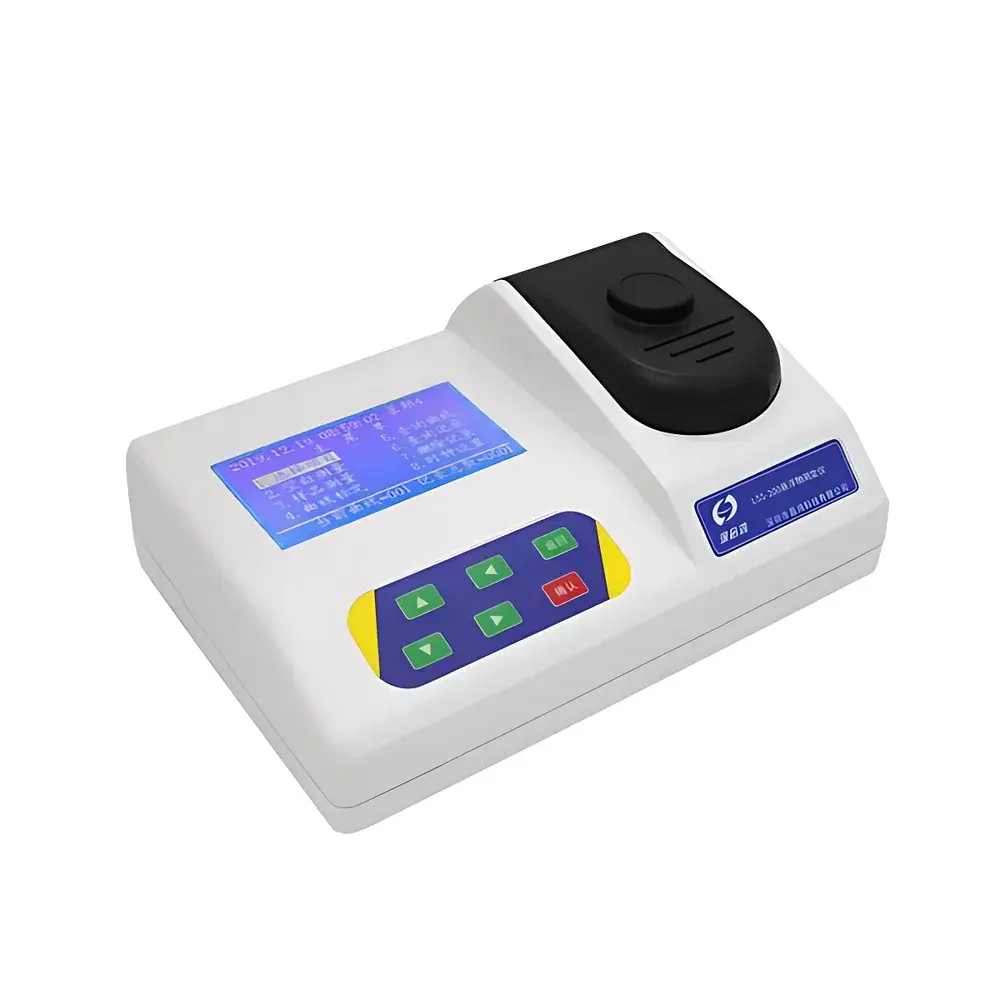
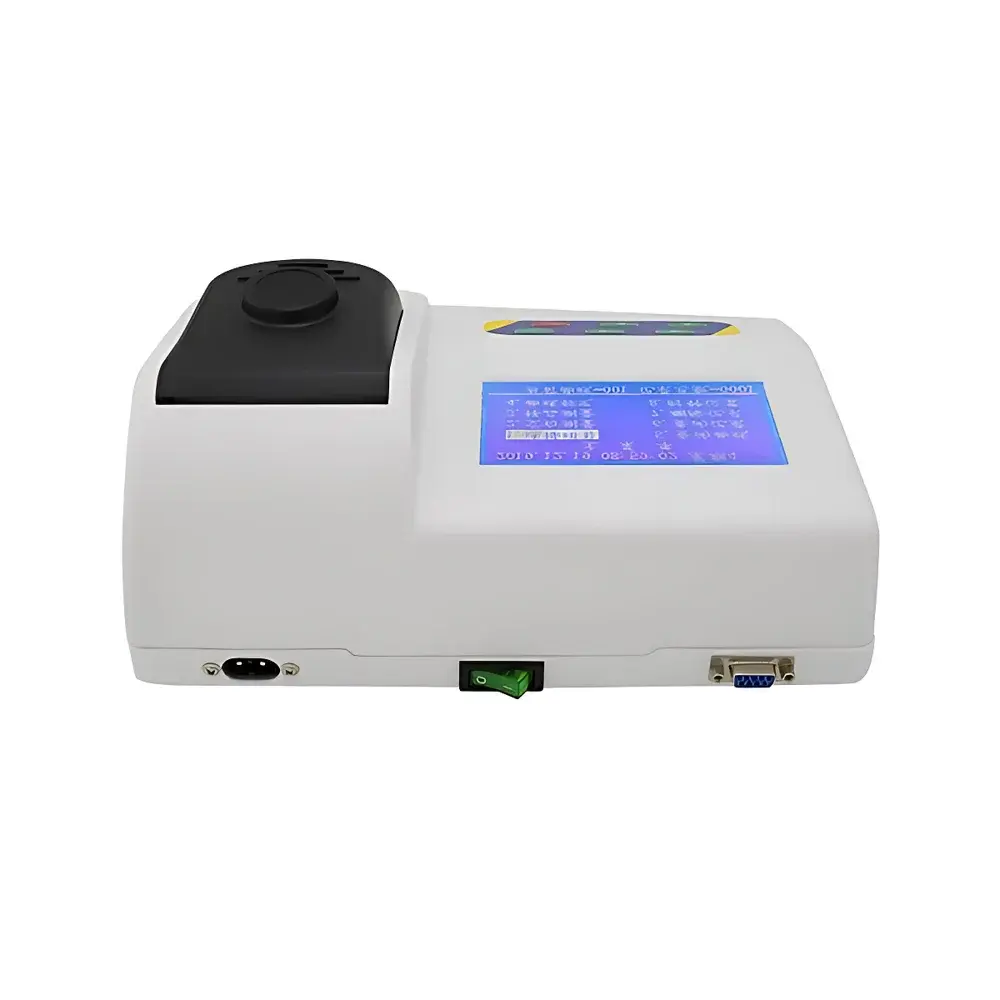
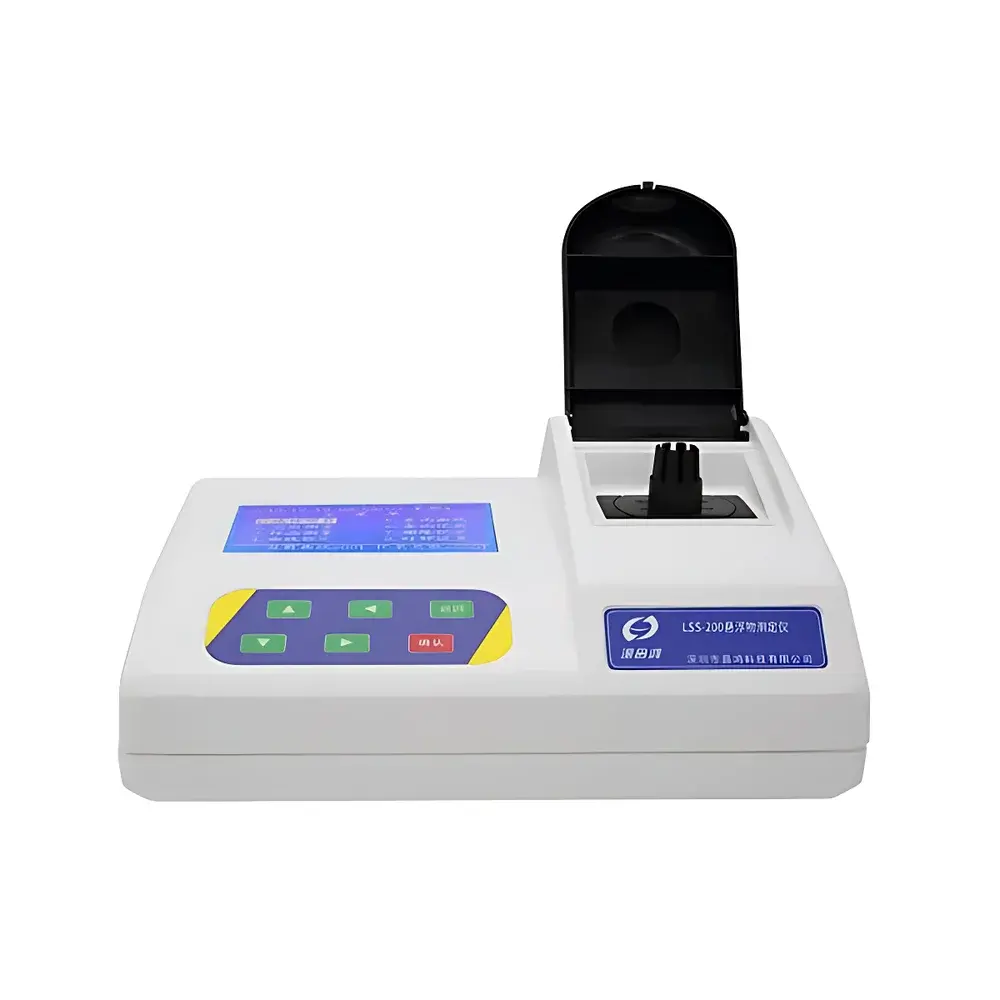
Shenchanghong LSS-200 Suspended Solids Analyzer
| Brand | Shenchanghong |
|---|---|
| Origin | Guangdong, China |
| Manufacturer Type | Direct Manufacturer |
| Country of Origin | China |
| Model | LSS-200 |
| Instrument Type | Laboratory Benchtop Analyzer |
| Measurement Principle | Nephelometric Turbidity Detection (90° scattered light) with Integrated Colorimetric Absorption Pathway (for True Color/Color Units) |
| Turbidity Range | 0–400 NTU (extendable to 1000 NTU) |
| Color Range | 0–500 CPU (Color Platinum-Cobalt Units) |
| Turbidity Accuracy | ≤ ±2% FS |
| Color Accuracy | ≤ ±3% FS |
| Repeatability | ≤ ±2% FS |
| Minimum Resolution | 0.01 NTU |
| Drift | < 0.1 NTU/h |
| Dimensions | 266 × 200 × 130 mm |
| Weight | 1.0 kg |
| Operating Environment | 5–40 °C, RH ≤70%, AC 220 V ±10%, 50 Hz |
| Optical Source | Imported high-intensity LED (100,000 h lifetime), narrow-band interference filters |
| Display | Backlit LCD with Chinese interface |
| Data Storage | 20 calibration curves + 400 measurement records (non-volatile memory) |
| Housing Material | Molded ABS with corrosion resistance |
| Microcontroller | Low-power 16-bit MCU architecture |
Overview
The Shenchanghong LSS-200 Suspended Solids Analyzer is a dual-function benchtop instrument engineered for precise, trace-level quantification of suspended solids concentration in aqueous samples via nephelometric turbidity measurement, complemented by standardized colorimetric analysis for true color (Platinum-Cobalt Units). It operates on the principle of 90° scattered light detection (ISO 7027-compliant optical geometry), where incident light from a stabilized high-luminance LED source interacts with particulate matter in the sample cell; the intensity of scattered radiation is linearly correlated to particle concentration within defined dynamic ranges. Simultaneously, the integrated absorption pathway enables spectrally resolved color assessment per APHA 2120B and ISO 7887 protocols. Designed exclusively for laboratory environments, the LSS-200 delivers metrologically traceable results under controlled ambient conditions (5–40 °C, ≤70% RH), fulfilling foundational requirements for regulatory water quality screening in municipal, industrial, and environmental testing laboratories.
Key Features
- Stabilized optical system featuring an imported long-life (≥100,000 h) high-brightness LED source coupled with precision narrow-band interference filters—minimizing spectral drift and enhancing photometric stability across extended operation cycles.
- Dual-mode measurement architecture supporting both turbidity (NTU) and true color (CPU) in a single platform, eliminating need for separate instruments and reducing cross-calibration uncertainty.
- High-resolution detection capability with 0.01 NTU minimum resolution and verified repeatability ≤±2% full scale—critical for low-turbidity applications such as drinking water distribution system monitoring and membrane filtration validation.
- Non-volatile internal memory stores up to 20 user-defined calibration curves and 400 individual measurement records, retaining data integrity during power interruption without battery backup dependency.
- Robust mechanical design incorporating injection-molded ABS housing with enhanced chemical resistance—suitable for routine exposure to common laboratory reagents and disinfectants.
- Embedded 16-bit low-power microcontroller ensures deterministic real-time signal processing, consistent response latency, and minimal thermal noise contribution to analog-to-digital conversion.
Sample Compatibility & Compliance
The LSS-200 accepts standard 10-mm pathlength square cuvettes (supplied: 2 pcs) and is compatible with deionized water blanks, formazin-based turbidity standards (e.g., StablCal® or equivalent traceable to NIST SRM 2134), and platinum-cobalt reference solutions (APHA 500 series). It supports method validation per ISO 7027 (turbidity) and ISO 7887-2 (color), and its performance specifications align with the instrumental requirements outlined in US EPA Method 180.1 and ASTM D1889. While not certified for GLP/GMP production environments, its documented accuracy, repeatability, and thermal drift characteristics meet criteria for routine QC/QA use in ISO/IEC 17025-accredited laboratories conducting environmental water analysis.
Software & Data Management
No external PC software is required for basic operation; all configuration, calibration, and data retrieval occur via the built-in Chinese-language LCD interface with hierarchical menu navigation. Calibration routines support multi-point standardization using up to five reference points per curve, with automatic slope/intercept calculation and residual error reporting. All stored measurements include timestamp, operator ID (manually entered), and associated calibration ID—enabling rudimentary audit trail functionality. Data export is limited to manual transcription; however, the non-volatile memory architecture ensures compliance with basic record retention mandates under ISO 17025 Clause 7.5.2 (Control of Records) when combined with laboratory SOPs governing data handling.
Applications
- Drinking water treatment plant effluent verification and filter backwash optimization.
- Wastewater influent/effluent monitoring per national discharge standards (e.g., China’s GB 8978-1996, EU Urban Wastewater Treatment Directive Annex I).
- Surface water quality assessment in lakes, rivers, and reservoirs—particularly for sediment transport modeling and eutrophication studies.
- Process control in pharmaceutical water systems (PW, WFI) where turbidity serves as a surrogate for particulate contamination.
- Educational laboratory instruction in environmental engineering and analytical chemistry curricula.
FAQ
Does the LSS-200 comply with ISO 7027 for turbidity measurement?
Yes—the optical geometry implements 90° scattered light detection with a nominal 860 nm LED source and appropriate spectral bandwidth, satisfying the fundamental design criteria of ISO 7027-1:2016.
Can it measure turbidity below 1 NTU with reliable accuracy?
With its 0.01 NTU resolution and ≤±2% FS accuracy specification, the LSS-200 is suitable for sub-1 NTU measurements typical of finished drinking water; however, users must rigorously control blank purity and cuvette cleanliness to maintain stated performance.
Is the color measurement function compliant with APHA standards?
The instrument reports results in Platinum-Cobalt Units (CPU) using fixed-wavelength absorbance at 455 nm, consistent with APHA Standard Method 2120B for true color determination.
What maintenance is required to ensure long-term calibration stability?
Annual verification against traceable turbidity and color standards is recommended; optical windows should be cleaned with lint-free tissue and isopropyl alcohol after each use to prevent residue accumulation.
Is firmware upgrade capability supported?
No—firmware is factory-programmed and not field-upgradable; functional enhancements require hardware revision per manufacturer release cycle.







