
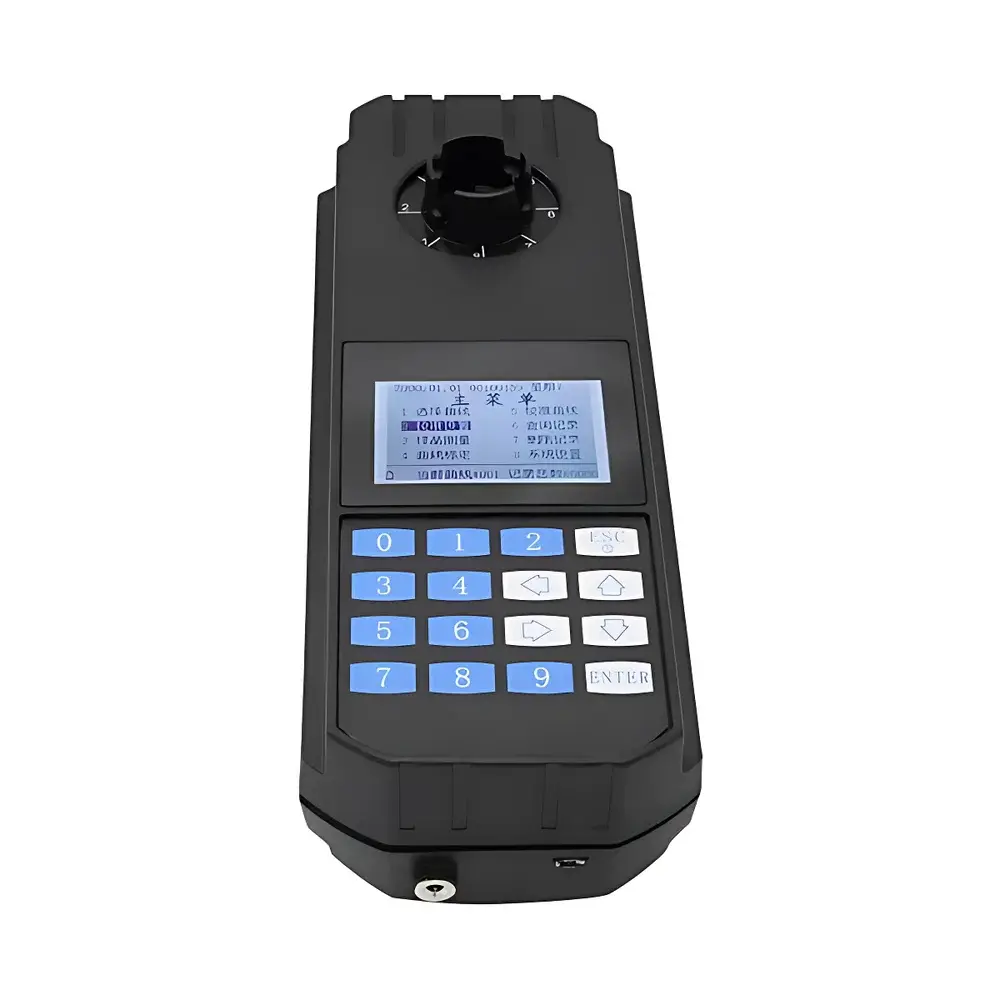
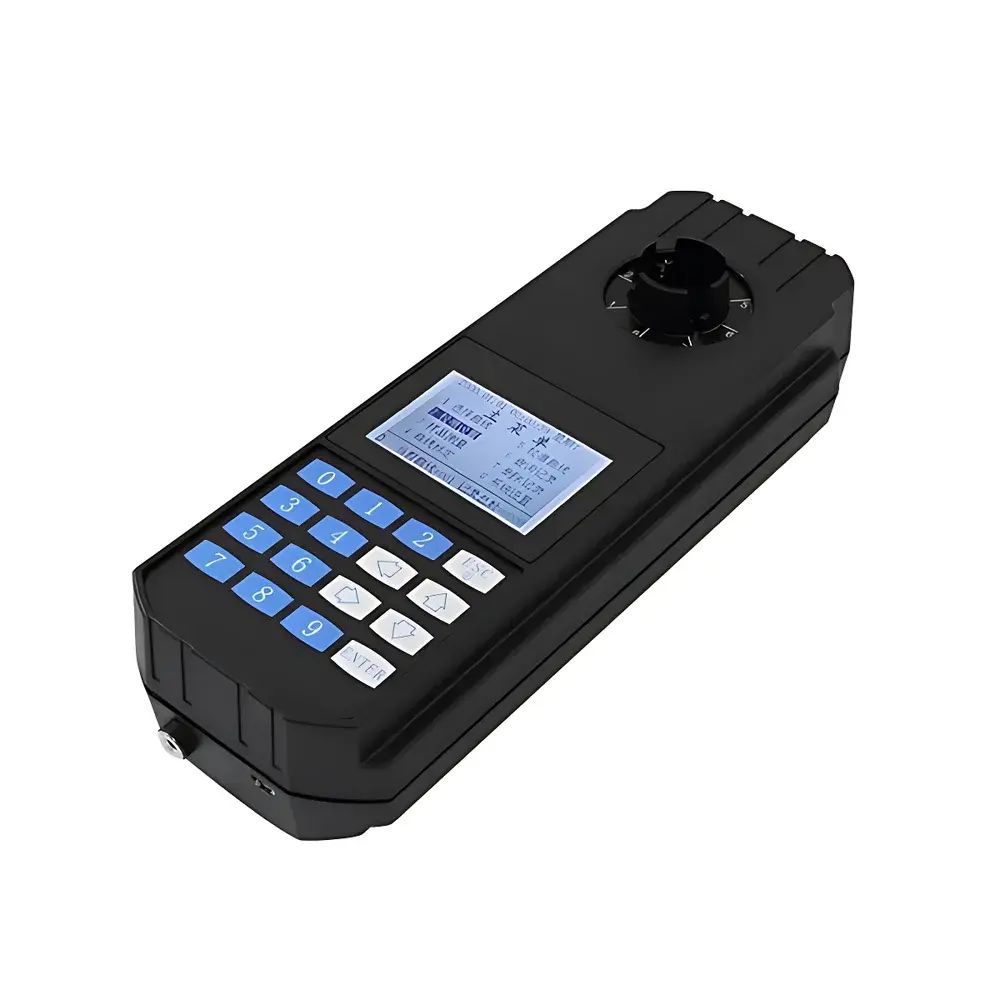
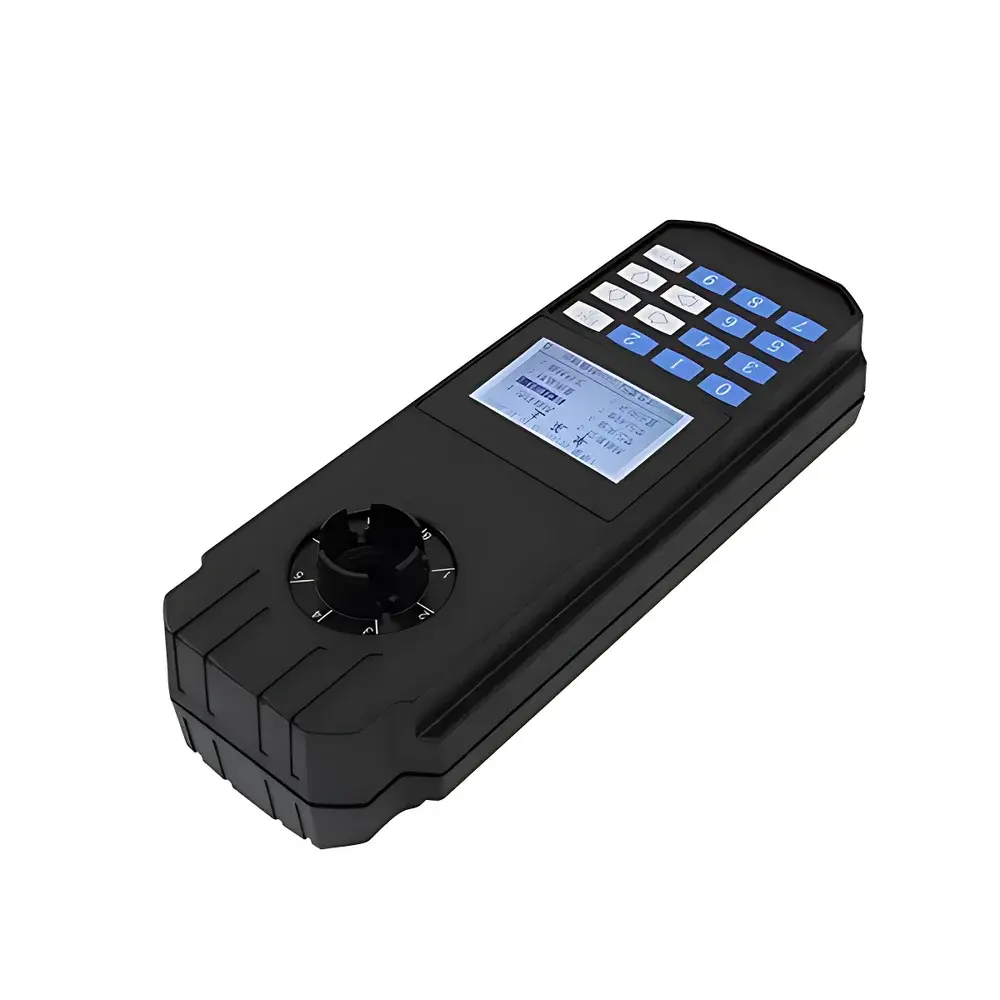
Shenchanghong PBRD-501 Portable Aquaculture Water Quality Analyzer
| Brand | Shenchanghong |
|---|---|
| Origin | Guangdong, China |
| Manufacturer Type | OEM/ODM Manufacturer |
| Country of Origin | China |
| Model | PBRD-501 |
| Price | Upon Request |
| pH Range | 5.00–8.00 |
| Dissolved Oxygen (DO) | 0.10–10.0 mg/L |
| Ammonia-Nitrogen (NH₃-N) | 0.02–25.0 mg/L |
| Nitrite-Nitrogen (NO₂⁻-N) | 0.02–5.00 mg/L |
| Sulfide (S²⁻) | 0.01–1.00 mg/L |
| Dimensions (Instrument) | 340 mm × 250 mm × 130 mm |
| Weight (Instrument) | 1.0 kg |
| Data Storage Capacity | 500 records with timestamp |
| Accuracy | ≤ ±5% FS |
| Power Supply | Rechargeable Li-ion battery (80 mm × 230 mm × 55 mm, 240 g) |
| Interface | USB |
| Display | Full Chinese menu interface |
| Optical Source | Imported high-stability optical module |
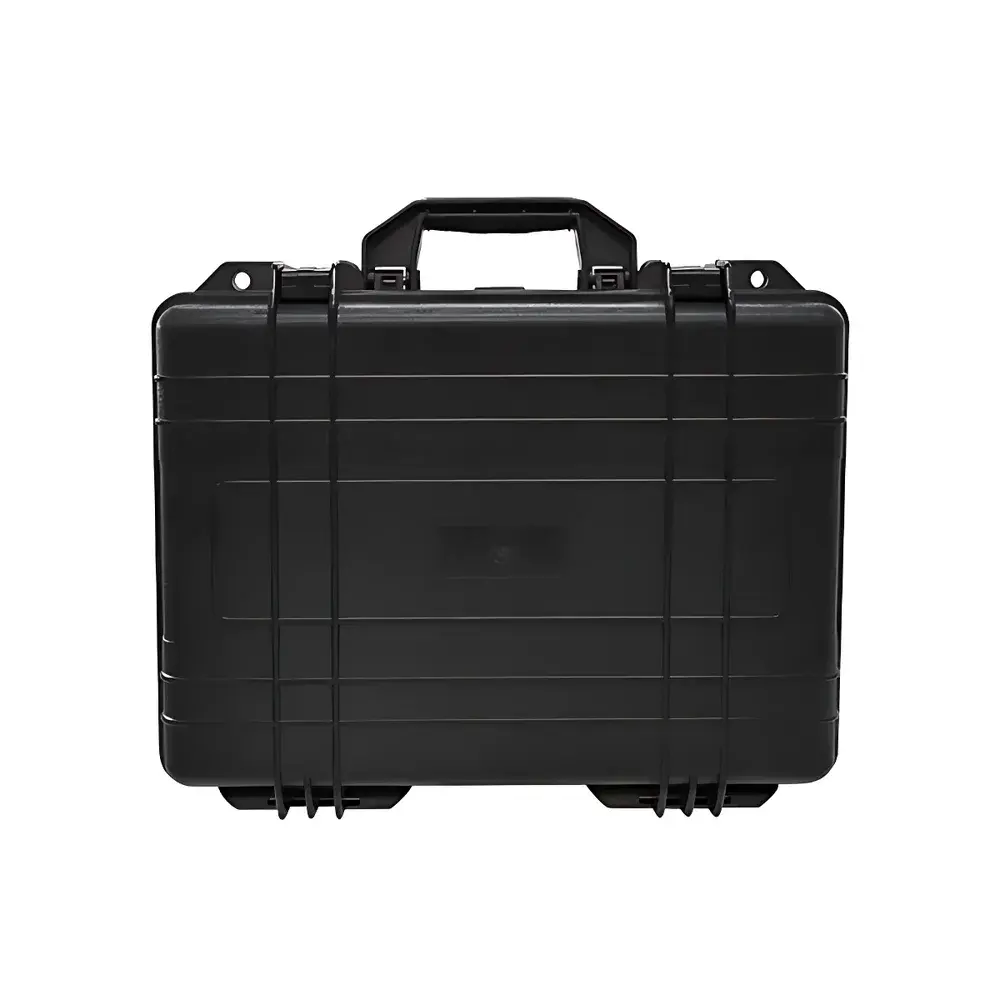
| Accessories | Carrying case, 10 cuvettes, full reagent kit, USB cable, data acquisition software CD, manual, warranty card, certificate of conformity |
Overview
The Shenchanghong PBRD-501 Portable Aquaculture Water Quality Analyzer is a field-deployable, multi-parameter photometric analyzer engineered for rapid, on-site assessment of critical water quality parameters in aquaculture systems. It operates on the principle of colorimetric analysis—where target analytes (e.g., ammonia-nitrogen, nitrite, sulfide) react with proprietary reagents to form stable chromophores, whose absorbance is measured at precisely defined wavelengths using a high-stability imported optical module. This methodology complies with standard reference methods including ISO 7890-2 (ammonia), ISO 6777 (nitrite), and APHA Standard Methods 4500-NH₃ F & 4500-NO₂⁻ B. Designed for use in ponds, hatcheries, recirculating aquaculture systems (RAS), and transport tanks, the PBRD-501 delivers quantitative results without requiring laboratory infrastructure—enabling real-time decision-making to mitigate stress, disease outbreaks, and mortality events.
Key Features
- Multi-parameter capability: Simultaneous quantification of pH, dissolved oxygen (DO), ammonia-nitrogen (NH₃-N), nitrite-nitrogen (NO₂⁻-N), and sulfide (S²⁻) in a single compact unit.
- Optical stability assurance: Equipped with an imported high-intensity, low-drift light source and precision interference filters—minimizing spectral drift and ambient light interference under variable field conditions.
- Integrated rechargeable power system: A dedicated 240 g Li-ion battery pack (80 × 230 × 55 mm) provides ≥12 hours of continuous operation; eliminates disposable battery dependency and supports >500 charge cycles.
- On-device data management: Stores up to 500 test records with automatic timestamping (year/month/day/hour/minute); supports GLP-compliant traceability for routine monitoring logs.
- Field-optimized ergonomics: Total instrument mass of 1.0 kg with ruggedized ABS housing and IP54-rated enclosure; supplied with shock-absorbing carrying case for transport across muddy banks, boats, or remote sites.
- USB data export: Direct transfer of measurement history to Windows-based PCs via included USB cable and proprietary data acquisition software (CD-delivered), enabling CSV export for trend analysis in Excel or LIMS integration.
Sample Compatibility & Compliance
The PBRD-501 accepts standard 10 mm pathlength glass cuvettes (supplied, 10 pcs per kit) and is validated for use with surface water, pond effluent, well water, and recirculated aquaculture discharge streams. All assay chemistries are formulated to minimize interferences from common aquaculture matrix components—including humic substances, suspended solids (<50 NTU), and moderate salinity (≤5 ppt). Method performance meets the repeatability requirements of ISO/IEC 17025 for field instruments: intra-laboratory RSD ≤4.5% for NH₃-N at 5.0 mg/L (n=6). While not certified to FDA 21 CFR Part 11, the device supports audit-ready documentation when paired with controlled reagent lots and dated calibration verification logs—aligning with GMP-aligned aquaculture QA protocols in export-oriented facilities.
Software & Data Management
The bundled PC software enables batch download, sorting by parameter or date, and generation of time-series plots for DO, NH₃-N, and NO₂⁻-N. Each record includes instrument ID, operator ID (manually entered), sampling location code, and ambient temperature (measured via integrated thermistor). Data files are saved in encrypted .scd format with optional password protection; export to CSV preserves all metadata fields. No cloud connectivity or remote telemetry is implemented—ensuring data sovereignty and compliance with regional data residency policies applicable to agricultural monitoring devices.
Applications
- Aquaculture health management: Daily screening of toxic nitrogen species during larval rearing, feeding cycles, and post-antibiotic treatment phases.
- Water exchange optimization: Quantifying pre- and post-exchange NH₃-N and DO to validate flow rate efficacy in earthen ponds or raceways.
- Regulatory reporting: Generating auditable records for local environmental bureaus (e.g., China MEE Tier-III discharge reporting) and export certification bodies (e.g., EU Regulation EC No. 852/2004 Annex II).
- Research & extension services: Supporting university-led studies on biofilter efficiency, nitrification kinetics, and hypoxia thresholds in tilapia, shrimp, and carp systems.
- Cross-sectoral utility: Validated for municipal drinking water pre-screening (per GB/T 5750.5–2006), wastewater influent characterization, and petroleum-contaminated groundwater triage (sulfide detection).
FAQ
What calibration standards are required for daily use?
The PBRD-501 uses factory-calibrated curves stored in non-volatile memory; no user calibration is needed for routine operation. Optional NIST-traceable check standards (pH 6.86/7.00 buffer, DO saturation solution) are recommended weekly for verification.
Can the instrument measure seawater samples?
It is validated for salinities up to 5 ppt. For marine aquaculture (>15 ppt), DO and NH₃-N readings require manual correction using published salinity compensation factors; sulfide assays may exhibit reduced sensitivity due to chloride competition.
Is reagent shelf life documented?
All reagent kits include lot-specific expiration dates (typically 18 months unopened, 6 months after first opening when refrigerated at 2–8°C) and are supplied with stability validation reports per ISO 8655-6.
Does the device support external probe inputs (e.g., for temperature or conductivity)?
No—temperature is measured internally via a calibrated thermistor for reaction compensation; no auxiliary sensor ports are provided.
How is firmware updated?
Firmware upgrades are performed offline via USB using the manufacturer’s authenticated update utility; no internet connection is required. Version history and release notes are included in the software package.
Related Products







