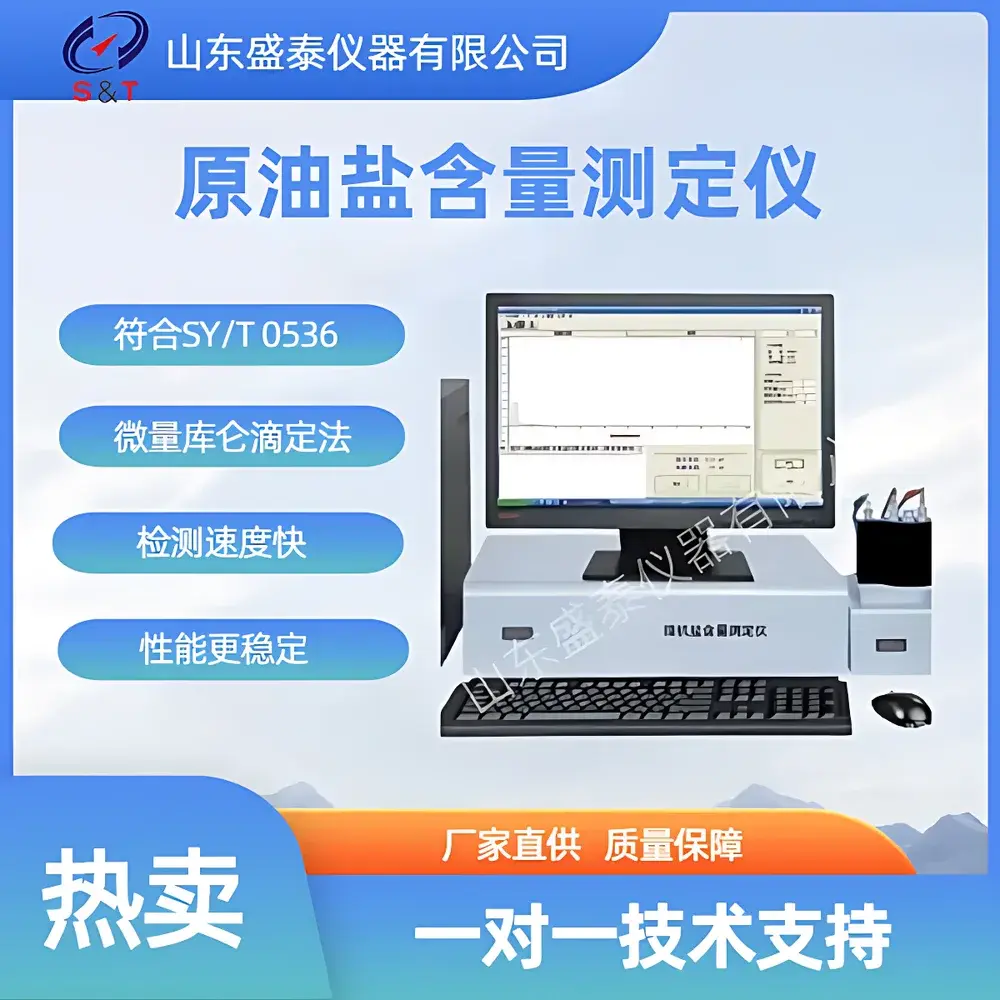
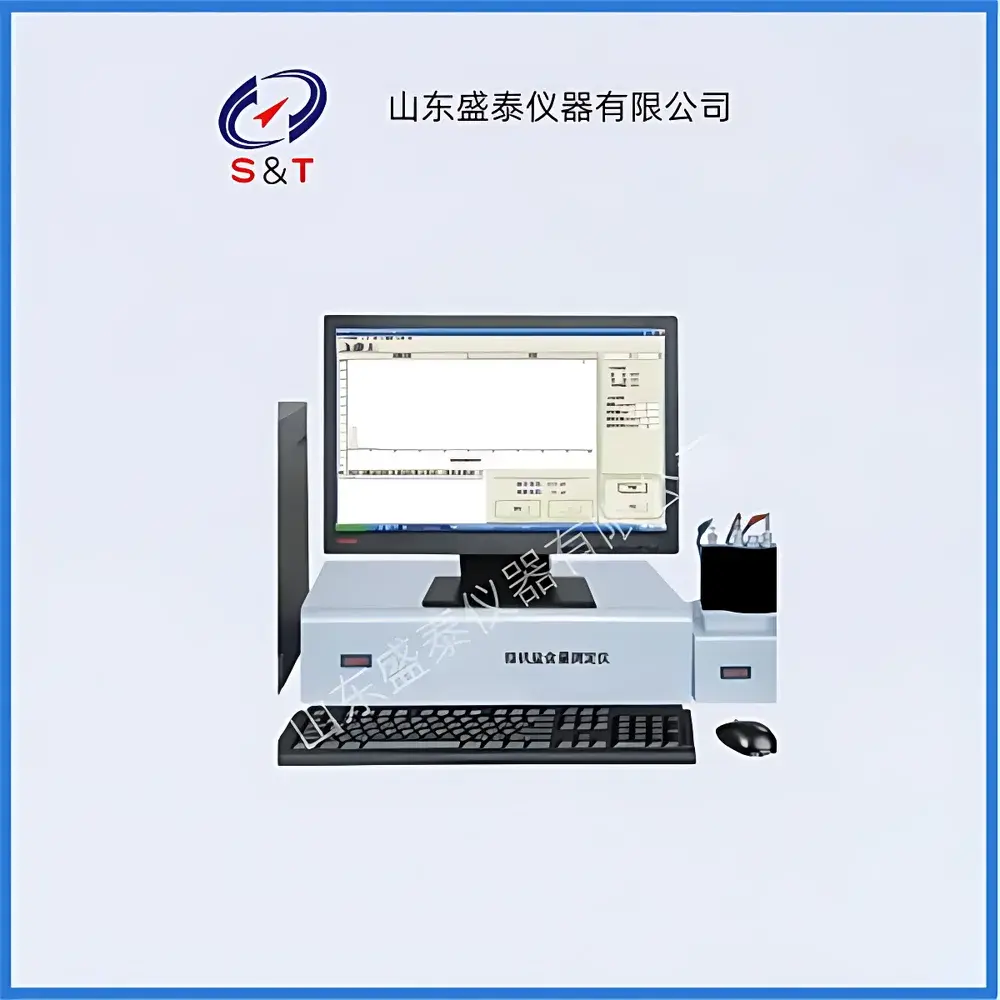
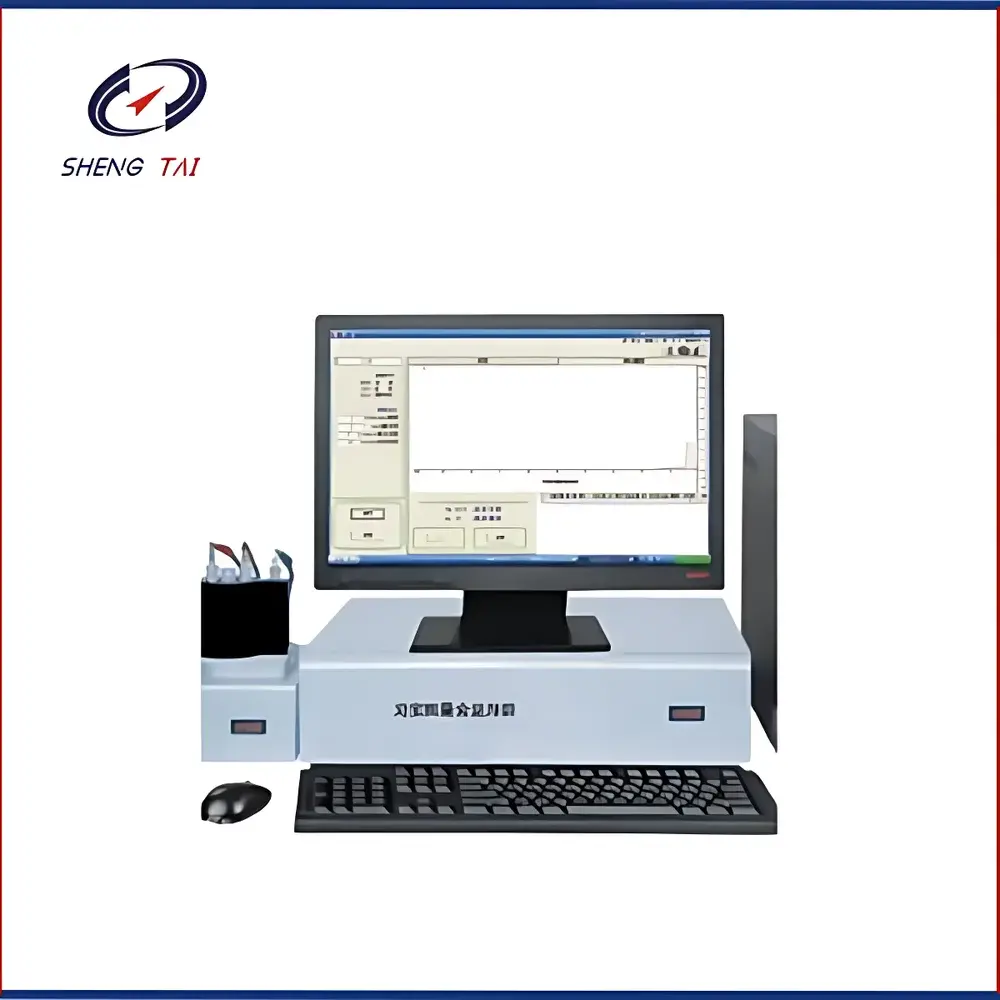
Shengtai Instruments SH0536 Crude Oil and Residual Fuel Oil Salt Content Analyzer
| Brand | Shengtai Instruments |
|---|---|
| Origin | Shandong, China |
| Manufacturer Type | Direct Manufacturer |
| Model | SH0536 |
| Measurement Principle | Microcoulometric Titration (Ag⁺/Cl⁻ Reaction) |
| Compliance | SY/T 0536, ZBE 21001–1987 |
| Sample Types | Crude oil, residual fuel oil, heavy oil, refinery wastewater, industrial process water |
| Salt Range | 0.2 ppm – 10,000 mg NaCl/L |
| Chloride Range | 0.1 ppm – 10,000 mg Cl⁻/L |
| Accuracy | ≤20% (NaCl <3 mg/L), ≤10% (3–10 mg/L), ≤8% (≥10 mg/L) |
| Repeatability | ≤0.3 mg/L (NaCl <3 mg/L), ≤1.2 mg/L (3–10 mg/L), ≤8% RSD (≥10 mg/L) |
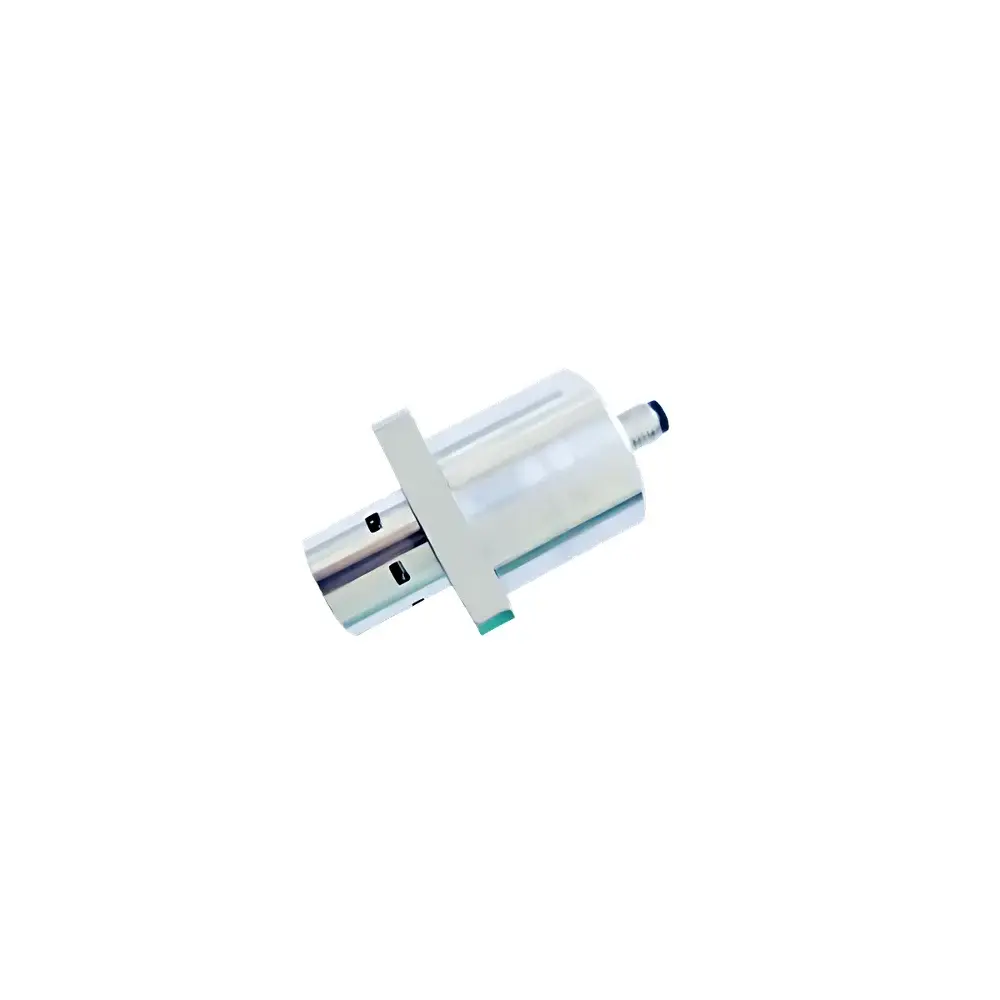
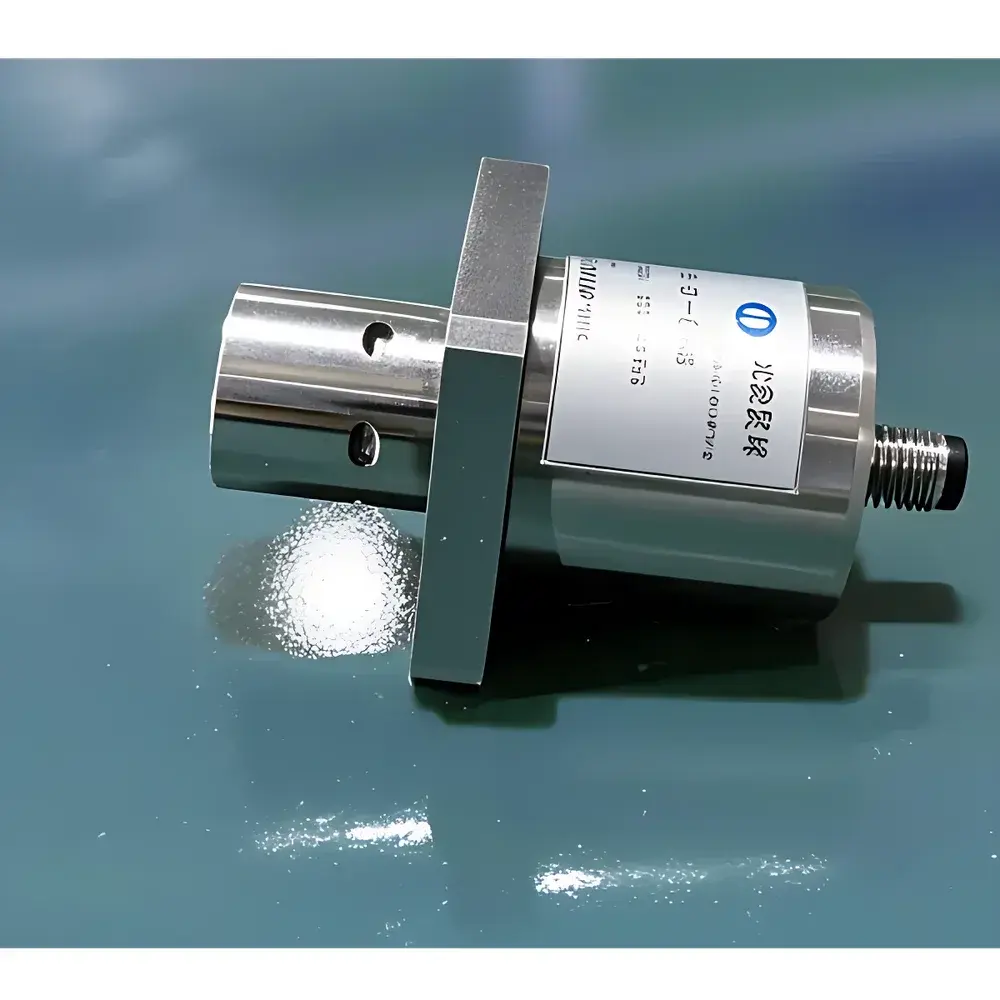
| Electrolytic Cell Design | Fritted Glass Disc (Replaces Ion-Exchange Membrane) |
| Control System | Embedded Microprocessor + PC-Based Data Acquisition & Visualization |
Overview
The Shengtai Instruments SH0536 Crude Oil and Residual Fuel Oil Salt Content Analyzer is a dedicated microcoulometric titration system engineered for precise quantification of inorganic chloride ions (Cl⁻) and total salt content—expressed as sodium chloride equivalent (NaCl)—in complex hydrocarbon matrices. It operates on the fundamental electrochemical principle of controlled-potential coulometry: when a sample is introduced into the electrolytic cell, chloride ions react stoichiometrically with electrogenerated silver cations (Ag⁺) at the anode surface, forming insoluble AgCl precipitate. The charge consumed during this reaction is measured in real time and converted to analyte concentration via Faraday’s law of electrolysis. Unlike conventional potentiometric or colorimetric methods, this technique eliminates matrix interference from organic sulfur compounds, naphthenic acids, and suspended solids commonly present in crude oils and refinery residues. The SH0536 is explicitly designed to meet the procedural requirements of SY/T 0536 (Petroleum Industry Standard of the People’s Republic of China) and ZBE 21001–1987, ensuring methodological alignment with industry-accepted protocols for custody transfer, desalting optimization, and corrosion risk assessment.
Key Features
- Microcoulometric detection architecture with high-resolution current integration (±0.1 nA resolution) and adaptive baseline correction for low-level chloride quantification down to 0.1 ppm Cl⁻.
- Fritted glass disc electrolytic cell replaces traditional ion-exchange membranes—reducing maintenance frequency, eliminating membrane fouling, and enabling rapid cleaning between samples without disassembly.
- Dual-range measurement capability: automatic switching between low-concentration (0.2–100 ppm NaCl) and high-concentration (100–10,000 mg/L NaCl) modes to preserve linearity and minimize dilution errors.
- Integrated microprocessor-controlled reagent delivery, cell temperature stabilization (±0.5 °C), and real-time titration curve visualization via USB-connected host PC.
- Calibration traceability supported by certified reference standards (e.g., NaCl aqueous solutions traceable to NIST SRM 999b) and built-in validation checks for electrode response stability and Ag⁺ generation efficiency.
Sample Compatibility & Compliance
The SH0536 is validated for direct analysis of undiluted or minimally diluted samples including: crude oils (API gravity 10–45°), vacuum residua, coker feedstocks, dehydrated emulsions, and refinery sour water streams. Its robust cell design accommodates high-viscosity samples (up to 500 cSt at 40 °C) when used with optional heated sample introduction modules. Method compliance extends beyond SY/T 0536 to support internal QA/QC workflows aligned with ISO 8502-9 (corrosion testing), ASTM D6470 (chloride in crude oil), and refinery-specific specifications (e.g., API RP 932-C for high-chloride corrosion management). All measurement data—including raw current-time integrals, calibration logs, operator ID, and timestamped audit trails—can be exported in CSV or XML format for GLP/GMP documentation and regulatory review.
Software & Data Management
The SH0536 is operated through Shengtai’s proprietary SaltCalc™ v3.2 software suite, compatible with Windows 10/11 (64-bit). The interface provides real-time titration curve plotting, dynamic endpoint recognition algorithms, multi-point calibration curve fitting (linear and quadratic), and automated report generation per sample batch. Data integrity safeguards include user-level access control (admin/operator modes), electronic signature support, and immutable audit logs compliant with FDA 21 CFR Part 11 requirements when deployed with validated IT infrastructure. Raw datasets are stored locally with SHA-256 checksum verification; optional cloud backup integration supports centralized laboratory information management system (LIMS) synchronization.
Applications
- Optimization of electrostatic desalter operation by monitoring inlet/outlet salt concentrations to maintain <1 PTB (pounds per thousand barrels) target thresholds.
- Corrosion prediction modeling through quantitative correlation of chloride levels with predicted HCl generation rates during atmospheric/vacuum distillation.
- Feedstock qualification for hydrotreating units where chloride-induced catalyst poisoning is a critical operational constraint.
- Regulatory compliance reporting for discharge permits (e.g., EPA NPDES) requiring chloride concentration limits in refinery wastewater effluents.
- Research applications in petroleum geochemistry involving halide profiling of source rock extracts and biodegraded oils.
FAQ
What sample preparation is required prior to analysis?
Minimal preparation is needed: crude oil samples require homogenization and filtration (≤5 µm) to remove particulates; aqueous samples may be analyzed directly after pH adjustment to 4.5–7.0.
Can the SH0536 analyze samples containing organic chlorides?
No—the method selectively detects inorganic chloride (Cl⁻); organochlorines (e.g., chlorinated hydrocarbons) do not interfere but also remain unquantified unless subjected to oxidative digestion pretreatment.
Is the fritted glass disc replaceable, and what is its typical service life?
Yes—the frit is a consumable component with a nominal service life of ≥500 injections under routine use; replacement kits and cleaning protocols are included with each instrument shipment.
Does the system support automated calibration verification between sample runs?
Yes—users may configure periodic standard spike checks (e.g., every 10th sample) with automatic pass/fail evaluation against predefined recovery tolerances (±15% for 5 mg/L NaCl standard).
What electrical and environmental requirements must be met for installation?
The analyzer requires a stable 220 VAC ±5%, 50 Hz power supply, ambient temperature control (15–30 °C), and non-condensing humidity <80% RH; no external gas supply or exhaust hood is required.
Related Products