
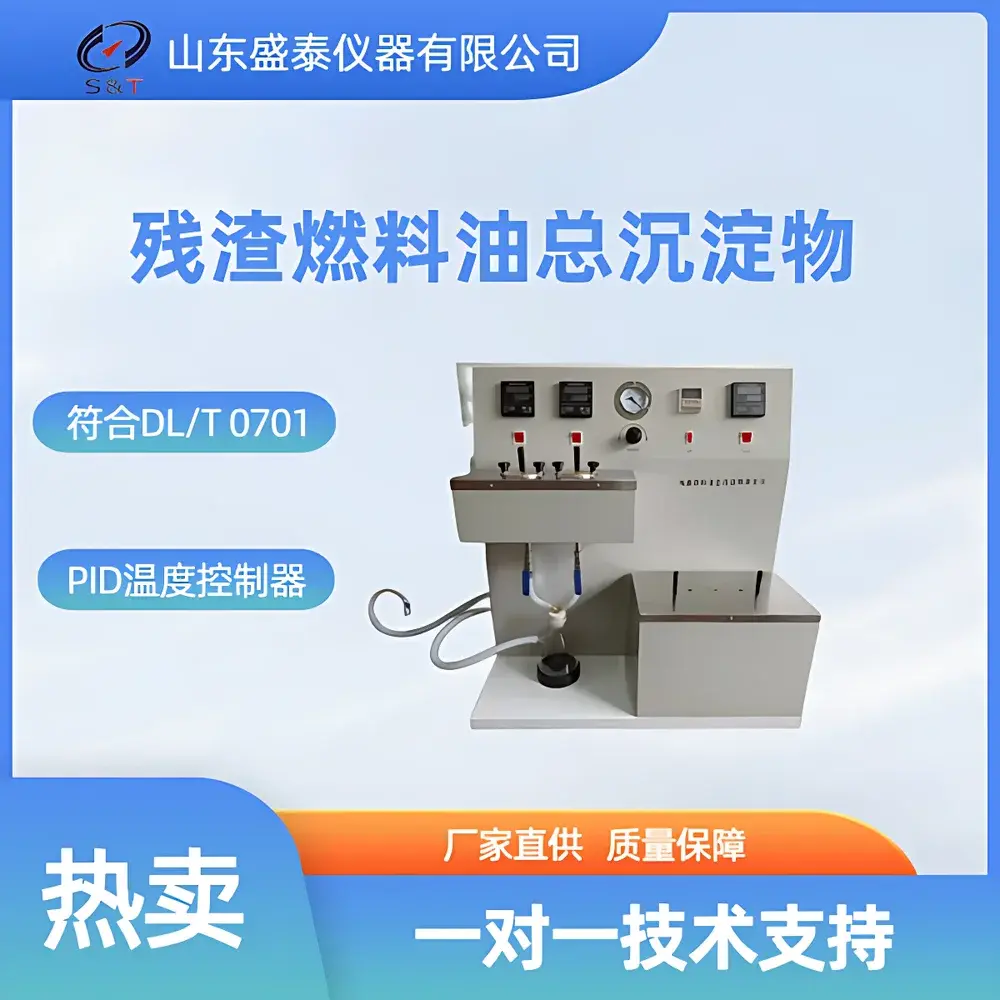
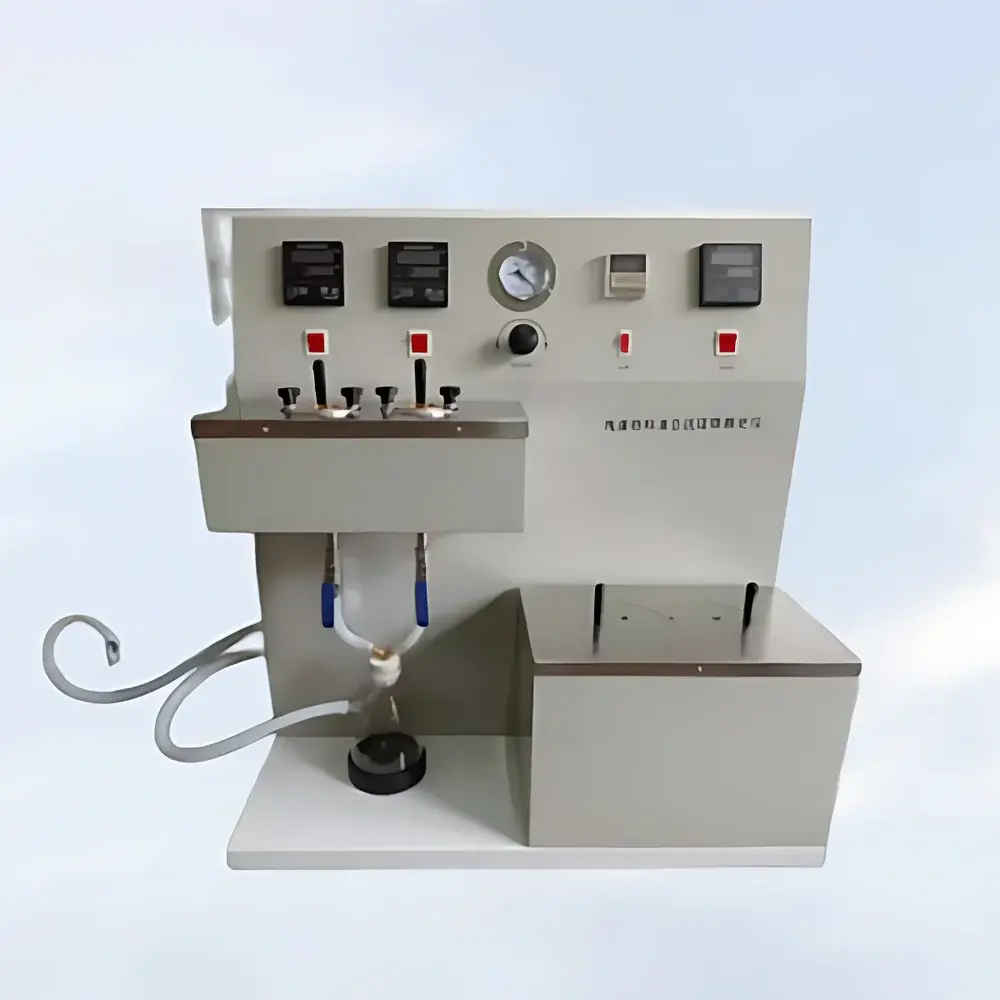
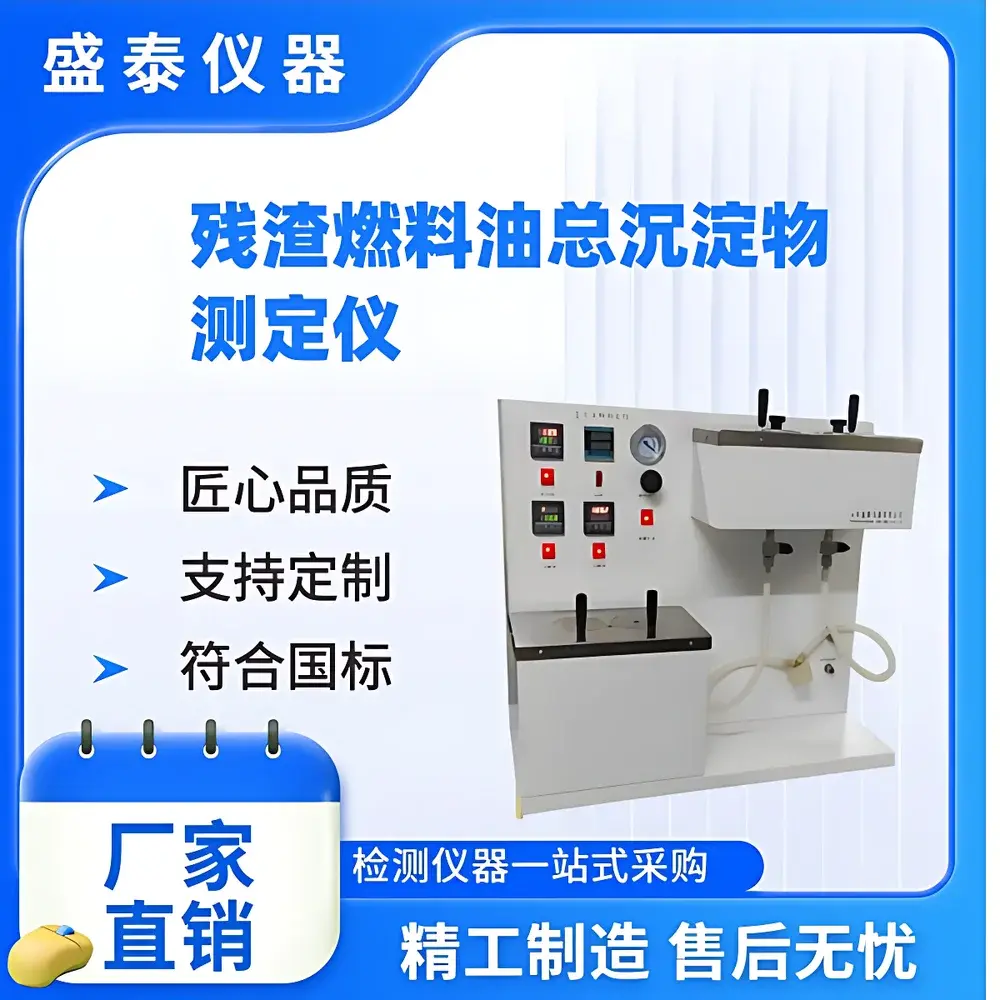
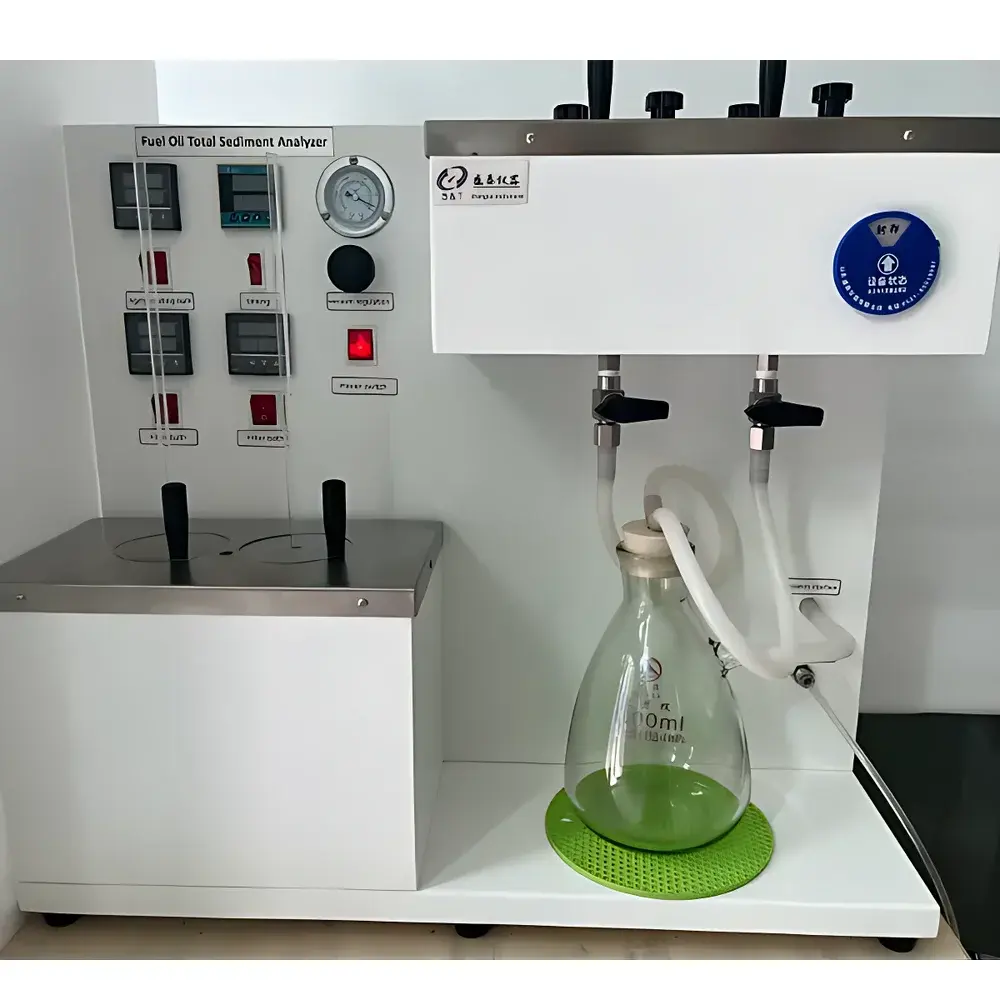
Shengtai Instruments SH0702 Petroleum Sediment Performance Tester
| Brand | Shengtai Instruments |
|---|---|
| Origin | Shandong, China |
| Manufacturer Type | Manufacturer |
| Country of Origin | China |
| Model | SH0702 |
| Price Range | USD 1,400 – 7,000 |
| Sample Mass | 25 g |
| Waste Flask Capacity | 500 mL |
| Measured Sediment Range | 0.5 % (m/m) |
| Test Stations | 2 |
| Filter Paper | Glass Fiber, Pore Size 1.6 µm, Diameter 47 mm |
| Vacuum Pressure | 40 kPa |
| Applicable Standards | SH/T 0701, SH/T 0702 |
| Power Supply | AC 220 V, 50 Hz |
| Total Power Consumption | 1000 W |
Overview
The Shengtai Instruments SH0702 Petroleum Sediment Performance Tester is a dedicated benchtop instrument engineered for the quantitative determination of total sediment in residual fuel oils and distillate fuels blended with residual components. It operates in strict accordance with the Chinese petroleum industry standards SH/T 0701 (“Test Method for Total Sediment in Residual Fuel Oils—Aging Method”) and SH/T 0702 (“Test Method for Total Sediment in Residual Fuel Oils—Hot Filtration Method”). The instrument implements a controlled thermal aging process followed by hot vacuum filtration to isolate and gravimetrically quantify insoluble particulate matter formed under accelerated oxidative and thermal stress conditions. This methodology simulates long-term storage instability and assesses the propensity of fuel to generate sludge, lacquer, or carbonaceous deposits during handling, storage, or pre-combustion heating—critical parameters for refinery quality control, bunker fuel certification, and marine engine fuel compliance.
Key Features
- Dual-station design enables parallel testing of two 25 g fuel samples, improving throughput without compromising procedural consistency.
- Integrated aging bath maintains precise temperature control (typically 95–100 °C per SH/T 0702) for defined aging duration (e.g., 16 h), ensuring reproducible oxidation kinetics across batches.
- Heated filtration assembly includes thermostatically regulated hot plate and cooling coil—maintaining filtrate temperature above 80 °C during vacuum draw to prevent re-precipitation or wax crystallization.
- Stainless steel three-way ball valve allows rapid, leak-tight switching between heating and cooling media circuits, minimizing thermal lag and operator intervention.
- Standardized glass fiber filter paper (diameter 47 mm, nominal pore size 1.6 µm) complies with SH/T 0702 dimensional and retention specifications; certified lot documentation available upon request.
- Vacuum system delivers stable 40 kPa (300 mmHg) negative pressure via calibrated diaphragm pump, optimized for consistent flow rate and complete solvent removal without filter rupture.
- Robust stainless steel chassis and borosilicate glassware ensure chemical resistance to hydrocarbon solvents, acidic residues, and high-temperature operation over extended service life.
Sample Compatibility & Compliance
The SH0702 is validated for residual fuel oils (e.g., RMG 380, RMK 500) and distillate-residual blends with kinematic viscosity below 55 mm²/s at 100 °C. It excludes highly paraffinic or bio-blended fuels requiring modified thermal protocols. All hardware interfaces, filtration geometry, and thermal profiles conform to SH/T 0701 and SH/T 0702 procedural requirements. While not certified to ASTM D2274 or ISO 10307-1, its operational principles and measurement traceability align with internationally recognized sediment quantification frameworks. The system supports GLP-aligned documentation when paired with external balance calibration records and manual logbook entries.
Software & Data Management
The SH0702 is a manually operated, analog-controlled instrument with no embedded microprocessor or digital interface. Temperature setpoints, timing, vacuum activation, and filtration steps are executed via front-panel mechanical controls and external timers. Data recording—including initial sample mass, final filter + sediment mass, blank correction, and calculated % (m/m) sediment—is performed externally using laboratory notebooks or LIMS-integrated spreadsheets. For regulatory environments requiring audit trails (e.g., ISO/IEC 17025 accredited labs), users must implement documented SOPs covering equipment calibration (thermocouple verification, vacuum gauge validation), filter paper lot traceability, and analyst training records. No FDA 21 CFR Part 11 functionality is provided, as the device lacks electronic data capture.
Applications
- Refinery QC release testing of residual fuel batches prior to shipment.
- Bunker fuel inspection at port terminals to verify contractual sediment limits per ISO 8217 Table 2.
- Investigation of storage stability failures in inland depots or coastal terminals.
- Formulation support for additive packages designed to inhibit sediment formation.
- Technical service laboratories performing third-party dispute resolution on fuel quality claims.
- Educational use in petroleum engineering curricula for hands-on demonstration of fuel degradation mechanisms.
FAQ
Does the SH0702 comply with ASTM or ISO sediment standards?
No—it is purpose-built for SH/T 0701 and SH/T 0702. Cross-compliance with ASTM D2274 requires method adaptation and independent validation.
Can it test biodiesel blends (e.g., B20)?
Not recommended: SH/T 0702 specifies applicability only to conventional residual and distillate fuels; oxidation behavior of FAME blends differs significantly.
What maintenance is required for long-term reliability?
Quarterly verification of bath temperature uniformity, annual vacuum pump oil replacement, and periodic inspection of glassware integrity and valve sealing surfaces.
Is filter paper supplied with the instrument?
Yes—initial consumables include certified 47 mm glass fiber filters meeting SH/T 0702 pore specification; additional lots are available under part number ST-FP16.
How is measurement uncertainty estimated?
Per SH/T 0702 Annex B: dominated by analytical balance repeatability (±0.1 mg), filter paper blank variability (±0.05 mg), and operator timing consistency during hot filtration (<±30 s). Combined standard uncertainty typically <±0.03 % (m/m) at 0.5 % level.







