
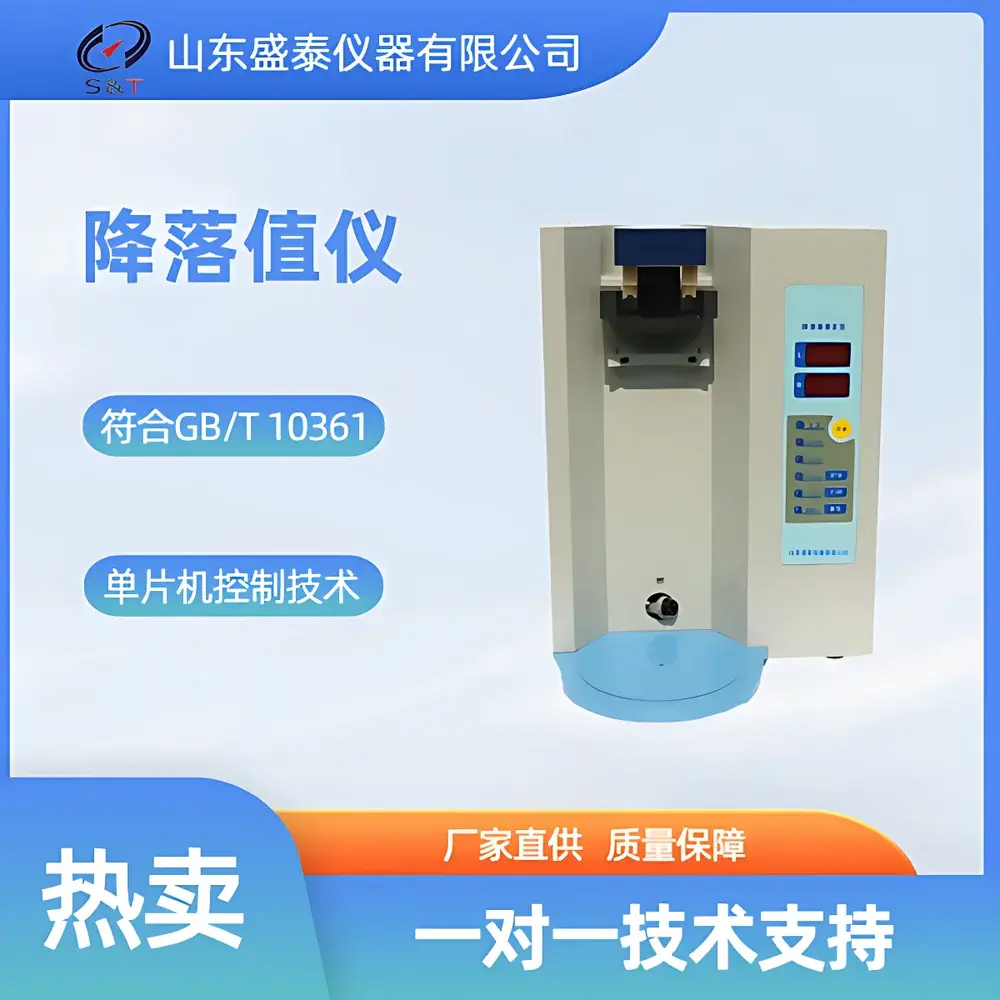
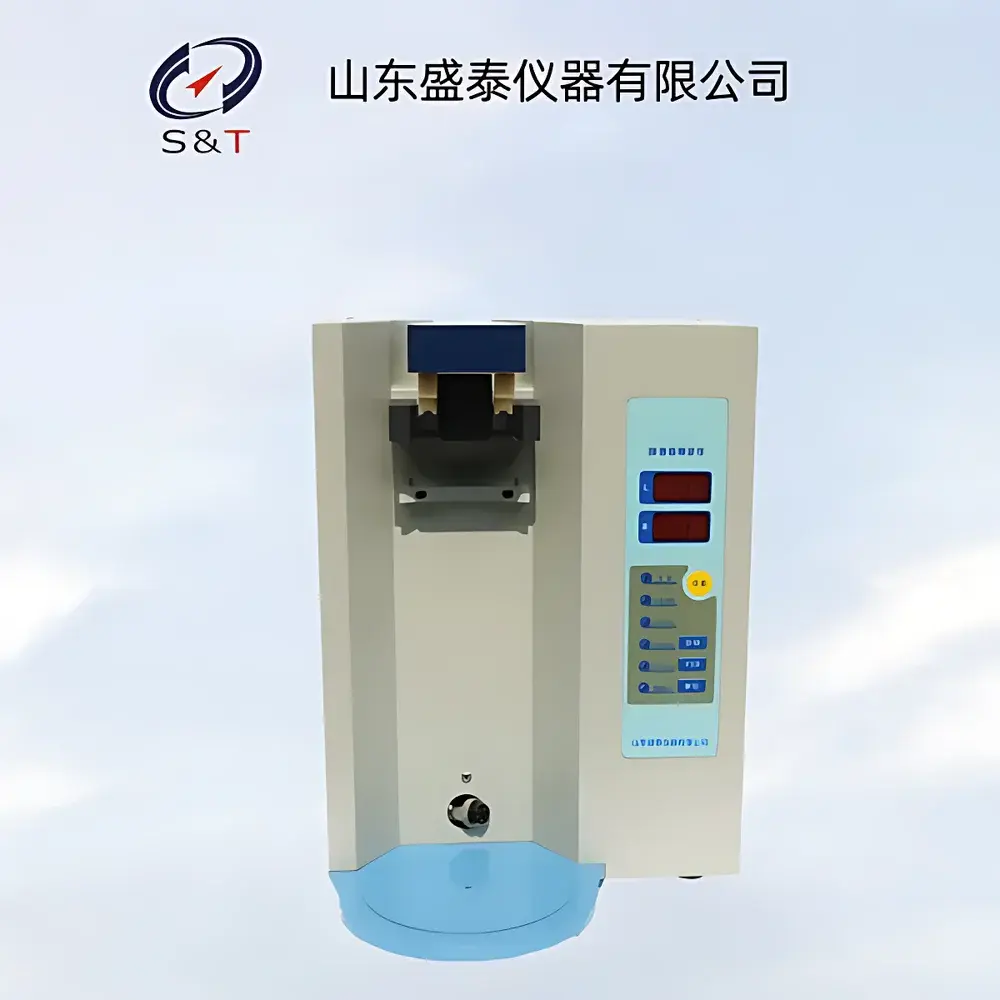
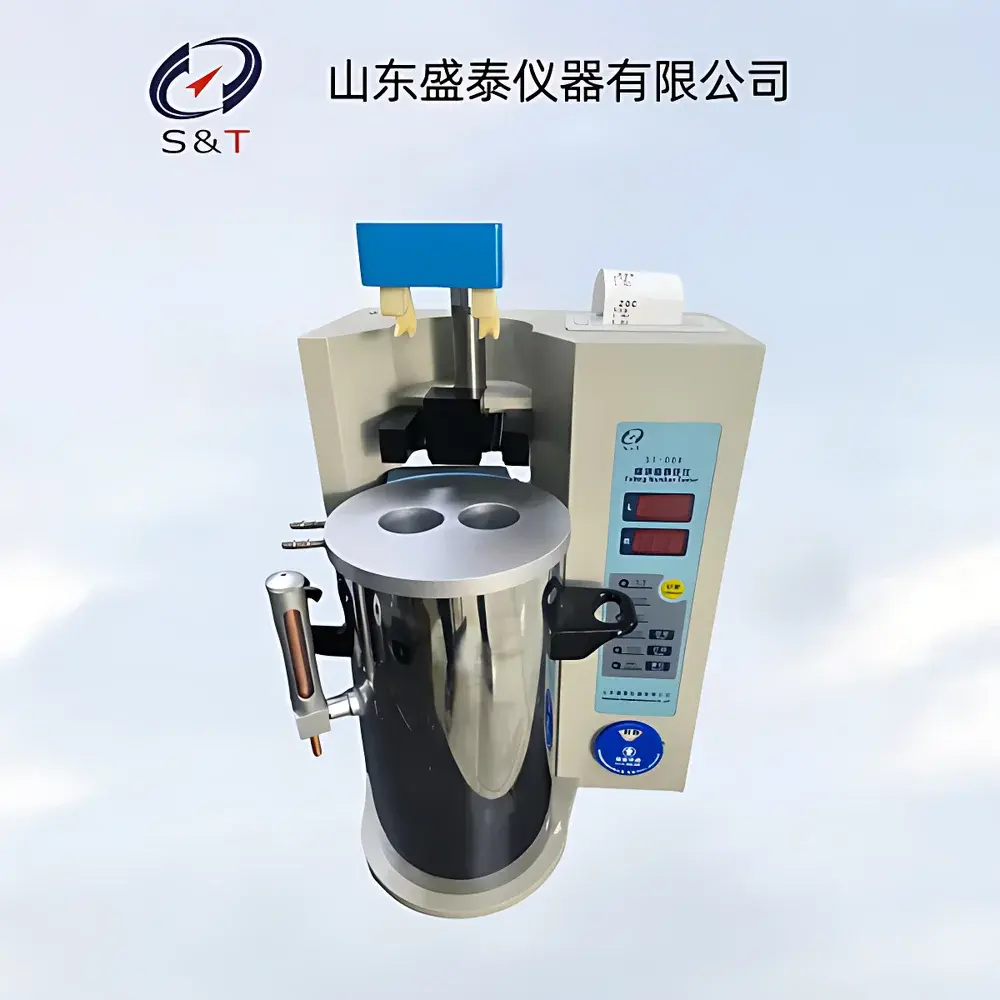
Shengtai Instruments ST006 Falling Number Analyzer for Grain and Oil Testing
| Brand | Shengtai Instruments |
|---|---|
| Origin | Shandong, China |
| Manufacturer Type | Direct Manufacturer |
| Country of Origin | China |
| Model | ST006 |
| Power Supply | 220 V, 50 Hz |
| Stirring Rod Mass | 25 g ± 0.05 g |
| Viscometer Tube Inner Diameter | 21 mm ± 0.02 mm |
| Outer Diameter | 23.8 mm ± 0.25 mm |
| Internal Height | 220 mm ± 0.3 mm |
| Heater Power | 600 W |
| Measurement Accuracy | < 5% |
| Package Dimensions | 550 × 475 × 510 mm |
| Net Weight | 36 kg |
Overview
The Shengtai Instruments ST006 Falling Number Analyzer is a dedicated benchtop instrument engineered for the quantitative determination of α-amylase activity in cereals, milled grains, and starch-containing food products. It operates on the Hagberg–Perten falling number principle—a standardized viscometric method widely adopted in global grain quality laboratories. During analysis, a standardized slurry of ground sample and distilled water is heated to gelatinization (typically 90–100 °C), followed by controlled stirring and continuous temperature maintenance. A calibrated stainless-steel stirrer rod is then released into the hot, viscous slurry; its descent time (in seconds) through a fixed distance is measured precisely. This falling number inversely correlates with α-amylase concentration: lower values indicate higher enzymatic activity due to accelerated starch hydrolysis and consequent viscosity reduction. The instrument complies fully with GB/T 10361–2008, the Chinese national standard equivalent to ISO 3093:2022 and AACCI Method 22–01, ensuring traceable, inter-laboratory comparable results essential for grain procurement, storage management, flour milling process control, and regulatory compliance.
Key Features
- Robust single-board microcontroller architecture with real-time thermal regulation and step-by-step LED guidance for operator-assisted workflow execution.
- High-reliability membrane keypad interface—engineered for >1 million actuations—eliminating mechanical fatigue issues associated with toggle-type switches used in legacy units.
- Precision-machined viscometer tube assembly meeting strict dimensional tolerances: inner diameter 21.00 ± 0.02 mm, outer diameter 23.80 ± 0.25 mm, internal height 220.0 ± 0.3 mm—critical for reproducible shear geometry and laminar flow conditions.
- 600 W high-stability heating system with PID-controlled temperature maintenance (±0.3 °C over 90–100 °C range) to ensure consistent starch gelatinization kinetics across batches.
- Calibrated 25.00 ± 0.05 g stainless-steel falling rod manufactured to ASTM E456 metrological specifications for mass uncertainty control.
- Integrated mechanical stop mechanism and optical fall-time detection with sub-second resolution, minimizing operator-induced timing variability.
Sample Compatibility & Compliance
The ST006 supports routine analysis of wheat, barley, rye, triticale, oats, corn, rice, and their milled flours—including wholemeal, refined, and pre-germinated samples. It accommodates both intact kernels (after appropriate grinding per GB/T 5491) and commercial flour specimens. All operational parameters—including heating ramp rate, holding time, stirring speed, and rod release protocol—are aligned with GB/T 10361–2008, which references ISO 3093:2022 (Cereals — Determination of falling number) and harmonizes with Codex Alimentarius Standard CXS 221–1995. The instrument’s design facilitates audit readiness for GLP-compliant grain testing laboratories and supports documentation requirements under China’s Grain Circulation Regulations and National Food Safety Standard GB 2715–2016.
Software & Data Management
While the ST006 operates as a standalone hardware platform without embedded PC-based software, it delivers fully traceable analog output signals compatible with external data loggers or laboratory information management systems (LIMS). Each test generates a timestamped falling number value, ambient temperature, and heater status—recordable manually or via RS-232/USB interface (optional accessory). For regulated environments, users may integrate the device into 21 CFR Part 11–compliant workflows using third-party electronic lab notebooks (ELNs) that capture instrument ID, operator ID, sample ID, and raw fall-time data with immutable audit trails. Calibration records, preventive maintenance logs, and performance verification reports (e.g., daily blank checks with reference wheat flour standards) are maintained per ISO/IEC 17025:2017 Clause 6.4.10.
Applications
- Grain receiving inspection at elevators and silos: rapid segregation of low-falling-number (sprouted) wheat to prevent dough stickiness and baking failure.
- Flour mill quality assurance: monitoring enzyme activity post-bleaching or blending to maintain consistent rheological behavior in bread and noodle production.
- Research on pre-harvest sprouting resistance: comparative analysis of breeding lines under controlled moisture stress protocols.
- Food safety auditing: verification of α-amylase levels in imported cereal commodities against contractual specifications and phytosanitary thresholds.
- Educational use in agricultural science curricula: hands-on demonstration of starch–enzyme kinetics and cereal quality parameter interrelationships.
FAQ
What is the significance of the falling number value in wheat quality assessment?
The falling number quantifies α-amylase-mediated starch degradation. Values below 250 s indicate significant sprout damage; 250–300 s suggest marginal activity; above 300 s reflect sound, dormant grain—directly impacting dough handling, loaf volume, and crumb texture.
Does the ST006 require annual recalibration by an accredited body?
While not mandated by GB/T 10361, Shengtai recommends biannual verification using NIST-traceable reference materials (e.g., certified wheat flour standards with assigned falling numbers) and annual dimensional inspection of the viscometer tube per ISO 9001:2015 Clause 7.1.5.
Can the instrument be used for non-wheat cereals such as barley or rye?
Yes—the method is validated for barley (ISO 3093 Annex B) and rye (DIN 10779), though interpretation thresholds differ; users must apply cereal-specific acceptance criteria defined in regional trading standards.
Is the ST006 compliant with international export documentation requirements?
The analyzer meets CE marking prerequisites for EMC Directive 2014/30/EU and Low Voltage Directive 2014/35/EU when supplied with EU-certified power modules; full conformity documentation is available upon request for customs clearance.
How is measurement uncertainty estimated for ST006-generated falling number data?
Per ISO/IEC Guide 98-3 (GUM), combined standard uncertainty is dominated by repeatability (≤2.5 s), tube geometry deviation (±0.8 s), and temperature drift (±1.2 s), yielding an expanded uncertainty (k=2) of ≤9 s at 250 s nominal value.





