
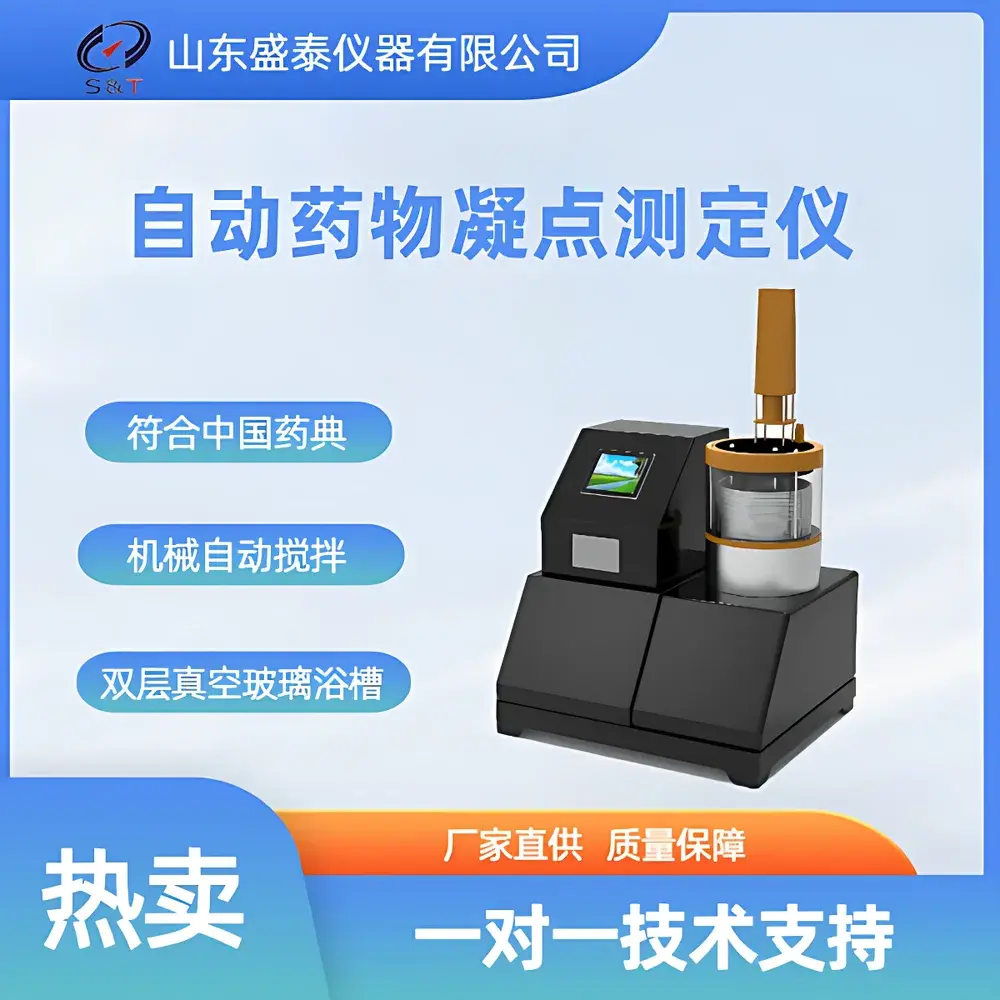
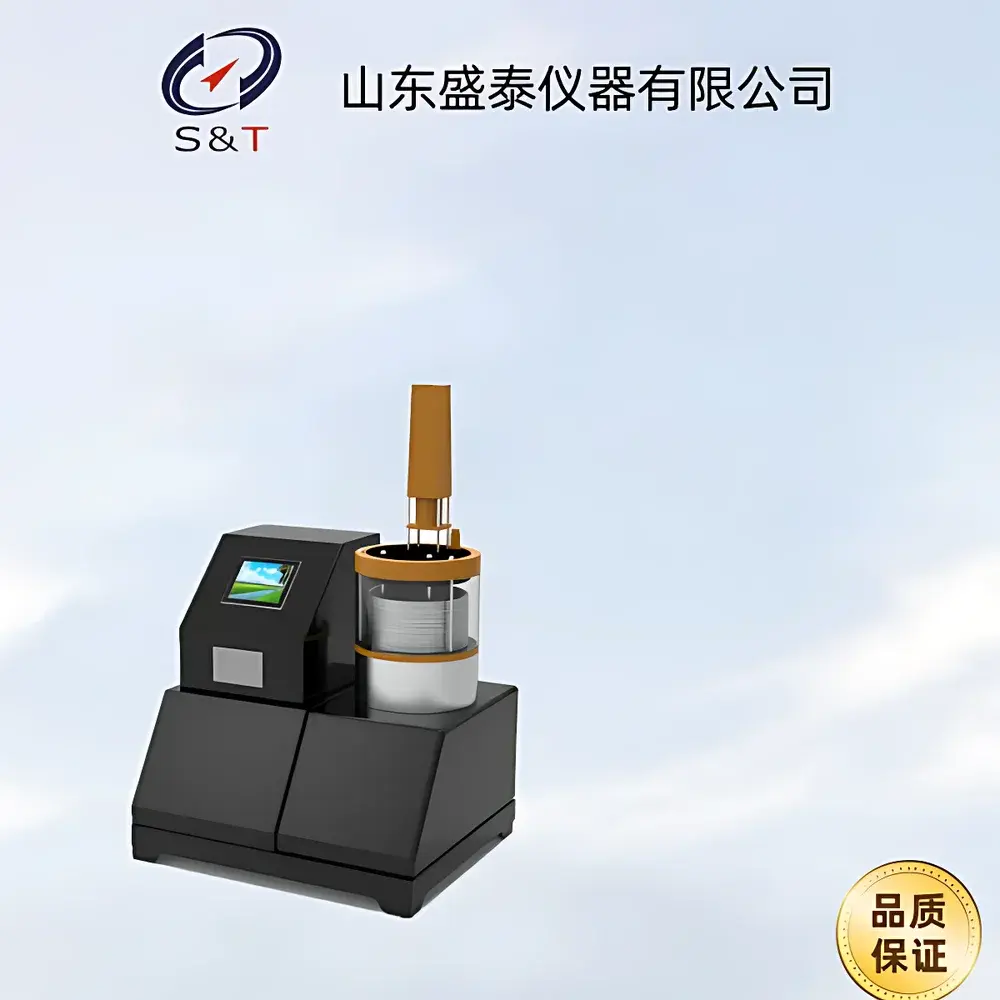
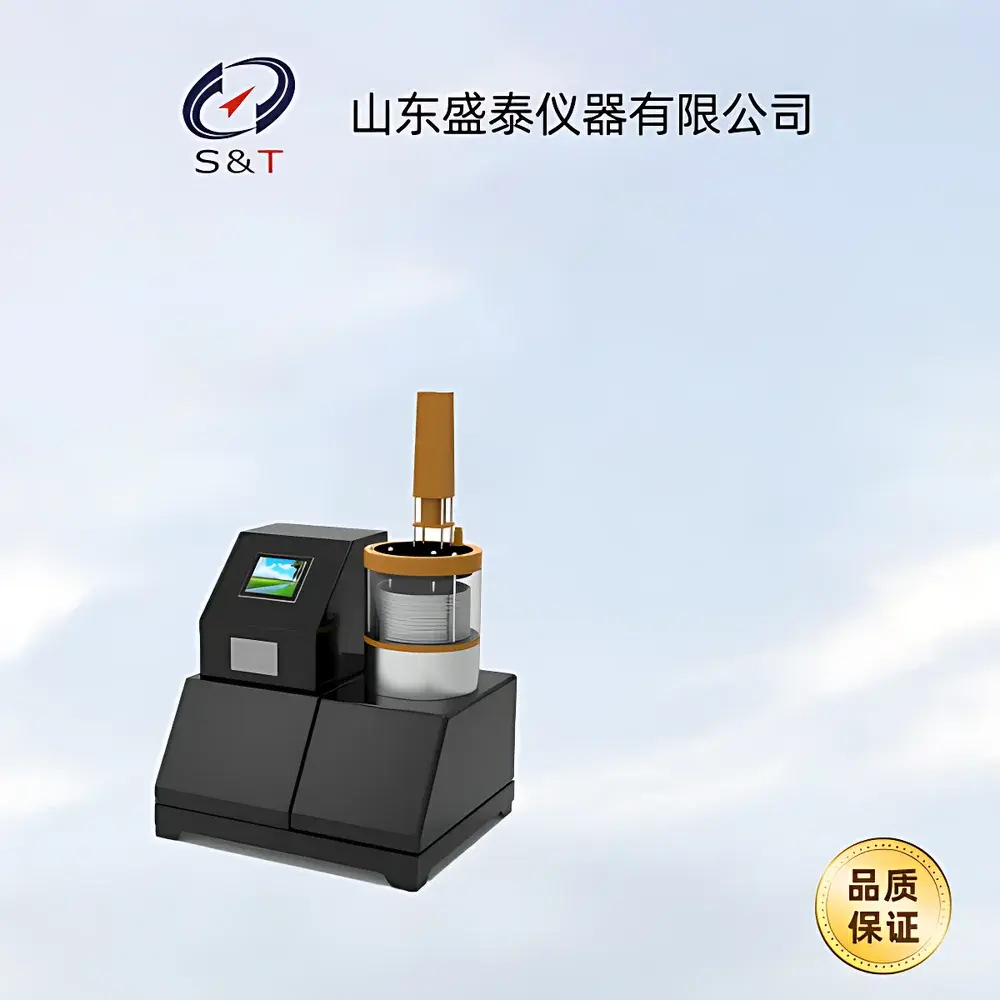
Shengtai Instruments ST203B Automated Phenol Cloud Point & Solidification Point Analyzer for Biopharmaceutical Purity Assessment
| Brand | Shengtai Instruments |
|---|---|
| Origin | Shandong, China |
| Manufacturer Type | Direct Manufacturer |
| Country of Origin | China |
| Model | ST203B |
| Pricing | Upon Request |
| Power Supply | AC 220 V ±10%, 50 Hz |
| Cooling Bath Temperature Range | −30 °C to +80 °C |
| Temperature Control Accuracy | ±0.1 °C |
| Stirring Speed (Bath) | 1200 rpm |
| Stirring Power | 6 W |
| Sample Stirring Frequency | 60 cycles/min |
| Cooling Method | Compressor-based air-cooled system |
| Bath Construction | Double-walled vacuum glass vessel |
| Heat Transfer Medium | Dimethyl silicone oil (6 L, user-supplied) |
| Display | 7-inch color touchscreen interface |
| Data Storage Capacity | Up to 199 test records (expandable internal memory up to 16 GB) |
| Data Export | USB flash drive (CSV or Excel format) |
| Built-in Printer | Thermal micro-printer (A4 printer optional) |
| LIMS Integration | Optional |
| Audit Trail | Optional |
| User Account Management | Three-tier role-based access (optional) |
| NFC Authentication | Optional (includes 30 programmable NFC cards) |
Overview
The Shengtai Instruments ST203B Automated Phenol Cloud Point & Solidification Point Analyzer is a precision thermal transition measurement system engineered for compliance with Chapter 0613 “Solidification Point” of the Chinese Pharmacopoeia (2020 Edition). It determines the solidification point—the highest temperature at which a liquid pharmaceutical substance remains in equilibrium with its solid phase for a sustained period—by monitoring thermally induced phase change behavior under controlled cooling conditions. This parameter serves as a critical physical indicator of chemical identity and batch-to-batch purity in biopharmaceutical excipients and active pharmaceutical ingredients (APIs). Unlike generic melting point apparatuses, the ST203B implements a dynamic, real-time detection protocol that captures the momentary thermal plateau characteristic of solid–liquid coexistence, enabling high reproducibility in regulatory testing environments where trace impurities significantly depress or broaden the solidification interval.
Key Features
- Compressor-driven refrigeration system delivering stable temperature control across −30 °C to +80 °C with ±0.1 °C accuracy—essential for detecting subtle deviations in crystallization onset.
- Dual-mode agitation architecture: independent high-speed bath stirring (1200 rpm) ensures uniform thermal distribution, while synchronized low-frequency sample stirring (60 cycles/min) prevents supercooling artifacts and promotes nucleation consistency.
- Double-walled vacuum-insulated glass bath minimizes thermal gradient distortion and improves measurement repeatability across repeated runs.
- Embedded Linux-based control platform with 7-inch capacitive touchscreen interface supports intuitive method setup, real-time curve visualization, and on-device data review.
- Integrated thermal printer provides immediate hard-copy documentation of results; optional A4 output enables GLP-compliant report generation.
- Expandable internal storage (up to 16 GB) retains up to 199 complete test records—including raw temperature/time profiles, operator ID, timestamp, and ambient metadata.
- USB export functionality outputs structured CSV or Excel files compatible with statistical process control (SPC) software and enterprise quality management systems.
Sample Compatibility & Compliance
The ST203B is validated for use with low-molecular-weight organic pharmaceutical excipients and intermediates including polyethylene glycol (PEG), glacial acetic acid, benzyl alcohol, phenol, magnesium stearate, calcium stearate, and lauryl alcohol. Its operational range accommodates both volatile and viscous liquids whose solidification points fall within the instrument’s calibrated thermal envelope. The system meets functional requirements outlined in USP General Chapter <721> Melting Points and Related Temperatures, ISO 6383-1:1983, and ASTM D97 for pour point analogues. When configured with optional audit trail and three-tier account management modules, it supports FDA 21 CFR Part 11 compliance for electronic records and signatures in regulated GMP/GLP laboratories.
Software & Data Management
Data acquisition and analysis are managed via an embedded firmware platform supporting time-stamped event logging, user authentication, and method version control. Optional LIMS connectivity allows bidirectional transfer of test parameters and results using HL7 or ASTM E1384-compliant protocols. The audit trail module records all critical actions—including method edits, result overrides, and user logins—with immutable timestamps and operator identifiers. NFC-enabled login (with included 30 programmable cards) enforces personnel accountability without keyboard entry errors. All stored data adhere to ALCOA+ principles (Attributable, Legible, Contemporaneous, Original, Accurate, Complete, Consistent, Enduring, Available) for inspection readiness.
Applications
- Identity verification and purity screening of phenolic preservatives in monoclonal antibody formulations.
- Batch release testing of PEGylated conjugates where solidification point correlates with polymer molecular weight distribution.
- Stability-indicating assay for thermal degradation products in fatty acid esters used in lipid nanoparticle (LNP) delivery systems.
- QC/QA support for excipient suppliers producing USP/EP-grade stearates and alcohols.
- Method development for compendial validation studies requiring ICH Q2(R2)-aligned precision and robustness assessment.
FAQ
What standards does the ST203B comply with for pharmaceutical testing?
The instrument is designed to fulfill the procedural and performance criteria specified in Ch. 0613 of the Chinese Pharmacopoeia (2020), and its measurement methodology aligns with principles referenced in USP <721>, ISO 6383-1, and ASTM D97.
Is external calibration required before first use?
Yes—users must perform initial calibration using certified reference materials (e.g., pure phenol, stearic acid) traceable to NIST or equivalent national metrology institutes. Calibration certificates should be retained per GMP documentation requirements.
Can the ST203B operate without silicone oil?
No—the double-walled bath requires 6 L of dimethyl silicone oil (kinematic viscosity ~50 cSt at 25 °C) as the heat transfer medium. Substitution with other fluids may compromise temperature uniformity and damage the cooling system.
Does the system support networked data backup?
While local USB export and internal storage are standard, networked backup requires integration through optional LIMS or third-party file synchronization tools configured externally.
What maintenance intervals are recommended?
Compressor oil level and condenser coil cleanliness should be verified quarterly; silicone oil viscosity should be tested annually or after 500 test cycles to ensure thermal stability. Preventive maintenance logs are automatically appended to audit trails when enabled.





