
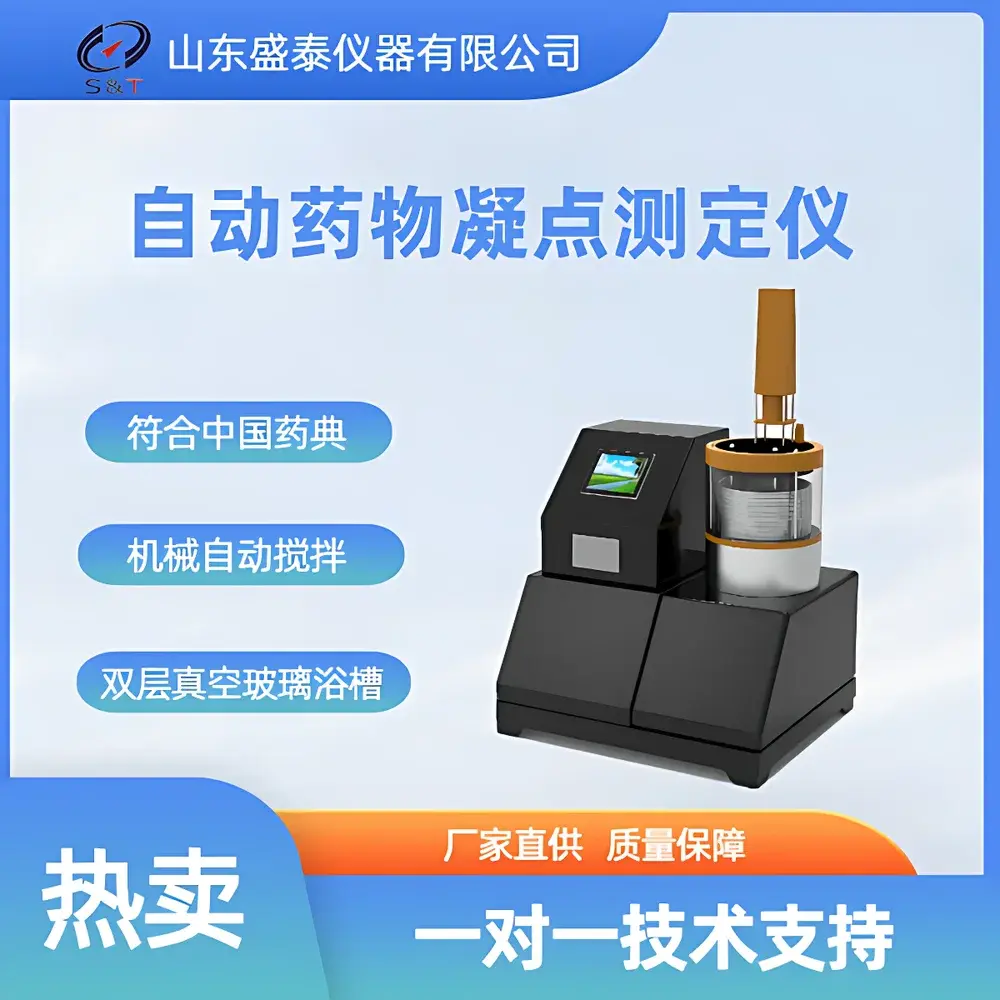
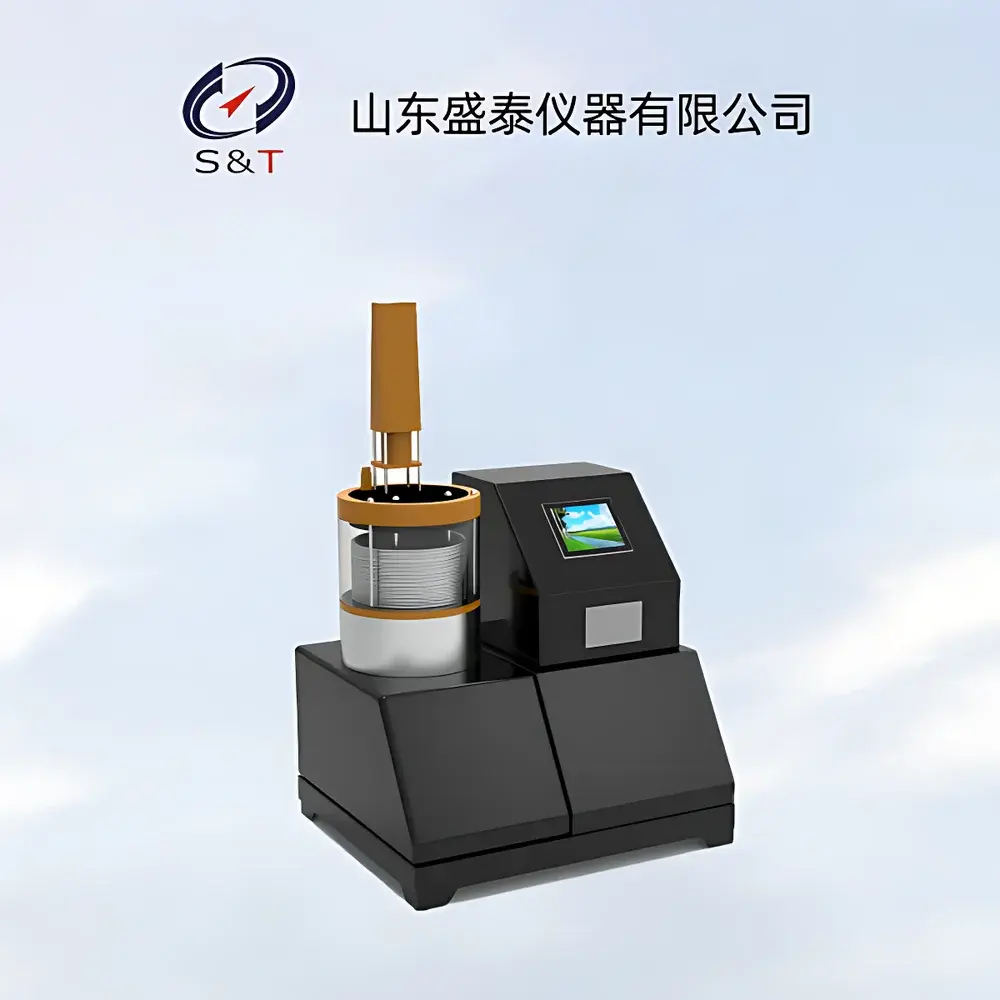
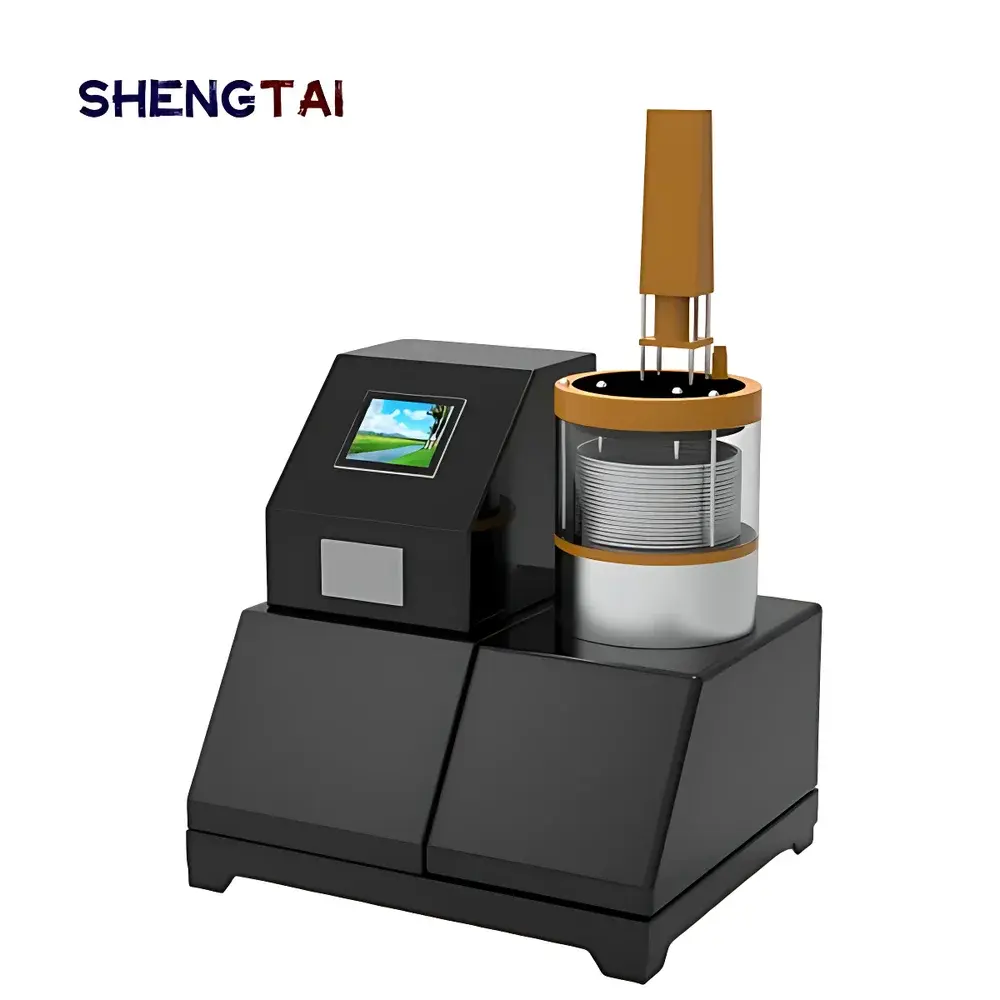
Shengtai Instruments ST203B Phenol Freezing Point Analyzer for Biopharmaceutical Purity Assessment
| Brand | Shengtai Instruments |
|---|---|
| Origin | Shandong, China |
| Manufacturer Type | Direct Manufacturer |
| Country of Origin | China |
| Model | ST203B |
| Pricing | Upon Request |
Overview
The Shengtai Instruments ST203B Phenol Freezing Point Analyzer is a dedicated pharmaceutical testing instrument engineered for precise determination of the freezing point (solidification point) of liquid drug substances—particularly phenol, glacial acetic acid, and other thermally sensitive biopharmaceutical excipients or active pharmaceutical ingredients (APIs). It operates on the principle of dynamic thermal arrest detection: as a sample cools under controlled conditions, the instrument identifies the highest temperature at which the liquid phase remains in equilibrium with the nascent solid phase for a sustained period—defined in the Chinese Pharmacopoeia (ChP) 2020 General Chapter 0613 as the “freezing point.” This thermodynamic parameter serves as a critical quality attribute (CQA) for purity assessment; deviations from reference values indicate contamination, solvent residue, or compositional drift—making the ST203B an essential tool for identity confirmation, batch release testing, and stability-indicating analysis in GMP-compliant biopharmaceutical manufacturing and QC laboratories.
Key Features
- Embedded real-time control system enabling fully automated cooling, detection, stirring, and endpoint recognition per ChP 0613 protocol
- Dual-layer vacuum-insulated cryogenic bath with programmable temperature range from –30 °C to +70 °C and thermal stability of ±0.1 °C
- Integrated mechanical stirring subsystem: synchronized reduction motor (60 cycles/min) for sample homogeneity during phase transition, plus auxiliary bath circulation motor (1200 r/min, 6 W)
- 7-inch high-resolution color touch display with intuitive GUI for method setup, real-time curve visualization, and on-screen data review
- Onboard thermal printer for immediate hardcopy output of test reports—including date/time stamp, sample ID, freezing point value, and operator code
- U.S.-standard USB interface supporting export of raw temperature-time profiles and final results in CSV format for LIMS integration or audit trail generation
- Secure access control with configurable date- and password-protected user accounts to support ALCOA+ data integrity principles
- Non-volatile memory storing ≥1000 test records with timestamp, operator ID, and environmental metadata (ambient temp/humidity)
Sample Compatibility & Compliance
The ST203B is validated for use with pharmacopeial reference standards and routine biopharmaceutical samples including phenol injection solutions, acetic acid dilutions, and low-molecular-weight organic solvents commonly employed in monoclonal antibody formulation buffers. All consumables—including pharmacopeia-compliant freezing point tubes and silicone rubber stoppers—are supplied with documented traceability. The instrument’s operational methodology aligns with ChP 2020 General Chapter 0613 and is technically compatible with parallel interpretations of USP <741> and EP 2.2.16. While not certified to ISO/IEC 17025 by default, its design supports full validation per ICH Q2(R2) guidelines, including installation qualification (IQ), operational qualification (OQ), and performance qualification (PQ) protocols. Data handling features—including electronic signatures, audit trails, and export logs—facilitate compliance with FDA 21 CFR Part 11 when deployed within validated IT infrastructure.
Software & Data Management
No external PC software is required: all functions are executed via the embedded Linux-based firmware. Test parameters (cooling rate, hold duration, stir frequency) are user-configurable and saved as named methods. Each result includes automatic annotation of ambient conditions (recorded via onboard sensors), operator ID, and calibration status flags. Exported CSV files contain time-stamped temperature readings at 0.5-second intervals, enabling post-acquisition regression analysis of nucleation onset and plateau duration. Audit logs retain all user actions—including method edits, calibration events, and report exports—with immutable timestamps. Data retention complies with GLP archival requirements for minimum 5-year storage; extended retention is supported via periodic U-disk backup.
Applications
- Release testing of phenol preservative solutions in vaccine formulations
- Purity verification of glacial acetic acid used in buffer preparation for protein purification
- Stability monitoring of liquid biopharmaceutical intermediates during accelerated storage studies
- Raw material identity testing against pharmacopeial monographs (e.g., ChP phenol specification: freezing point 40.8–41.2 °C)
- Investigation of cryoconcentration effects in ultra-low-temperature fill-finish processes
- Supporting root cause analysis during OOS investigations involving thermal behavior anomalies
FAQ
Does the ST203B comply with 21 CFR Part 11 for electronic records?
It provides foundational controls—audit trails, user authentication, and exportable raw data—but full Part 11 compliance requires site-specific validation of the entire digital workflow, including network configuration and archive procedures.
Can the instrument be calibrated using NIST-traceable standards?
Yes—calibration is performed using certified reference materials (e.g., pure phenol SRM with certified freezing point), and calibration certificates include uncertainty budgets per ISO/IEC 17025 principles.
What maintenance is required during the 12-month warranty period?
Routine cleaning of the bath chamber and sensor probes is recommended monthly; refrigerant service and stir motor lubrication are performed only as needed and covered under warranty if attributable to manufacturing defects.
Is remote diagnostics supported?
No—diagnostic mode is local-only via service menu access; remote support requires on-site technician dispatch or secure screen-sharing during scheduled maintenance windows.
How is data integrity ensured during power interruption?
The embedded system includes brownout protection and non-volatile RAM that preserves ongoing test state and last 10 minutes of temperature history, allowing resumption or safe abort upon recovery.





