
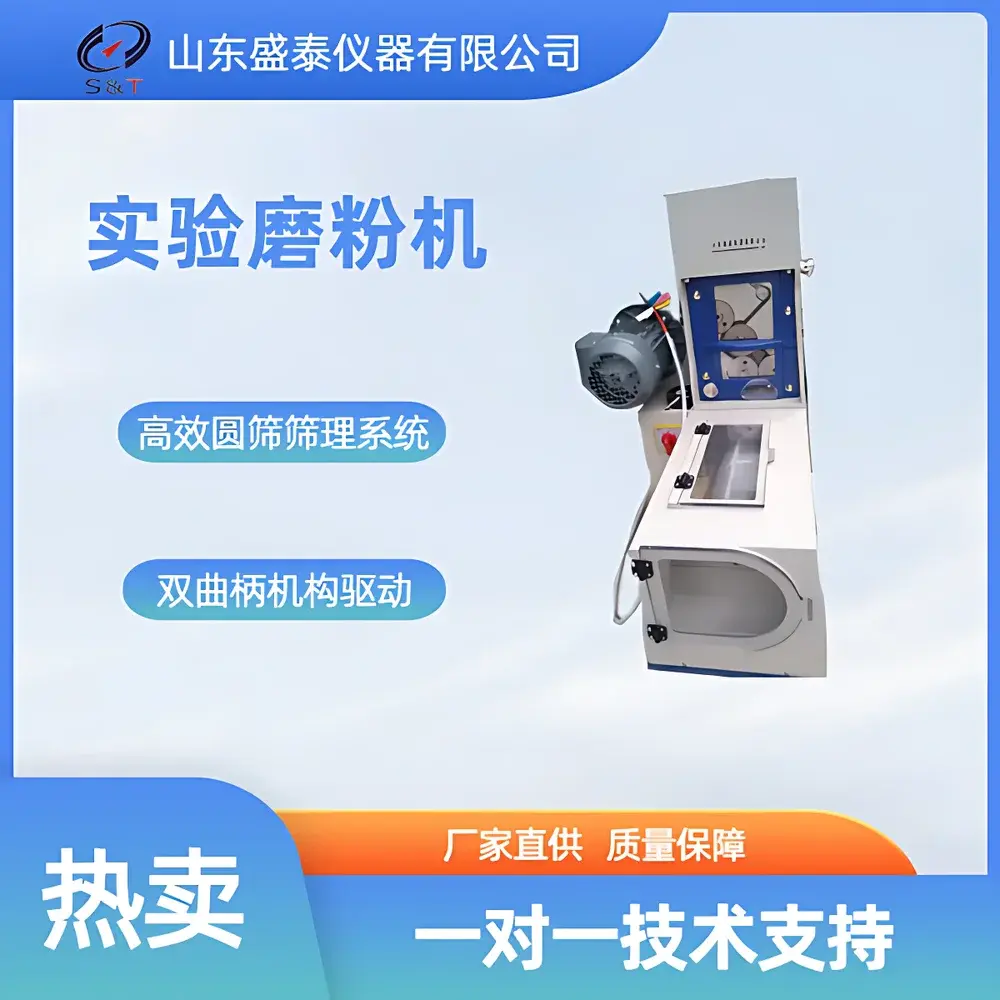
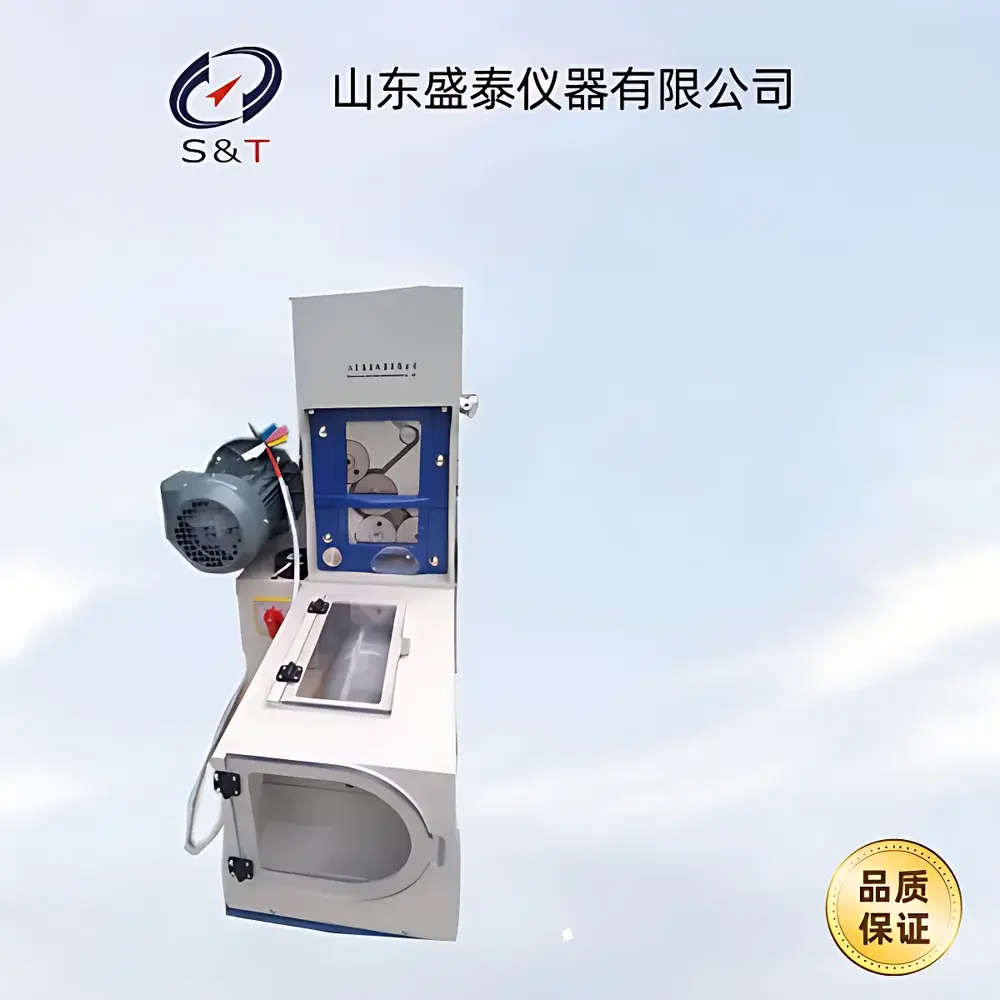
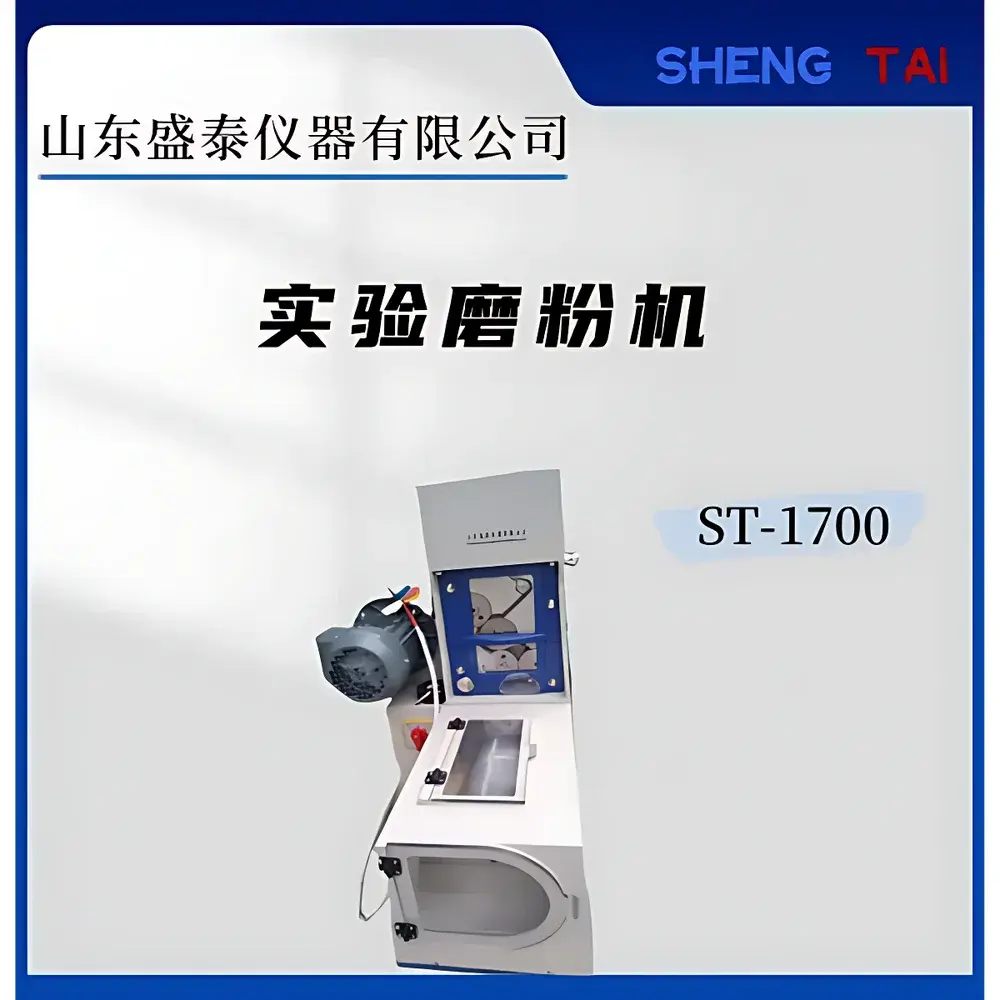
Shengtai ST-1700 Laboratory Milling System with Farinograph Integration
| Brand | Shengtai Instruments |
|---|---|
| Origin | Shandong, China |
| Manufacturer | Yes |
| Country of Origin | China |
| Model | ST-1700 |
| Weight | 65 kg |
| Dimensions | 67 × 51 × 79 cm (L×W×H) |
| Roller Speed (Fast/Slow) | 1200 / 550 rpm |
| Power Supply | AC 380 V / 50 Hz or AC 220 V / 50 Hz |
| Grinding Capacity | 0–100 g/min |
| Flour Yield | 60–70 % |
| Ash Content (dry basis) | ≤0.7 % |
| Roller Diameter × Length | φ70 × 30 mm |
| Motor Power | 550 W |
Overview
The Shengtai ST-1700 Laboratory Milling System is a precision-engineered, benchtop-scale milling platform designed specifically for experimental wheat flour production in analytical and R&D laboratories. It operates on the principle of controlled roller milling—utilizing paired corrugated alloy rollers rotating at differential speeds—to replicate the physical shearing, crushing, and flaking actions of industrial mill trains. Unlike generic grinders or hammer mills, the ST-1700 implements a true four-roller, three-pass continuous milling architecture, enabling sequential reduction of tempered wheat kernels while preserving endosperm integrity and minimizing starch damage. This architecture ensures that the resulting flour exhibits representative particle size distribution, ash content, moisture retention, and gluten network development—critical parameters for downstream farinograph, extensograph, alveograph, and baking performance evaluation. The system complies with NY/T 1094.5–2006 (“Wheat Experimental Milling – Part 5”), the national agricultural standard governing laboratory-scale wheat milling methodology in China, and serves as a validated bridge between raw grain characterization and functional flour quality assessment.
Key Features
- Four-roller, three-stage milling configuration with independent speed control per roller pair, ensuring progressive kernel breakdown and optimal endosperm liberation.
- Eccentric bushing-based roll gap adjustment mechanism: enables precise, tool-free calibration of inter-roller clearance across the full service life of the rollers—maintaining consistent grinding intensity and reproducible flour yield.
- Transparent polycarbonate end covers and sealed cylindrical sieve housing: provide real-time visual monitoring of grinding action, bran separation, and sieve efficiency without interrupting operation.
- Variable-speed cylindrical sieve driven by a dual-crank linkage: delivers non-uniform rotational acceleration to enhance stratification and improve separation efficiency of coarse middlings from fine flour.
- Through-hardened alloy steel rollers (φ70 × 30 mm), heat-treated to ≥62 HRC: deliver high wear resistance, dimensional stability, and extended service life under repeated load cycles.
- Modular roller assembly design: permits rapid disassembly and replacement without recalibration or alignment tools—reducing downtime during routine maintenance or roller reconditioning.
- Dual-voltage compatibility (AC 220 V / 380 V, 50 Hz) and low thermal load (550 W rated power): support flexible integration into diverse lab electrical infrastructures with minimal HVAC impact.
Sample Compatibility & Compliance
The ST-1700 accepts whole, tempered wheat kernels (Triticum aestivum and T. durum) within the standard moisture range of 15.0–16.5 % (wet basis). It accommodates sample batches from 100 g to 500 g per run, with typical throughput adjusted to 0–100 g/min to maintain thermal equilibrium and minimize starch gelatinization. Flour output consistently meets specification limits for ash content (≤0.7 %, dry basis), reflecting accurate branny fraction removal and minimal aleurone layer carryover. The system conforms to NY/T 1094.5–2006 for experimental milling protocol, and its mechanical repeatability supports method validation under ISO/IEC 17025:2017 requirements for testing laboratories. While not certified to FDA 21 CFR Part 11, its operational transparency and manual parameter logging enable full traceability for GLP-compliant workflows when integrated with external LIMS or electronic lab notebooks.
Software & Data Management
The ST-1700 operates as a stand-alone electromechanical system with no embedded firmware or digital interface. All operational parameters—including feed rate, tempering time, roll gap settings, and run duration—are manually recorded and tracked using standardized lab worksheets aligned with NY/T 1094.5–2006 reporting templates. For laboratories requiring digital data capture, the system integrates seamlessly with third-party farinograph instruments (e.g., Brabender Farinograph-AT, Chopin Consistograph) via standardized sample transfer protocols. Raw flour samples are labeled with batch ID, date, tempering conditions, and roll gap values to ensure unambiguous correlation between milling variables and rheological test outcomes. Audit-ready documentation is supported through structured SOPs covering preventive maintenance, roller calibration verification, and inter-laboratory reproducibility checks.
Applications
- Pre-milling preparation for farinograph, mixolab, and alveograph analysis to assess dough water absorption, development time, stability, and mixing tolerance.
- Genotype-by-environment (G×E) studies evaluating wheat breeding lines for milling yield, flour ash, and baking functionality under controlled lab conditions.
- Quality control of incoming wheat lots prior to pilot-scale or commercial milling trials.
- Process optimization of tempering parameters (moisture, time, temperature) to maximize flour extraction and minimize starch damage.
- Training platform for cereal science students and milling technicians on fundamental principles of roller milling mechanics and flour fractionation.
- Reference method implementation for regulatory or contract testing laboratories accredited to ISO/IEC 17025.
FAQ
What standards does the ST-1700 comply with?
It is engineered and validated per NY/T 1094.5–2006, the Chinese national standard for experimental wheat milling. Its mechanical design supports method equivalence assessments against AACC International Method 26–10A and ICC Standard No. 112.
Can the ST-1700 be used for grains other than wheat?
While optimized for wheat, limited adaptation for rye and triticale is possible with roller profile and gap adjustments; however, performance validation against reference methods is required for non-wheat applications.
How often must the rollers be replaced or resurfaced?
Under normal use (≤200 kg total throughput), rollers retain functional geometry for ≥12 months; resurfacing intervals depend on kernel hardness and daily usage volume—typically every 300–500 kg.
Is operator training provided with purchase?
Yes—Shengtai Instruments provides on-site or remote commissioning support, including hands-on instruction on tempering protocol, gap calibration, sieve cleaning, and preventive maintenance scheduling.
Does the system include flour collection and handling accessories?
Standard delivery includes stainless steel flour collection trays, calibrated sample scoops, and a dedicated sieve cleaning brush. Optional accessories include vacuum-assisted flour transfer kits and humidity-controlled sample storage boxes.






