
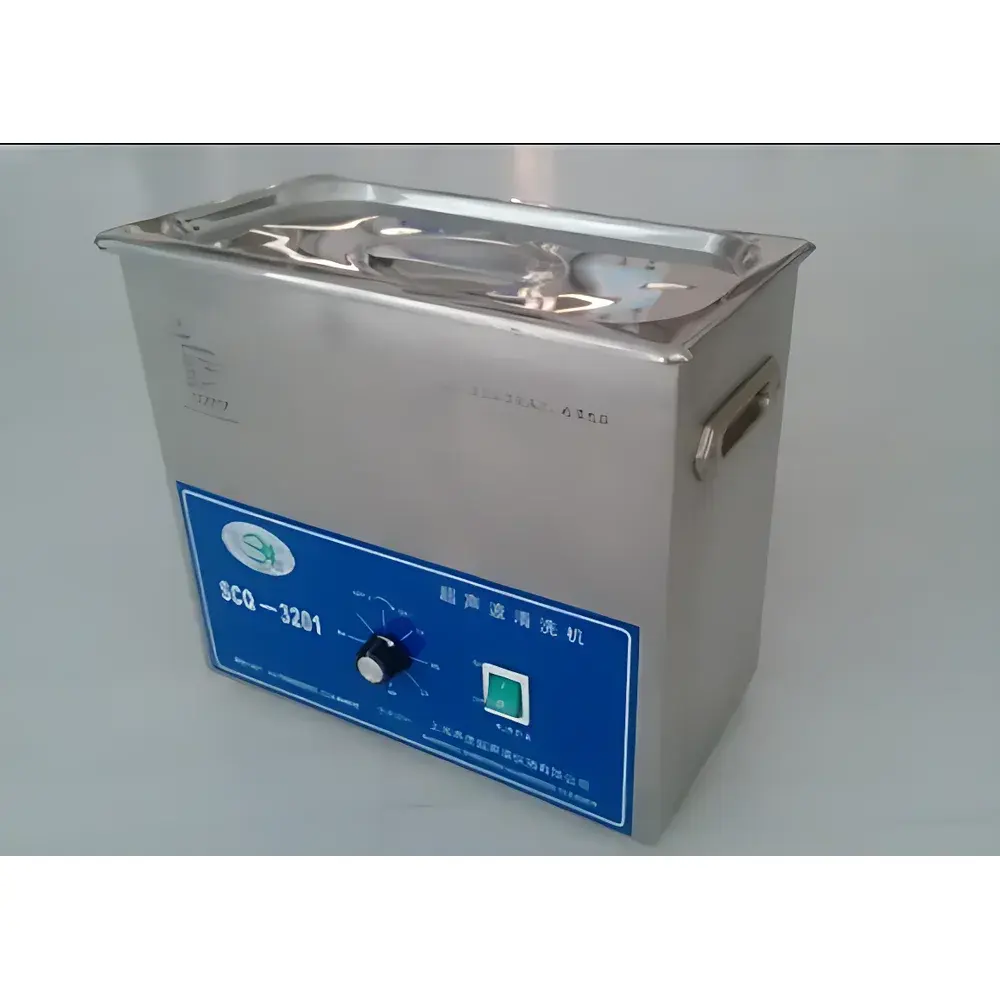
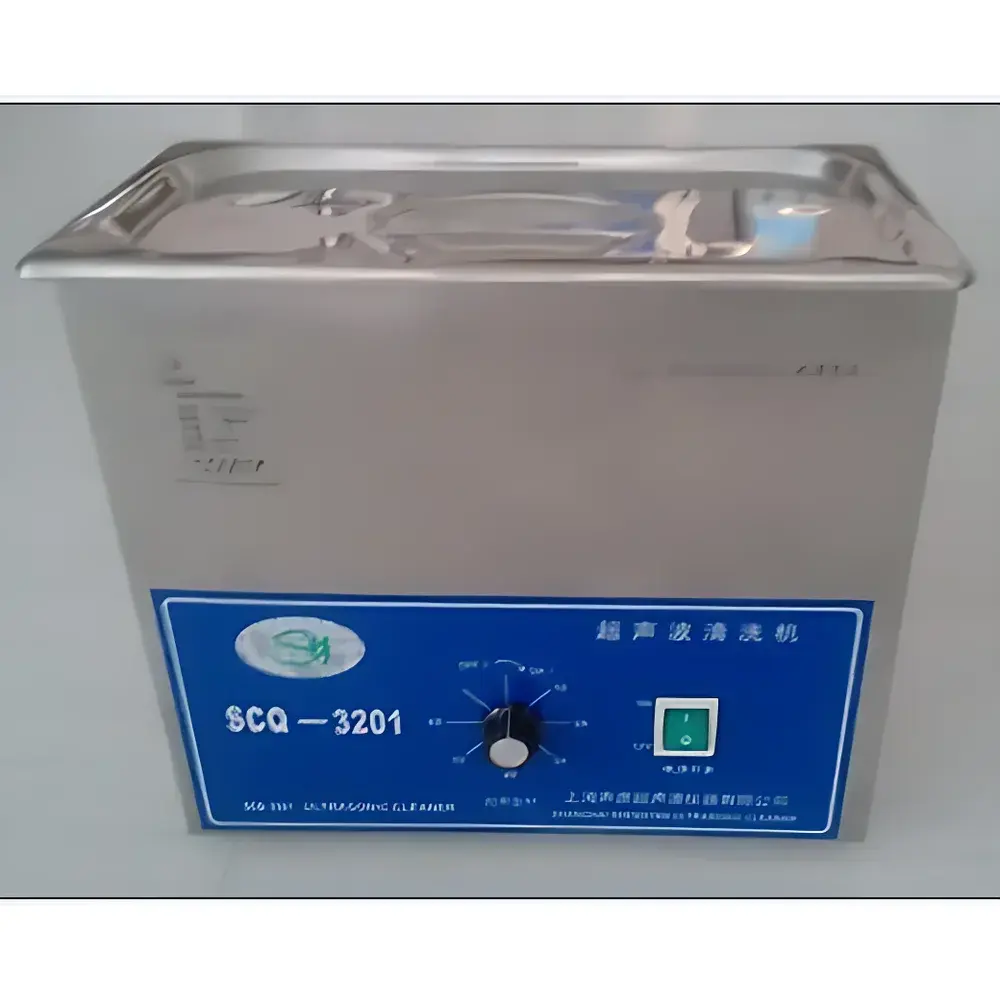
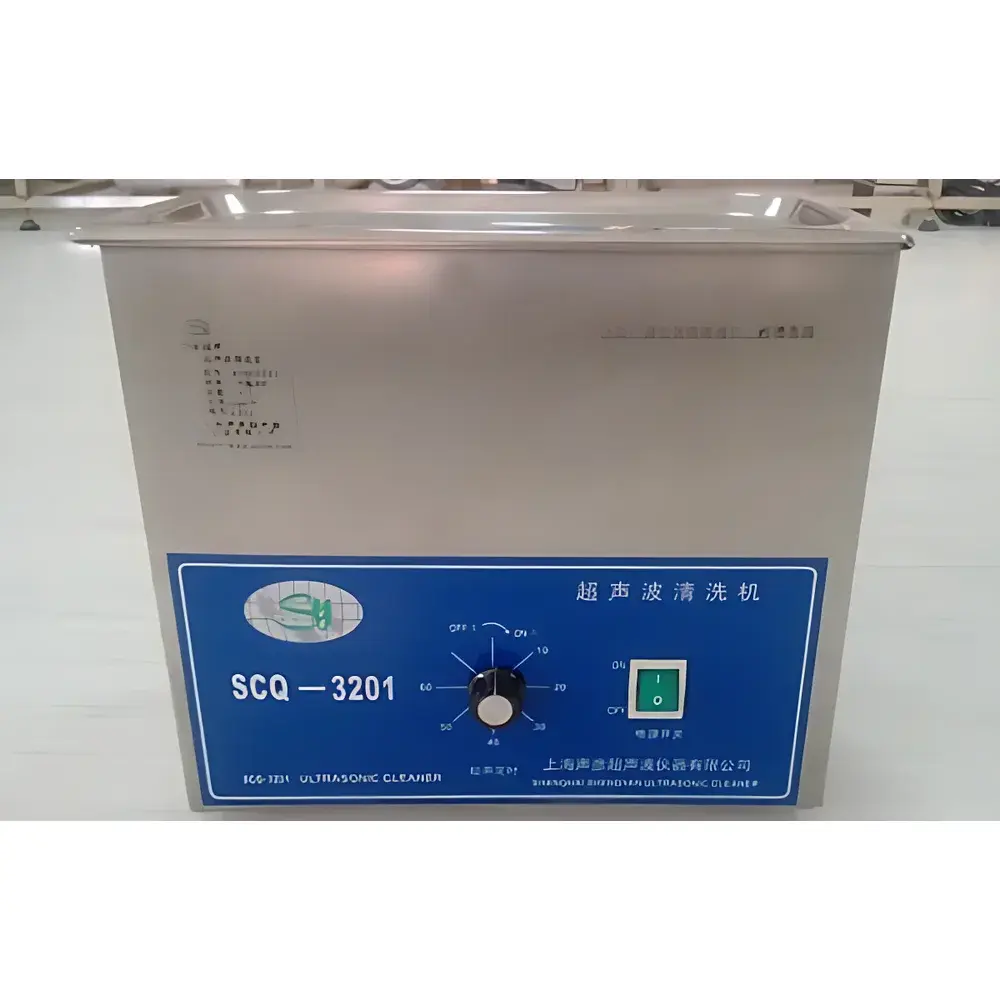
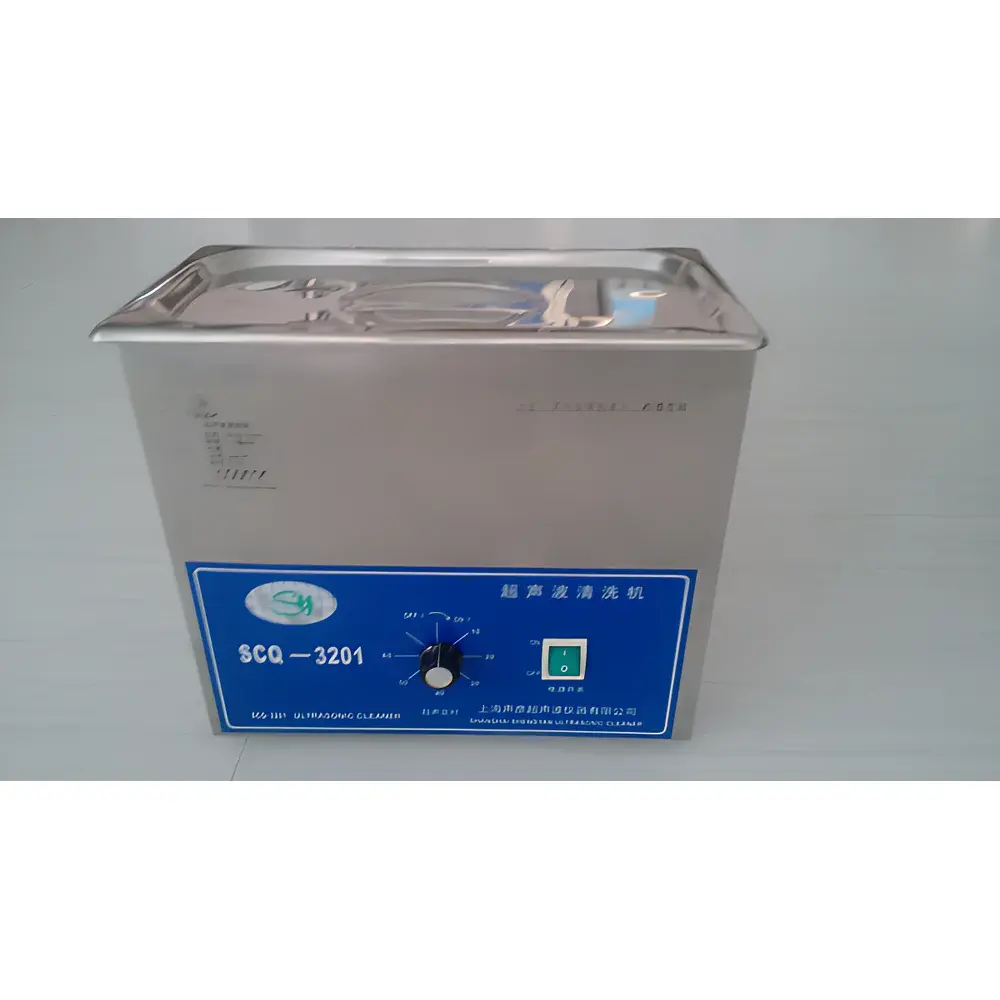
Shengyan SCQ-3201B Digital Ultrasonic Extractor with Heated Bath
| Brand | Shengyan Ultrasonics (SYCS) |
|---|---|
| Origin | Shanghai, China |
| Model | SCQ-3201B |
| Tank Capacity | 6 L |
| Ultrasonic Frequency Options | 25 / 28 / 40 / 60 / 80 / 100 kHz |
| Ultrasonic Power Output | 200 W |
| Power Adjustment | Fixed |
| Heating Power | 600 W |
| Temperature Range | Ambient to 100 °C |
| Timer Range | 1–600 min |
| Lid | Acoustic Damping Cover Included |
| Drain | Manual Valve |
| Internal Tank Dimensions | 300 × 150 × 150 mm |
Overview
The Shengyan SCQ-3201B Digital Ultrasonic Extractor with Heated Bath is an integrated laboratory instrument engineered for precision solvent-based extraction, cell disruption, degassing, emulsification, and homogeneous dispersion. Unlike conventional ultrasonic cleaners optimized solely for surface cleaning, the SCQ-3201B is specifically configured for analytical and preparative sample processing in life science, pharmaceutical, environmental, and materials research laboratories. Its operational principle relies on piezoelectric transduction of high-frequency electrical signals into mechanical vibrations—typically at selectable frequencies between 25 kHz and 100 kHz—which propagate through the liquid medium as longitudinal pressure waves. This induces acoustic cavitation: the formation, growth, and violent implosion of transient microbubbles in low-pressure zones. Each collapse generates localized shockwaves exceeding 1,000 atm and transient temperatures above 5,000 K—sufficient to disrupt cellular membranes, accelerate mass transfer across phase boundaries, and enhance solute release from solid matrices without thermal degradation. The unit integrates a thermostatically controlled stainless-steel bath (304 grade), digital PID temperature regulation, and programmable timing—enabling reproducible, protocol-driven extraction under defined thermal and acoustic conditions.
Key Features
- Integrated ultrasonic generator and heated bath in a single compact chassis—eliminating external coupling losses and ensuring optimal energy transfer efficiency.
- Digital LED display showing real-time bath temperature, set temperature, elapsed time, and remaining time; supports memory retention of last-used parameters after power cycle.
- Programmable timer with 1–600 minute range and automatic shutdown—critical for unattended overnight extractions or standardized dissolution protocols.
- Precision heating system (600 W) with ±1 °C stability across 20–100 °C range; rapid thermal equilibration enabled by immersed heating elements and forced convection design.
- Acoustically damped lid reduces ambient noise to <55 dB(A) at 1 m distance—compliant with ISO 7779 and OSHA workplace exposure guidelines for continuous operation.
- Stainless-steel tank (304 grade) with dimensions 300 × 150 × 150 mm (L × W × H); corrosion-resistant, non-reactive, and compatible with aqueous, alcoholic, and mild organic solvent systems.
- Over-temperature, over-current, and low-water-level safety interlocks—meeting IEC 61010-1 Class II requirements for laboratory electrical equipment.
Sample Compatibility & Compliance
The SCQ-3201B accommodates a broad spectrum of sample formats—including Erlenmeyer flasks (up to 1 L), centrifuge tubes (15–50 mL), Petri dishes, glass vials, and custom reaction vessels—when placed within the tank using the included adjustable stainless-steel mesh rack. It is validated for use with water, ethanol, methanol, isopropanol, acetone, chloroform, and buffered saline solutions. While not certified to UL/CSA standards for hazardous location use, the instrument conforms to general-purpose laboratory safety norms per EN 61010-1:2010 and carries CE marking for electromagnetic compatibility (EMC Directive 2014/30/EU). For GLP/GMP-regulated environments, the fixed-power architecture ensures consistent acoustic output across batches—reducing variability inherent in manually adjusted systems. Though lacking FDA 21 CFR Part 11-compliant audit trails, its deterministic timer and temperature logging support traceable SOP execution when paired with external data loggers.
Software & Data Management
The SCQ-3201B operates via embedded microcontroller firmware—no PC interface or proprietary software is required. All user inputs are stored in non-volatile memory and persist through power interruptions. While it does not feature USB, RS-232, or Ethernet connectivity, its digital interface enables precise manual replication of validated methods across instruments. For laboratories requiring electronic records, integration with third-party Lab Information Management Systems (LIMS) is achievable via analog voltage output modules (optional add-on) or external thermocouple/data logger synchronization. The absence of variable power control simplifies calibration verification: ultrasonic output can be confirmed using calorimetric measurement (ISO 13073-2) or hydrophone-based intensity mapping (IEC 62127-1), ensuring long-term consistency in extraction kinetics.
Applications
- Phytochemical Extraction: Accelerated recovery of alkaloids, flavonoids, and terpenoids from dried plant matrices (e.g., ginseng, turmeric, green tea) using ethanol/water mixtures at 40–60 °C.
- Cell Lysis & Nucleic Acid Isolation: Efficient disruption of bacterial, yeast, and mammalian cells prior to DNA/RNA purification—minimizing shearing compared to mechanical homogenization.
- Environmental Sample Preparation: Extraction of PAHs, PCBs, and organochlorine pesticides from soil/sediment using Soxhlet-compatible solvents under reduced thermal stress.
- Nanomaterial Dispersion: Deagglomeration of carbon nanotubes, graphene oxide, and metal oxide nanoparticles in aqueous or polymeric suspensions.
- Pharmaceutical Dissolution Testing: Supporting USP and methodologies for extended-release dosage forms where uniform suspension is critical.
- Lab-Scale Process Development: Parameter screening for scale-up to industrial ultrasonic reactors—leveraging frequency-dependent cavitation thresholds to optimize selectivity.
FAQ
Is the ultrasonic frequency user-selectable during operation?
Yes—the front-panel selector switch allows real-time change among six discrete frequencies (25, 28, 40, 60, 80, and 100 kHz) without interrupting the timer or heating cycle.
Can the unit operate continuously for more than 60 minutes?
Yes—timer range extends to 600 minutes (10 hours); thermal protection prevents overheating during prolonged runs.
What is the maximum recommended solvent volume for effective cavitation?
For optimal acoustic coupling and uniform energy distribution, fill level should be between 3 L and 5.5 L—avoiding both underfilling (cavitation instability) and overfilling (attenuation at surface boundary).
Does the unit include a degassing function?
While not labeled as a dedicated “degas mode,” the 25 kHz frequency setting produces macro-cavitation ideal for rapid bulk gas removal from solvents prior to sensitive analytical procedures.
Is the stainless-steel tank passivated for high-purity applications?
The 304 stainless steel construction meets ASTM A276 requirements; electropolished upgrade is available upon request for semiconductor-grade cleaning validation.



