
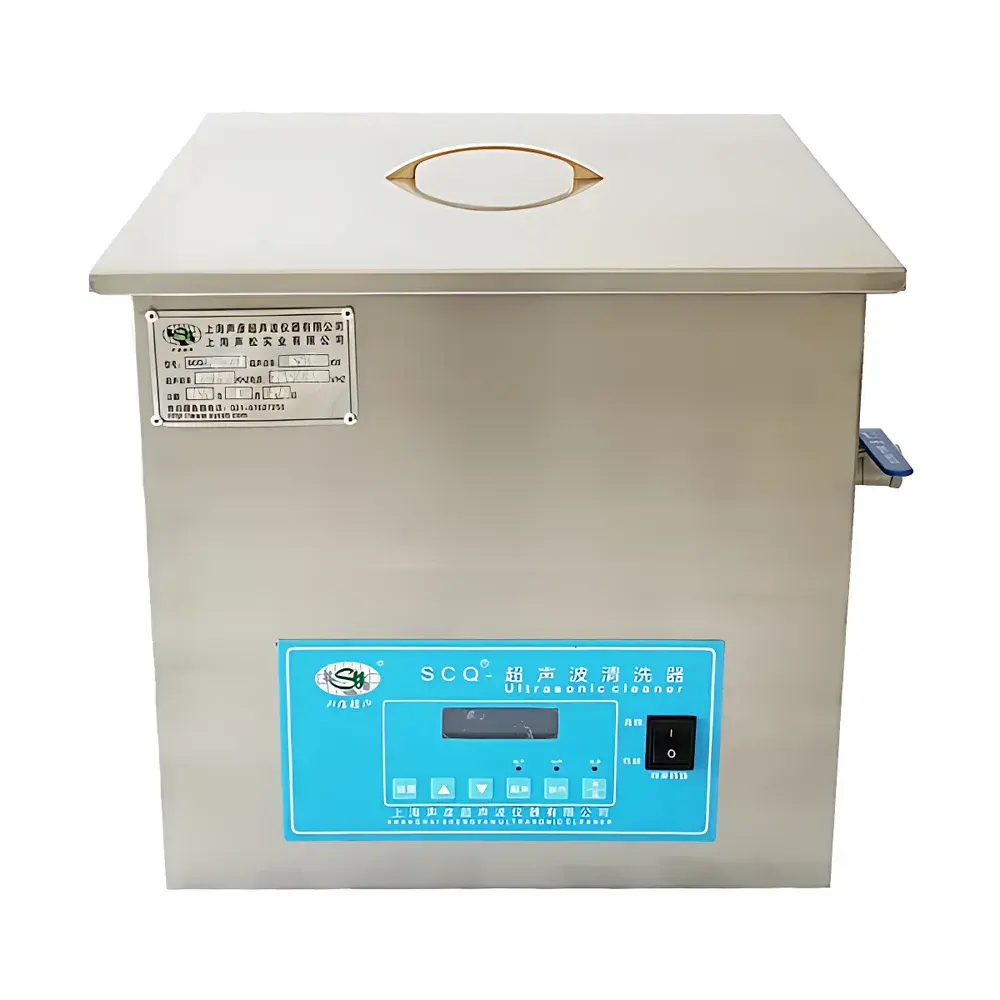
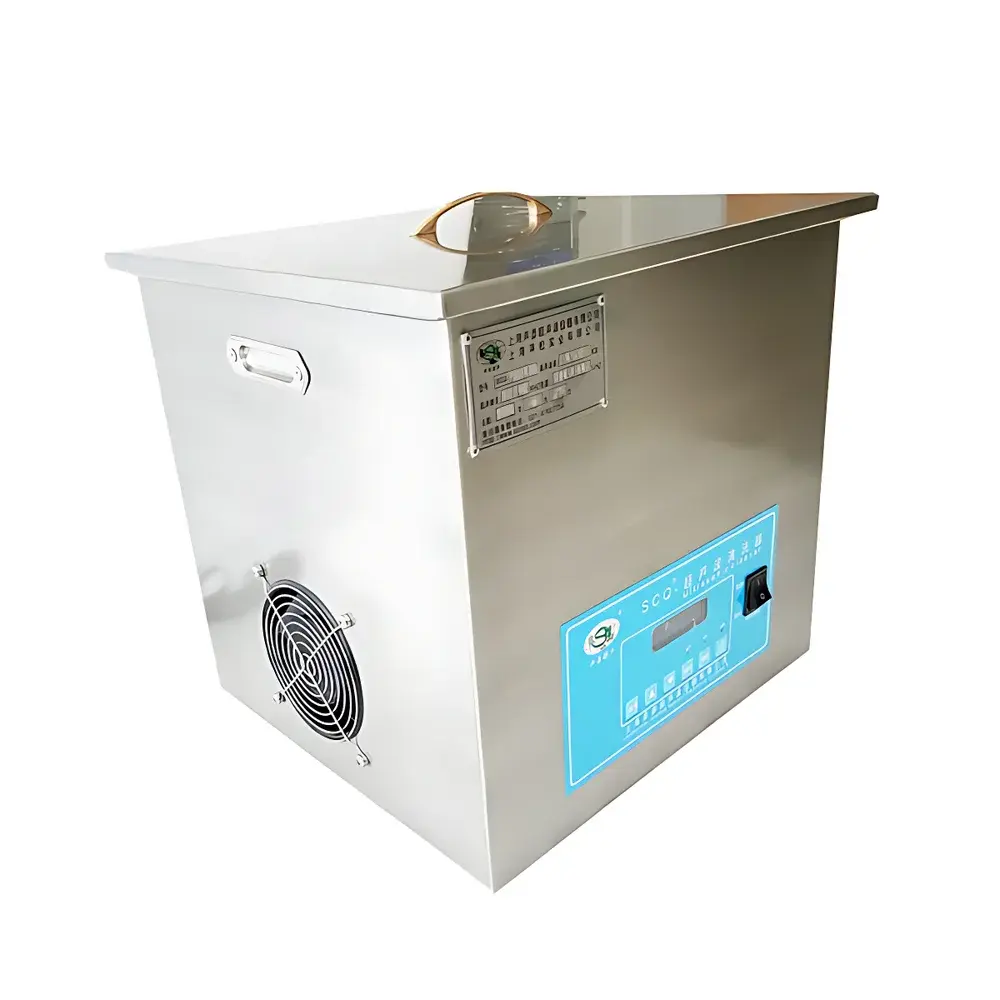
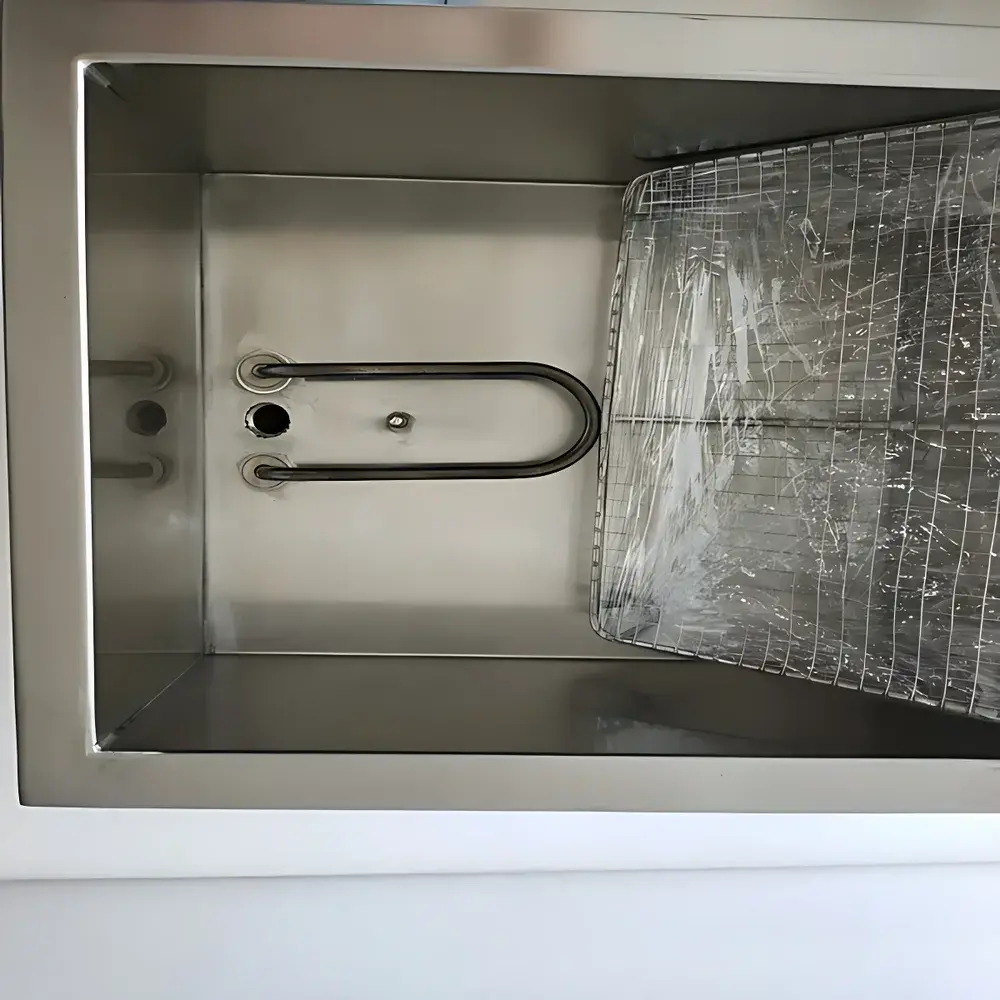
Shengyan SCQ-6201C 15L Programmable Ultrasonic Cleaner
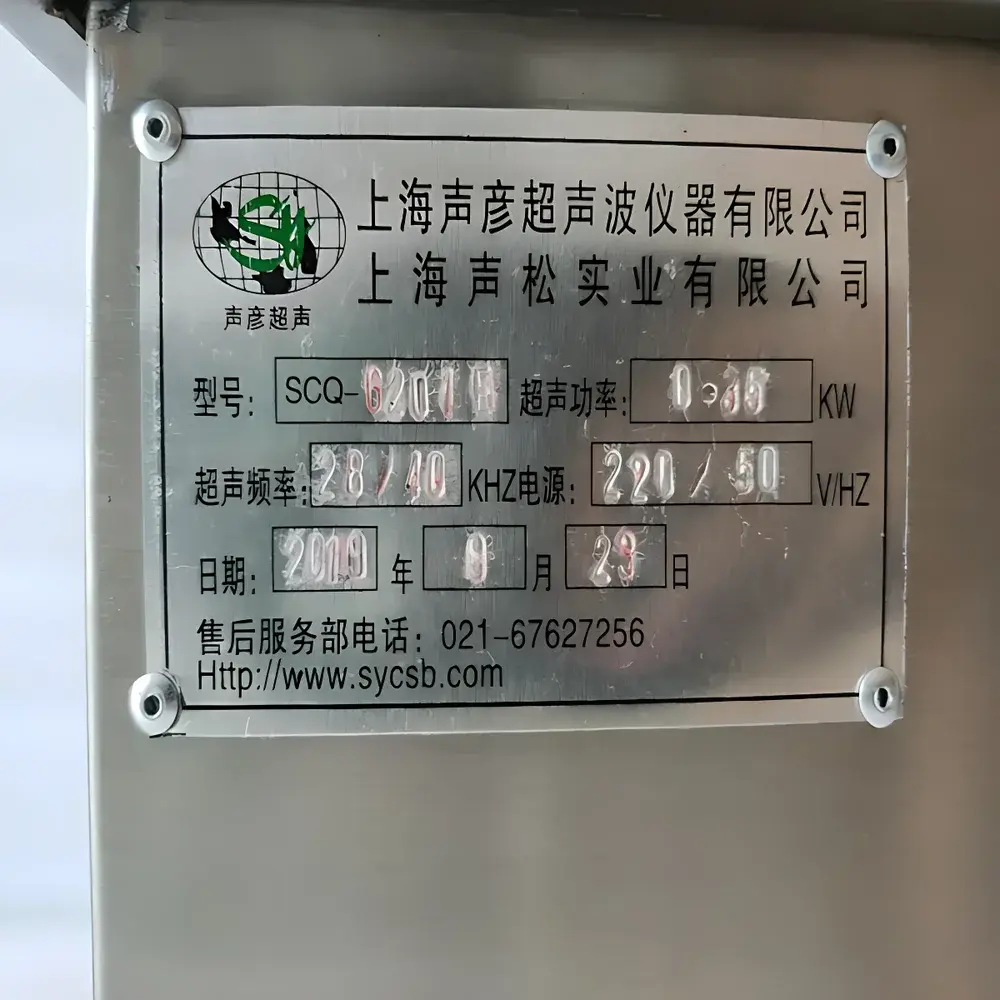
| Brand | Shengyan Ultrasonics (SYCS) |
|---|---|
| Origin | Shanghai, China |
| Model | SCQ-6201C |
| Capacity | 15 L |
| Ultrasonic Frequency | 40 kHz (selectable 25/28/40/60 kHz) |
| Ultrasonic Power | 350 W (10–100% adjustable) |
| Heating Power | 600 W |
| Temperature Range | Ambient to 100 °C (adjustable) |
| Timer Range | 1–600 min (adjustable) |
| Tank Dimensions | 330 × 300 × 150 mm (L×W×H) |
| Drain Valve | Yes |
| Sound-Dampening Lid | Yes |
| Stainless Steel Basket & Rack | Yes |
| Power Supply | 220 V / 50 Hz |
| Safety Features | Overload protection, overheat protection, auto dry-run alarm (for tanks ≥10 L) |
| Construction | Full SUS304 stainless steel tank and accessories |
| Transducer | Proprietary design with U.S.-sourced piezoelectric chips |
Overview
The Shengyan SCQ-6201C is a 15-liter programmable ultrasonic cleaner engineered for precision cleaning, degassing, and mild disinfection in regulated laboratory, medical, and industrial environments. It operates on the principle of acoustic cavitation: high-frequency ultrasonic energy (40 kHz, with optional 25/28/60 kHz modes) is transmitted through an aqueous or solvent-based cleaning medium via piezoelectric transducers bonded to the tank bottom. This induces rapid formation and asymmetric collapse of microscopic vapor cavities—generating localized pressures exceeding 1000 atm and transient temperatures above 5000 K. The resulting micro-jets and shockwaves disrupt particulate adhesion, emulsify organic residues, dislodge sub-micron contaminants from complex geometries (e.g., blind holes, microchannels, porous surfaces), and accelerate solvent penetration. Unlike mechanical scrubbing or immersion alone, this non-contact process achieves uniform cleaning efficacy without surface abrasion—critical for delicate optics, MEMS devices, surgical instruments, and analytical glassware.
Key Features
- Full SUS304 stainless steel construction—including tank, basket, rack, and lid—ensuring long-term corrosion resistance in acidic, alkaline, or halogenated cleaning solutions (superior to industry-standard SUS201/SUS202).
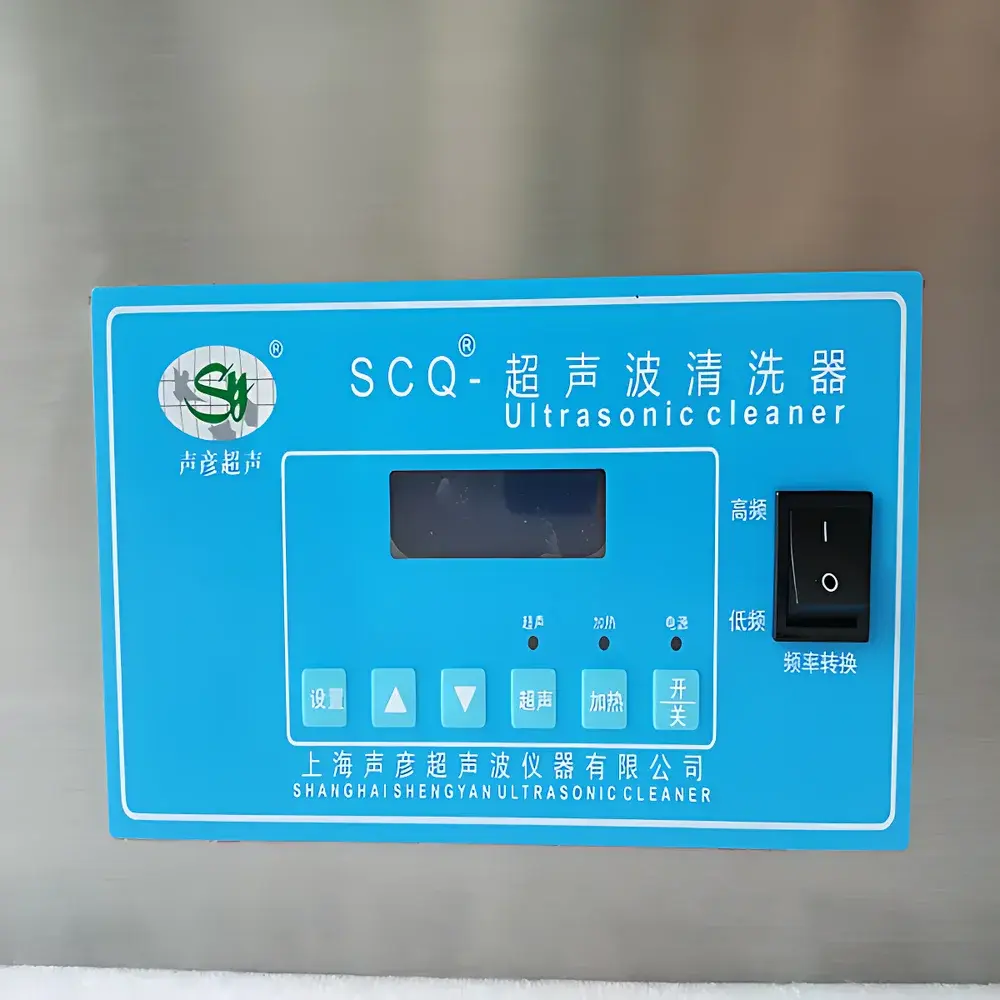
- Digitally programmable controls for ultrasonic power (10–100% of 350 W), heating (ambient to 100 °C, ±1 °C stability), and timer (1–600 minutes), enabling method reproducibility across shifts and operators.
- Dual safety architecture: hardware-level overheat and overload protection; intelligent dry-run detection that halts operation and triggers audible/visual alarm when liquid level falls below operational threshold—standard on all ≥10 L units.
- Integrated sound-dampening lid with ergonomic latch mechanism reduces ambient noise to ≤55 dB(A) at 1 m—meeting ISO 11201 occupational exposure guidelines for continuous lab use.
- Proprietary transducer assembly featuring U.S.-sourced piezoelectric ceramic elements and optimized epoxy bonding—delivering stable acoustic output over >10,000 operating hours with <3% power drift.
- Front-panel LED display with intuitive icon-based navigation; no external PC required for routine operation or parameter recall.
Sample Compatibility & Compliance
The SCQ-6201C accommodates a broad spectrum of sample types and container formats: standard 50 mL centrifuge tubes, Petri dishes, NMR tubes, microtiter plates, endoscopic components, dental prostheses, watch movements, semiconductor wafers (up to 6-inch), and printed circuit boards. Its open-tank geometry supports custom fixtures and multi-tiered racking. All wetted parts comply with FDA 21 CFR §177.2400 (indirect food contact) and ISO 10993-5 (cytotoxicity testing). While not certified as a medical device sterilizer (per ISO 17664 or AAMI ST79), it meets preparatory cleaning requirements referenced in ASTM F3127 (ultrasonic cleaning validation for reusable medical devices) and USP (analytical instrument qualification). Routine use aligns with GLP documentation standards when paired with operator logbooks and calibration records.
Software & Data Management
This model operates via embedded firmware—not cloud-connected or PC-dependent—ensuring deterministic real-time control and immunity to network vulnerabilities. All user-defined programs (up to 10 stored presets) are retained in non-volatile memory during power loss. For audit readiness, time-stamped operation logs (start/stop time, set parameters, fault events) can be manually recorded per batch. Optional RS-232 interface (available on request) enables integration into LIMS or MES platforms for automated data capture—supporting 21 CFR Part 11-compliant electronic signatures when deployed with validated third-party software. Firmware updates are performed locally via USB port using manufacturer-provided binaries, with version verification and rollback capability.
Applications
- Laboratory: Removal of protein residues from HPLC vials and autosampler needles; decontamination of electrophoresis combs and gel trays; pre-analytical cleaning of ICP-MS sample introduction systems.
- Medical & Dental: Pre-sterilization cleaning of orthodontic brackets, endodontic files, and laryngoscope blades per AAMI TIR12 guidance; biofilm disruption on reusable bronchoscopes prior to high-level disinfection.
- Electronics Manufacturing: Flux residue removal from SMT-assembled PCBs; particle reduction on wafer carriers and photomask blanks; degassing of conformal coating solutions.
- Research & Development: Nanoparticle dispersion stabilization; cell lysate clarification prior to centrifugation; extraction of phytochemicals from botanical matrices using ethanol/water mixtures.
- Quality Control: Surface cleanliness verification per ISO 8502-3 (water-break test support); particulate counting validation for Class 100 cleanroom tooling.
FAQ
What cleaning solutions are compatible with the SCQ-6201C?
Aqueous alkaline, neutral, or mildly acidic detergents; ethanol, isopropanol, and acetone (with proper ventilation and explosion-proof certification if used continuously); and water-soluble terpenes. Avoid halogenated solvents unless equipped with optional solvent-resistant gaskets.
Can the unit operate without heating?
Yes—temperature control is fully independent of ultrasonic activation. Cold ultrasonic cleaning is recommended for heat-sensitive polymers and biological samples.
Is validation support available for GxP environments?
Shengyan provides IQ/OQ protocol templates aligned with ASTM E2810 and ISO/IEC 17025. Installation qualification requires verification of electrical grounding, tank dimension conformity, and transducer impedance. Operational qualification includes frequency sweep verification, temperature uniformity mapping (±2 °C across tank volume), and power output linearity testing.
How often should the transducers be serviced?
No scheduled maintenance is required under normal use. Annual visual inspection of transducer bonding integrity and tank weld seams is advised. Replacement transducers are field-installable with torque-controlled fasteners and calibrated epoxy application kits.
Does the unit meet CE or UL safety standards?
The SCQ-6201C complies with IEC 61000-6-3 (EMC emission limits) and IEC 61010-1 (safety requirements for lab equipment). CE marking applies to EU export variants; UL listing is available upon request for North American distribution channels.



