
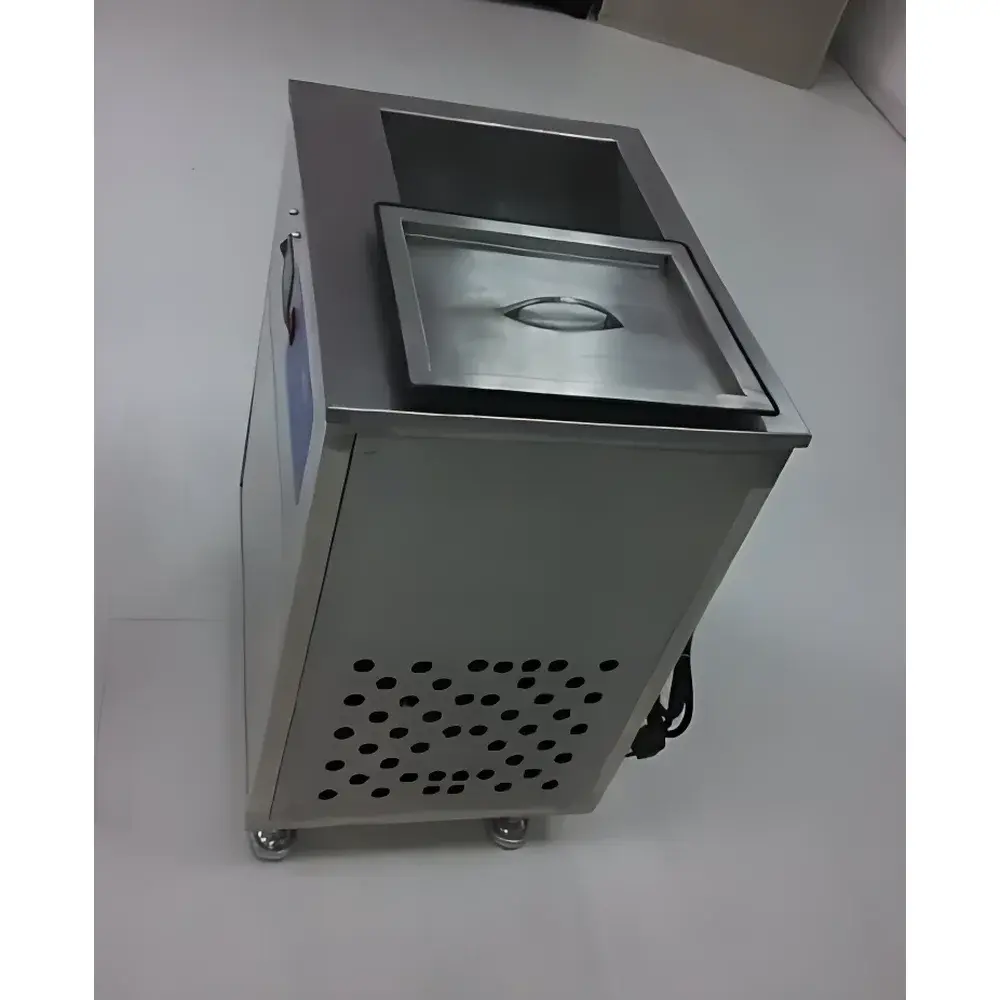
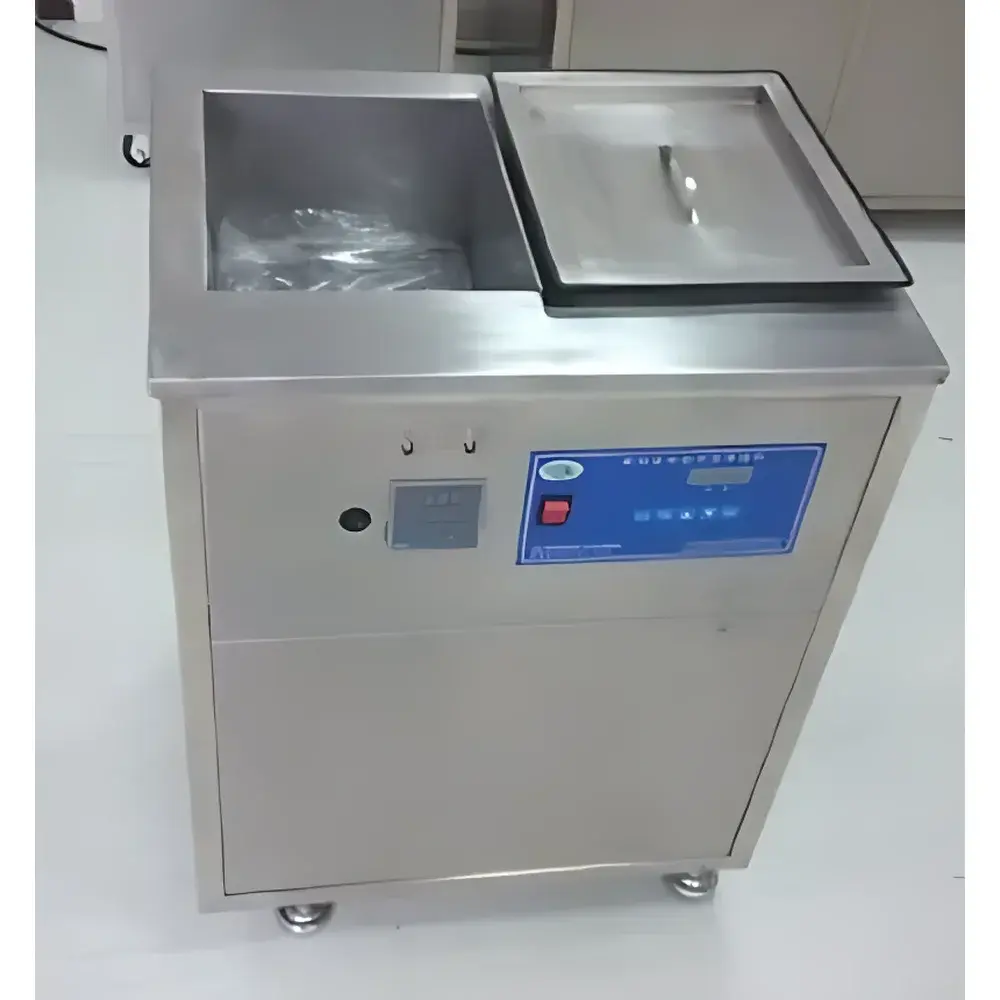
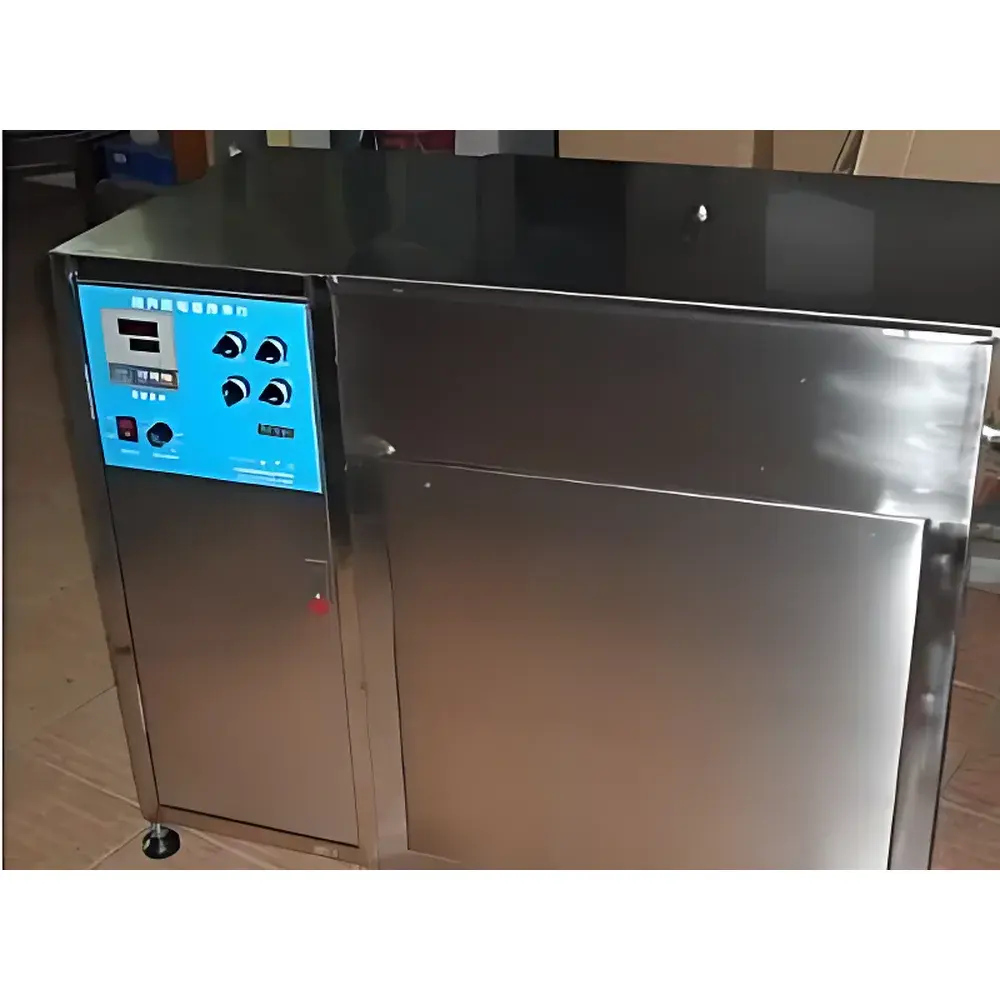
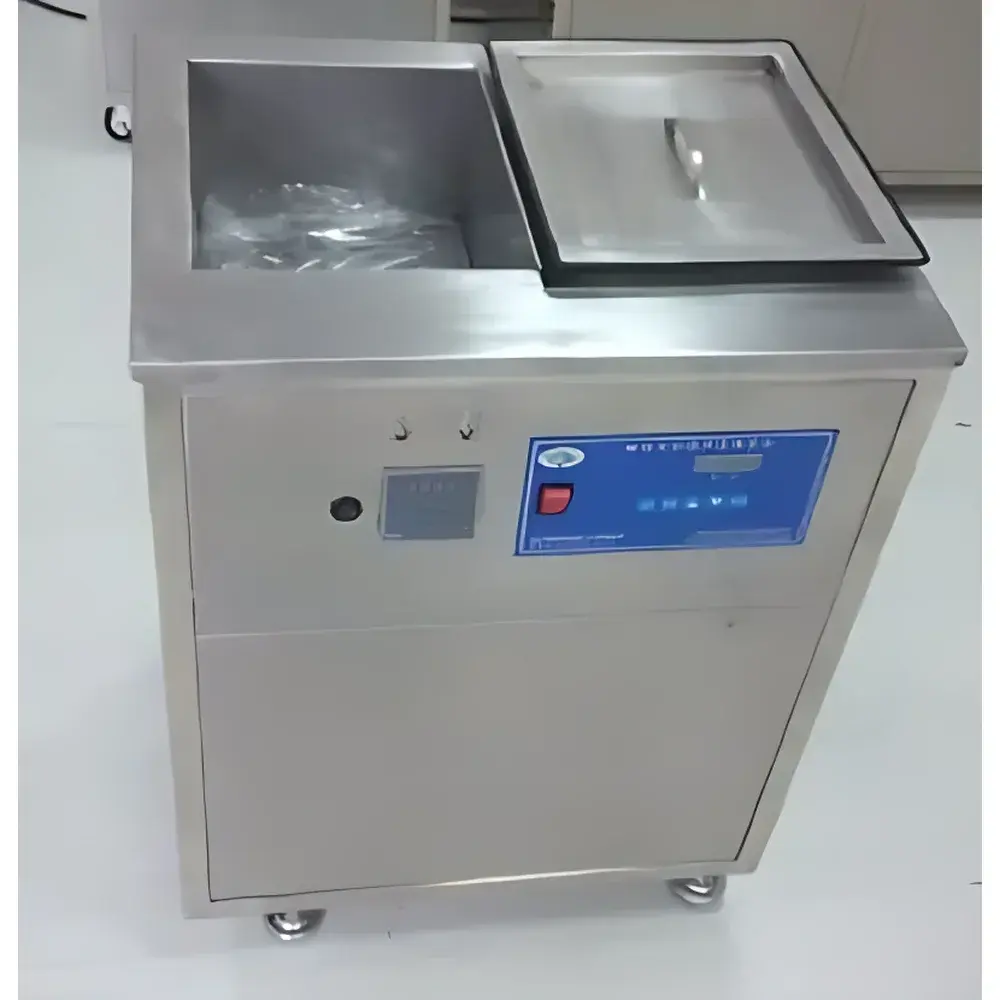
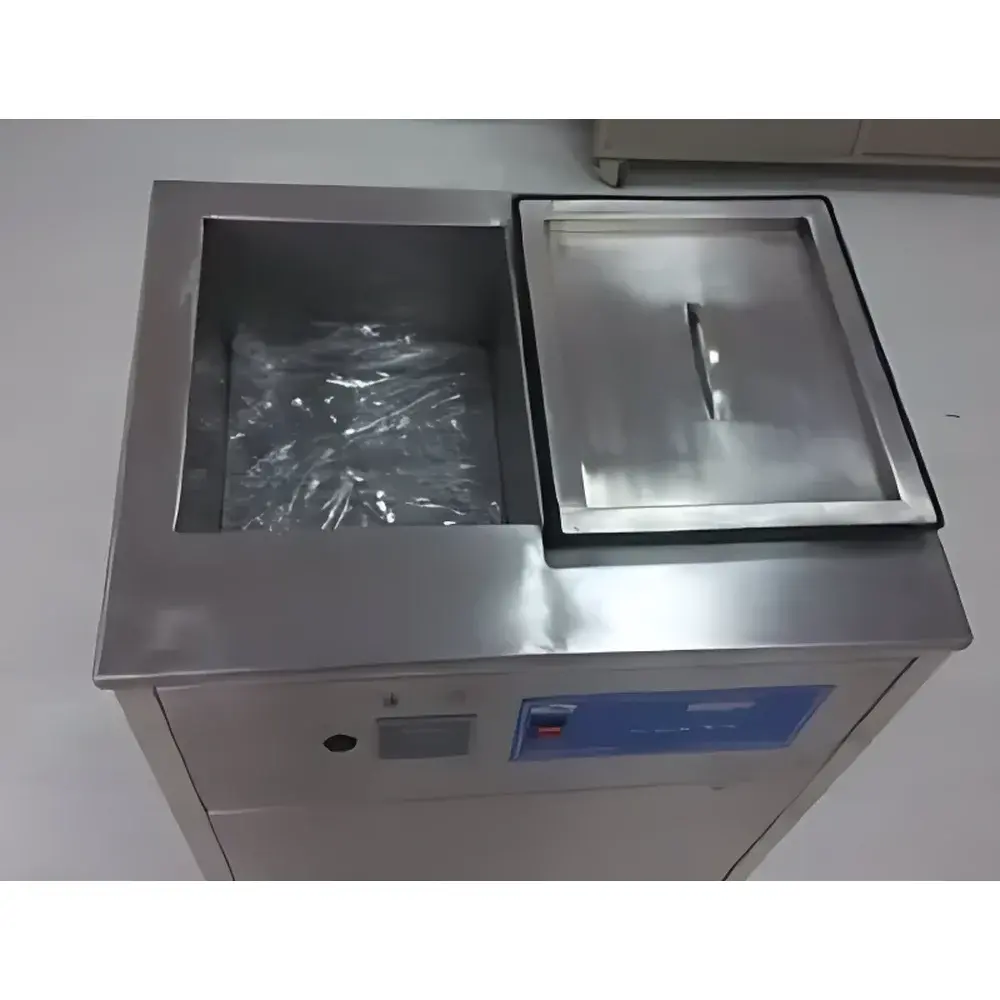
Shengyan Sycs SCQ-HD300A Ultrasonic Constant-Temperature Water Bath
| Brand | Shengyan Sycs |
|---|---|
| Origin | Shanghai, China |
| Manufacturer Type | Authorized Distributor |
| Product Category | Domestic |
| Model | SCQ-HD300A |
| Instrument Type | Constant-Temperature Bath |
| Circulation Mode | Internal & External Circulation |
| Tank Capacity | 5 L |
| Inner Tank Dimensions (mm) | 300 × 150 × 100 |
| Heating Power | 1000 W |
| Temperature Range | RT to 100 °C |
| Temperature Stability | ±0.1 °C |
| Timer Range | 1–600 min |
| Ultrasonic Power Output | 180 W |
| Power Supply | 220 V / 50 Hz |
| Drain Valve | Yes |
| Sound-Dampening Lid | Yes |
| Stainless Steel Mesh Basket | Yes |
| Construction Material | 304 Stainless Steel Tank & Heater |
| Cooling System | Sealed, CFC-Free Compressor (Integrated) |
| Control System | Microprocessor-Based with LCD Display |
Overview
The Shengyan Sycs SCQ-HD300A Ultrasonic Constant-Temperature Water Bath is an integrated laboratory thermal-ultrasonic platform engineered for precision-controlled chemical synthesis, enzymatic reactions, nanoparticle dispersion, pharmaceutical extraction, and delicate component cleaning. Unlike conventional water baths, this system combines thermostatic regulation with high-frequency ultrasonic energy (40 kHz nominal frequency) to induce controlled cavitation within the liquid medium—enhancing mass transfer, accelerating reaction kinetics, and improving homogeneity in heterogeneous systems. The unit employs a closed-loop refrigeration circuit with a CFC-free compressor, enabling rapid cooling from ambient to sub-ambient temperatures while maintaining tight thermal stability (±0.1 °C) across its full operating range (room temperature to 100 °C). Its 304 stainless steel tank, immersion heater, and corrosion-resistant internal components ensure long-term reliability under repeated exposure to aqueous, mildly acidic, or alkaline solutions.
Key Features
- Microprocessor-based digital control with backlit LCD interface for simultaneous monitoring and independent adjustment of temperature setpoint, ultrasonic duty cycle, and timer duration
- High-efficiency ultrasonic transducer array (180 W nominal output) mounted directly to the tank base, delivering uniform acoustic energy distribution without requiring external probes
- Dual-mode circulation system: internal recirculation ensures temperature homogeneity; external port supports connection to auxiliary equipment (e.g., condensers, reactors, or secondary baths) via standard 1/2″ NPT fittings
- Integrated sound-dampening lid with gasket-sealed hinge design reduces airborne noise by >15 dB(A) and minimizes solvent evaporation during extended operation
- Drain valve located at the lowest point of the tank enables complete fluid evacuation without tilting or disassembly—critical for cross-contamination prevention in multi-step workflows
- Stainless steel mesh basket (included) provides sample elevation above the transducer surface, preventing localized overheating and facilitating post-sonication handling
- Over-temperature cut-off, dry-run protection, and fuse-protected power supply comply with IEC 61010-1 safety requirements for laboratory electrical equipment
Sample Compatibility & Compliance
The SCQ-HD300A accommodates a wide range of sample formats—including glass vials (up to 50 mL), centrifuge tubes, beakers, and custom reaction vessels—within its 5 L working volume. Its inert 304 stainless steel construction resists degradation from common solvents (e.g., ethanol, acetone, aqueous buffers) and mild reagents used in natural product extraction or polymer processing. The system supports GLP-compliant documentation when paired with external data loggers; temperature and timer parameters are manually recordable per batch, and the stable thermal profile meets ASTM E2777-22 criteria for validation of temperature-controlled immersion systems. While not FDA 21 CFR Part 11–certified out-of-the-box, audit trails can be generated using third-party software interfaced via RS232 (optional module).
Software & Data Management
The SCQ-HD300A operates as a standalone instrument with no proprietary software dependency. All operational parameters—including real-time temperature feedback, elapsed time, and active ultrasonic status—are displayed on the front-panel LCD. For laboratories requiring automated data capture, an optional RS232 serial interface (model SCQ-RS232-KIT) enables bidirectional communication with PC-based acquisition platforms such as LabVIEW, MATLAB, or custom Python scripts. This allows scheduled logging of temperature deviations (±0.05 °C resolution), ultrasonic activation cycles, and alarm events—supporting ISO/IEC 17025 traceability frameworks where environmental conditioning records are mandated.
Applications
- Accelerated solvent extraction of bioactive compounds from botanical matrices (e.g., flavonoids, alkaloids)
- Controlled hydrolysis and esterification reactions under mild thermal-ultrasonic synergy
- Dispersion stabilization of carbon nanotubes, graphene oxide, or metal-organic frameworks in aqueous colloids
- Gentle cleaning of optical lenses, microfluidic chips, and MEMS devices without mechanical abrasion
- Temperature-sensitive enzyme incubations where conventional shaking introduces shear stress
- Preparation of uniform liposomal suspensions for drug delivery formulation development
FAQ
What is the maximum allowable liquid level for optimal ultrasonic performance?
For consistent cavitation intensity and transducer longevity, maintain liquid volume between 3 L and 5 L. Operating below 3 L risks transducer overheating; exceeding 5 L may attenuate acoustic coupling.
Can the unit operate continuously for 24 hours?
Yes—the SCQ-HD300A is rated for continuous duty at any temperature setting within its specified range, provided ambient conditions remain ≤30 °C and relative humidity <80% non-condensing.
Is external chiller integration supported?
No—this model includes an integrated compressor-based cooling system. External chillers are incompatible due to absence of coolant inlet/outlet ports.
How often should the ultrasonic transducer be serviced?
Under normal use (≤8 hrs/day), no routine maintenance is required. Visual inspection of the tank bottom for pitting or delamination is recommended every 6 months.
Does the unit support programmable ramp-and-soak temperature profiles?
No—this model offers single-setpoint thermostatic control only. Multi-stage profiles require external PID controllers interfaced via analog voltage input (not included).



