
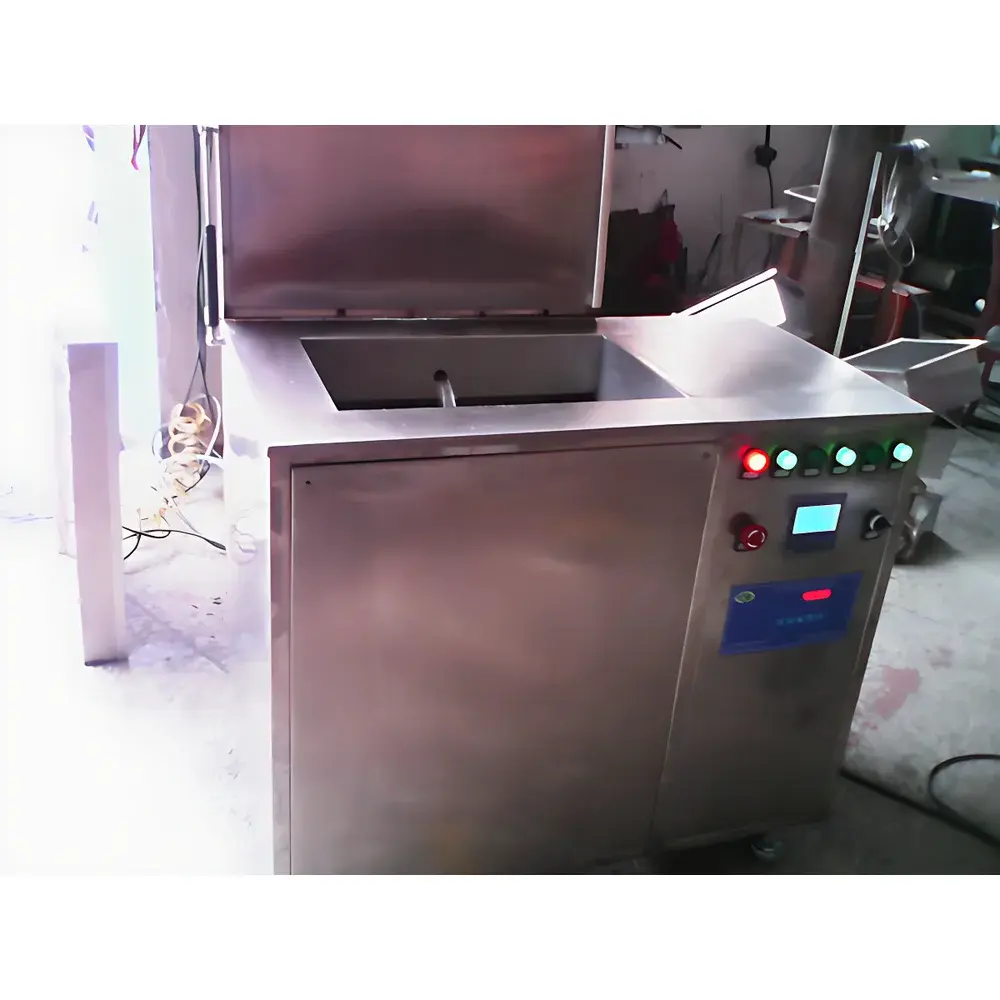
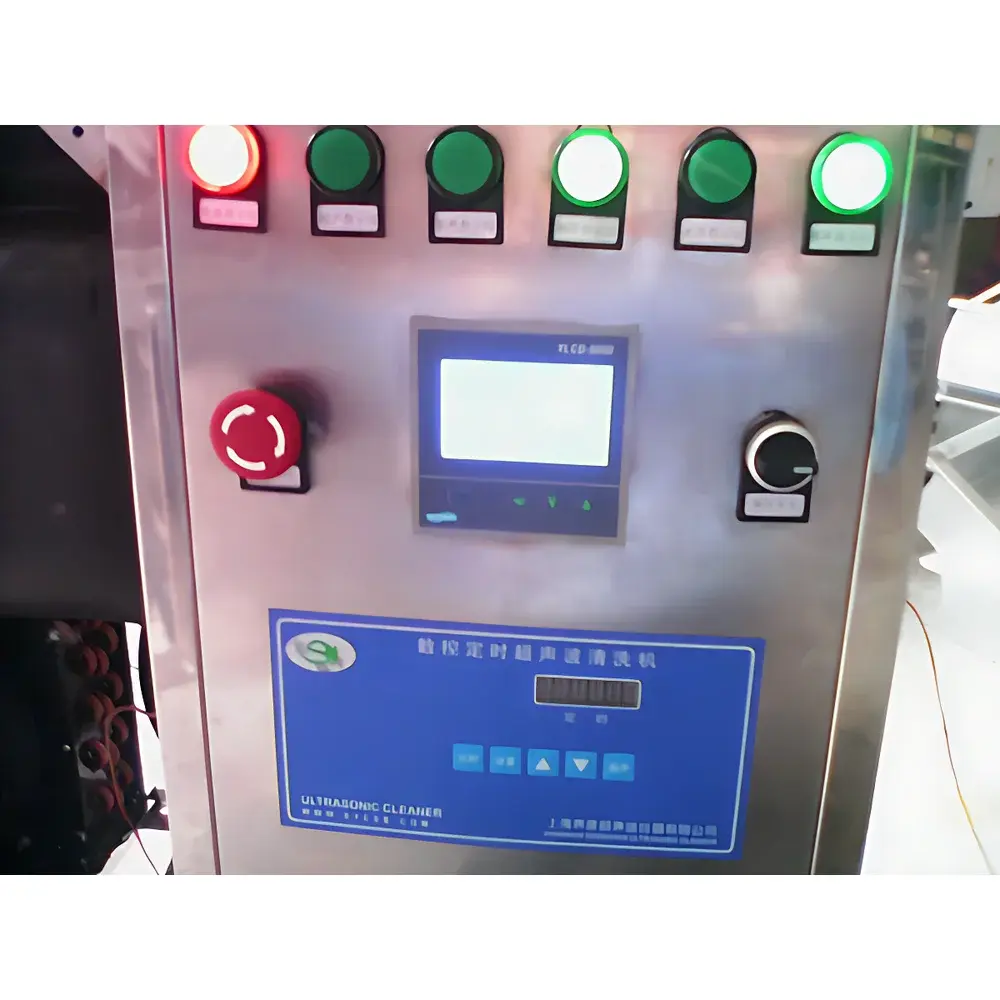
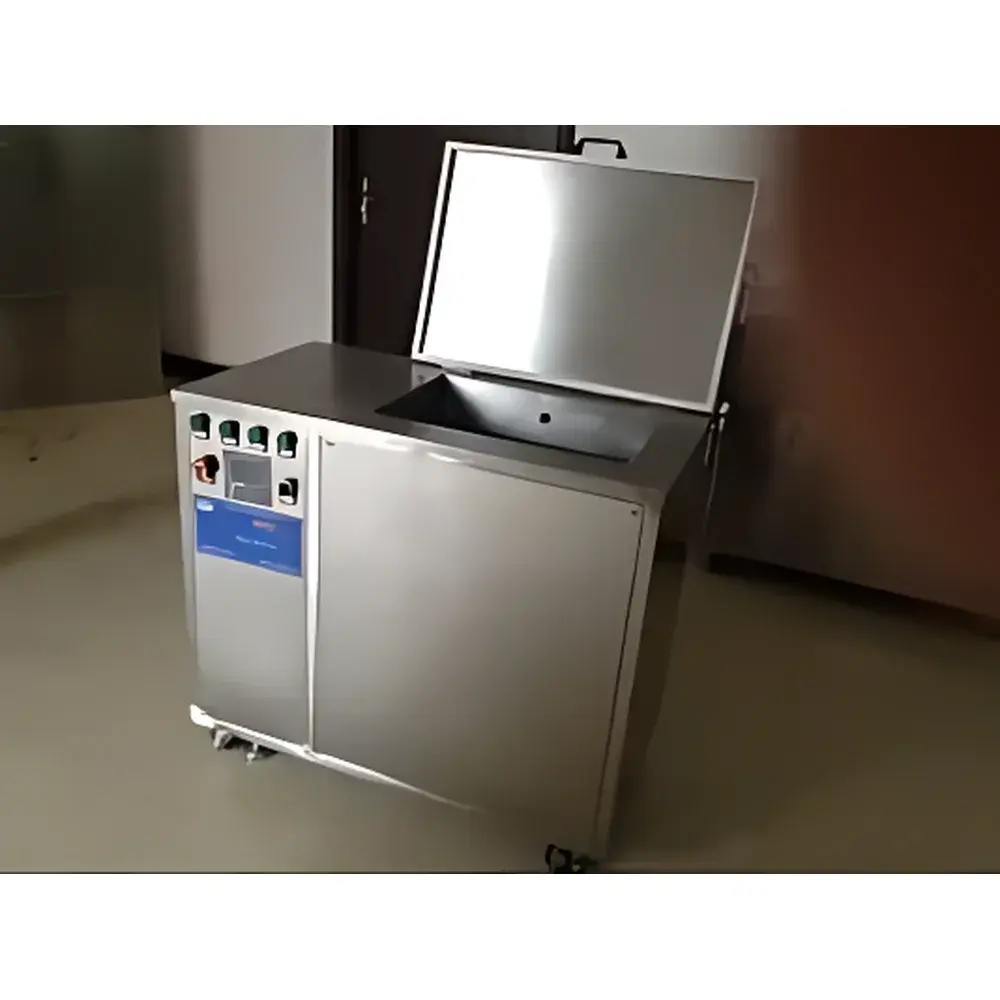
Shengyan SYCS Ultrasonic Constant-Temperature Water Bath
| Brand | Shengyan SYCS |
|---|---|
| Origin | Shanghai, China |
| Model | Ultrasonic Constant-Temperature Water Bath |
| Bath Capacity | 30 L |
| Temperature Range | 5–90 °C |
| Temperature Stability | ±0.1 °C |
| Ultrasonic Power | 900 W |
| Heating Power | 1200 W |
| Refrigeration Power | 350 W (Emerson Copeland Compressor) |
| Ultrasonic Frequency | 40 / 59 kHz |
| Power Adjustment Range | 10–100% |
| Timer Range | 1 s – 9 h 59 min 59 s |
| Internal Dimensions (L×W×H) | 500 × 300 × 200 mm |
| Construction Material | Full SUS304 Stainless Steel |
| Circulation Type | Internal Recirculation |
| Temperature Control Method | Insulated Jacket with Compressor-Based Cooling |
| Drain Port | Yes |
| Sound-Dampening Lid | Yes |
| Sample Rack Included | Yes |
| Power Supply | 220 V / 50 Hz |
| Extraction Configuration | U-shaped Circulating Extraction with Standardized Extraction Cups (50, 100, 200, 500, 1000 mL) |
Overview
The Shengyan SYCS Ultrasonic Constant-Temperature Water Bath integrates precision temperature control with high-efficiency ultrasonic energy delivery in a single-platform laboratory system. Designed for applications requiring simultaneous thermal regulation and acoustic cavitation—such as accelerated solvent extraction (ASE), cell lysis, nanoparticle dispersion, enzymatic reaction enhancement, and sample homogenization—the instrument employs dual-mode thermoregulation: resistive heating combined with a sealed, oil-free Emerson Copeland rotary compressor for active cooling. This architecture enables stable operation across a validated range of 5–90 °C with long-term stability of ±0.1 °C at setpoint, meeting the thermal consistency requirements for ISO/IEC 17025-compliant analytical workflows. The bath chamber is constructed entirely from electropolished SUS304 stainless steel to ensure corrosion resistance against aqueous and mild organic solvents, while its fully insulated jacket minimizes thermal drift and external heat emission—critical for placement within shared fume hood or benchtop environments.
Key Features
- Full SUS304 stainless steel tank (500 × 300 × 200 mm internal dimensions) with seamless welding and passivated surface finish for chemical inertness and cleanability
- Dual-frequency ultrasonic transduction (40 kHz and 59 kHz selectable) enabling optimization for different sample viscosities and particle sizes
- Digitally adjustable ultrasonic power output (10–100% in 1% increments) with real-time feedback monitoring to prevent probe overload or sample overheating
- Microprocessor-based PID temperature controller with adaptive tuning, supporting programmable ramp-hold profiles and deviation alarms
- Integrated U-shaped circulation path with removable stainless steel sample rack and five standardized extraction cups (50–1000 mL) for reproducible batch processing
- Acoustic isolation lid with silicone gasket and quick-release clamps to suppress airborne noise and minimize evaporative loss during extended operation
- Front-panel digital timer (1 second to 9 hours 59 minutes 59 seconds) with auto-shutdown and audible end-of-cycle notification
- Standard drain valve with PTFE-sealed ball valve and threaded outlet for controlled fluid removal without disassembly
Sample Compatibility & Compliance
The SYCS Ultrasonic Constant-Temperature Water Bath accommodates a broad spectrum of sample formats—including glass vials, centrifuge tubes, extraction thimbles, and custom reactor vessels—within its open-bath geometry and configurable rack system. Its non-pressurized design complies with IEC 61010-1:2010 safety standards for laboratory electrical equipment. The unit supports GLP/GMP-aligned documentation through optional audit-trail-enabled firmware (available upon request), which logs timestamped temperature setpoints, ultrasonic duty cycles, and operator IDs. While not certified to FDA 21 CFR Part 11 out-of-the-box, the system’s data export capability (via RS-232 or optional USB interface) permits integration into validated LIMS or ELN platforms where electronic record integrity is required. All materials in contact with the bath medium meet USP Class VI biocompatibility criteria.
Software & Data Management
The embedded controller provides standalone operation without external software dependency. However, optional PC connectivity enables remote parameter configuration, real-time data logging (temperature, power %, elapsed time), and CSV export via Shengyan’s SYCS-Link™ desktop application (Windows 10/11 compatible). Logged datasets include metadata such as ambient temperature, calibration date, and firmware revision—supporting traceability per ISO/IEC 17025 Clause 7.7. For regulated environments, optional validation packages (IQ/OQ protocols) are available, including factory-installed NIST-traceable temperature sensor calibration certificates and ultrasonic intensity mapping reports generated using calibrated hydrophone measurements per ASTM E1002.
Applications
- Accelerated extraction of phytochemicals, pesticides, and environmental contaminants from solid matrices (e.g., soil, plant tissue, food samples)
- Controlled disruption of bacterial and mammalian cells for protein and nucleic acid isolation
- Dispersion and deagglomeration of nanomaterials (e.g., graphene oxide, metal oxides) in aqueous and polar solvent systems
- Enhancement of enzymatic digestion kinetics in proteomics and metabolomics sample preparation
- Thermally assisted cleaning of HPLC columns, GC injectors, and microfluidic devices
- Stabilized dissolution testing of pharmaceutical dosage forms under pharmacopeial conditions (USP & Ph. Eur.)
FAQ
What is the maximum allowable bath liquid volume for optimal ultrasonic performance?
For consistent cavitation field distribution and thermal uniformity, the recommended fill level is between 24 L and 30 L. Operating below 20 L may reduce transducer coupling efficiency and increase localized heating.
Can this unit maintain temperature stability during continuous ultrasonic operation at 90 °C?
Yes—the compressor-assisted cooling system actively compensates for ultrasonic energy input, sustaining ±0.1 °C stability at 90 °C over 8-hour cycles when ambient temperature remains ≤25 °C and humidity <60% RH.
Is third-party calibration support available?
Shengyan provides annual recalibration services performed by ISO/IEC 17025-accredited laboratories, including full uncertainty budgets and certificate issuance compliant with ILAC-MRA mutual recognition arrangements.
Are custom bath geometries or OEM integrations supported?
Yes—Shengyan offers engineering collaboration for non-standard tank dimensions, specialized transducer mounting, or integration into automated sample-handling platforms (e.g., robotic arms, carousel loaders). NDA and design review processes apply.
What maintenance intervals are recommended for the compressor and transducers?
Compressor oil inspection every 12 months; transducer impedance verification every 6 months using a handheld LCR meter. Full preventive maintenance—including refrigerant pressure check, seal integrity test, and ultrasonic intensity recalibration—is advised annually.



