
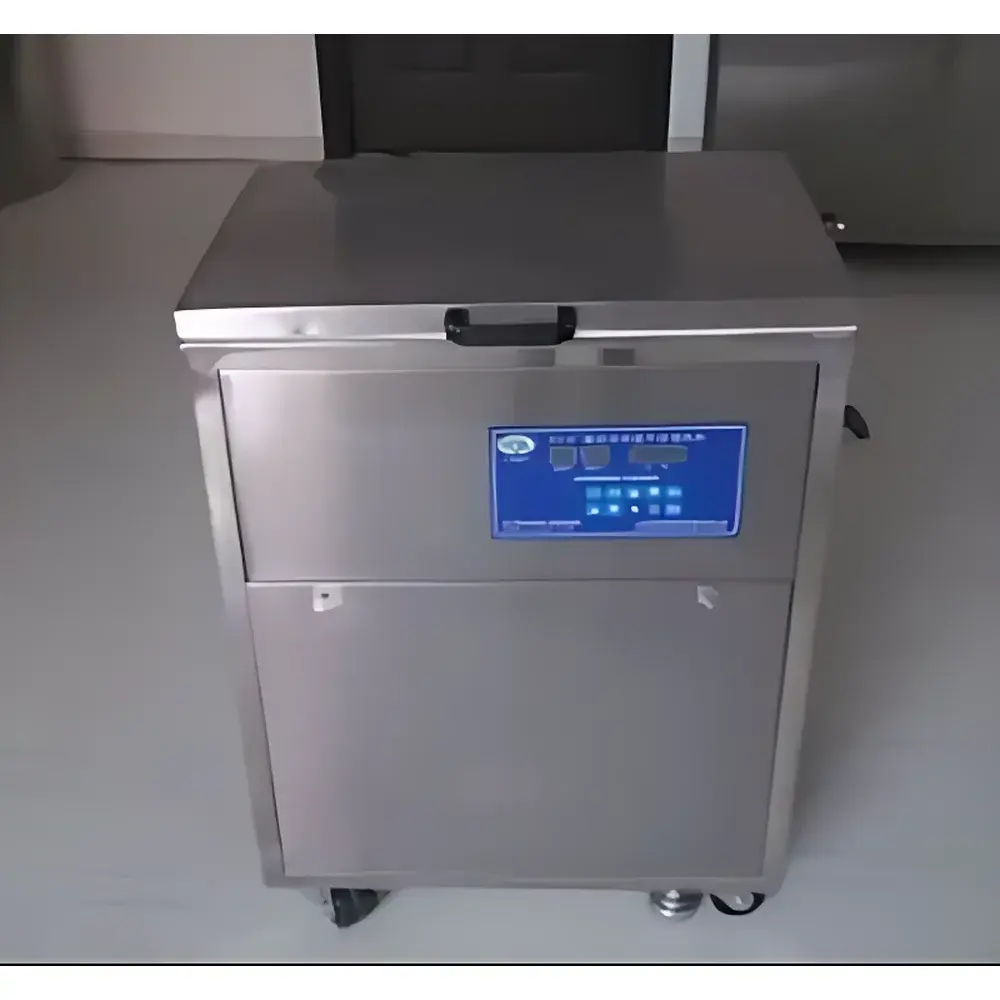
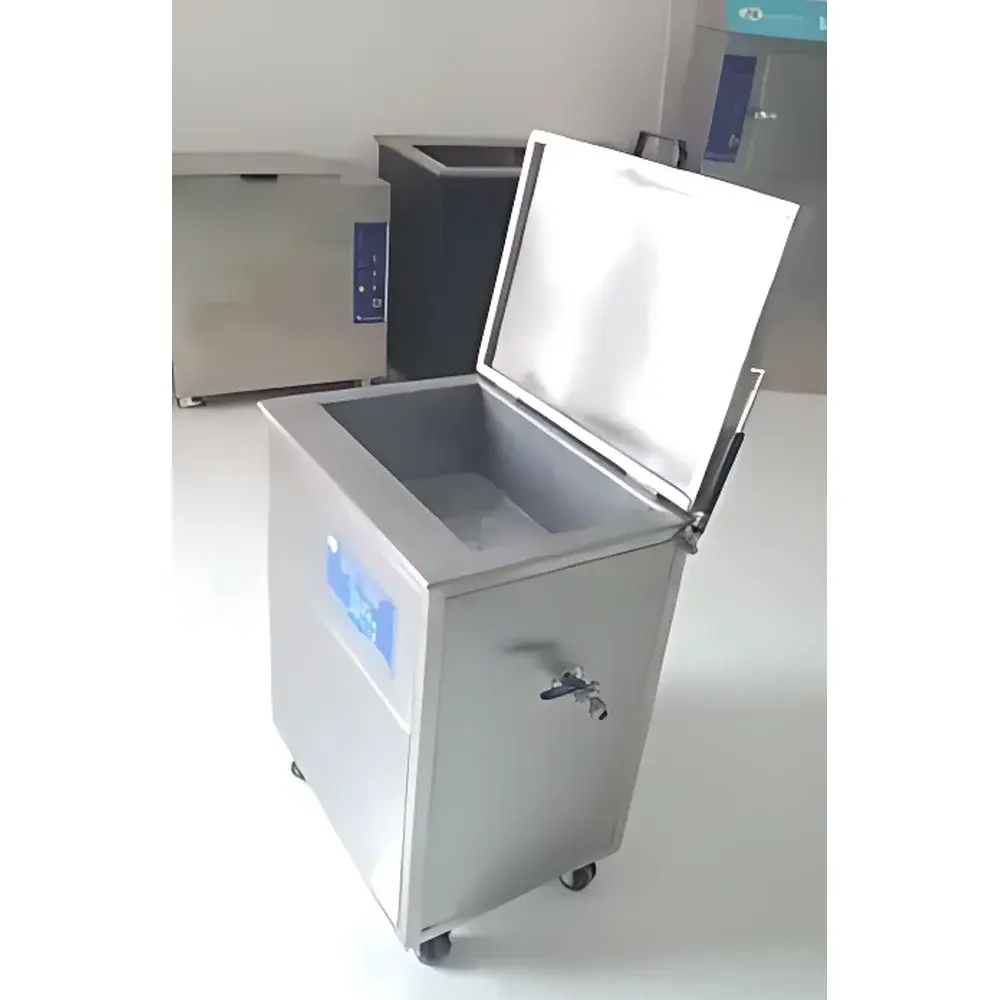
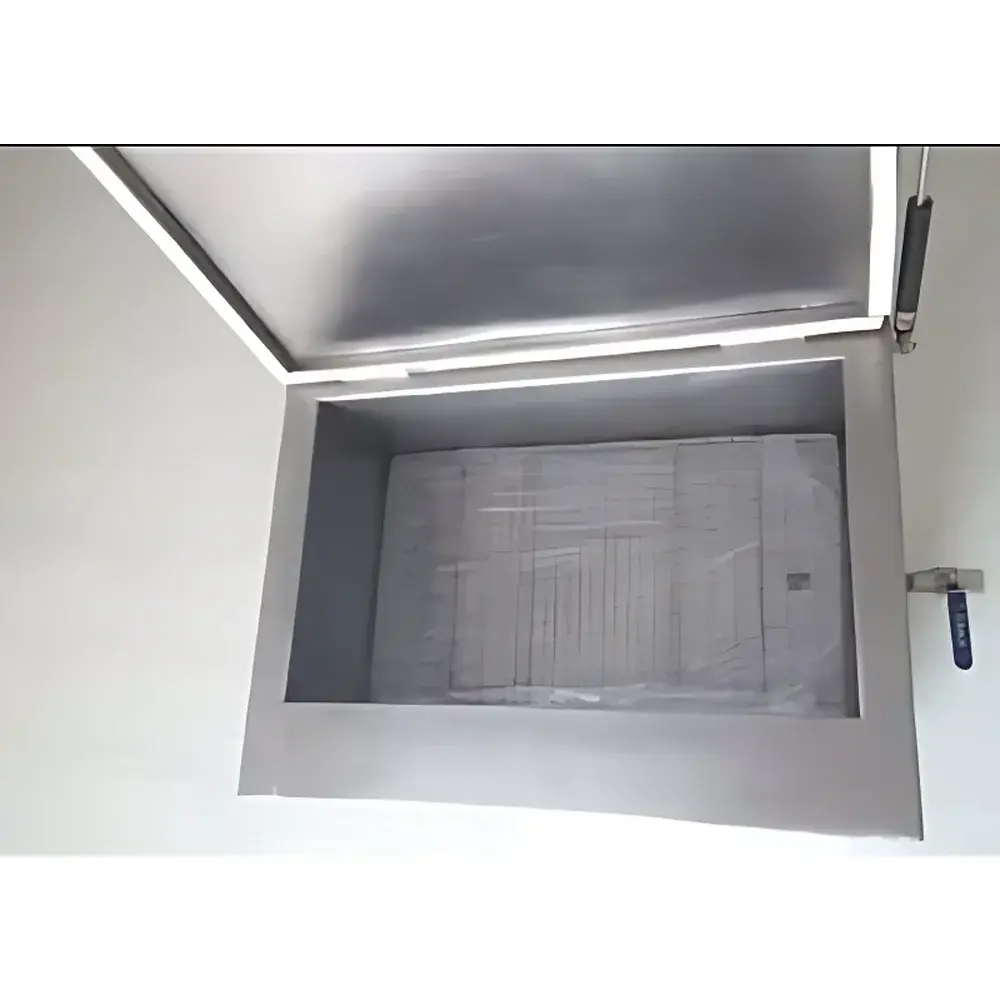
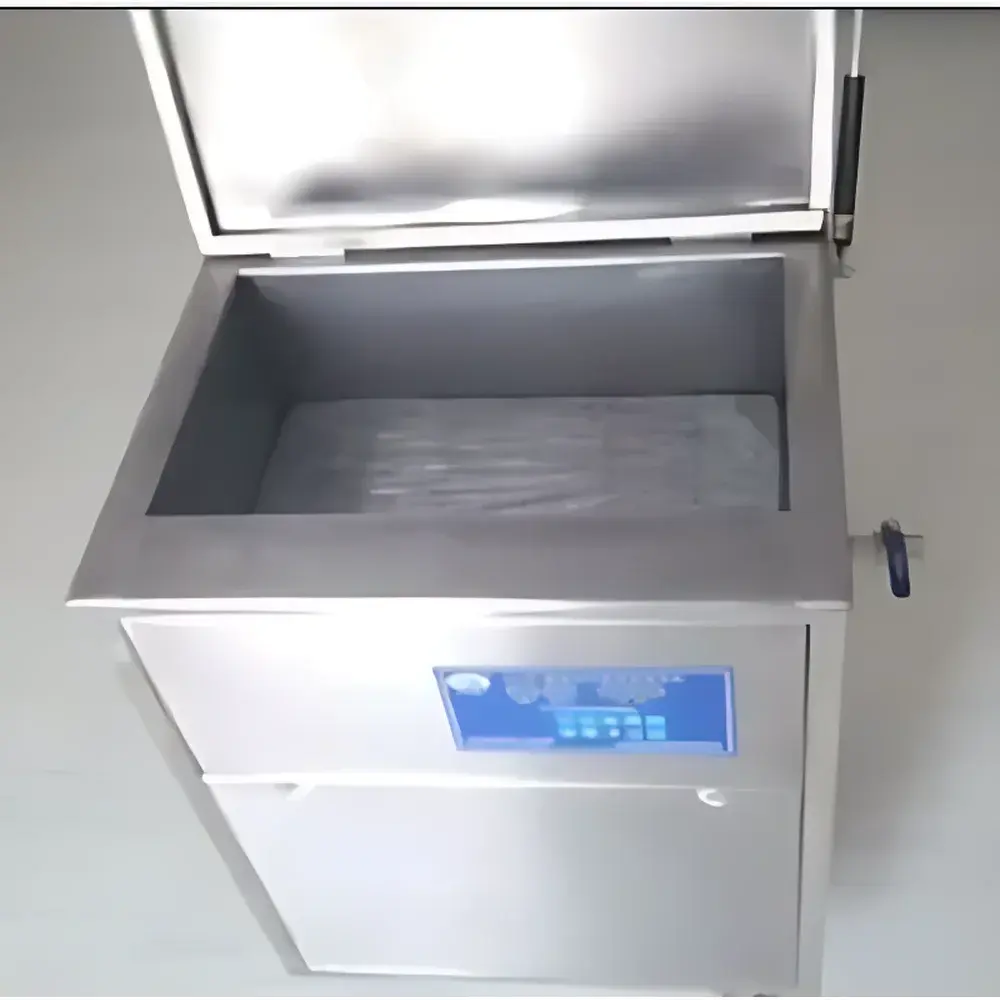
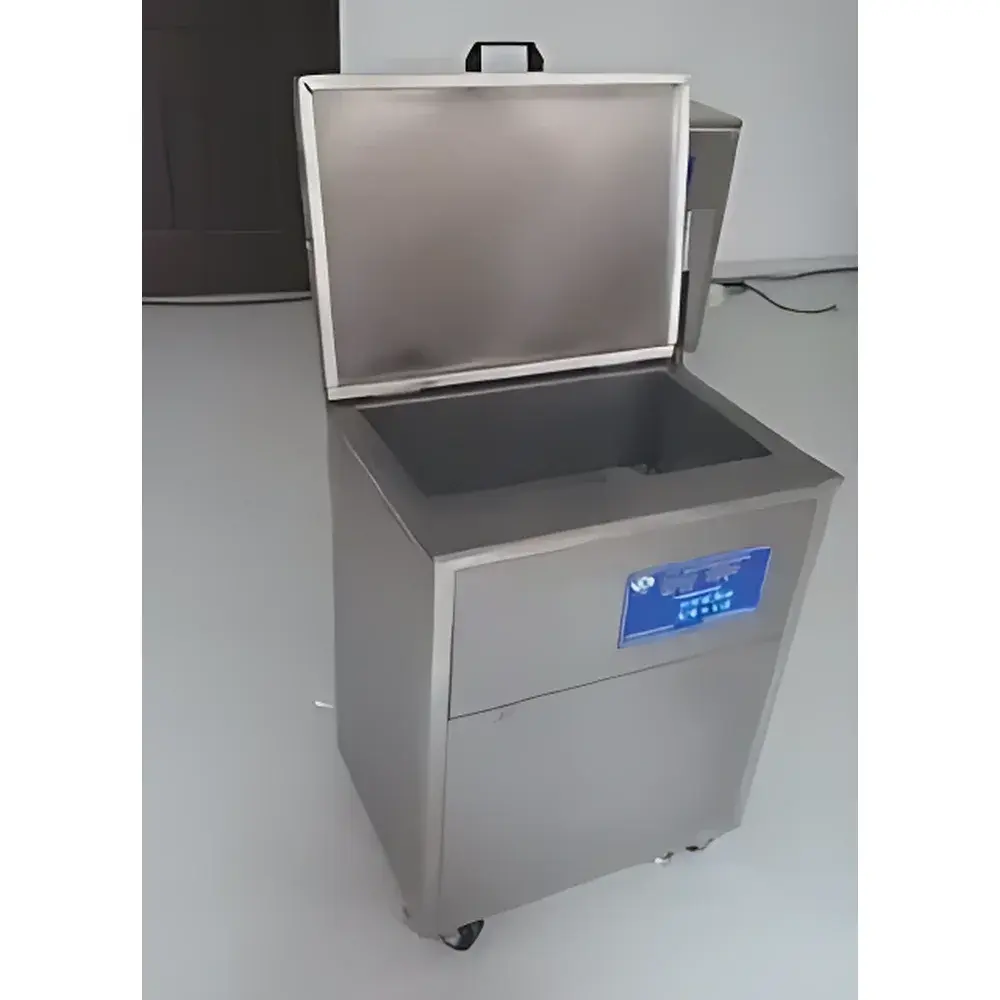
Shengyan Ultrasonic Extractor SCQ-8201B
| Brand | Shengyan Ultrasonic (SYCS) |
|---|---|
| Origin | Shanghai, China |
| Model | SCQ-8201B |
| Capacity | 22.5 L |
| Ultrasonic Frequency | 40 kHz / 60 kHz / 80 kHz |
| Ultrasonic Power | 500 W |
| Power Adjustment Range | 10–100% |
| Heating Power | 1200 W |
| Temperature Control Range | Ambient to 80 °C (max 100 °C per spec sheet) |
| Timer Range | 1–600 min |
| Lid Type | Integrated sound-dampening cover |
| Drainage | Manual valve |
| Internal Tank Dimensions | 500 × 300 × 150 mm |
| Construction | Full 304 stainless steel tank and housing |
| Input Power | 220 V / 50 Hz |
Overview
The Shengyan Ultrasonic Extractor SCQ-8201B is a vertically oriented, benchtop-capable ultrasonic cleaning and extraction system engineered for reproducible cavitation-based processing in laboratory, industrial quality control, and clinical support environments. Operating on the principle of high-frequency acoustic energy transmission through liquid media, the unit generates controlled cavitation bubbles that collapse near solid surfaces—producing localized micro-jets and shear forces effective for particulate removal, cell lysis, solvent-assisted extraction, degassing, emulsification, and surface decontamination. Unlike immersion-only cleaners, the SCQ-8201B integrates a rigid, hinged stainless steel lid with integrated acoustic damping, enabling stable operation during extended cycles while minimizing ambient noise and solvent evaporation. Its 22.5 L capacity supports batch processing of large or multiple samples—including glassware arrays, printed circuit boards, medical instruments, optical components, and botanical matrices—without requiring continuous refilling.
Key Features
- Triple-frequency ultrasonic generation (40 kHz, 60 kHz, and 80 kHz) allows selection based on application requirements: lower frequencies (40 kHz) deliver higher cavitation intensity for robust cleaning of heavily soiled metal parts; mid-range (60 kHz) balances penetration and gentleness for delicate optics or electronics; higher frequency (80 kHz) enables finer resolution for nano-emulsion preparation or gentle biomolecule extraction.
- Digitally adjustable ultrasonic power output from 10% to 100% of nominal 500 W, permitting optimization for sensitive substrates or low-viscosity solvents without compromising process repeatability.
- Independent heating system (1200 W) maintains temperature between ambient and 80 °C (up to 100 °C as specified), supporting thermally enhanced extraction protocols compliant with pharmacopeial methods (e.g., USP <724>, EP 2.9.39) and accelerating solvent kinetics in herbal or nutraceutical workflows.
- Full 304 stainless steel construction—including tank, lid, and external housing—ensures corrosion resistance against aqueous, alcoholic, and mild organic solvents (e.g., ethanol, isopropanol, acetone), meeting ISO 13485 cleanroom-compatible material standards.
- Integrated mechanical timer (1–600 minutes) with audible end-cycle alert provides deterministic process control suitable for GLP-regulated laboratories where manual intervention must be minimized and cycle documentation maintained.
- Manual drain valve positioned at the tank base facilitates rapid, residue-free solvent exchange—critical when switching between incompatible chemistries or performing multi-step extractions.
Sample Compatibility & Compliance
The SCQ-8201B accommodates a broad range of sample formats including but not limited to: borosilicate glassware (vials, flasks, cuvettes), stainless steel surgical tools, titanium dental implants, silicone tubing, PCB assemblies, quartz optical lenses, ceramic filters, and plant tissue homogenates. Its design conforms to general safety requirements outlined in IEC 61010-1 (Electrical Equipment for Laboratory Use) and incorporates IPX4-rated splash protection on control panels. While not certified to FDA 21 CFR Part 11 out-of-the-box, its deterministic mechanical controls and non-networked architecture simplify validation for regulated environments where electronic audit trails are managed externally via lab notebooks or LIMS-integrated logbooks.
Software & Data Management
This model operates via analog/digital hybrid controls with no embedded firmware or network interface. All operational parameters—frequency selection, power level, temperature setpoint, and timer duration—are configured manually using front-panel dials and switches. This architecture eliminates cybersecurity vulnerabilities and ensures long-term functional stability without software updates or license dependencies. For laboratories requiring traceability, users may document settings and cycle outcomes in paper-based SOP logs or integrate timestamps and parameter records into validated electronic lab notebooks (ELN) such as LabArchives or Benchling.
Applications
- Pharmaceutical & Biotechnology: Solvent-based active pharmaceutical ingredient (API) extraction from botanical matrices; degassing of formulation buffers prior to filtration; cleaning of HPLC autosampler vials and syringe filters.
- Clinical Diagnostics: Decontamination of reusable endoscopic accessories; removal of biofilm from dental prosthetics and orthodontic appliances; preparation of histology slide racks.
- Materials Science: Dispersion of nanomaterials (e.g., graphene oxide, TiO₂ nanoparticles) in aqueous or ethanolic suspensions; cleaning of sputtering targets and SEM stubs.
- Electronics Manufacturing: Flux residue removal from SMT-assembled PCBs; precision cleaning of MEMS sensors and RF connectors prior to packaging.
- Academic Research: Cell disruption for intracellular metabolite recovery; sonication-assisted synthesis of metal-organic frameworks (MOFs); accelerated leaching studies in environmental geochemistry.
FAQ
Is the SCQ-8201B suitable for use with flammable solvents?
Yes—when operated within manufacturer-specified temperature limits (<60 °C for most organics) and with proper ventilation. The unit lacks spark-generating components and features grounded stainless steel construction compatible with Class I, Division 2 hazardous location practices.
Can frequency be changed during an active cycle?
No. Frequency selection is a pre-cycle configuration step. Switching frequencies mid-process may cause transducer impedance mismatch and reduce cavitation efficiency.
Does the unit include a degas mode?
Not as a dedicated function; however, operating at 40 kHz for 5–10 minutes at ambient temperature effectively removes dissolved gases from solvents—a standard practice preceding filtration or chromatography.
What maintenance is required for long-term reliability?
Routine inspection of the transducer bonding integrity (visible via tank bottom), periodic descaling with 5% citric acid solution if used with hard water, and verification of lid gasket compression every 6 months.
Is calibration supported by the manufacturer?
The unit does not require field calibration; ultrasonic output is verified at factory via hydrophone measurement per ASTM E1002. Users may validate performance using aluminum foil erosion tests per ISO 13073-2.



