
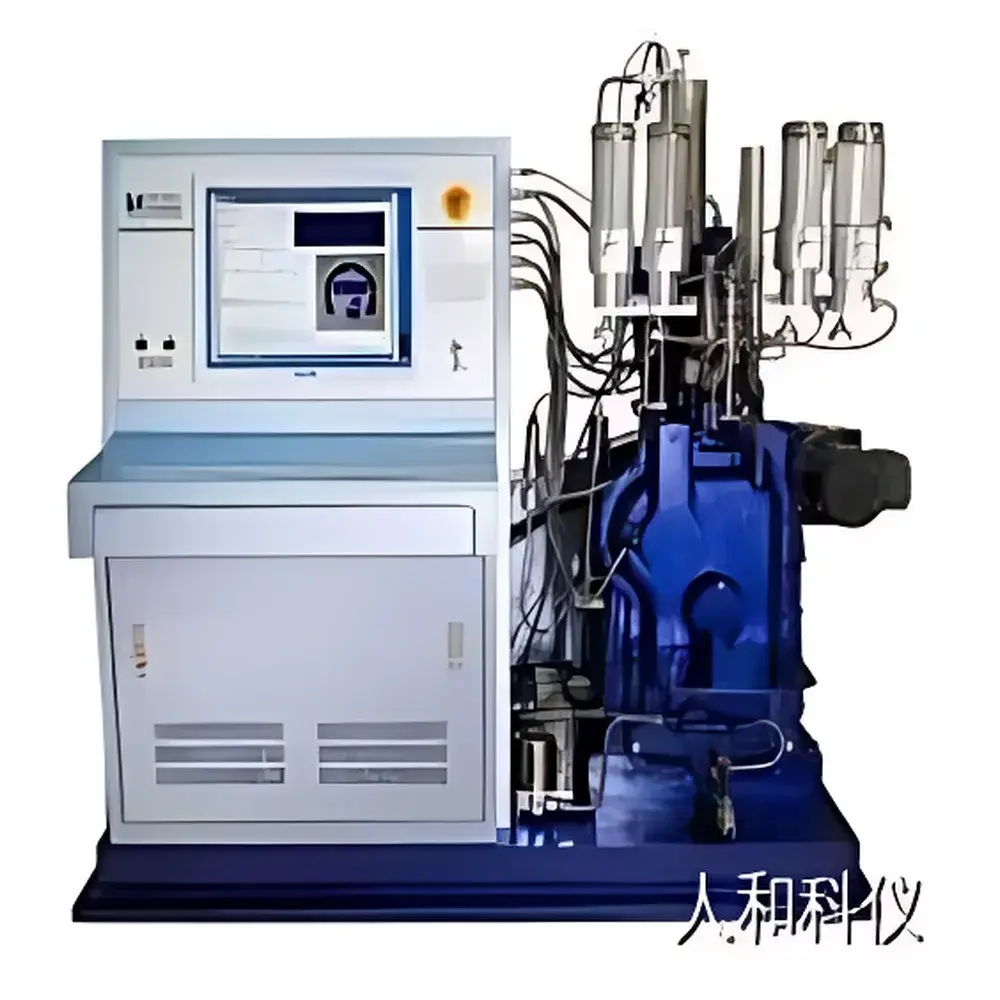
ShenKai CFR-A1 Motor Octane Number (MON) Tester
| Brand | ShenKai |
|---|---|
| Origin | Shanghai, China |
| Model | CFR-A1 |
| Application | Gasoline Octane Number Determination (Motor Method) |
| Principle | CFR Engine-Based Motor Method (ASTM D2700 / GB/T 503-2016) |
| Configuration | Benchtop Single-Cylinder CFR Engine System |
| Measurement Range | 40–120 MON |
| Compression Ratio Adjustment Range | 4:1 to 18:1 |
| Engine Speed (MON) | 900 ± 9 rpm |
| Lubricating Oil Pressure | 172–207 kPa |
| Lubricating Oil Temperature | 57 ± 8 °C |
| Coolant Temperature | 100 ± 1.5 °C |
| Intake Mixture Temperature (MON) | 149 ± 1.1 °C |
| Intake Air Temperature (MON) | 38 ± 2.8 °C |
| Intake Air Temperature (RON) | 52 ± 1 °C (at standard atmospheric pressure, auto-compensated) |
| Ignition Timing (MON) | 26 ± 1.5° BTDC (automatically adjusted per compression ratio) |
| Ignition Timing (RON) | Fixed at 13° BTDC |
| Displacement | 0.61 L (37.33 in³) |
| Cylinder Bore | 82.55 mm (3.25 in) |
| Piston Stroke | 114.3 mm (4.5 in) |
| Crankcase Dimensions | 480 × 380 × 680 mm (L×W×H) |
| Overall Instrument Dimensions | 1700 × 900 × 1400 mm (W×D×H) |
| Weight | 1000 kg |
| Power Supply | AC 380 V ±10%, 50 Hz |
| Total Power Consumption | 12 kW |
| Cooling Water Requirement | 60 L/min, 4–5 kg/cm² pressure, ≤24 °C inlet temperature |
| Data Storage Capacity | High-volume local storage with remote diagnostic capability |
| Software Platform | Windows 7-based proprietary control interface with real-time knock meter display, knock signal waveform, automatic report generation, and audit-trail-ready data logging |
Overview
The ShenKai CFR-A1 Motor Octane Number (MON) Tester is a benchtop, single-cylinder, variable-compression-ratio engine system engineered for precise determination of the motor octane number of gasoline fuels in accordance with ASTM D2700-08 and GB/T 503-2016 standards. It implements the classical CFR (Cooperative Fuel Research) engine method—widely recognized as the reference measurement technique for gasoline anti-knock performance under high-speed, high-temperature operating conditions. The instrument features a monobloc cast-iron cylinder head and barrel assembly, conforming strictly to CFR dimensional and material specifications, including an 82.55 mm bore and 114.3 mm stroke, yielding a displacement of 0.61 L. Its continuously adjustable compression ratio (4:1 to 18:1) enables accurate replication of standardized combustion chamber geometries required for MON testing across the full 40–120 octane range. The engine operates at a regulated speed of 900 ± 9 rpm under motor method conditions, with tightly controlled thermal parameters—including intake mixture temperature (149 ± 1.1 °C), coolant temperature (100 ± 1.5 °C), and lubricating oil temperature (57 ± 8 °C)—to ensure thermodynamic consistency and inter-laboratory reproducibility.
Key Features
- CFR-compliant monobloc cast-iron engine architecture with integrated cooling jacket, ensuring mechanical and thermal stability over extended test cycles.
- Automated compression ratio adjustment with position-limit safety protection and real-time feedback via integrated laser displacement sensor.
- Dual-mode operation: seamless switching between Motor Method (MON) and Research Method (RON) via configurable belt drive assembly—no hardware disassembly required.
- Advanced carburetor system featuring four independent horizontal nozzles plus a vertically oriented fourth nozzle with active refrigeration, enabling precise air–fuel ratio control for light-end hydrocarbon-rich samples.
- Integrated dual-circuit refrigerated cooling tower maintaining intake air at 2–4 °C, supported by a 60 L/min high-capacity chilled water circulation unit (≤24 °C inlet, 4–5 kg/cm² pressure).
- Real-time monitoring suite: high-sensitivity piezoelectric knock sensor with millisecond-level response, multi-channel thermal and pressure transducers, and automated anomaly detection with audible/visual alerts.
- Comprehensive safety infrastructure: phase-loss protection, emergency stop circuitry, stainless steel corrosion-resistant cooling tower, and oil pre-heating function to reduce warm-up time.
Sample Compatibility & Compliance
The CFR-A1 is validated for use with automotive gasoline, aviation gasoline (avgas), and reformulated fuel blends meeting ASTM D4814 or GB 17930 specifications. It supports both neat gasoline and oxygenated blends containing ethanol or MTBE, provided volatility and distillation characteristics fall within CFR engine operational limits. Regulatory compliance includes full alignment with ASTM D2700 (Motor Method), ASTM D2699 (Research Method), ISO 5164 (RON), and national standards GB/T 503-2016 and GB/T 5487-2015. All critical operational parameters—including atmospheric pressure compensation, ignition timing calibration, and compression ratio verification—are traceable to NIST-certified references. Data acquisition and reporting functions support GLP/GMP environments through timestamped, user-identifiable audit trails and exportable CSV/PDF reports compliant with FDA 21 CFR Part 11 requirements when deployed with appropriate IT validation protocols.
Software & Data Management
The instrument runs on a dedicated Windows 7–based control platform with deterministic real-time kernel extensions. The GUI displays synchronized analog waveforms of knock intensity, cylinder pressure, and combustion phasing alongside digital readouts of all regulated parameters. Automated test sequencing includes initial warm-up verification, compression ratio ramping, knock threshold search via liquid-level auto-tracking, and final MON calculation using built-in ASTM-specified working curves. All raw sensor data, operator inputs, environmental corrections, and final results are stored locally in encrypted binary format with SHA-256 hashing. Remote diagnostic access enables OEM-level troubleshooting without physical intervention. Export options include XML metadata packages compatible with LIMS integration and PDF reports bearing digital signatures, instrument ID, calibration status, and analyst credentials.
Applications
This system serves primary roles in refinery quality assurance laboratories, fuel formulation R&D centers, third-party certification bodies, and regulatory testing facilities. Typical use cases include batch release testing of finished gasoline, development of high-octane blending components (e.g., alkylates, reformates), evaluation of octane enhancers (e.g., ferrocene, manganese-based additives), and forensic analysis of fuel adulteration or degradation. Its robust mechanical design and thermal management allow uninterrupted operation during multi-shift production monitoring, while its CFR-standardized geometry ensures direct comparability with legacy datasets from globally distributed MON reference laboratories.
FAQ
Does the CFR-A1 comply with current ASTM and Chinese national standards?
Yes—the system fully satisfies ASTM D2700-08, ASTM D2699-08, GB/T 503-2016, and GB/T 5487-2015, including mandatory environmental parameter controls and calibration traceability requirements.
Can the instrument perform both MON and RON determinations?
Yes—dual-method capability is achieved via mechanical reconfiguration of the drive train and ignition timing module; switching requires <5 minutes and no disassembly of core engine components.
What maintenance intervals are recommended for long-term reliability?
Scheduled maintenance includes oil filter replacement every 100 hours, coolant analysis quarterly, knock sensor calibration annually, and full compression ratio verification semiannually—alerts are generated automatically via the onboard scheduler.
Is remote software update or firmware upgrade supported?
Yes—secure OTA updates are available via authenticated HTTPS channel; all changes are logged with version hash and applied only after operator confirmation and system idle-state verification.
How is atmospheric pressure variation compensated during testing?
An integrated barometric sensor feeds real-time ambient pressure data into the control algorithm, dynamically adjusting intake heating setpoints to maintain the specified mixture temperature tolerance of ±1.1 °C per ASTM D2700.






