
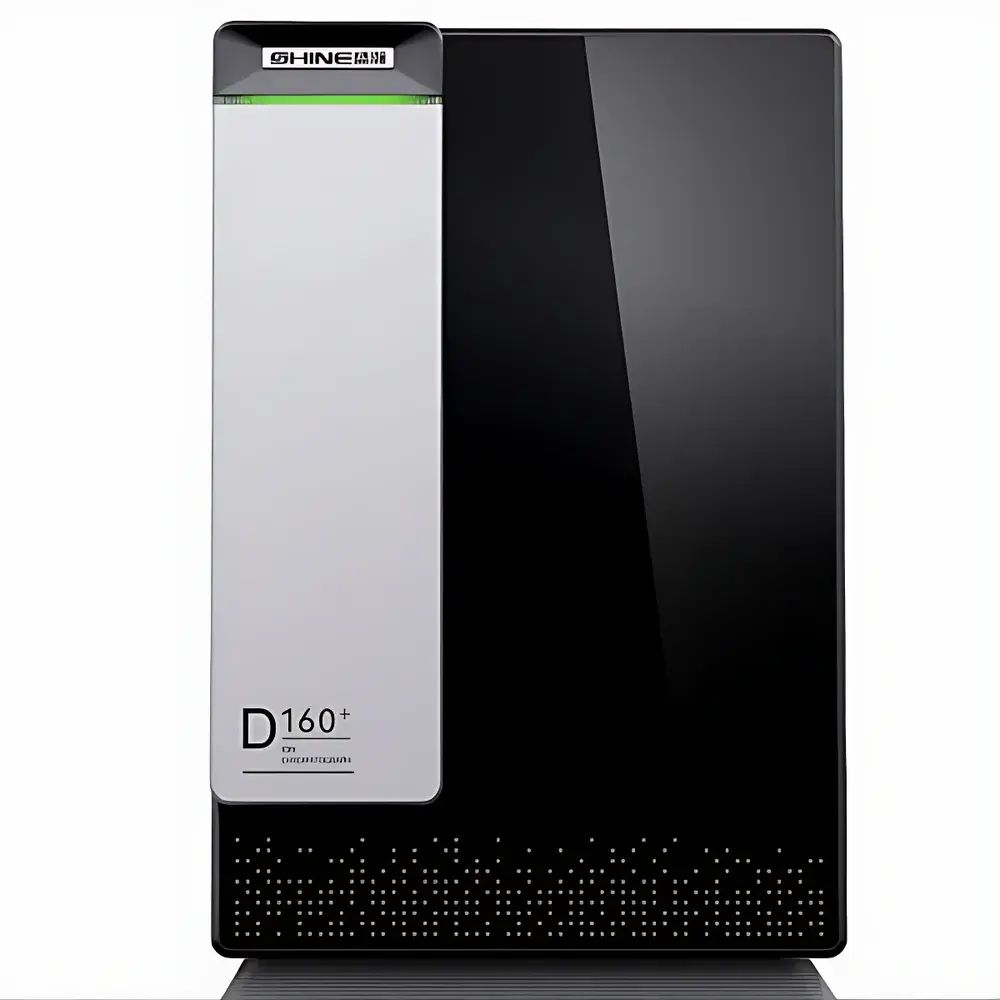
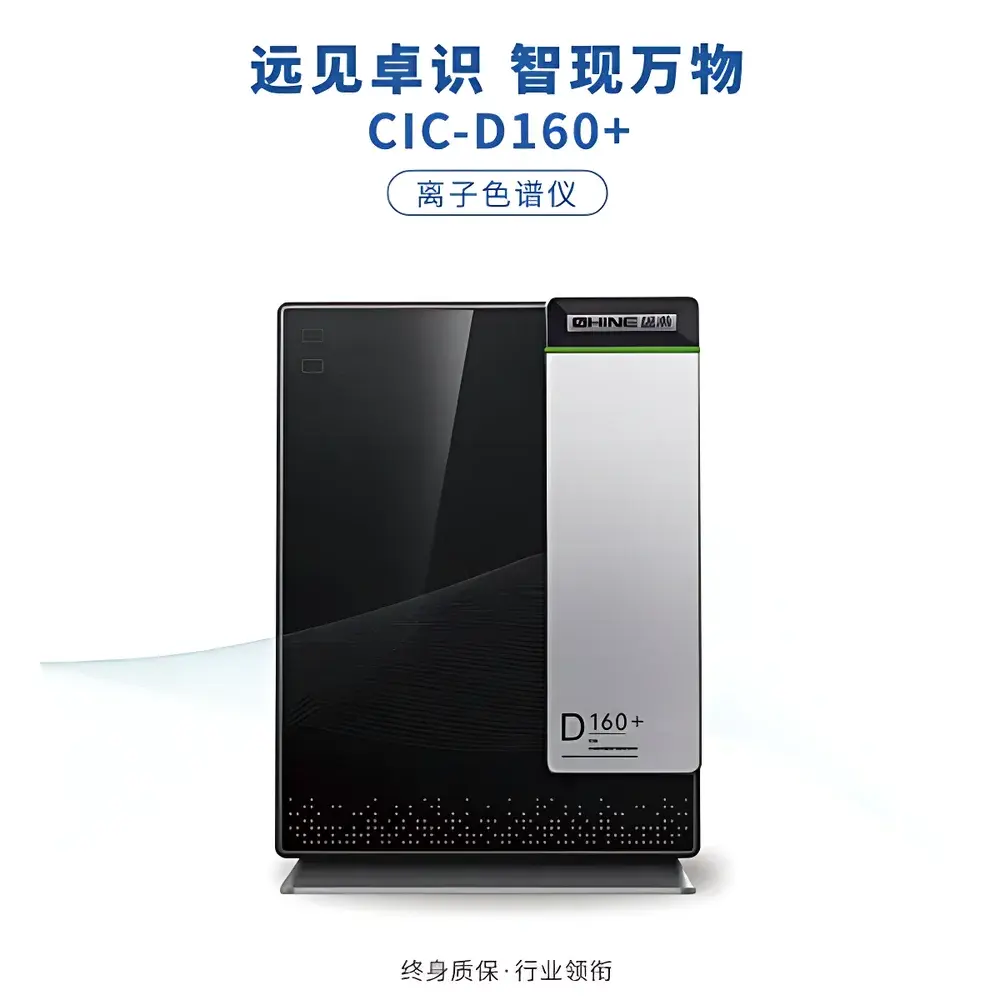
Shine CIC-D160+ Ion Chromatograph
| Brand | Shine |
|---|---|
| Origin | Shandong, China |
| Manufacturer Type | Direct Manufacturer |
| Regional Classification | Domestic (China) |
| Model | CIC-D160+ Ion Chromatograph |
| Instrument Type | Laboratory Benchtop |
| Application Scope | General-Purpose Ion Analysis |
| Maximum Pump Pressure | 42 MPa |
| Flow Rate Range | 0.1–5.0 mL/min |
Overview
The Shine CIC-D160+ Ion Chromatograph is a high-performance, benchtop analytical system engineered for precise, reproducible separation and quantification of inorganic anions and cations in complex aqueous matrices. Based on suppressed conductivity detection coupled with high-efficiency ion-exchange chromatography, the CIC-D160+ employs a dual-piston, pulse-free reciprocating pump architecture to deliver stable flow across its full operational range (0.1–5.0 mL/min) under pressures up to 42 MPa—enabling robust operation with high-resolution columns and low-diffusion detection cells. As a domestically developed platform meeting international design and performance benchmarks, it supports both isocratic and gradient elution protocols via integrated electrolytic eluent generation, eliminating manual preparation of standard eluents and reducing inter-batch variability.
Key Features
- Integrated Electrolytic Eluent Generator (EG): Produces high-purity hydroxide, carbonate, or methanesulfonic acid eluents on-demand from deionized water—enabling fully automated gradient elution, reduced reagent handling, and improved long-term baseline stability.
- Intelligent Component Monitoring: Embedded microchips in suppressors and separation columns log usage cycles, operating hours, and thermal history—providing predictive maintenance alerts and enabling method portability between instruments via automatic component identification and calibration transfer.
- Gas-Liquid Separation & Low-Pressure Degassing: A dedicated membrane-based degasser combined with an inline gas-liquid phase separator ensures complete bubble removal prior to the detector, minimizing conductivity noise and delivering smooth baselines essential for trace-level quantitation.
- Dual-Safety Architecture: Real-time monitoring of eluent reservoir level, column backpressure, and leakage detection at critical fluidic junctions triggers audible/visual alerts and automatic pump shutdown—ensuring compliance with laboratory safety protocols and protecting column integrity.
- Modular “Water-Electricity Separation” Design: The eluent generator is housed in an isolated, ventilated compartment physically segregated from high-voltage electronics and detector circuitry—enhancing electromagnetic compatibility, thermal management, and service accessibility.
Sample Compatibility & Compliance
The CIC-D160+ accommodates a broad spectrum of sample types—including environmental waters (drinking, wastewater, rainwater), food extracts, pharmaceutical excipients, battery electrolytes, and semiconductor process chemicals—following standardized pretreatment protocols (e.g., filtration, dilution, solid-phase extraction). Its column portfolio includes independently developed anion-exchange columns for OH−, CO32−/HCO3−, and CH3SO3− eluent systems, validated per ISO 10304-1:2012 (determination of dissolved anions) and ASTM D4327 (standard test method for anions in water by IC). System validation documentation supports GLP-compliant environments, and audit-trail functionality meets basic requirements for 21 CFR Part 11 readiness when paired with compliant LIMS integration.
Software & Data Management
Controlled via Shine IC Navigator v3.x, the system provides intuitive method setup, real-time chromatogram visualization, peak integration with customizable baseline algorithms, and automated report generation in PDF/CSV formats. The software logs all instrument events—including pressure transients, temperature deviations, and component replacement timestamps—with user-defined access levels and electronic signature support. Data files adhere to ASTM E1928-22 metadata standards, facilitating traceability and third-party data exchange. Optional cloud synchronization enables remote diagnostics and centralized fleet management across multi-site laboratories.
Applications
- Regulatory monitoring of nitrate, nitrite, fluoride, chloride, sulfate, and phosphate in municipal drinking water per EPA Method 300.1 and GB/T 5750.5–2023.
- Quality control of lithium-ion battery cathode slurries and electrolyte additives, including Li+, PF6−, and HF quantification.
- Analysis of organic acids (acetate, formate, oxalate) and inorganic counterions in biopharmaceutical formulations under ICH Q5C guidelines.
- Speciation of chromium (CrIII/CrVI) and arsenic (AsIII/AsV) following hyphenated IC-ICP-MS workflows.
- High-throughput screening of catalyst leachates in petrochemical R&D, supporting ASTM D7260-21 for trace metal anion profiling.
FAQ
Does the CIC-D160+ support gradient elution without external solvent delivery modules?
Yes—the integrated electrolytic eluent generator enables programmable hydroxide or methanesulfonic acid gradients directly from deionized water, with concentration ramping precision of ±0.1 mM over 0–100 mM ranges.
What column chemistries are validated for use with this instrument?
Shine-certified columns include AS series (OH−-eluted anion separation), CS series (MSA-eluted cation separation), and specialized guard columns compatible with high-salt or particulate-laden samples.
Is the system compliant with 21 CFR Part 11 for regulated pharmaceutical labs?
While the base configuration supports ALCOA+ data integrity principles, full Part 11 compliance requires optional audit-trail encryption, role-based electronic signatures, and secure network authentication—available through Shine’s GxP-ready software package.
How is preventive maintenance scheduled based on component usage data?
The embedded chip in each suppressor and column records cumulative runtime, pressure cycles, and regeneration events; thresholds trigger notifications in IC Navigator and generate PDF maintenance advisories with part numbers and replacement instructions.
Can the instrument be integrated into existing LIMS or ELN platforms?
Yes—via ASTM E1928-compliant XML/JSON API endpoints and ODBC drivers, enabling bidirectional method transfer, result import, and instrument status polling without proprietary middleware.




