
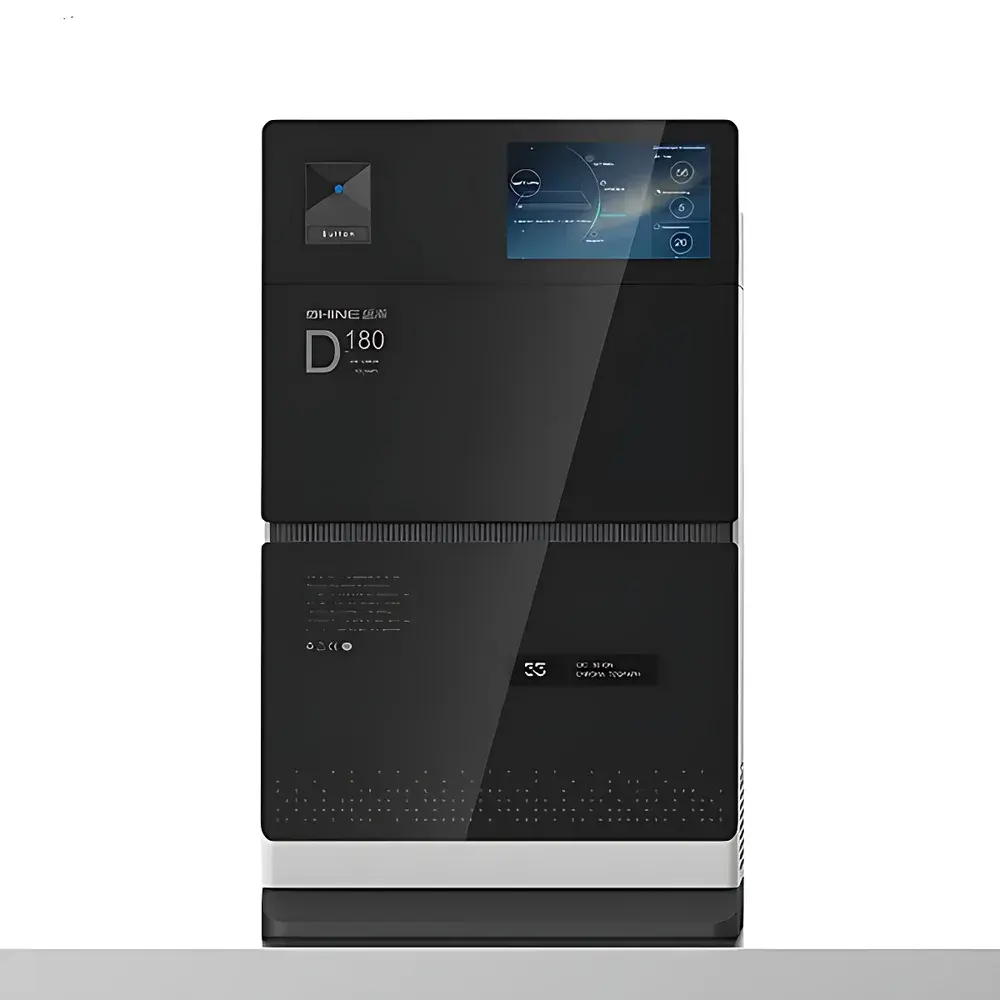
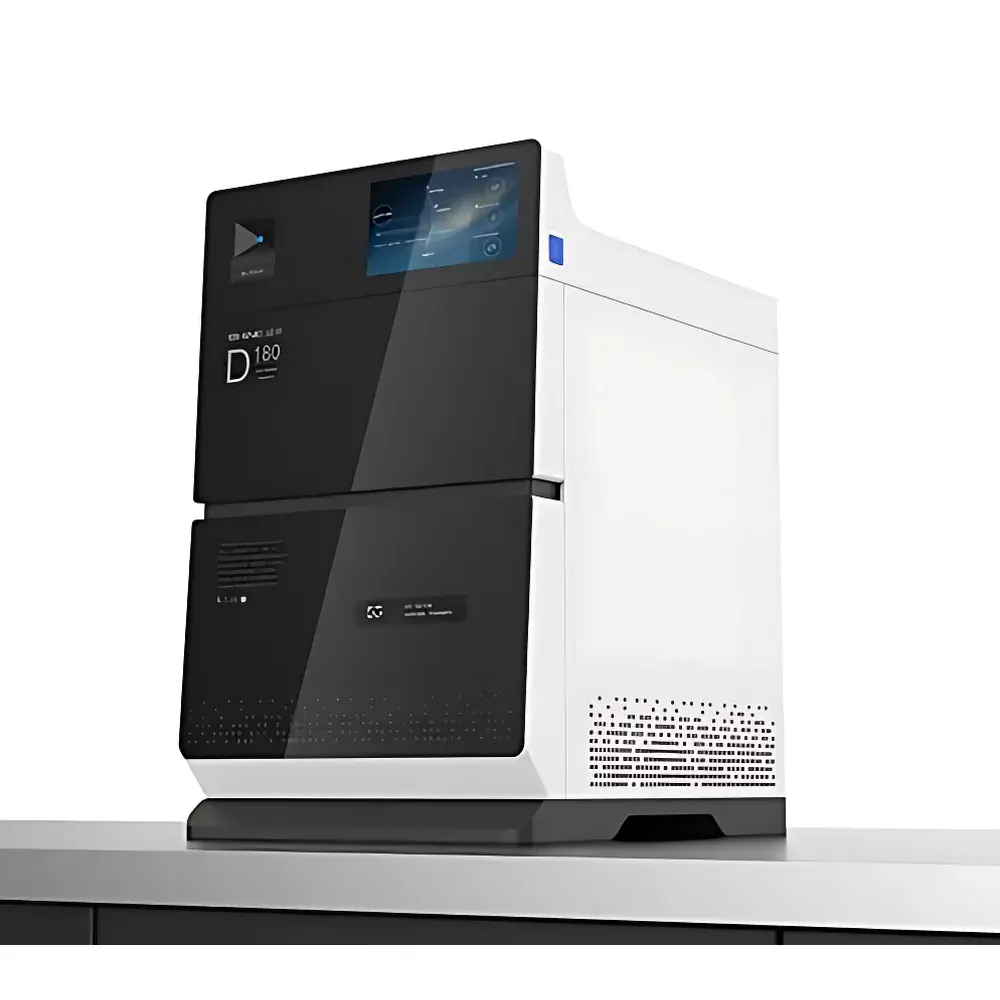
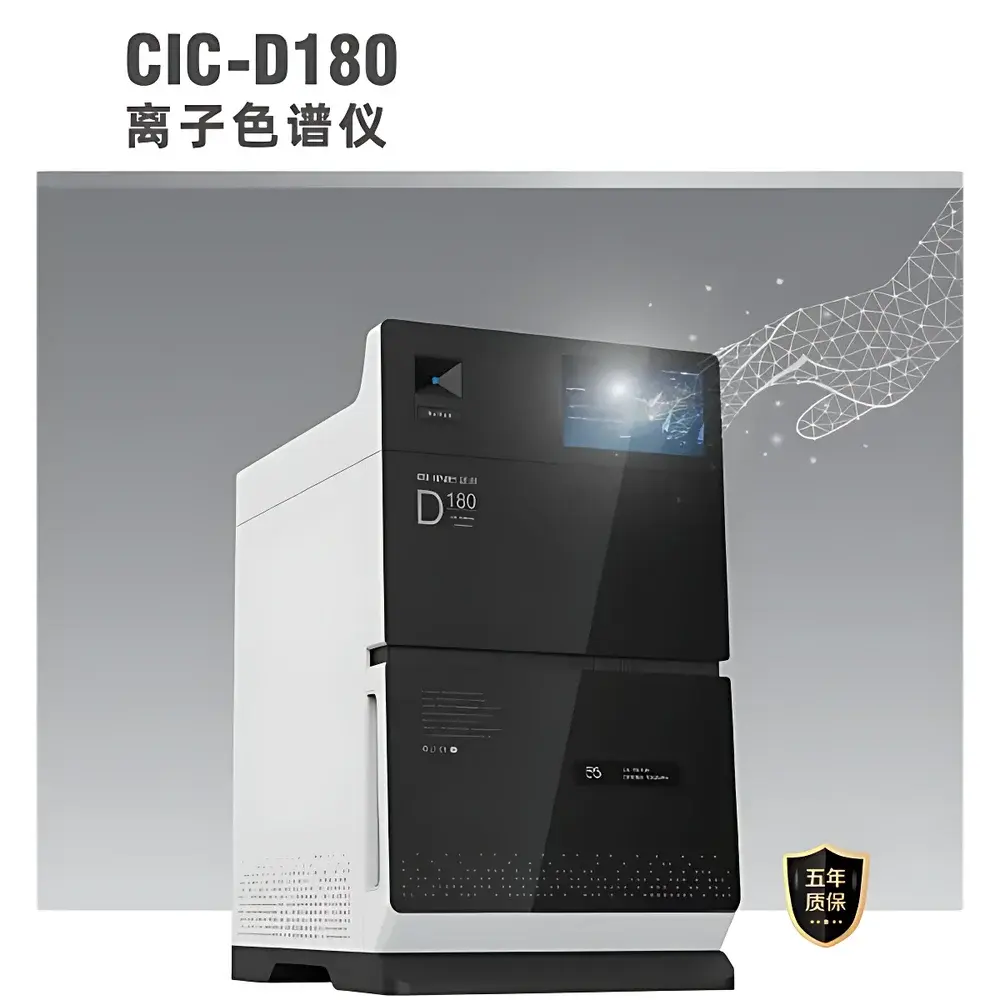
Shine CIC-D180 Intelligent Modular Ion Chromatograph
| Brand | Shine |
|---|---|
| Origin | Shandong, China |
| Manufacturer Type | Direct Manufacturer |
| Regional Classification | Domestic (China) |
| Model | CIC-D180 |
| Instrument Type | Laboratory Benchtop |
| Application Scope | Universal Ion Analysis |
| Maximum Pump Pressure | 35 MPa |
| Flow Rate Range | 0.1–5.0 mL/min |
| Eluent Delivery Precision | 0.001–9.999 mL/min |
| Max Operating Pressure | 35 MPa |
| Column Oven Temperature Range | Ambient +5 °C to 60 °C ±0.01 °C |
| Temperature Reproducibility | ±0.2 °C |
| Eluent Concentration Range | 0.1–100 mM |
Overview
The Shine CIC-D180 is a fully integrated, modular benchtop ion chromatograph engineered for high-precision anion and cation analysis in regulated and research laboratory environments. It operates on the principle of suppressed conductivity detection following ion-exchange separation, delivering quantitative and qualitative data for inorganic ions, small organic acids, and amines across diverse matrices—including environmental water, food extracts, pharmaceutical excipients, and industrial process streams. Designed with ISO/IEC 17025-aligned architecture and GLP-compliant operational traceability, the CIC-D180 supports method validation, routine QC/QA, and multi-analyte screening workflows without compromise in robustness or reproducibility.
Key Features
- Integrated Electrolytic Eluent Generator (EG): On-demand generation of high-purity KOH and methanesulfonic acid (MSA) eluents via membrane-separated electrolysis—eliminating manual preparation, reducing contamination risk, and enabling precise gradient elution from 0.1 to 100 mM.
- Dual-Pulse Conductivity Detector: Digital signal output with auto-ranging capability spanning five orders of magnitude (e.g., µg/L to mg/L), ensuring linear response for both trace-level and high-concentration ions in a single run.
- Intelligent Column Oven: Forced-air circulation system with 360° uniform heating; temperature stability maintained at ±0.01 °C over 0–60 °C range and reproducibility within ±0.2 °C—critical for retention time stability and method transfer compliance.
- Active Degassing & Bubble Management: Integrated vacuum-based online degasser with real-time gas-phase removal; combined with a dedicated gas–liquid separator to prevent baseline drift and pressure fluctuations during long-duration runs.
- Proactive System Diagnostics: Leak detection sensors trigger automatic shutdown upon fluid ingress; eluent volume monitoring alerts users prior to depletion; post-pump rinse cycle prevents salt crystallization on piston seals and sapphire plungers.
- Modular Fluidic Architecture: Standardized fittings and tool-free component access enable rapid reconfiguration—supporting dual-system setups, 2D ion chromatography (heart-cutting or comprehensive), and detector interchangeability (e.g., UV, CAD, or mass spectrometry interfaces).
Sample Compatibility & Compliance
The CIC-D180 accommodates aqueous samples with total dissolved solids (TDS) ≤ 500 ppm after appropriate filtration (0.22 µm). It meets core performance criteria referenced in ASTM D4327 (anions in drinking water), ISO 14911 (cation analysis), and USP (conductivity testing). Its software audit trail, electronic signature support, and configurable user roles align with FDA 21 CFR Part 11 requirements for regulated laboratories. All hardware modules—including detector cell, suppressor, and eluent generator—are certified to IEC 61000-6-3 (EMC) and IEC 61010-1 (safety).
Software & Data Management
Clarity Chromatography Data System (CDS) v3.x provides full instrument control, sequence management, peak integration, and report generation. It supports AIA/CDF export, LIMS integration via OPC UA, and customizable PDF/CSV templates compliant with ISO 17025 reporting clauses. The companion mobile application—accessible via iOS and Android—enables remote status monitoring, alarm acknowledgment, method launch, and real-time chromatogram preview using TLS 1.2–secured LAN/Wi-Fi connectivity. Audit trails record all parameter changes, user logins, and instrument events with immutable timestamps.
Applications
- Environmental: Quantification of F⁻, Cl⁻, NO₂⁻, Br⁻, NO₃⁻, PO₄³⁻, SO₄²⁻, and AsO₄³⁻ in surface water, wastewater, and rainwater per EPA Method 300.1 and ISO 10304-1.
- Food & Beverage: Determination of preservatives (benzoate, sorbate), nitrate/nitrite in cured meats, and iodide in dairy products under AOAC 999.10 and EU Regulation (EC) No 1881/2006.
- Pharmaceutical: Testing of counterions (Na⁺, K⁺, Cl⁻, acetate) in APIs and excipients; residual sulfate in biologics per ICH Q5C and USP .
- Power & Electronics: Trace chloride and sulfate analysis in ultrapure water for semiconductor fabrication (ASTM D512, SEMI F57).
- Academic Research: Development of novel ion-exchange methods, speciation studies of transition metal complexes, and coupling with ICP-MS for elemental fractionation.
FAQ
Does the CIC-D180 support gradient elution with electrolytically generated eluents?
Yes—the built-in eluent generator enables seamless isocratic and multi-step linear or nonlinear gradients between 0.1 mM and 100 mM KOH or MSA, programmable directly in Clarity CDS.
Is the system compatible with third-party column chemistries?
Yes—it accepts standard 4.0 mm × 250 mm and microbore (2.0 mm ID) columns from major vendors (e.g., Thermo, Metrohm, Waters) using universal PEEK unions and 10–32 threaded fittings.
What cybersecurity measures are implemented for remote access?
All network communications use AES-256 encryption; mobile app authentication requires two-factor verification; local firewall rules restrict external port exposure by default.
Can the CIC-D180 be validated for GMP environments?
Yes—full IQ/OQ documentation packages are available; the system supports 21 CFR Part 11-compliant electronic records, including user-defined electronic signatures and immutable audit logs.
How is detector sensitivity verified during routine operation?
Clarity CDS includes automated calibration routines using certified reference standards (e.g., NIST-traceable anion mixtures); daily system suitability tests assess peak area RSD, resolution, and retention time shift per USP .



