
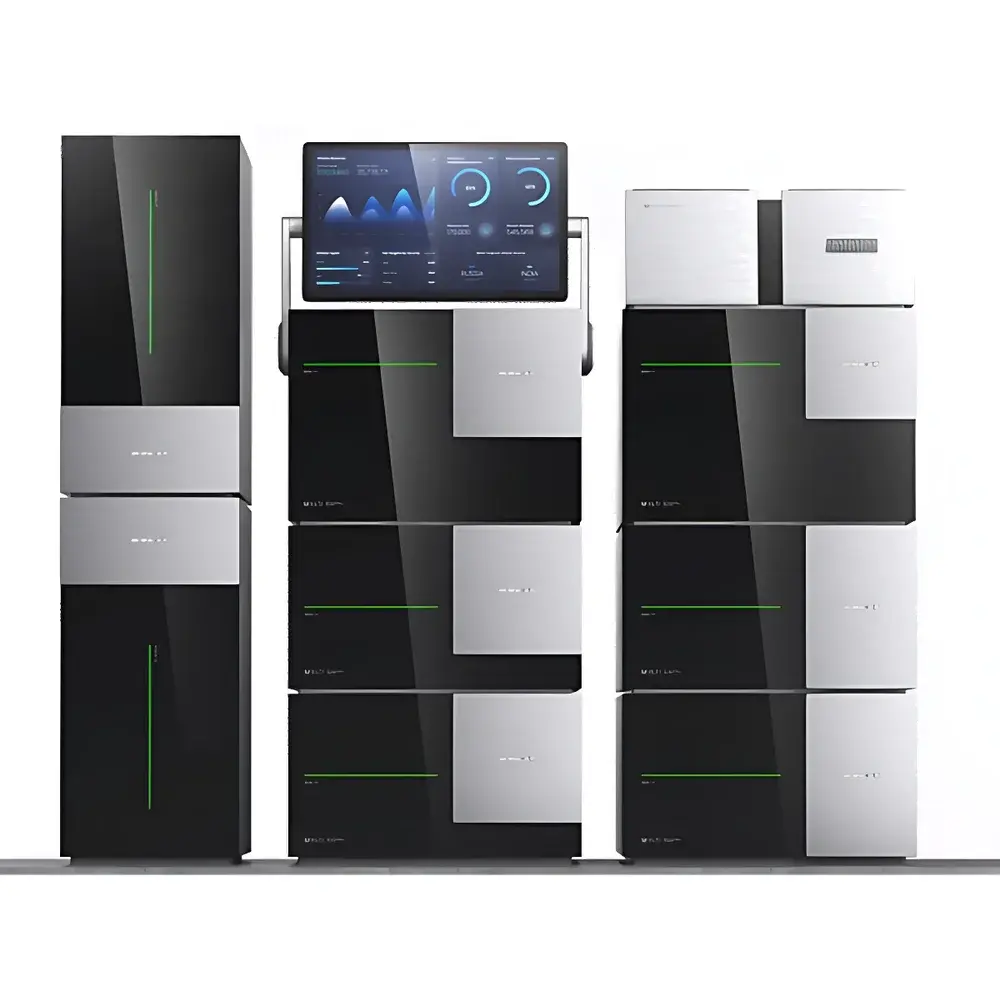
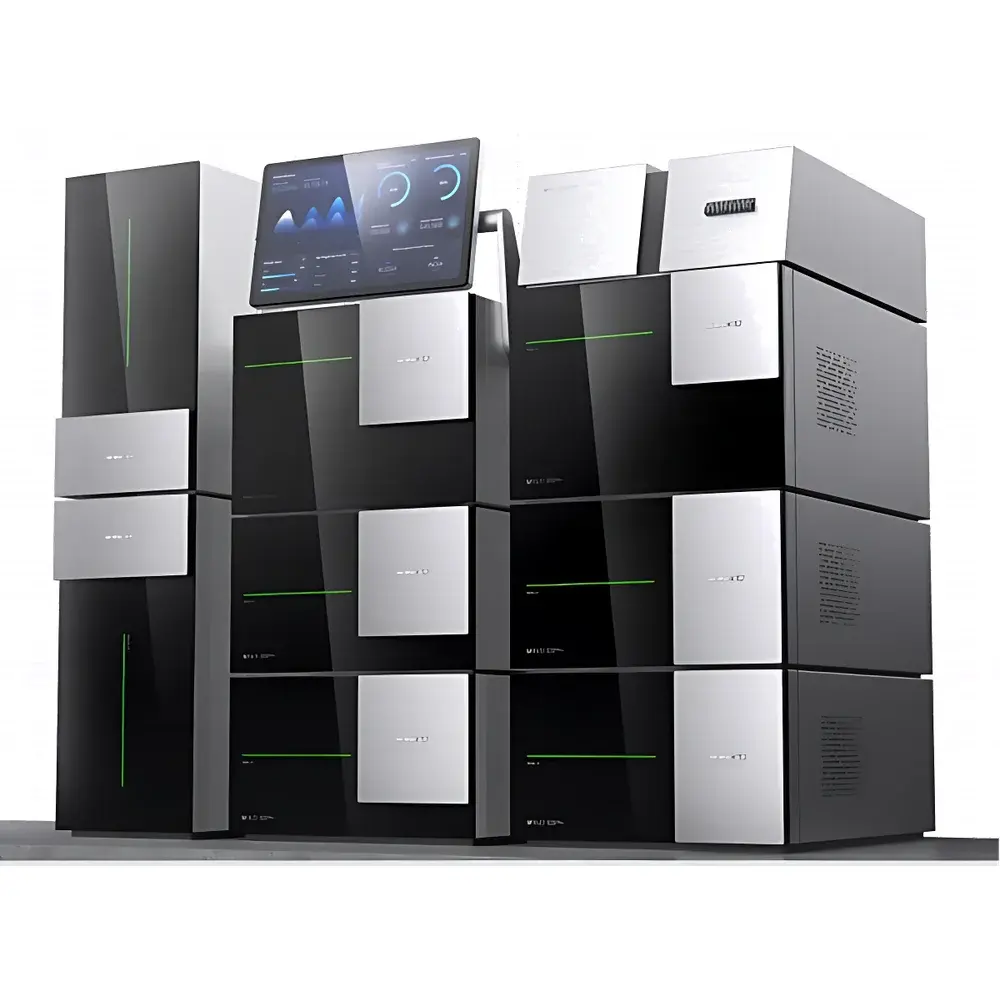
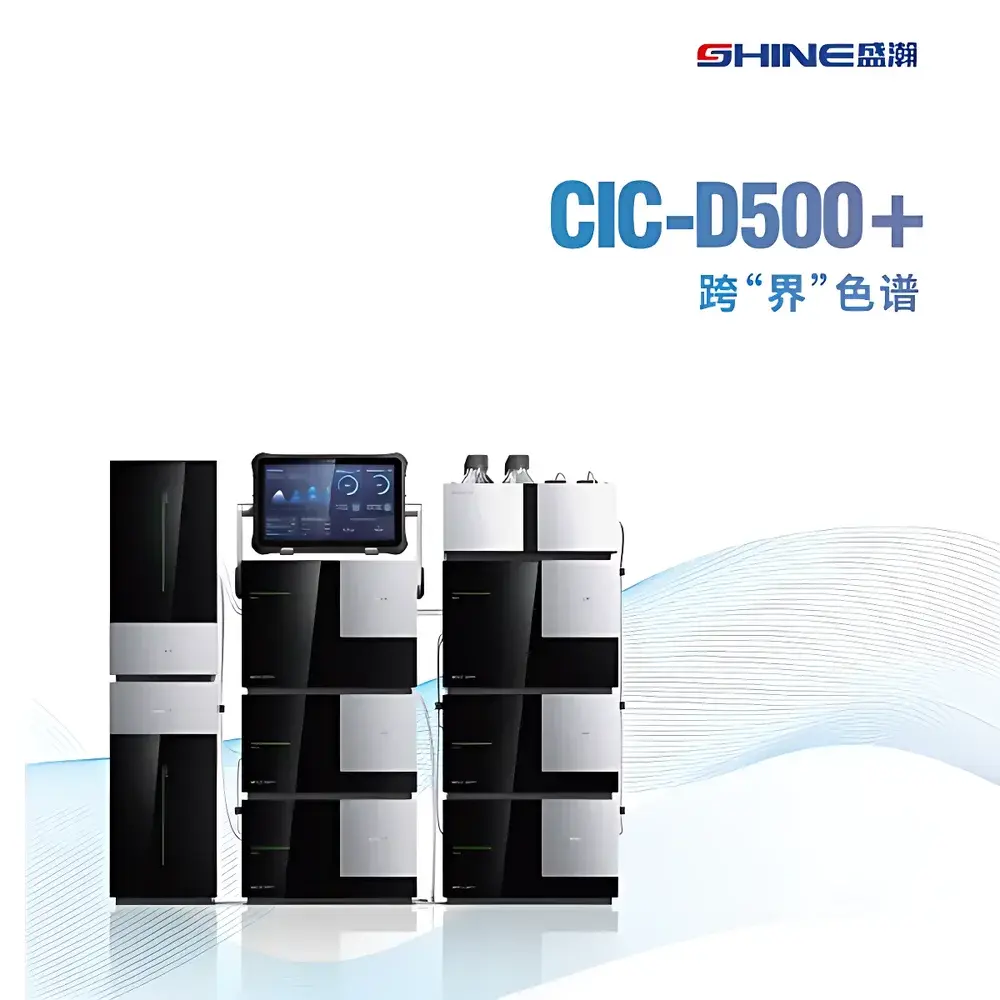
Shine CIC-D500+ Multi-Detector Modular Ion Chromatograph
| Brand | Shine (SHINE) |
|---|---|
| Origin | Shandong, China |
| Manufacturer Type | Direct Manufacturer |
| Regional Classification | Domestic (China-made) |
| Model | CIC-D500+ |
| Instrument Type | Laboratory Benchtop System |
| Application Profile | Specialized Multi-Mode Analytical Platform |
| Operating Temperature Range | Ambient + 5 °C to 60 °C |
Overview
The Shine CIC-D500+ is a high-performance, modular ion chromatography (IC) platform engineered for multi-detection capability, method flexibility, and long-term operational stability in regulated and research-intensive laboratory environments. Unlike conventional single-detector IC systems, the CIC-D500+ implements a true dual-channel architecture with independent fluidic paths—enabling simultaneous, non-interfering analysis of ionic species (e.g., anions/cations via conductivity detection) and non-ionic or redox-active analytes (e.g., heavy metal species, organic acids, pharmaceutical impurities, or nucleotides) using UV-Vis, pulsed amperometric, or atomic fluorescence detection on the same instrument run. Its core separation principle relies on suppressed ion-exchange chromatography with electrolytically generated eluents, ensuring reproducible retention, minimal baseline drift, and sub-ppq-level detection sensitivity across diverse matrices. Designed for compliance-critical workflows, the system supports GLP/GMP-aligned data integrity through integrated audit trails, electronic signatures, and database-driven raw data archiving.
Key Features
- Modular hardware architecture: Independent, hot-swappable modules—including quaternary gradient pump, binary high-pressure pump, column oven, auto-sampler, suppressor, and detector units—allow user-defined configuration for IC, HPLC, or hybrid IC/HPLC applications.
- Dual-channel, multi-detector operation: Supports concurrent use of conductivity, UV-Vis (190–740 nm), pulsed amperometric (with Au/Pt/Ag/GC working electrodes), and hydride-generation atomic fluorescence detectors—each with dedicated flow paths and pressure management.
- Electrolytic eluent generator (EG): Generates KOH or methanesulfonic acid eluents from deionized water; concentration range 0.1–100 mM (0.1 mM increments); integrated thermal stabilization at 35 °C ensures eluent consistency across ambient fluctuations.
- Continuous self-regenerating micro-membrane suppressor: Electrolytic water-splitting regeneration eliminates chemical regenerant consumption; low-pressure parallel regeneration design extends service life (>5,000 injections typical); selectable suppressor sizes match column ID (e.g., 2 mm vs. 4 mm) to minimize dead volume and enhance S/N ratio.
- Intelligent condition monitoring: Non-contact ultrasonic reagent level sensing, real-time leak detection, column oven & detector temperature telemetry, and consumables usage tracking (suppressor current, column backpressure, seal wear estimation) provide predictive maintenance alerts.
- Dual-zone column oven: Independently controllable temperature zones within a single chamber enable differential conditioning of guard/column or tandem column setups—critical for speciation analysis and complex matrix separation.
Sample Compatibility & Compliance
The CIC-D500+ accommodates aqueous samples across environmental, biological, pharmaceutical, semiconductor, and nuclear sectors—including drinking water, wastewater, serum, cell culture media, lithium electrolyte solutions, high-purity acids/bases, and spent nuclear fuel leachates. It meets key international method requirements including ASTM D4327 (anion analysis in water), ISO 14911 (determination of cations/anions in water), USP (conductivity of purified water), and EPA Methods 300.0, 300.1, and 6200 (trace anion/cation quantification). All detector modules comply with ICH Q2(R2) guidelines for analytical method validation parameters (LOD, LOQ, linearity, precision). The software satisfies FDA 21 CFR Part 11 requirements via role-based access control, immutable audit trail logging, and digital signature enforcement for report generation and method approval.
Software & Data Management
The integrated IonChrom™ workstation is built on a relational SQL database architecture—ensuring ACID-compliant data storage, automatic daily backups, and tamper-evident file integrity. It operates natively on Windows 7/10 and certified Linux distributions (including Kylin OS). Key capabilities include: synchronized control of multiple instruments and detectors; thumbnail-based sample review without opening full chromatograms; virtual column simulation for >30 anions under varied eluent conditions; gradient baseline correction algorithms to suppress conductivity drift during ramped elution; and consumables lifetime modeling with configurable replacement thresholds. Audit trail records capture all user actions—including method edits, integration parameter changes, calibration events, and data exports—with timestamps, operator IDs, and IP addresses. Electronic signatures are enforced for final report sign-off per ALCOA+ principles.
Applications
The CIC-D500+ serves as a primary analytical platform in environmental monitoring labs (EPA-compliant anion/cation profiling in surface/groundwater), pharmaceutical QC (counterion analysis in APIs, residual chloride in monoclonal antibodies), semiconductor manufacturing (ppq-level fluoride/chloride in ultra-pure process chemicals), lithium-ion battery R&D (Li+, PF6−, HF, and transition metal impurities in electrolytes), nuclear facilities (fission product speciation in coolant streams), and clinical toxicology (As/Bi/Sb speciation in urine via HPLC-IC-AFS coupling). Its modularity enables seamless integration with ICP-MS, LC-MS/MS, or online dialysis units for automated sample preparation and multidimensional analysis.
FAQ
Can the CIC-D500+ operate as both an ion chromatograph and a reversed-phase HPLC system?
Yes—its modular pump, detector, and valve configurations support full HPLC functionality when equipped with UV or fluorescence detectors and non-ionic columns.
Is the eluent generator compatible with both anion- and cation-exchange modes?
Yes—it produces KOH for anion analysis and methanesulfonic acid for cation analysis, with identical precision and thermal stability in both modes.
Does the system support method transfer from legacy IC platforms?
Yes—the software includes legacy method import tools and retention time prediction models calibrated against NIST-traceable standards.
What regulatory documentation is provided for validation?
Factory-issued IQ/OQ protocols, 21 CFR Part 11 validation packages, and ISO/IEC 17025-compliant uncertainty budgets are available upon request.
How is detector cross-talk prevented in dual-channel operation?
Physically isolated fluidic manifolds, independent waste routing, and synchronized but decoupled data acquisition clocks eliminate signal interference between channels.






