
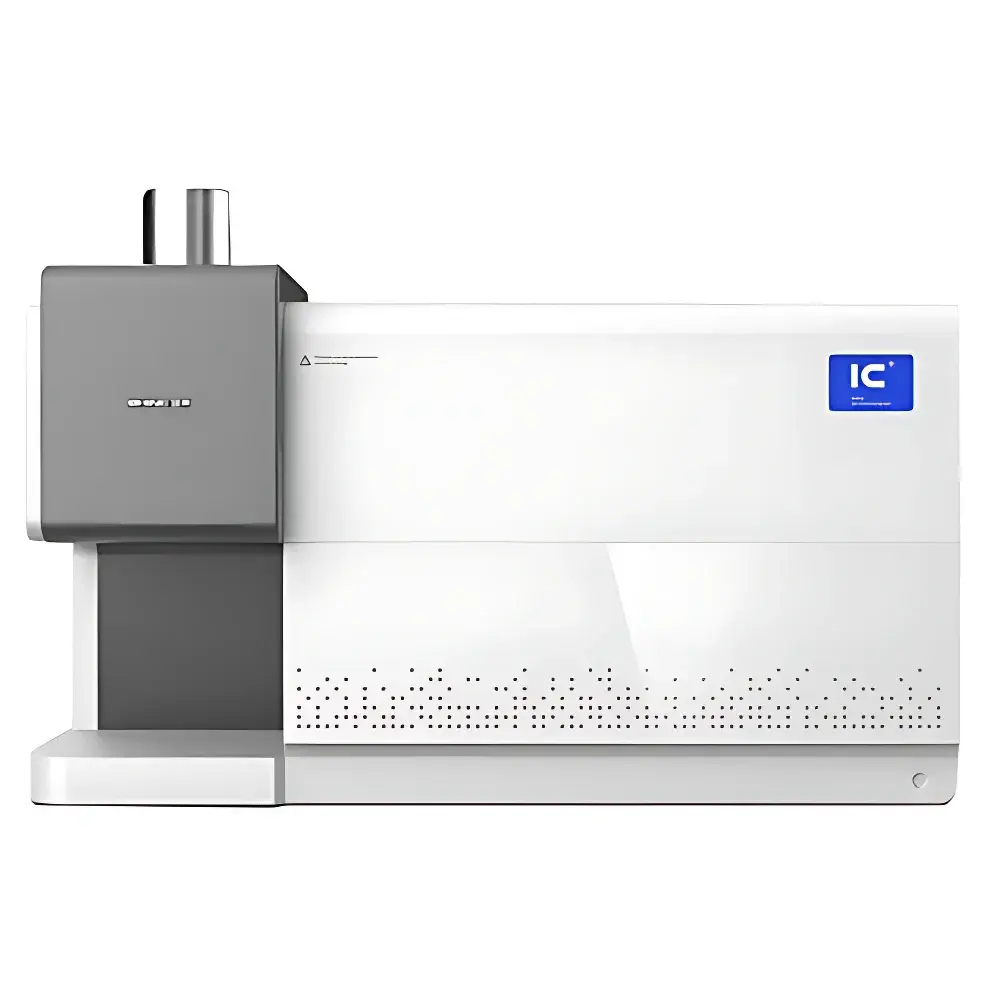
SHINE SH-ICP1100 Inductively Coupled Plasma Optical Emission Spectrometer (ICP-OES)
| Brand | SHINE |
|---|---|
| Origin | Shandong, China |
| Manufacturer Type | Direct Manufacturer |
| Instrument Type | Sequential Scanning ICP-OES |
| Detection Limit | Sub-ppb to low-ppb range |
| Precision (RSD) | ≤0.5% (short-term) |
| Wavelength Range | 180–800 nm (2400 grooves/mm grating) / 190–500 nm (3600 grooves/mm grating) |
| Optical Resolution | 0.004 nm (2400 L/mm) / 0.002 nm (3600 L/mm) |
Overview
The SHINE SH-ICP1100 is a high-performance sequential scanning inductively coupled plasma optical emission spectrometer (ICP-OES) engineered for precise, multi-element quantitative and qualitative analysis of inorganic elements in liquid matrices. It utilizes an argon-based inductively coupled plasma (ICP) source operating at ~10,000 K to fully atomize, excite, and ionize sample constituents. Emitted photons from de-exciting atoms and ions are dispersed via a high-resolution Czerny–Turner optical system equipped with dual-grating configurations (2400 L/mm and 3600 L/mm), enabling selective detection across a broad spectral window (180–800 nm). The instrument’s core architecture supports robust elemental identification through characteristic line emission and accurate quantification via intensity–concentration calibration curves. Designed for regulatory compliance and routine laboratory throughput, the SH-ICP1100 delivers trace-level sensitivity with sub-ppb detection limits for key analytes including Ba, Cu, Pb, Cr, Ni, Zn, Mn, As, and V—making it suitable for environmental monitoring, geochemical surveying, industrial effluent control, and quality assurance in raw materials.
Key Features
- Automated RF ignition and plasma stabilization sequence, minimizing operator intervention and startup variability
- Peristaltic pump-based sample introduction with integrated internal standard addition and online dilution capability
- Dual-grating monochromator offering selectable resolution modes: 0.004 nm (2400 L/mm) for broad-spectrum surveys and 0.002 nm (3600 L/mm) for high-resolution interference mitigation
- Real-time background correction using adjacent pixel interpolation and multi-point baseline fitting algorithms
- Linear dynamic range exceeding six orders of magnitude (e.g., 0.1 µg/L to 100 mg/L), enabling simultaneous quantification of major, minor, and trace elements without manual dilution
- Optimized argon consumption: full-power operation sustained for ≥8 hours per standard 40-L cylinder (10 MPa initial pressure)
- Integrated hardware interlocks and plasma status diagnostics compliant with IEC 61000-6-2/6-4 electromagnetic compatibility standards
Sample Compatibility & Compliance
The SH-ICP1100 accepts acid-digested or leached samples prepared in HCl, HNO₃, HF, or mixed mineral acid media—fully compatible with EPA Method 200.7, ISO 11885, and Chinese national standards including HJ 776–2015 (water), HJ 781–2016 (solid waste), HJ 804–2016 (soil extractables), HJ 974–2018 (alkali fusion of soils/sediments), and GB/T 36690–2018 (industrial sludge). Its analytical scope covers over 70 elements—including alkali metals, alkaline earths, transition metals, rare earths, and non-metals such as P, S, B, Si, and As—with validated performance under GLP-aligned workflows. Instrument validation protocols support IQ/OQ/PQ documentation, and data integrity features align with FDA 21 CFR Part 11 requirements when paired with SHINE’s optional audit-trail-enabled software package.
Software & Data Management
The SH-ICP1100 operates with SHINE’s proprietary ICP-Analyzer Suite v4.x—a Windows-based platform supporting method development, spectral library management, multi-calibration curve generation (linear, quadratic, and weighted regression), and automated QC flagging (e.g., drift correction, recovery checks, blank subtraction). Raw spectral data are stored in vendor-neutral .csv and .spc formats; metadata tagging includes instrument parameters, sample ID, digestion protocol, and analyst signature. Optional network deployment enables centralized instrument monitoring, remote diagnostics, and role-based user access control—facilitating multi-site laboratories subject to ISO/IEC 17025 accreditation.
Applications
- Environmental Monitoring: Quantification of regulated metals (Pb, Cd, Cr, Ni, As, Hg, Tl, Be, Sb, V) in soil, sediment, wastewater, and drinking water per national and regional regulatory frameworks
- Geological & Mining: Multi-element profiling of ores, tailings, and exploration samples; determination of extractable fractions (e.g., DTPA-, EDTA-, or acetic acid–leachable metals)
- Pharmaceutical & Food Safety: Residual catalyst screening (e.g., Pd, Pt, Rh), contaminant testing (Al, Sn, Ni in packaging leachates), and nutrient profiling (Ca, Mg, Fe, Zn, Se)
- Petrochemical & Catalyst Analysis: Vanadium/nickel content in crude oil fractions; Al/Si ratio in FCC catalysts; trace metal impurities in lubricants and biofuels
- Materials Science: Composition verification of alloys, ceramics, battery cathode precursors (Li, Co, Ni, Mn), and semiconductor-grade reagents
FAQ
What sample preparation methods are validated for use with the SH-ICP1100?
Acid digestion (EPA 3050B, 3051A, 3052), alkaline fusion (HJ 974–2018), and single-acid leaching (e.g., HJ 804–2016 for soil-available fractions) are fully supported. HF-containing digestions require quartz or PFA sample introduction components.
Does the SH-ICP1100 support internal standardization?
Yes—up to three internal standards (e.g., Y, Sc, In, Rh, or Re) can be added online via the peristaltic pump manifold and monitored simultaneously during analysis.
Is spectral interference correction available?
The software provides both mathematical interference correction (e.g., peak-fit deconvolution for overlapping lines such as Al 308.215 nm and Fe 308.221 nm) and empirical correction using interference check standards.
Can the instrument be integrated into a LIMS environment?
Yes—via ODBC-compliant database export and HL7-compatible result transmission modules included in the Enterprise Edition software license.
What maintenance intervals are recommended for routine operation?
Nebulizer cleaning every 100 hours; torch inspection and alignment every 500 hours; radial-to-axial viewing mode calibration biannually; full optical alignment and wavelength validation annually per ISO/IEC 17025 guidelines.





