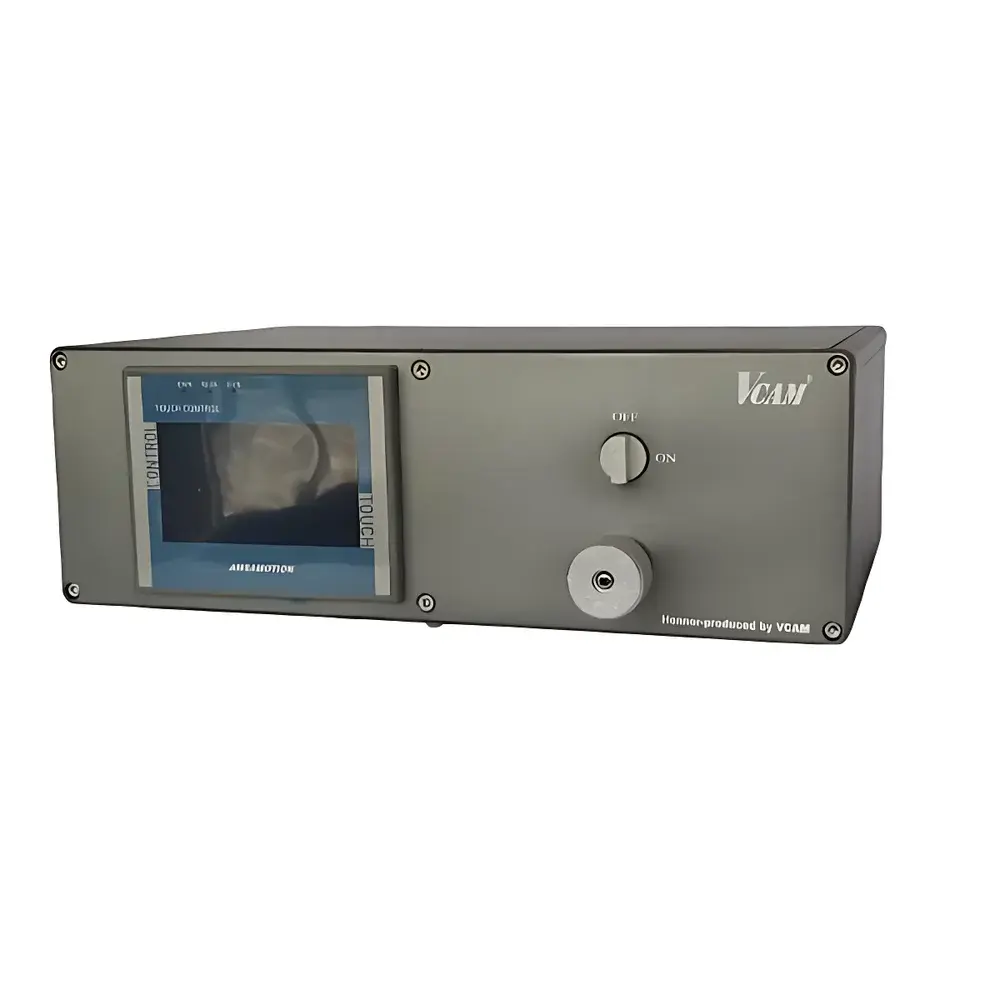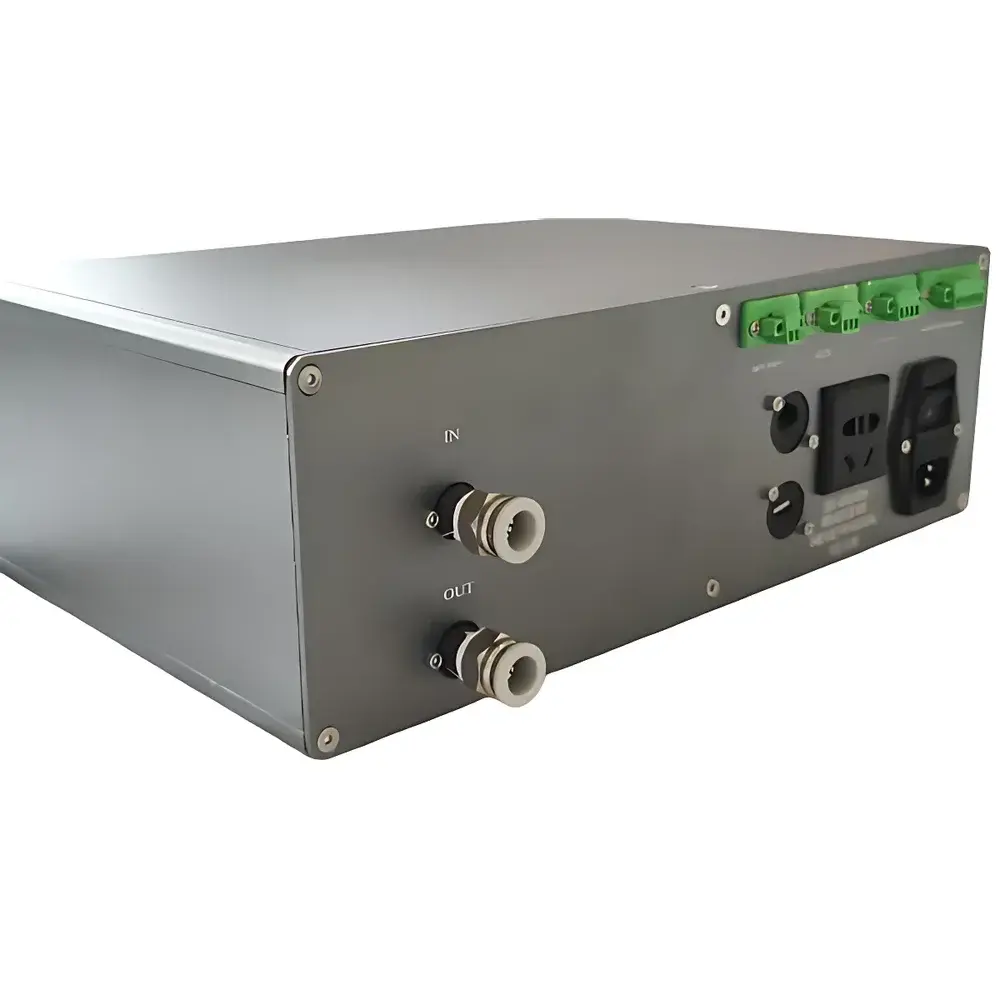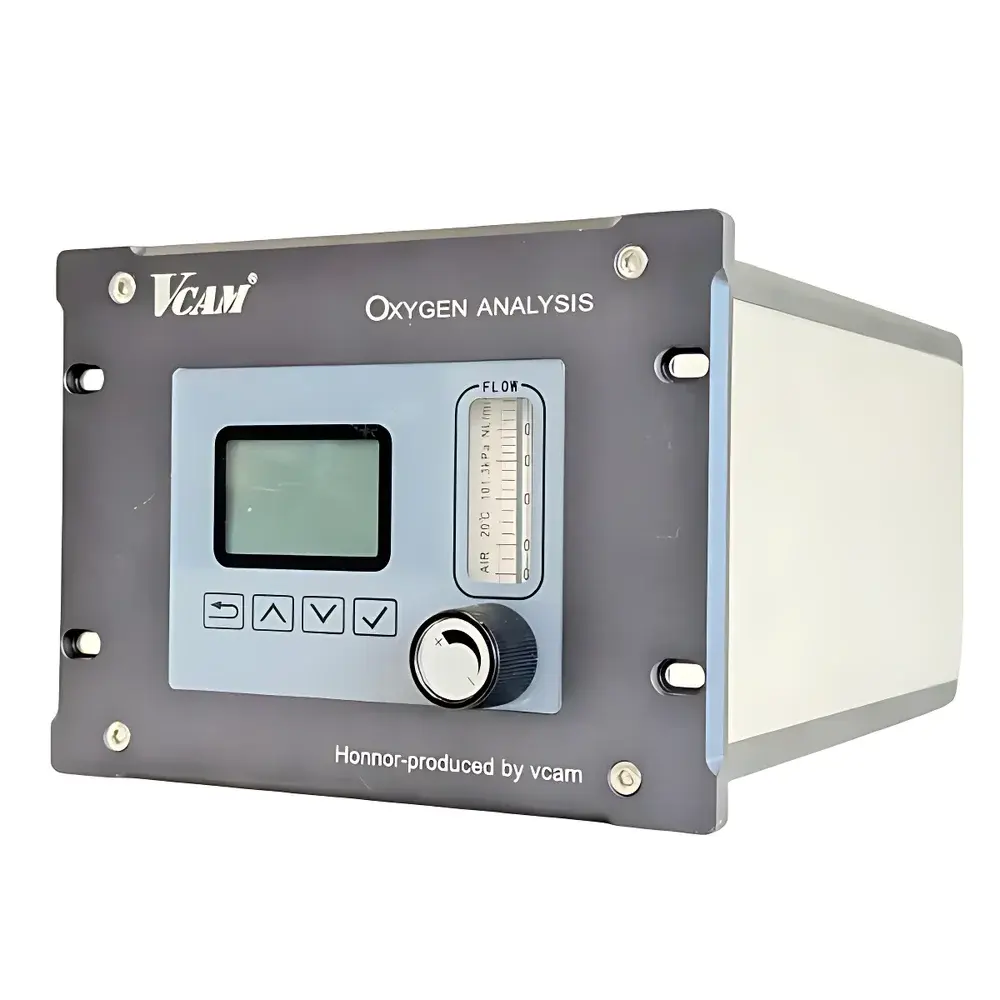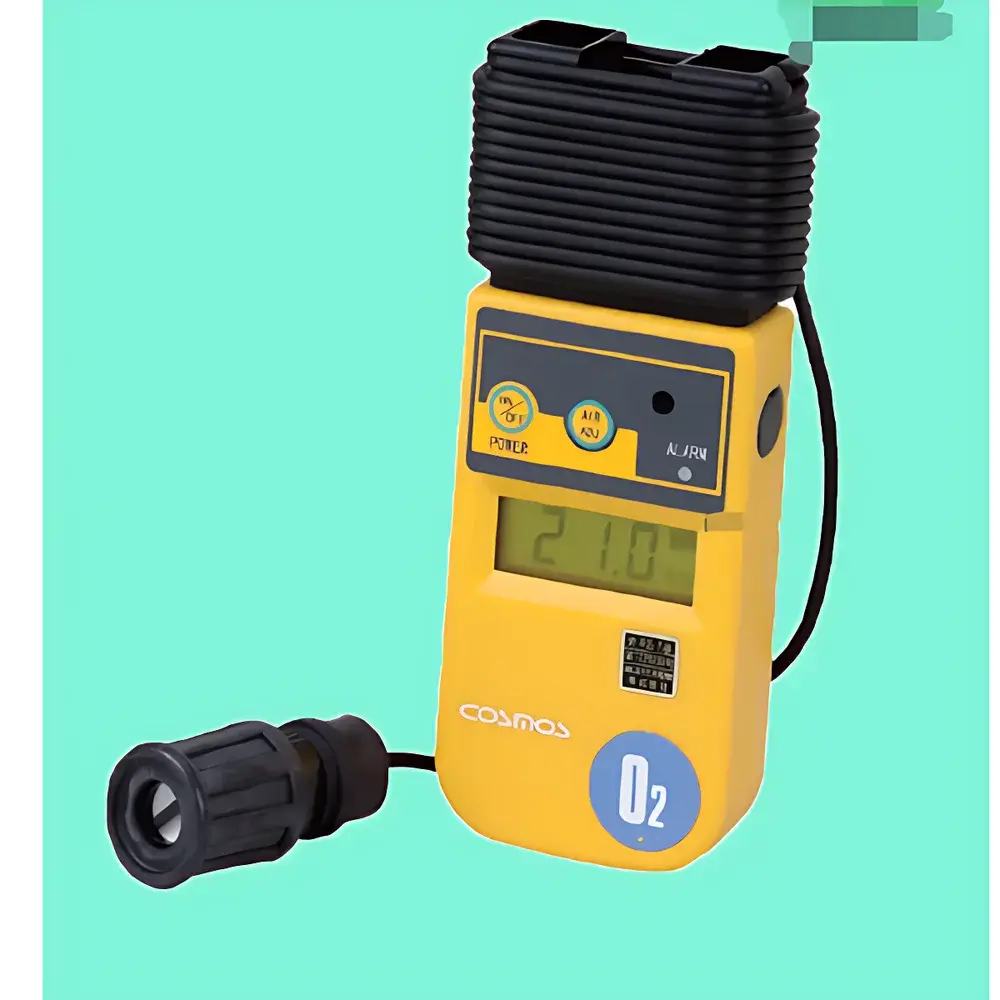
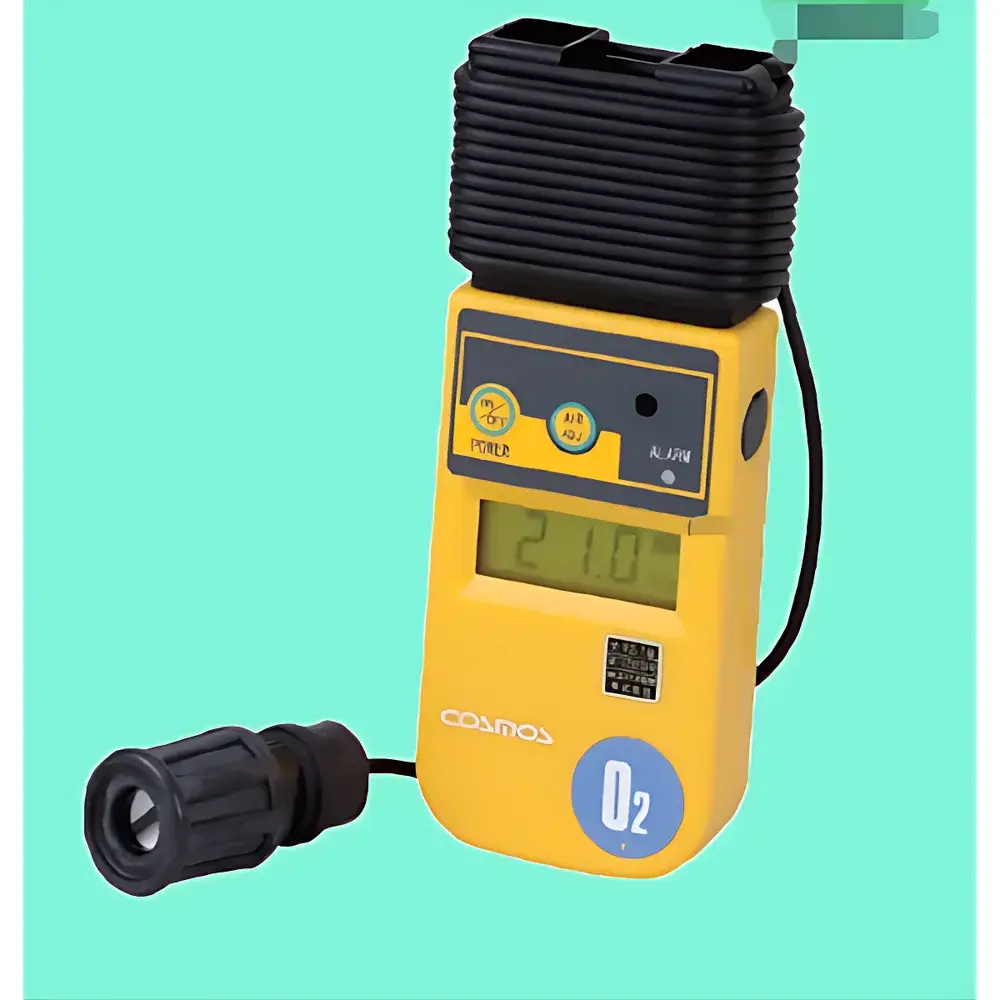
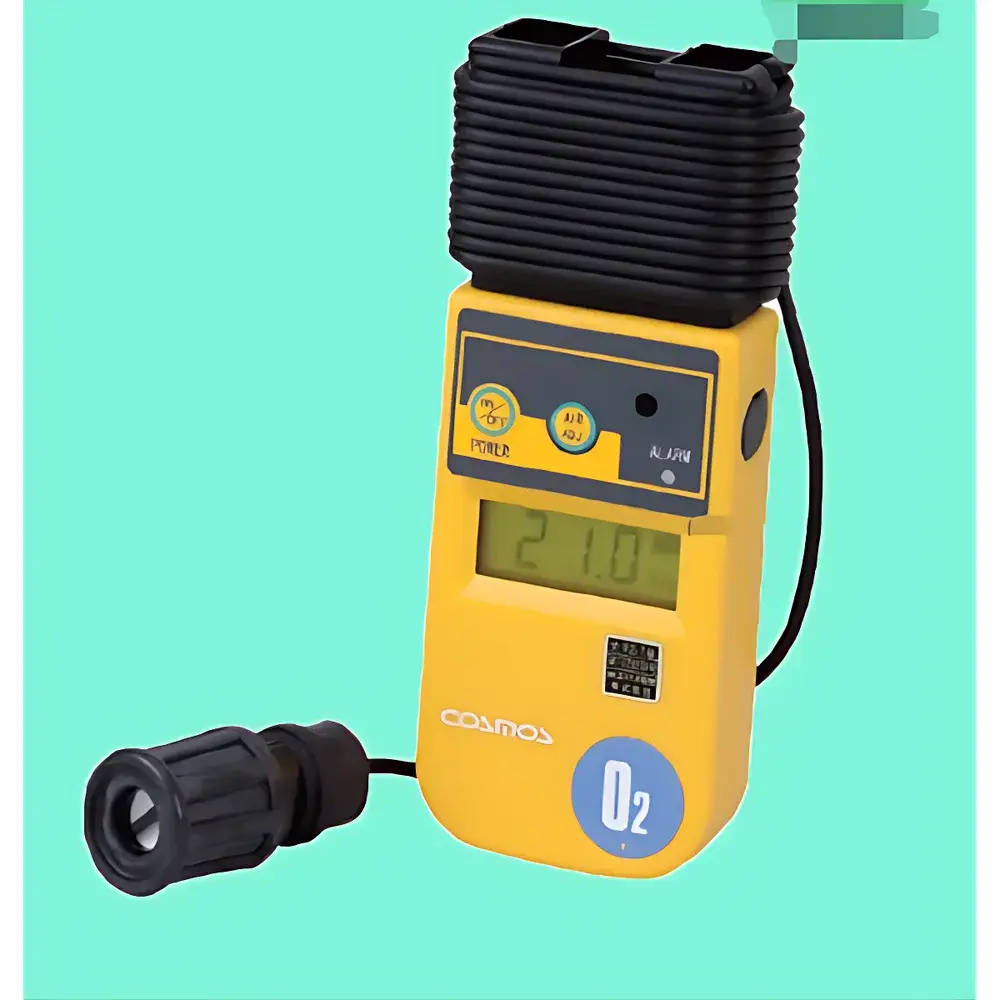
Shinsei XO-326IIs Portable Electrochemical Oxygen Analyzer
| Brand | Shinsei |
|---|---|
| Origin | Japan |
| Model | XO-326IIs |
| Sensor Type | Galvanic (Diffusion-Type Membrane) |
| Measurement Range | O₂: 0–25.0 vol% |
| Full-Scale Extended Range | 25.1–40.0 vol% |
| Accuracy | ±0.5 vol% |
| Response Time (t₉₀) | ≤20 s |
| Repeatability | ±0.5 vol% (typical) |
| Resolution | 0.1 vol% (3-digit LCD display) |
| Operating Temperature | 0–40 °C |
| Power Supply | Two AA alkaline batteries |
| Battery Life | Approx. 8,000 hours continuous operation |
| Enclosure Rating | Intrinsically Safe Ex ia IIB T3 |
| Dimensions (XO-326IIsB variant) | 66 × 120 × 29 mm |
| Weight (XO-326IIsB) | ~265 g |
Overview
The Shinsei XO-326IIs is a portable, intrinsically safe electrochemical oxygen analyzer engineered for reliable, real-time monitoring of ambient or process gas oxygen concentration in industrial safety, confined space entry, inerting verification, and maintenance environments. It operates on the galvanic cell principle—utilizing a diffusion-controlled, membrane-sealed electrochemical sensor that generates a current proportional to the partial pressure of molecular oxygen. Unlike polarographic or paramagnetic analyzers, this self-powered galvanic design requires no external bias voltage, delivering stable zero and span characteristics with minimal drift over time. The instrument is specifically calibrated for O₂ measurement in air-equivalent matrices and is not intended for use in high-CO₂, high-H₂S, or strongly acidic/alkaline gas streams without validation. Its compact form factor, extended battery life, and certified intrinsic safety make it suitable for routine field deployment where regulatory compliance with occupational exposure limits (e.g., OSHA 1910.146, EU Directive 2017/164) is mandatory.
Key Features
- Intrinsically safe construction certified to Ex ia IIB T3 per IEC 60079-0 and IEC 60079-11—enabling safe operation in potentially explosive atmospheres containing Group IIB gases (e.g., acetone, ethanol, propane).
- Galvanic diffusion-type oxygen sensor with built-in temperature compensation—providing stable output across 0–40 °C without manual recalibration.
- Three-digit LCD display with 0.1 vol% resolution and intuitive LED status indicators for power, alarm, and sensor health.
- Dual-stage audible and visual alarm system with user-configurable thresholds at 19.5 vol% (first-stage warning) and 18.0 vol% (second-stage hazard alert), aligned with NIOSH and OSHA oxygen deficiency criteria.
- Integrated airflow control knob for passive sampling adjustment—optimizing response time and minimizing cross-sensitivity in variable flow conditions.
- Modular model variants (XO-326IIsA/B/C) accommodate differing ergonomic and functional requirements—distinguished by housing height (120 mm / 170 mm / 200 mm) and weight (265 g / 340 g / 410 g), all sharing identical metrological performance.
Sample Compatibility & Compliance
The XO-326IIs is validated for use with ambient air and nitrogen-inerted atmospheres where oxygen concentration falls within 0–25.0 vol%. Operation beyond 25.0 vol% (up to 40.0 vol%) is supported as a service range but does not guarantee full accuracy compliance. The sensor exhibits known interference from chlorine, sulfur dioxide, and hydrogen sulfide; therefore, use in environments contaminated with these species requires prior verification or protective filtration. The device meets Japanese JIS T 8201 and conforms to international occupational hygiene standards including ISO 8573-7 (compressed air purity) and EN 50104 (oxygen deficiency detectors). It supports GLP-aligned documentation practices through manual log recording; however, it does not provide electronic audit trails or FDA 21 CFR Part 11-compliant data storage.
Software & Data Management
The XO-326IIs operates as a standalone, firmware-embedded instrument with no onboard data logging, Bluetooth, or USB connectivity. All measurements are displayed in real time on the integrated LCD screen and must be manually recorded. No proprietary software, drivers, or cloud integration is provided. Calibration verification is performed using certified span gas (typically 20.9% O₂ in N₂) and zero gas (nitrogen or argon); calibration frequency follows site-specific risk assessment protocols—typically every 30–90 days or after exposure to sensor poisons. The unit includes a mechanical calibration port compatible with standard gas regulators and flow controllers (0.5 L/min recommended).
Applications
- Confined space entry pre-check and continuous atmospheric monitoring per OSHA 1910.146 and HSE INDG258 guidelines.
- Verification of nitrogen purge effectiveness in chemical reactors, pipelines, and storage tanks prior to maintenance.
- Monitoring of modified atmosphere packaging (MAP) headspace during food processing line audits.
- Field verification of inert gas blanket integrity in semiconductor fabrication tooling and laser cutting enclosures.
- Emergency response screening for oxygen displacement hazards following cryogenic liquid leaks or CO₂ fire suppression discharge.
- Validation of ventilation system performance in laboratories and cleanrooms where oxygen depletion poses inhalation risk.
FAQ
What is the expected service life of the galvanic sensor?
Typical operational lifespan is 24–36 months under normal ambient conditions; exposure to high humidity, condensate, or corrosive gases accelerates degradation.
Can the XO-326IIs be used in high-pressure gas lines?
No—it is designed exclusively for ambient pressure sampling; direct connection to pressurized systems requires external pressure regulation and flow restriction.
Is calibration traceable to NIST or other national standards?
Yes—calibration gases used for verification must be certified to ISO/IEC 17025-accredited standards, with certificates of analysis documenting traceability to NIST or equivalent NMIs.
Does the instrument support analog output or relay signaling?
No—the XO-326IIs provides no 4–20 mA, 0–10 V, or dry-contact outputs; it is a purely indicative handheld device.
How often should bump testing be performed?
Daily bump testing with certified test gas is recommended before each shift when used in life-safety applications, per ISEA Z240.10.1 and manufacturer guidance.