


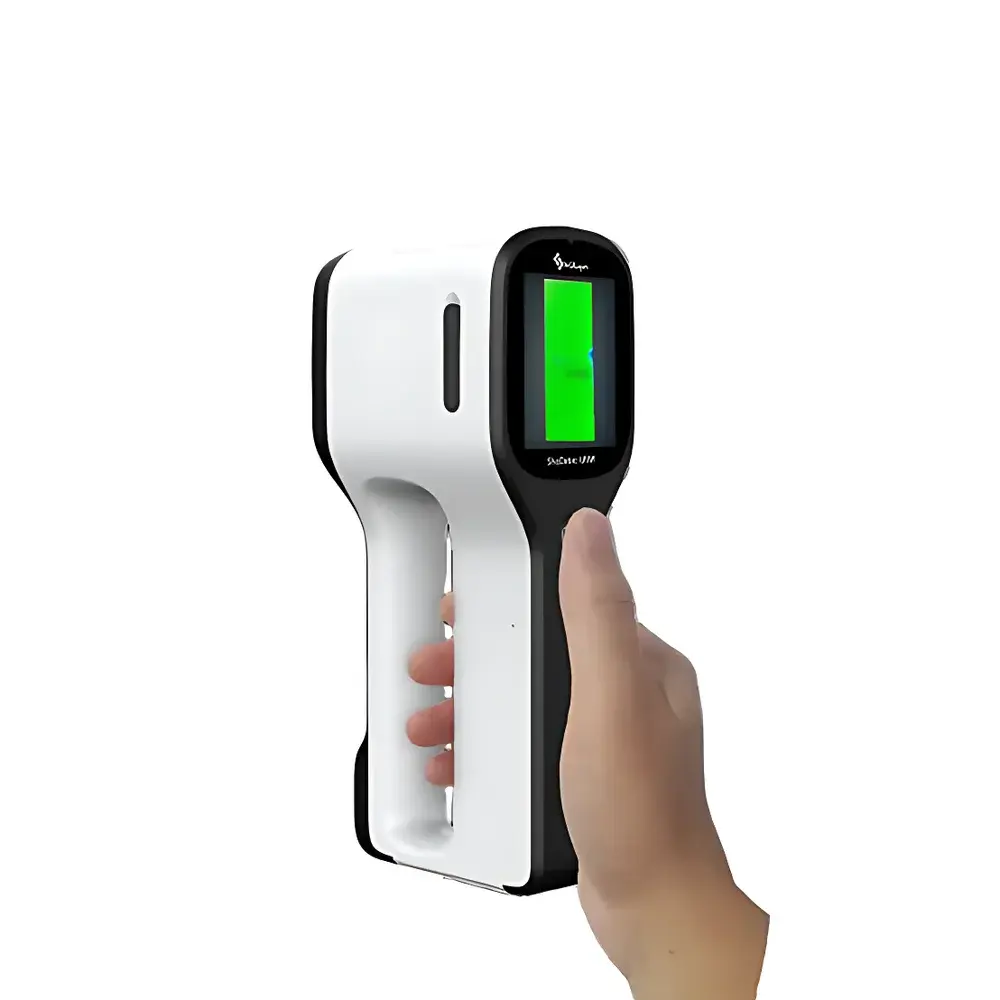
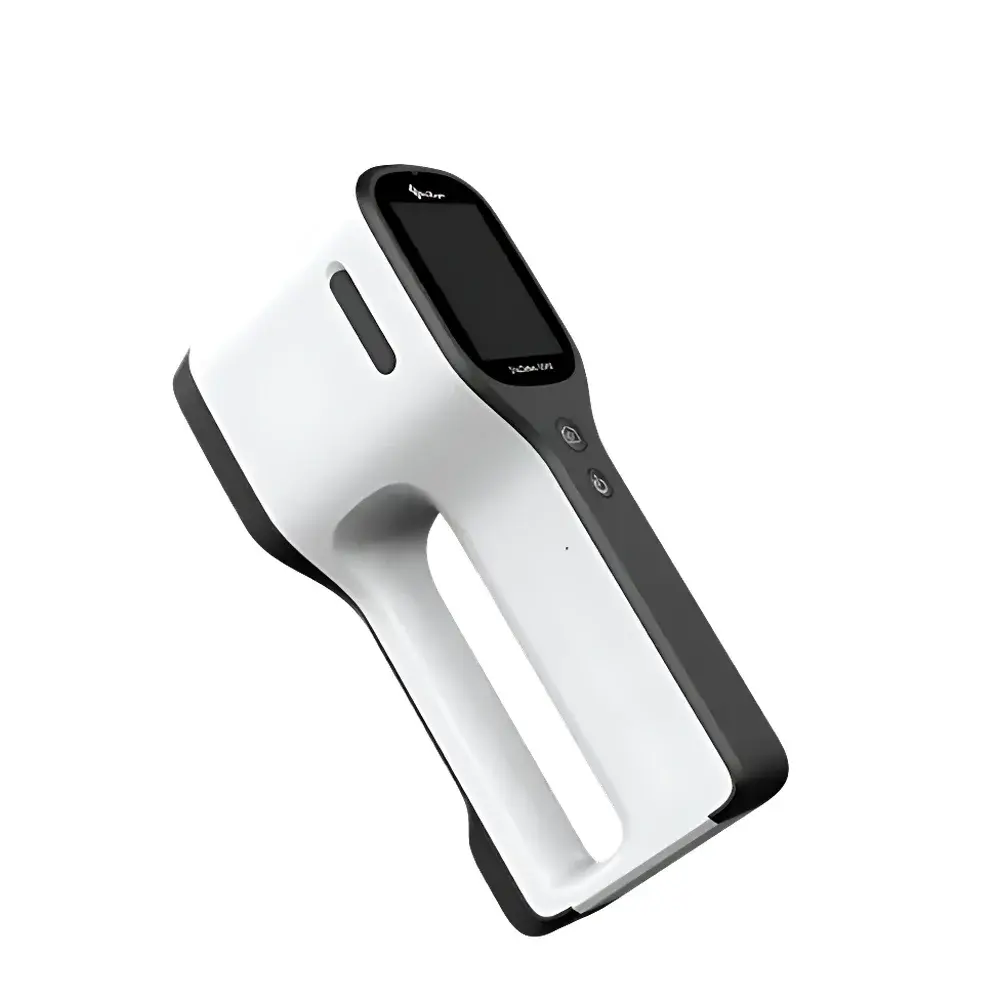
ShoLyn ShoDetec-UV UV Transilluminator for TLC Imaging
| Brand | ShoLyn |
|---|---|
| Model | ShoDetec-UV |
| Instrument Type | Thin-Layer Chromatography (TLC) Imaging System |
| Operation Mode | Manual |
| Wavelength Options | 254 nm, 365 nm |
| Light Source | High-Stability UV LED |
| Spectral Bandwidth | 12.2 nm |
| Wavelength Accuracy | ±2.7 nm |
| Wavelength Repeatability | <0.2 nm |
| Imaging Area | 50 × 70 mm |
| Camera Resolution | 5 MP fixed-focus |
| Display | 2.83-inch TFT (480 × 640) |
| Onboard Storage | 16 GB |
| Connectivity | USB-C, microSD card slot, optional Wi-Fi module |
| Power | Rechargeable 2500 mAh Li-ion battery |
| Working Distance (Depth of Field) | 5 cm |
| Rf Calculation Support | Yes |
Overview
The ShoLyn ShoDetec-UV is a compact, manually operated UV transilluminator engineered specifically for high-fidelity documentation and qualitative analysis of thin-layer chromatography (TLC) plates and paper chromatograms. It operates on the principle of ultraviolet-induced fluorescence—where analytes containing conjugated π-systems or native fluorophores absorb UV photons at 254 nm or 365 nm and re-emit visible light, enabling visual detection and digital capture. Unlike broad-spectrum mercury lamps, the ShoDetec-UV integrates dual-wavelength, narrow-band UV LEDs with calibrated spectral output and minimal thermal drift, ensuring consistent excitation conditions across repeated runs. Its design prioritizes laboratory portability, operator safety (integrated UV shielding and automatic cutoff when lid is opened), and compliance with standard chromatographic workflows in academic, pharmaceutical QC, and industrial R&D environments.
Key Features
- Dual-wavelength UV excitation (254 nm and 365 nm) with independently controlled LED modules—each rated at 2 W optical output and stabilized by constant-current drivers for long-term intensity consistency.
- Fixed-focus 5-megapixel CMOS camera optimized for UV-reflective and UV-fluorescent imaging; lens focal length and aperture calibrated to maintain sharpness across the full 50 × 70 mm sample area at a fixed working distance of 5 cm.
- Integrated 2.83-inch TFT display (480 × 640 resolution) supporting real-time preview, image review, contrast adjustment, and on-device Rf value calculation using reference scale overlays.
- Triple-mode data export: direct USB-C transfer to host PC, microSD card readout (up to 16 GB onboard storage), and optional Wi-Fi-enabled remote image retrieval—facilitating integration into GLP-compliant documentation systems.
- Rechargeable 2500 mAh lithium-ion battery supports ≥3.5 hours of continuous operation under mixed-wavelength use, eliminating dependency on AC power during field or teaching-lab applications.
- UV-optimized optical path with diffuser plate and uniform irradiance profile (±8% variation across imaging area), minimizing hotspots and enabling reproducible spot intensity quantification for semi-quantitative comparisons.
Sample Compatibility & Compliance
The ShoDetec-UV accommodates standard silica gel, alumina, cellulose, and reversed-phase TLC plates (up to 20 × 20 cm), as well as filter paper and acetate membranes used in electrophoretic transfers. Its 50 × 70 mm active imaging zone aligns with common analytical plate dimensions (e.g., 5 × 10 cm or 10 × 10 cm). The instrument meets IEC 61000-6-3 (EMC emission limits) and IEC 62471 (Photobiological Safety Classification – Risk Group 2 for UV-A/UV-C exposure). While not classified as a medical device, its operational parameters conform to ASTM D7217–19 (Standard Practice for Fluorescence Detection in TLC) and support traceability requirements under ISO/IEC 17025:2017 for non-accredited testing laboratories.
Software & Data Management
No proprietary desktop software is required: captured TIFF/JPEG images are stored with embedded EXIF metadata (wavelength used, timestamp, exposure mode). The onboard firmware logs all imaging sessions—including date/time stamp, selected wavelength, and manual Rf annotations—enabling audit-ready records without external database dependencies. For regulated environments, exported image files may be ingested into validated LIMS or ELN platforms supporting FDA 21 CFR Part 11-compliant electronic signatures and audit trails. Firmware updates are delivered via microSD card and include version-controlled changelogs traceable to internal QA release notes.
Applications
- Biochemical analysis: visualization of nucleic acids (ethidium bromide–free detection of SYBR-safe–stained gels), amino acids, peptides, and coenzymes (e.g., NADH, FAD) on silica or cellulose layers.
- Pharmaceutical quality control: identity testing of APIs including steroids, alkaloids, vitamins (B2, K), and sulfonamides based on Rf matching and fluorescence signature under dual UV excitation.
- Industrial chemistry: differentiation of hydrocarbon fractions in crude oil screening, identification of antioxidant additives in rubber formulations, and verification of dye purity in textile intermediates.
- Educational labs: standardized TLC instruction with immediate digital archiving—supporting student report generation, comparative analysis, and instructor assessment without darkroom infrastructure.
FAQ
Is the ShoDetec-UV suitable for quantitative densitometry?
No—it is designed for qualitative and semi-quantitative spot detection and Rf determination. For calibrated densitometric quantification, a spectrodensitometer or HPTLC scanner with linear response calibration is recommended.
Can it be used with UV-absorbing visualization reagents like iodine or anisaldehyde?
Yes—though these reagents typically require post-development fuming or heating, the ShoDetec-UV’s 254 nm mode remains effective for detecting UV-active compounds prior to derivatization.
Does the device comply with GLP documentation standards?
It supports GLP-aligned practices through timestamped image export, immutable session logs, and vendor-provided firmware validation documentation—but final system qualification must be performed by the end-user lab per their SOPs.
What is the expected LED lifetime under routine use?
The UV LEDs are rated for ≥10,000 hours at nominal drive current, with output stability maintained within ±5% over the first 5,000 hours per IES LM-80 testing protocols.
Is there a protective filter option for long-term eye safety during open-lid operation?
The unit includes a polycarbonate UV-blocking viewing window (OD ≥4 at 254 nm); however, direct observation of illuminated samples without certified UV goggles is not advised—even with the shield in place.




