


ShoLyn ShoDetec-UVE UV Transilluminator
| Brand | ShoLyn |
|---|---|
| Origin | Shanghai, China |
| Model | ShoDetec-UVE |
| Instrument Type | TLC Imaging System |
| Operation Mode | Manual |
| Wavelength Selection | Manual Dual-Band Switching |
| Wavelengths | 254 nm, 365 nm |
| Light Source | High-Intensity UV LED |
| Spectral Bandwidth | 18 nm |
| Wavelength Accuracy | ±5 nm |
| Imaging Wavelengths | 254 nm, 365 nm |
| Sample Platform | Accommodates 200 × 200 mm preparative silica gel plates and standard TLC plates (e.g., 20 × 50 mm) |
| UV Output Power | 6 W at 254 nm |
| LED Lifetime | >10,000 h |
| Built-in Rechargeable Battery | 5000 mAh |
| Viewing Area | Up to 200 × 200 mm with integrated UV-blocking filter |
Overview
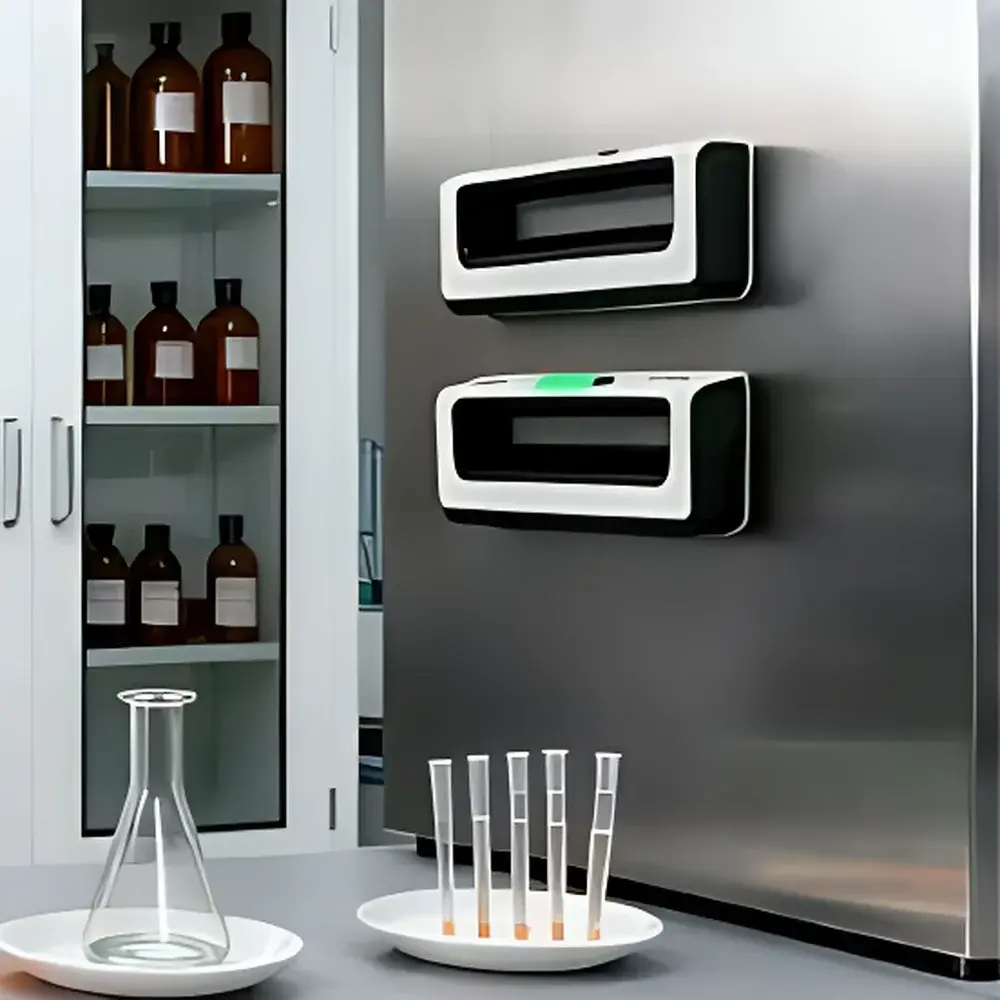
The ShoLyn ShoDetec-UVE UV Transilluminator is a compact, battery-powered thin-layer chromatography (TLC) imaging system engineered for reliable fluorescence excitation and visualization of UV-active compounds under controlled short- and long-wave ultraviolet illumination. Based on solid-state LED excitation technology, it operates at two fixed, narrow-band wavelengths—254 nm and 365 nm—enabling selective detection of analytes that absorb or fluoresce under these spectral conditions. Unlike legacy mercury-vapor or fluorescent tube-based transilluminators, the ShoDetec-UVE eliminates warm-up time, thermal drift, and inconsistent output intensity, delivering stable irradiance over its entire operational lifetime. Its portable architecture supports field-deployable use in teaching labs, quality control environments, and mobile analytical units where access to mains power is limited or impractical.
Key Features
- High-efficiency dual-wavelength UV LEDs (254 nm and 365 nm), each rated at 6 W nominal optical output, providing uniform irradiance across the viewing surface
- Extended LED service life exceeding 10,000 hours—reducing maintenance frequency and total cost of ownership compared to conventional UV lamps
- Integrated 5000 mAh rechargeable lithium-ion battery enabling up to 90 minutes of continuous operation per charge (typical usage at 365 nm mode)
- Optimized optical path with precision-coupled bandpass filters (18 nm spectral bandwidth, ±5 nm wavelength accuracy) ensuring high signal-to-noise ratio during compound visualization
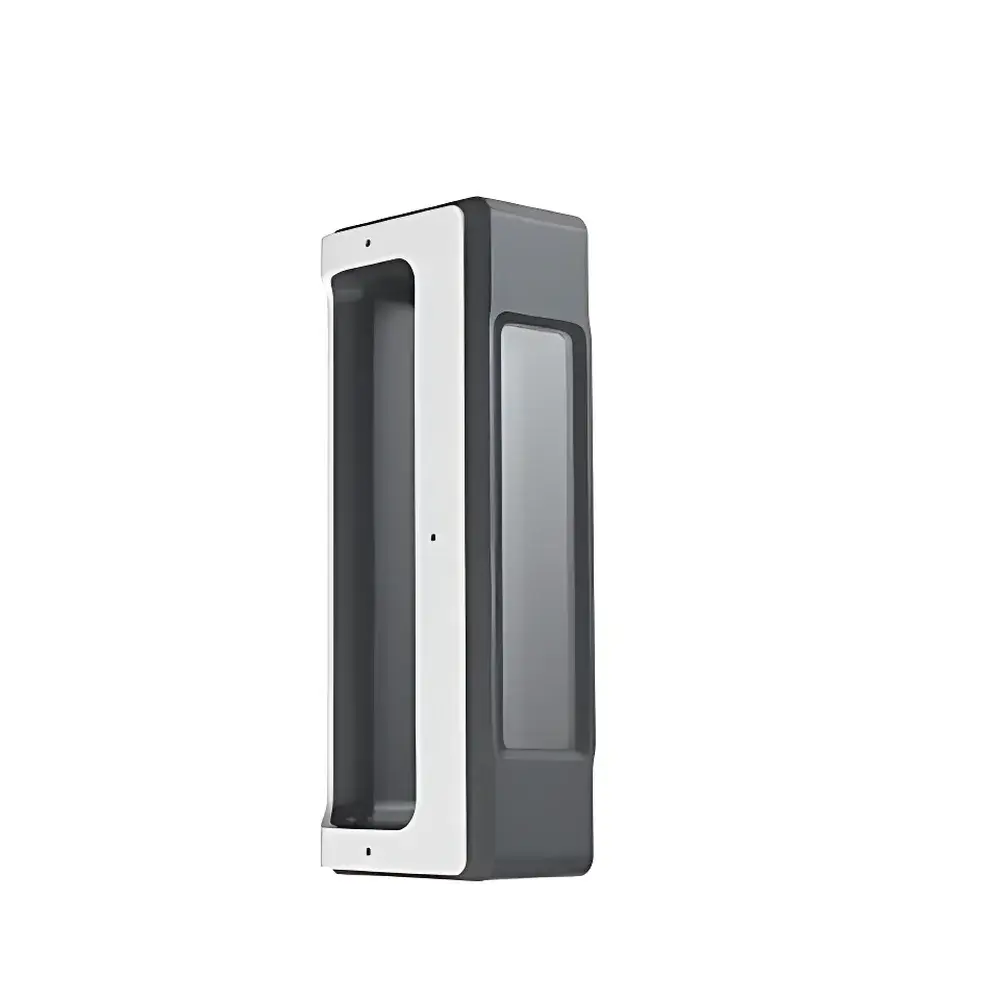
- Ergonomic, lightweight chassis (≤2.3 kg) with foldable side shields and built-in UV-absorbing acrylic viewing window compliant with IEC 62471 photobiological safety standards
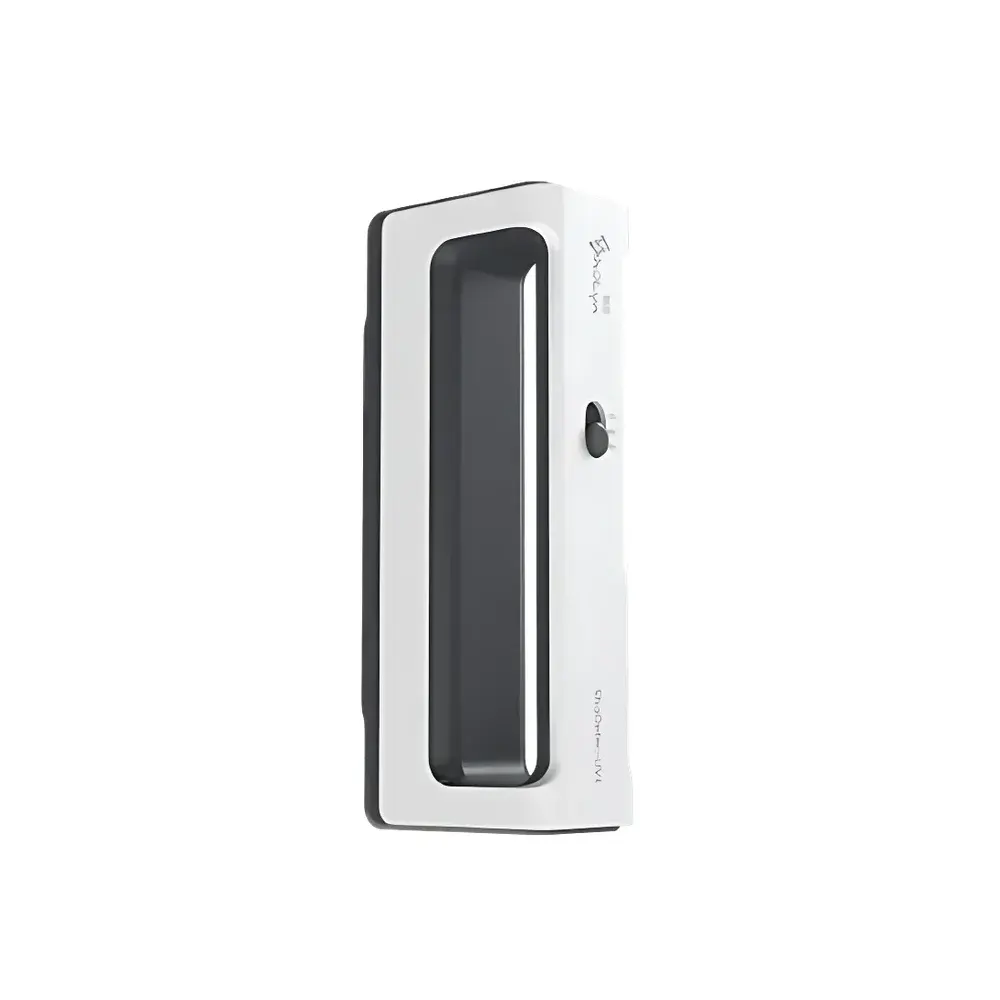
- Manual wavelength selection via tactile toggle switch—designed for rapid method switching without software dependency or calibration routines
Sample Compatibility & Compliance
The ShoDetec-UVE accommodates a broad range of planar chromatographic substrates, including standard analytical TLC plates (20 × 50 mm, 20 × 100 mm), high-performance silica layers (HPTLC), aluminum-backed cellulose sheets, and large-format preparative plates up to 200 × 200 mm. Its open-platform design allows direct placement of developed plates without mechanical clamping or stage alignment—ideal for rapid qualitative screening in academic teaching labs or routine QC workflows. The instrument meets general laboratory safety requirements for Class 3R UV-emitting devices per IEC 60825-1 and incorporates passive shielding to limit stray UV exposure. While not certified for GMP-regulated environments as a standalone data-generating device, its consistent output stability supports documentation practices aligned with GLP principles when paired with external imaging systems.
Software & Data Management
The ShoDetec-UVE operates as a hardware-only excitation source and does not include embedded firmware, touchscreen interface, or proprietary software. It is fully compatible with third-party digital imaging platforms—including DSLR cameras, scientific CMOS sensors, and document scanners—when used with appropriate UV-transmissive lenses and neutral-density filtration. Users may integrate captured images into validated image analysis pipelines (e.g., ImageJ with TLC Analyser plugin, GelAnalyzer, or commercial chromatography software such as OpenChrom or Chromeleon) for Rf calculation, spot quantification, and comparative densitometry. Audit trail generation, electronic signatures, and 21 CFR Part 11 compliance must be implemented at the downstream image acquisition and processing layer, as the transilluminator itself functions exclusively as an illumination module.
Applications
- Routine identification and purity assessment of organic synthetic intermediates and final products via TLC
- Monitoring enzymatic reactions and protein modifications using UV-absorbing chromophores (e.g., dansyl chloride, o-phthalaldehyde derivatives)
- Visualizing nucleic acid bands stained with ethidium bromide analogues (e.g., SYBR Safe) on agarose or polyacrylamide gels—when used with appropriate safety protocols
- Teaching laboratory demonstrations of separation science fundamentals, including solvent front tracking, Rf determination, and multi-solvent system optimization
- Field-based forensic screening of dyes, alkaloids, and illicit substances on improvised chromatographic media
- Quality assurance checks for herbal extract standardization and pharmaceutical raw material identity testing per USP <621> and EP 2.2.27 guidelines
FAQ
Is the ShoDetec-UVE suitable for quantitative densitometric analysis?
It serves as a stable excitation source but requires integration with a calibrated camera system and validated image analysis software for quantitative applications.
Can the unit be operated while charging?
Yes—continuous operation is supported during AC charging via the included 12 V / 2 A adapter.
What safety certifications does the device carry?
It complies with IEC 62471 (UV hazard classification: Risk Group 2) and IEC 60825-1 (laser product safety, applicable to LED-based optical radiation sources).
Does the instrument support custom wavelength configurations?
No—only factory-set 254 nm and 365 nm LED modules are available; no user-replaceable or tunable optics are provided.
How often should the UV filter be replaced?
The integrated acrylic filter is designed for permanent use under normal operating conditions; replacement is only necessary if physically damaged or optically degraded due to prolonged UV exposure or chemical contact.
Related Products





