
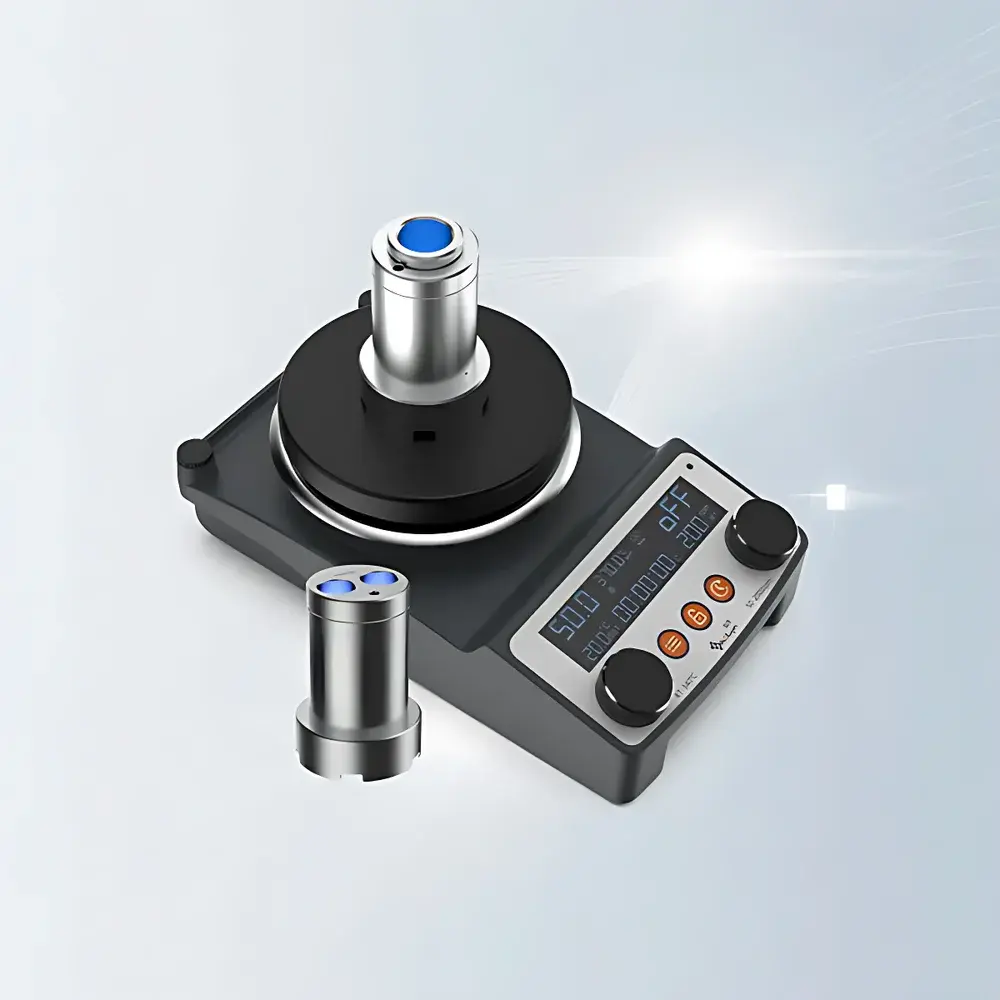

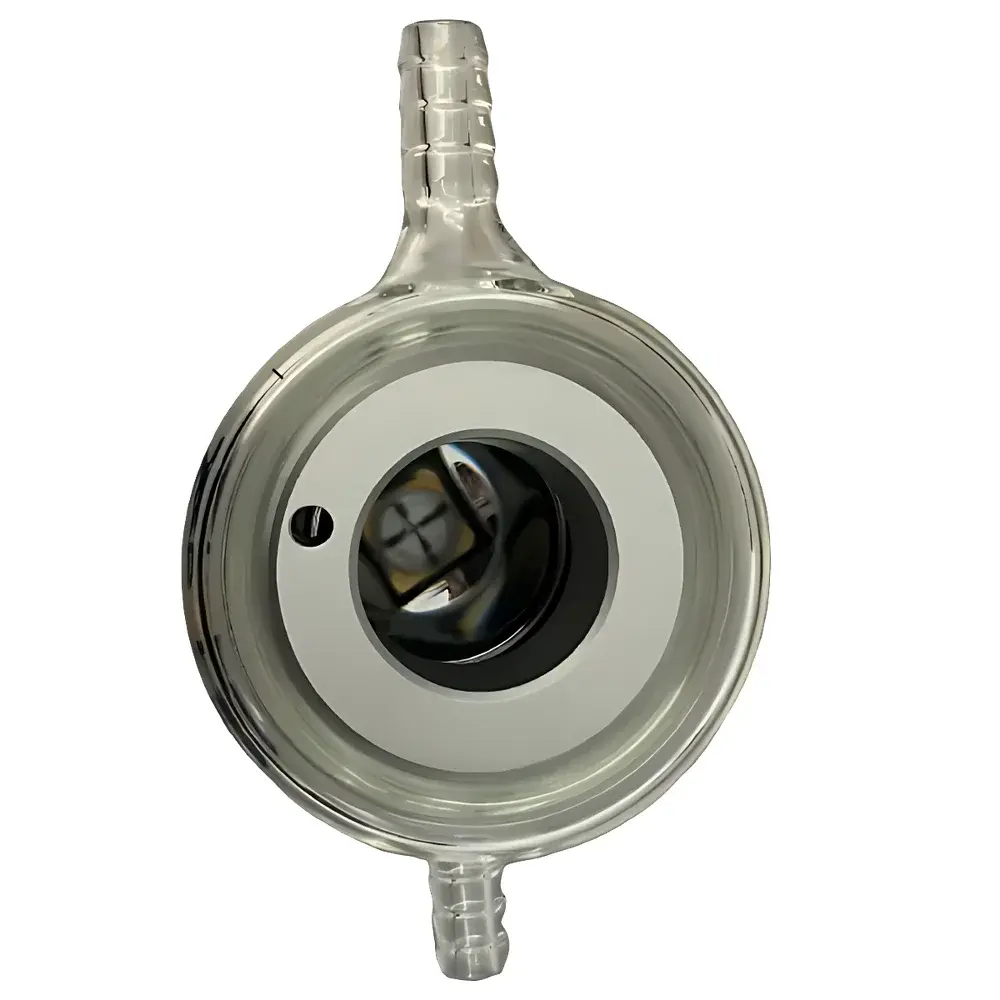
ShoLyn ShoPhoS Single-Station Photochemical Reactor
| Brand | ShoLyn |
|---|---|
| Origin | Shanghai, China |
| Model | ShoPhoS |
| Reaction Stations | 1 |
| Reaction Vessel Capacity | 8–50 mL (compatible with 10–25 mL Schlenk tubes or 15 mL flat-bottom vials) |
| Temperature Range | 55–70°C (active cooling required for sub-ambient operation) |
| Light Source Wavelength Options | 254, 280, 305, 330, 365, 395, 420, 450 nm, or 6500 K white light (custom composite wavelengths available) |
| Power Supply | 7.5 W AC/DC adapter |
| Housing Material | High-thermal-conductivity aluminum alloy |
| Optical Design | Dual-lens collimated transmissive illumination module |
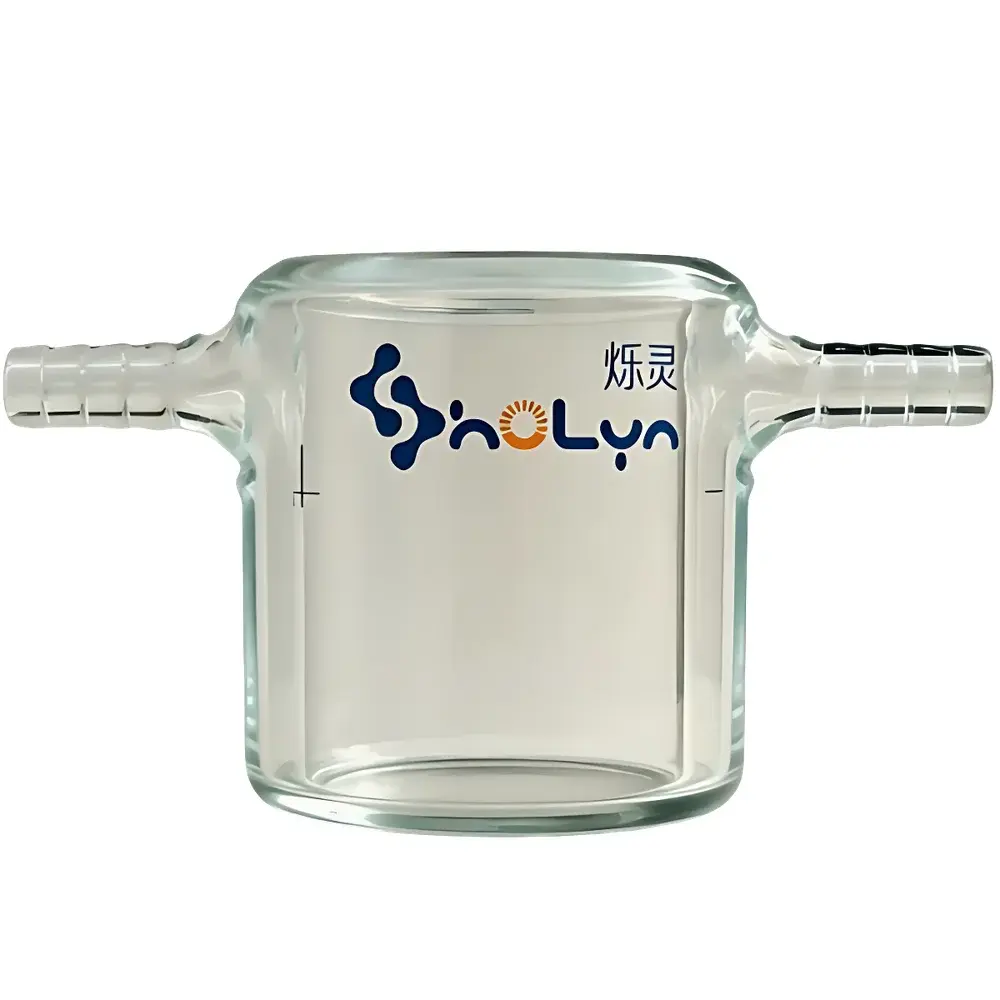
| Optional Accessories | ShoPhoS-Jacket glass thermostatic jacket |
Overview
The ShoLyn ShoPhoS Single-Station Photochemical Reactor is an engineered platform designed for controlled, reproducible photochemical experimentation in academic and industrial R&D laboratories. It operates on the principle of heterogeneous or homogeneous photocatalysis—where incident photons (UV to visible, 254–950 nm) excite catalytic species (e.g., TiO₂, Ru(bpy)₃²⁺, organic dyes, or transition metal complexes), generating reactive intermediates such as electron–hole pairs, singlet oxygen, or radical species that drive bond-forming or bond-cleavage reactions. Unlike open-beam LED arrays, the ShoPhoS employs a patented dual-lens transmissive optical architecture that collimates and focuses irradiance onto the reaction volume, delivering up to 40% higher photon flux density at the sample plane compared to conventional reflective or diffused setups. This design ensures uniform spectral irradiation across the reactor’s cylindrical reaction zone—critical for kinetic studies, quantum yield determination, and catalyst screening under ISO 10678:2010 and ASTM E2655-21 compliant conditions.
Key Features
- Monostation modular architecture optimized for benchtop integration—fits directly atop standard magnetic stirrers (e.g., IKA, Thermo Fisher, VWR models) without mechanical adaptation.
- High-purity 6063-T5 aluminum housing with integrated thermal pathways, enabling passive dissipation of LED heat load and stable thermal management during extended irradiation (up to 70°C ambient).
- Interchangeable optical modules supporting discrete monochromatic wavelengths (254 nm UVC to 950 nm NIR) or broad-spectrum white light (6500 K CCT), each calibrated to NIST-traceable irradiance standards.
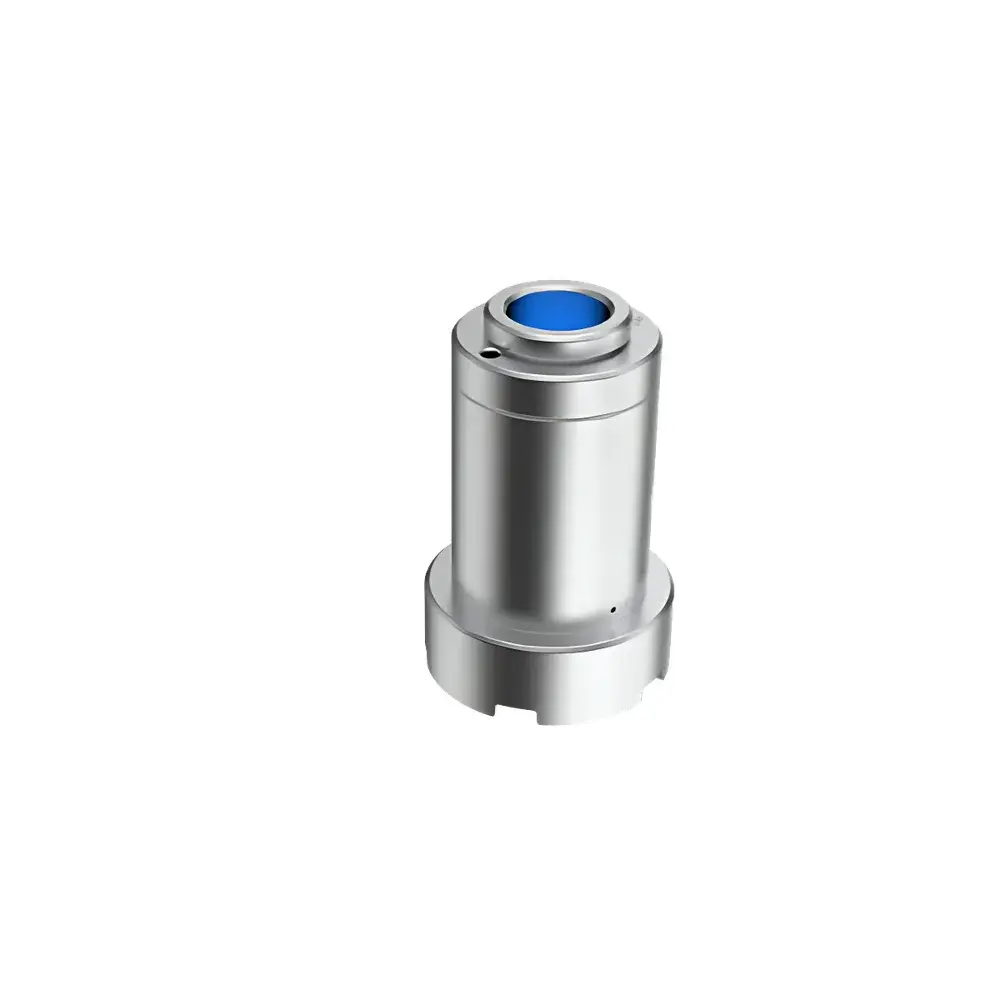
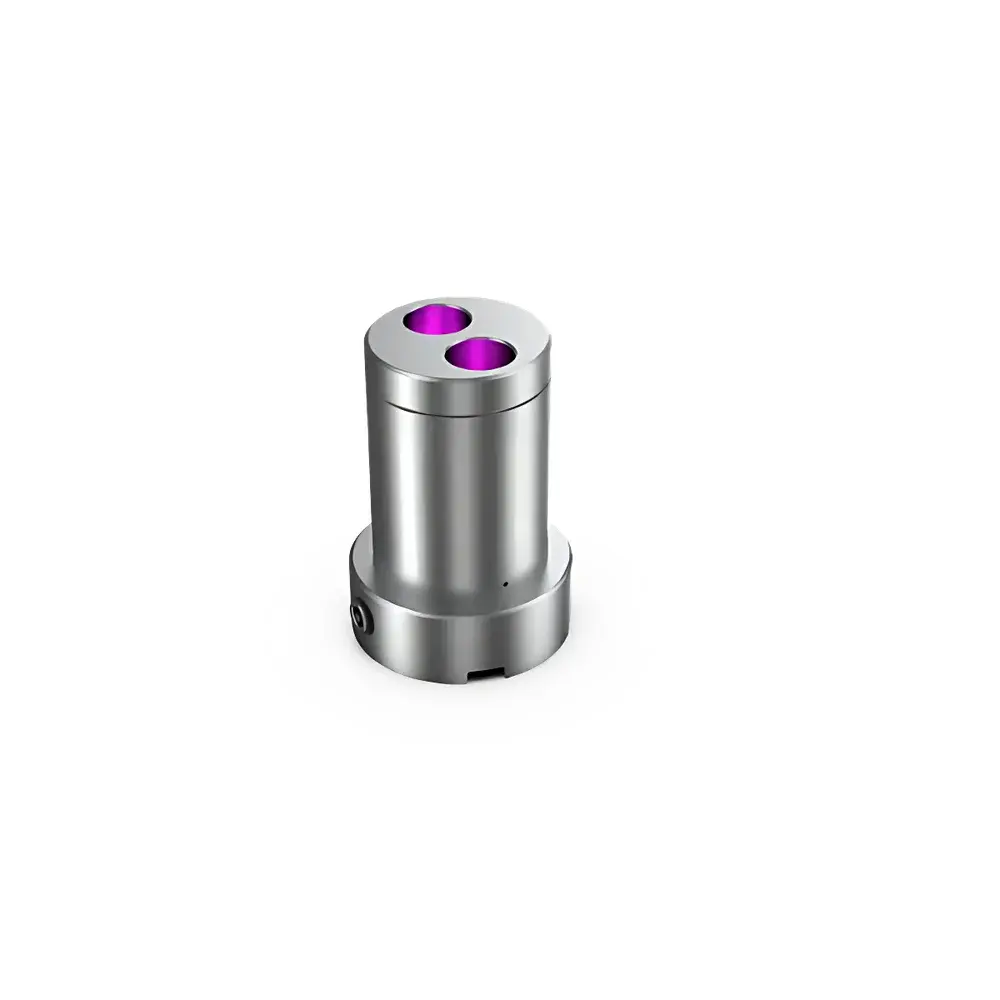
- Reaction chamber geometry engineered for optical homogeneity: single-bore configuration (Φ22.5 mm) accommodates 10–25 mL Schlenk tubes or 15 mL flat-bottom vials; optional dual-bore variant (2 × Φ16.5 mm) supports parallel small-volume screening.
- Compact footprint (reduced by ~40% vs. legacy photochemical reactors), enabling deployment inside inert-atmosphere gloveboxes (O₂/H₂O < 0.1 ppm), refrigerated chambers (with external cooling accessory), or fume hoods with restricted vertical clearance.
Sample Compatibility & Compliance
The ShoPhoS supports standard borosilicate glass and quartz reaction vessels conforming to ASTM E2932-22 specifications for UV-transmissive labware. Its open-top, sleeve-style reactor head permits rapid vessel insertion/removal and compatibility with septum-sealed systems for anaerobic or air-sensitive transformations. The device meets CE marking requirements for electromagnetic compatibility (EN 61326-1) and low-voltage safety (EN 61010-1). While not intrinsically rated for Class I Division 1 hazardous locations, it is routinely deployed in GLP-compliant photoredox workflows where audit trails, instrument calibration logs, and operator-defined SOPs govern experimental execution per FDA 21 CFR Part 11 Annex 11 expectations.
Software & Data Management
The ShoPhoS operates as a standalone hardware module with no embedded firmware or proprietary software stack—intentionally designed for method portability and long-term maintainability. Irradiation time is controlled externally via timer switches or programmable stirrer interfaces (e.g., ShoHMS Smart unit with TTL-triggered exposure gating). All optical components are labeled with wavelength-specific calibration certificates traceable to PTB (Physikalisch-Technische Bundesanstalt). Users maintain full control over experimental metadata (wavelength, intensity, duration, vessel type, catalyst loading) within their LIMS or ELN platforms—supporting FAIR data principles without vendor lock-in.
Applications
- Photocatalytic C–H functionalization and cross-coupling (e.g., arylations, alkylations, trifluoromethylations)
- Visible-light-mediated asymmetric synthesis using chiral photocatalysts
- Photopolymerization kinetics and initiator screening under controlled spectral input
- Environmental photocatalysis: degradation of micropollutants (pharmaceuticals, dyes) in aqueous matrices
- Photoelectrochemical cell testing with immobilized semiconductor electrodes
- High-throughput catalyst library evaluation using standardized irradiance dosimetry
FAQ
Does the ShoPhoS include temperature control capability?
No—the base unit maintains passive thermal equilibrium up to 70°C. For precise isothermal operation below ambient or above 70°C, the optional ShoPhoS-Jacket glass thermostatic jacket must be paired with an external recirculating chiller or heater-circulator.
Can I use quartz reaction tubes with this system?
Yes—quartz tubes with outer diameters ≤22 mm are fully compatible and recommended for experiments requiring deep-UV transmission (e.g., 254 nm irradiation).
Is irradiance intensity adjustable?
Intensity is fixed per optical module (defined by LED binning and lens geometry); however, effective dose is modulated via exposure duration and distance-to-sample—calibration curves for each wavelength are supplied with NIST-traceable power meter validation data.
What safety certifications does the device carry?
It complies with EN 61010-1 (safety requirements for electrical equipment) and EN 61326-1 (EMC for laboratory use), certified by SGS Shanghai under EU CE directives.
How is light uniformity validated across the reaction zone?
Each production batch undergoes spatial irradiance mapping using a calibrated CCD-based radiometer (Hamamatsu Photonics C12702), confirming ±8% deviation across the central 80% of the illuminated cross-section—meeting ISO/IEC 17025 criteria for measurement uncertainty reporting.



