
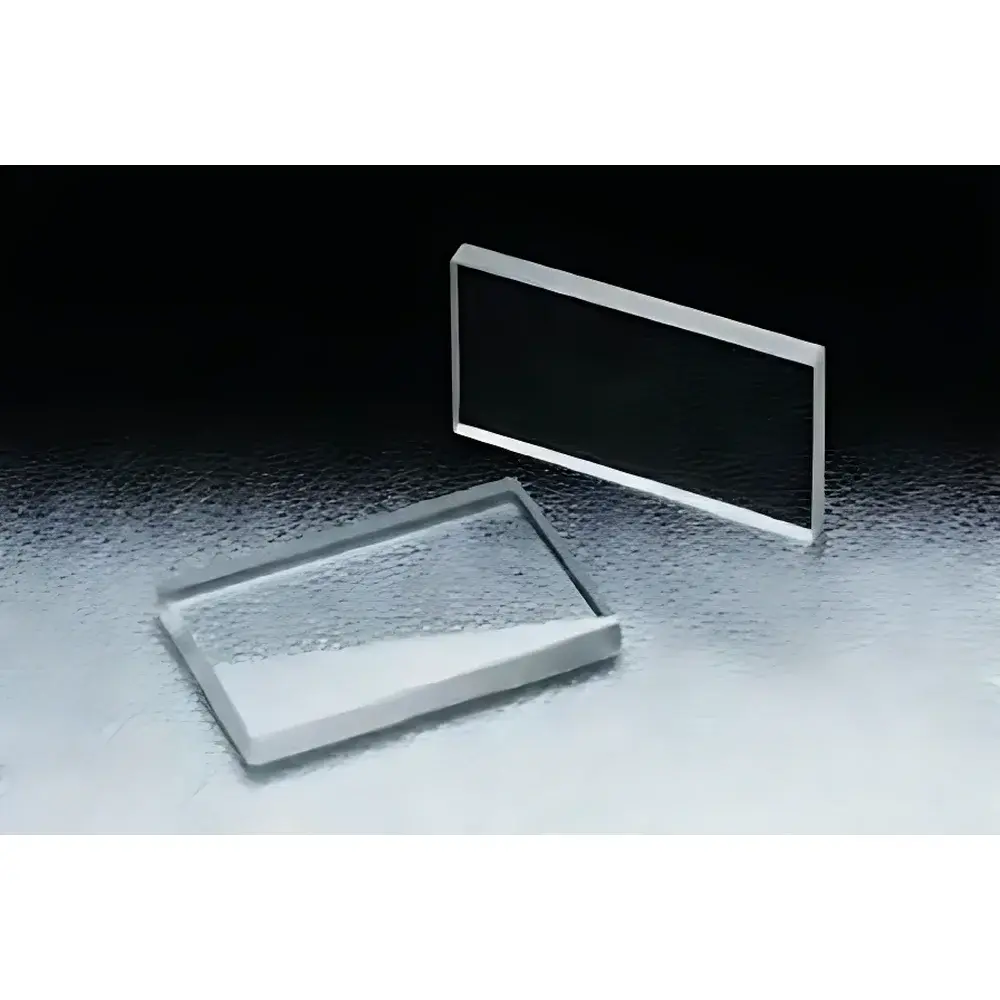
Sigma CLB Series Cylindrical Plano-Convex Lens
| Brand | Sigma |
|---|---|
| Origin | Japan |
| Manufacturer Type | Authorized Distributor |
| Product Origin | Imported |
| Model | CLB Series |
| Component Category | Optical Element |
| Material Options | BK7 Glass or Synthetic Fused Silica |
| Available Coatings | AR Coating for Visible, NIR, and IR Spectral Ranges |
| Design Wavelength Range | 350 nm – 2000 nm (depending on substrate and coating) |
| Recommended Input | Collimated Beam Incident on Convex Surface |
| Typical Transmission | ~90% (uncoated), >99% per surface (with optimized AR coating) |
| Chromatic Behavior | Focal Length Varies with Wavelength |
| Compliance | ISO 10110–1 (Optical Component Specifications), MIL-PRF-13830B (Surface Quality) |
Overview
The Sigma CLB Series Cylindrical Plano-Convex Lens is a precision optical component engineered for asymmetric beam shaping in laser and illumination systems. Unlike spherical lenses, this lens features curvature only along one axis—convex in the cylindrical (sagittal) plane and flat (plano) in the orthogonal (tangential) plane—enabling line-focused irradiance distribution via controlled astigmatic focusing. Its fundamental operating principle relies on differential refractive power: light incident parallel to the optical axis converges along the curved axis to form a narrow line focus, while remaining collimated along the flat axis. This geometry is essential in applications requiring anisotropic intensity profiles, such as laser line generation for particle image velocimetry (PIV), structured light projection, optical trapping arrays, and slit-based spectroscopic illumination. The CLB series is manufactured to ISO 10110–1 dimensional and surface quality standards, with surface irregularity ≤λ/4 @ 633 nm and scratch-dig compliance per MIL-PRF-13830B Class 40–20.
Key Features
- Two substrate options: high-homogeneity BK7 glass for visible-to-NIR (400–2000 nm) operation and synthetic fused silica for deep-UV transmission down to 350 nm with elevated laser-induced damage threshold (LIDT ≥ 5 J/cm² @ 1064 nm, 10 ns pulse)
- Three broadband anti-reflection (AR) coating variants: VIS (400–700 nm), NIR (700–1100 nm), and IR (1100–2000 nm), each delivering 99% peak transmission
- Strict mounting orientation guidance: collimated input must be directed onto the convex surface to minimize spherical aberration and preserve line focus sharpness; reverse incidence degrades M² factor by ≥30%
- Chromatic focal shift quantified and documented: focal length variation across design band is provided in wavelength-dependent calibration tables (e.g., f = 50.1 mm @ 532 nm, f = 49.8 mm @ 633 nm for CLB-50-20)
- Edge thickness control within ±0.05 mm and center thickness tolerance of ±0.1 mm ensure repeatability in kinematic mounts and multi-element assemblies
Sample Compatibility & Compliance
The CLB series is compatible with standard optomechanical interfaces including SM1 (1.035″-40) threaded mounts, cage systems (30 mm and 60 mm), and kinematic lens holders with tip/tilt adjustment. All lenses undergo spectral verification using calibrated spectrophotometry (PerkinElmer Lambda 950) and wavefront testing via Zygo GPI interferometry. Manufacturing adheres to ISO 9001:2015 quality management protocols. Documentation includes individual test reports listing measured transmission spectra, surface flatness (λ/10 PV), and coating adhesion per ASTM D3359. For regulated environments—including ISO/IEC 17025-accredited labs—the lenses support traceable calibration workflows when paired with NIST-traceable power meters and beam profilers.
Software & Data Management
No embedded firmware or proprietary software is associated with the CLB lens, as it functions as a passive optical element. However, Sigma provides downloadable technical documentation packages—including Zemax OpticStudio-compatible .ZMX files, raytrace-ready STEP models, and wavelength-dependent focal length lookup tables—in CSV and PDF formats via secure customer portal access. These resources enable accurate system-level modeling in optical design platforms (e.g., CODE V, LightTools) and integration into automated alignment scripts (Python/Matlab APIs available upon request). Audit trails for coating deposition parameters and metrology logs are retained for 10 years in accordance with GLP-compliant recordkeeping standards.
Applications
- Laser line generation for confocal microscopy illumination and sheet-based flow cytometry
- Beam homogenization in semiconductor lithography illumination optics
- Asymmetric collimation correction in fiber-coupled diode laser modules
- Line-focus enhancement in photoacoustic tomography excitation paths
- Calibration reference elements in ISO 11146-compliant laser beam characterization setups
- UV-curable resin patterning in maskless lithography systems (using fused silica variant)
FAQ
Why must collimated light enter through the convex surface?
Entering from the convex side minimizes spherical aberration by aligning the chief ray path with the lens’s natural refraction profile—reversal increases RMS wavefront error by up to 0.15 λ and broadens the line focus FWHM by 35–50% depending on f-number.
Is the focal length specified at a single wavelength?
Yes—nominal focal length is defined at the coating’s design center wavelength (e.g., 587.6 nm for VIS AR); actual focal position shifts measurably across the band; consult the published chromatic focal shift curve for system-level compensation.
Can these lenses be used in vacuum or high-humidity environments?
BK7 variants are rated for ambient operation only (20–80% RH, non-condensing); fused silica versions meet NASA outgassing requirements (CVCM ≤ 0.01%) and are qualified for UHV use (<1×10⁻⁶ Torr) when edge-sealed.
Do uncoated versions support UV applications below 350 nm?
No—uncoated BK7 exhibits strong absorption below 350 nm; only AR-coated fused silica variants are validated for deep-UV use, with transmission >85% at 350 nm and LIDT certification per ISO 21254–1.
How is surface quality verified prior to shipment?
Each lens undergoes 100% inspection under dark-field illumination at 50× magnification; defects exceeding 40-20 scratch-dig specification are rejected; interferometric surface figure data is archived and available upon request.




