
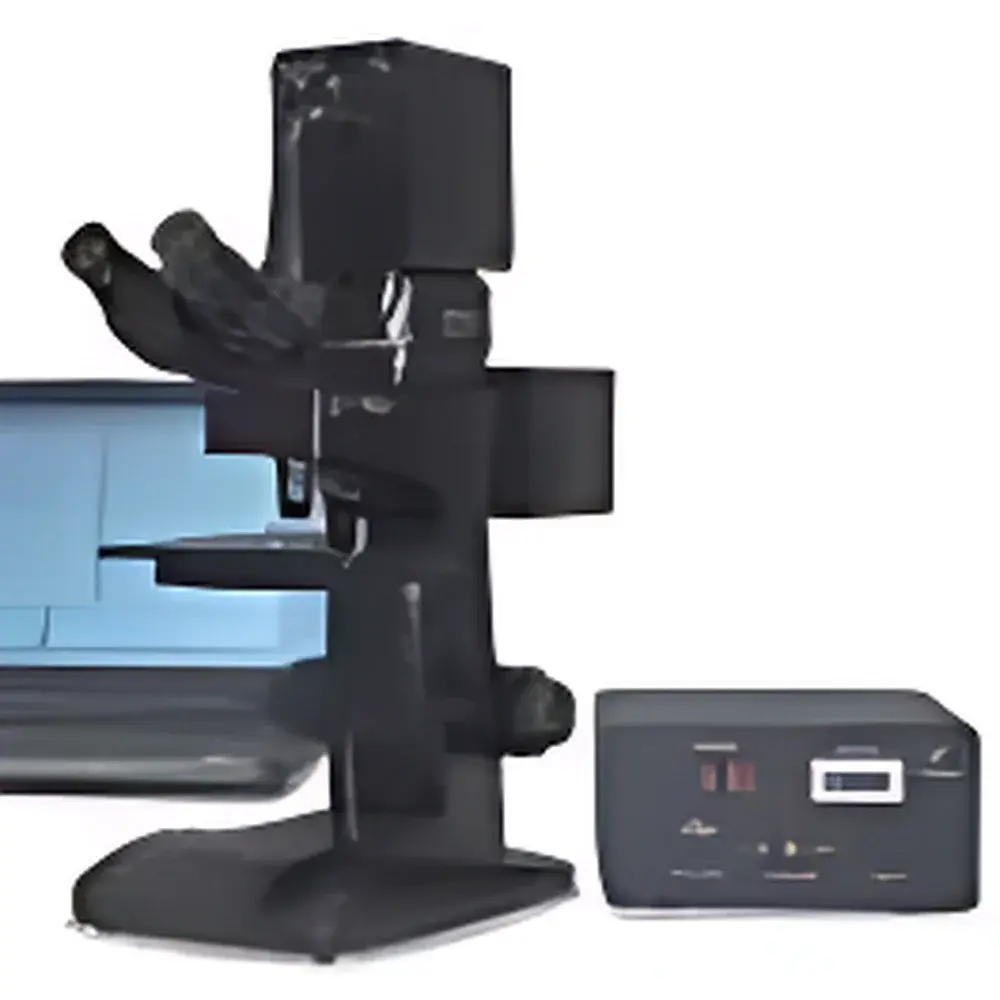
Sigma SGRM-200 Reflectance Measurement Instrument
| Brand | Sigma |
|---|---|
| Origin | Japan |
| Manufacturer Type | Authorized Distributor |
| Origin Category | Imported |
| Model | SGRM-200 |
| Pricing | Available Upon Request |
Overview
The Sigma SGRM-200 Reflectance Measurement Instrument is a precision optical metrology system engineered for quantitative, non-contact measurement of spectral reflectance across the visible and near-infrared (VIS-NIR) range. Based on calibrated integrating sphere geometry and dual-beam ratio photometry, the SGRM-200 determines absolute reflectance (%) by comparing sample signal intensity against a traceable NIST-certified reference standard (e.g., Spectralon® or BaSO₄-coated tile). Its optical architecture minimizes directional bias and compensates for ambient light interference, enabling high reproducibility (< ±0.3% RSD over 10 repeated measurements on uniform matte surfaces) under laboratory and controlled production floor conditions. Designed for routine quality assurance in optics manufacturing, coating validation, and material characterization labs, the instrument operates without requiring user calibration—factory alignment and spectral verification are performed prior to shipment and documented in the Certificate of Conformance.
Key Features
- Integrating sphere configuration with >98% diffuse reflectance inner coating (barium sulfate or PTFE-based) ensures uniform illumination and collection geometry compliant with ASTM E1331 and ISO 2813 standards.
- Dual-beam optical path with real-time reference channel correction eliminates drift due to lamp aging or thermal fluctuation during extended measurement sessions.
- UV-stabilized tungsten-halogen broadband source (360–1050 nm) coupled with a fixed grating spectrometer delivers stable spectral output and <1.5 nm optical resolution (FWHM).
- Motorized sample stage with XYZ adjustment and optional rotation mount supports flat, curved, and textured substrates up to Ø100 mm and 25 mm thickness.
- Embedded microprocessor with onboard memory stores up to 1,000 spectra; USB 2.0 interface enables direct data export to external PCs running Windows-based analysis software.
- Compliance-ready design includes hardware timestamping, operator ID input field, and audit trail log generation—supporting GLP and ISO/IEC 17025 documentation requirements.
Sample Compatibility & Compliance
The SGRM-200 accommodates a broad spectrum of reflective materials including optical thin-film coatings (AR, HR, mirror), anodized metals, painted automotive panels, ceramic glazes, printed packaging films, and biomedical implant surfaces. Sample surface roughness up to Ra = 3.2 µm does not compromise measurement fidelity, provided the spot size (default 8 mm diameter) fully covers local topography. The system conforms to key international test standards: ASTM E903 (solar absorptance/reflectance), ASTM E1331 (reflectance factor of opaque materials), ISO 2813 (gloss and reflectance of non-metallic paints), and JIS Z 8722 (diffuse reflectance of solid surfaces). All factory calibrations are traceable to NMIJ (National Metrology Institute of Japan) via certified reference standards, ensuring metrological continuity for import-regulated industries in the EU, US, and ASEAN markets.
Software & Data Management
The SGRM-200 ships with Sigma Reflectance Suite v3.2—a Windows-compatible application supporting spectral acquisition, multi-point mapping, batch reporting, and comparative overlay analysis. Raw data is exported in CSV and ASTM E1382-compliant .rif formats. The software enforces role-based access control (administrator, technician, reviewer), maintains full electronic records of measurement parameters (integration time, aperture selection, reference ID), and generates PDF reports with embedded digital signatures. Optional 21 CFR Part 11 compliance package adds electronic signature workflows, automated backup to network drives, and immutable audit logs with hash-verified integrity checks—enabling deployment in regulated pharmaceutical, medical device, and aerospace supply chain environments.
Applications
- Quality control of anti-reflective (AR) and high-reflection (HR) optical coatings on lenses, filters, and laser cavity mirrors.
- Batch-to-batch consistency verification of pigment dispersion in automotive clearcoats and industrial powder coatings.
- Reflectance uniformity mapping of large-area solar absorber surfaces and PV module encapsulants.
- Validation of cleaning efficacy on semiconductor wafer carriers and optical bench components via pre/post-reflectance delta analysis.
- Material library development for spectral rendering engines used in automotive and architectural visualization software.
FAQ
Is the SGRM-200 suitable for measuring specular versus diffuse reflectance separately?
Yes—the instrument includes interchangeable apertures and baffle kits to configure for either total reflectance (integrating sphere mode) or directional-hemispherical reflectance (DHR) per ASTM E1918. Specular-excluded measurements require optional goniometric add-on.
Does it support measurement of transparent or semi-transparent films?
No—the SGRM-200 is optimized for opaque and translucent samples mounted on non-reflective black backing. Transmission or transmittance measurements require complementary instrumentation (e.g., Sigma TGM series).
Can the system be integrated into an automated production line?
Yes—digital I/O ports (TTL-compatible) enable external trigger synchronization and pass/fail signal output. PLC integration is supported via Modbus RTU over RS-485 (optional module).
What maintenance is required to sustain measurement accuracy?
Annual recalibration against certified standards is recommended. Daily verification using the included reference tile is mandatory per ISO/IEC 17025 clause 7.7. Optical window cleaning with spectroscopic-grade methanol is advised after every 500 measurements on dusty or oily samples.



