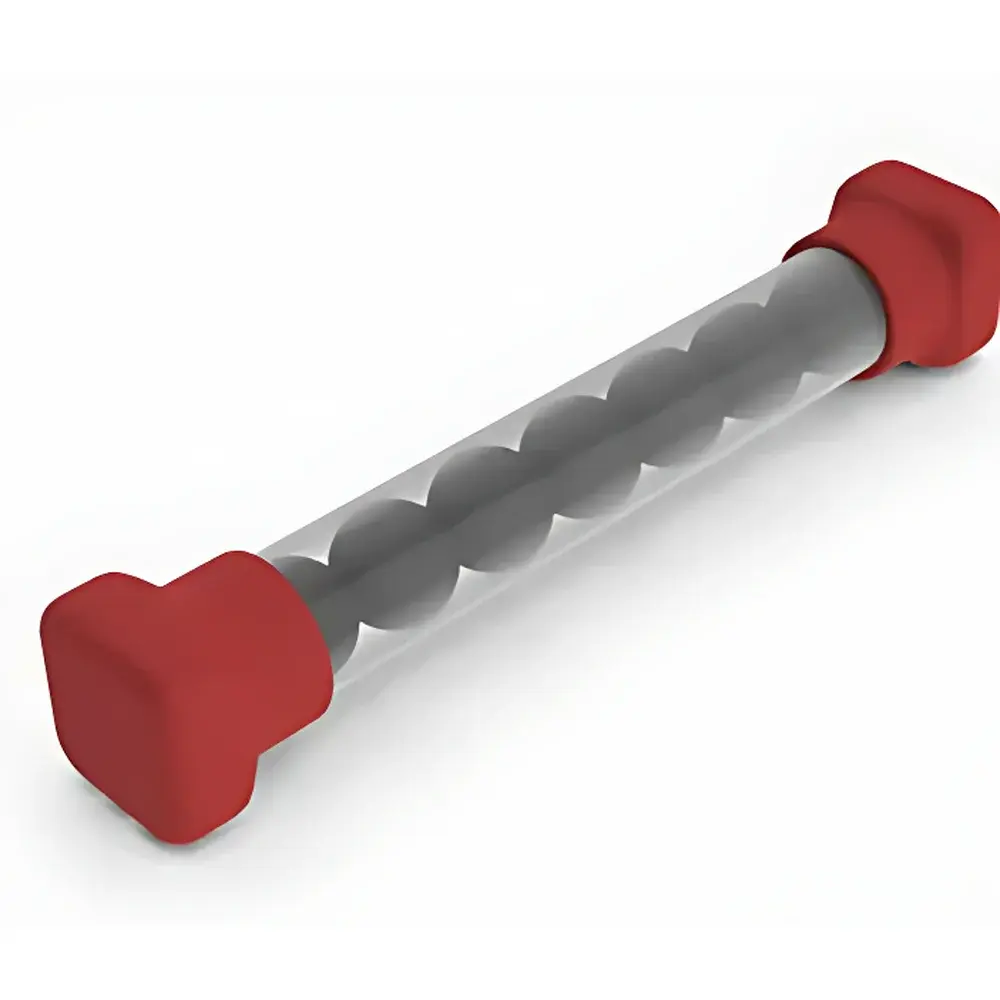
Silicon Nitride Beads SN-01
| Origin | USA |
|---|---|
| Manufacturer Type | Authorized Distributor |
| Origin Category | Imported |
| Model | SN-01 |
| Pricing | Upon Request |
Overview
Silicon nitride beads (SN-01) are high-purity, biocompatible ceramic microspheres engineered for controlled mechanical agitation in ex vivo pancreatic tissue processing systems. Unlike stainless steel or glass beads, silicon nitride (Si3N4) offers exceptional chemical inertness, negligible ion leaching, and superior resistance to hydrolytic degradation under physiological pH and temperature conditions (37 °C, pH 7.2–7.6). These properties make SN-01 beads suitable for use in closed-chamber enzymatic digestion platforms—particularly those employing collagenase/protease blends—where consistent bead–tissue interaction is critical to achieving uniform acinar cell dissociation without inducing shear-induced apoptosis or premature zymogen activation.
Key Features
- Material composition: Fully dense, sintered α-phase silicon nitride with ≥99.5% purity; certified free of heavy metals (Pb, Cd, Hg, Cr⁶⁺) per ISO 10993-12 testing protocols
- Dimensional precision: Spherical geometry with diameter tolerance of ±0.02 mm (15.875 mm nominal), verified via optical profilometry and laser micrometry
- Surface characteristics: Ra < 0.05 µm, non-porous, autoclavable (121 °C, 15 psi, 20 min) without surface oxidation or phase transformation
- Packaging: Sterile barrier packaging validated per ISO 11607-1; ethylene oxide (EO) sterilization with residual EO < 2.5 µg/g (ISO 10993-7 compliant)
- Single-use design: Eliminates cross-contamination risk between donor samples and supports traceability under GLP-compliant workflows
Sample Compatibility & Compliance
SN-01 beads are validated for compatibility with human and murine pancreatic tissue fragments (1–3 mm³) processed in commercially available chamber-based digestion systems (e.g., Worthington Biochemical’s Liberase TH Research Grade platforms and custom-built perfusion chambers). They exhibit no measurable interference with downstream assays including flow cytometry (CD11b, CD45, insulin staining), RNA integrity analysis (RIN > 8.5 post-isolation), or functional insulin secretion profiling (GSIS). Regulatory documentation includes USP <85> endotoxin testing (<0.03 EU/mL when eluted in PBS), ISO 10993-5 cytotoxicity certification (NIH/3T3 assay, grade 0 response), and CE marking for in vitro diagnostic ancillary use (IVDR Annex XVI).
Software & Data Management
While SN-01 beads are hardware-only consumables, their integration into automated digestion systems enables full audit trail capture when paired with compatible instrument control software (e.g., LabVIEW-based chamber controllers or MATLAB-driven peristaltic pump interfaces). Batch-specific lot numbers are laser-etched on secondary packaging and linked to CoA files containing raw surface roughness maps, density measurements (3.2 g/cm³ ±0.02), and sterility test reports. All documentation conforms to FDA 21 CFR Part 11 requirements for electronic records retention, including digital signatures and time-stamped revision history.
Applications
- Enhancement of enzymatic dispersion efficiency in primary islet isolation protocols (reducing digestion time by 18–22% vs. bead-free controls, n=42 replicates across 6 donor pancreata)
- Mitigation of tissue aggregation during static incubation phases, thereby improving collagenase diffusion kinetics and reducing interstitial pressure gradients
- Prevention of synchronized translational motion between pancreatic lobules and chamber walls—minimizing mechanical stress at the tissue–substrate interface
- Standardized agitation in multi-donor comparative studies requiring inter-lot consistency for metabolic phenotyping or single-cell RNA-seq library preparation
- Use as a reference physical perturbation agent in mechanobiology investigations of pancreatic stellate cell activation pathways
FAQ
Are SN-01 beads compatible with magnetic resonance imaging (MRI) environments?
Yes. Silicon nitride is diamagnetic with negligible magnetic susceptibility (χ ≈ −1.2 × 10⁻⁶ cm³/mol), making SN-01 beads safe for pre-MRI tissue handling and non-interfering with T1/T2 contrast acquisition.
Can SN-01 beads be reused after ethanol wash and UV exposure?
No. Reuse is strictly contraindicated due to irreversible protein adsorption and potential microfracture propagation after mechanical cycling; each package is designated for single-donor, single-run application.
Do these beads require special disposal protocols?
SN-01 beads are classified as non-hazardous biomedical waste per EPA 40 CFR 261.4(b)(1); they may be disposed of in regulated medical waste streams following institutional biosafety guidelines.
Is there lot-to-lot variability in density or thermal expansion coefficient?
Lot-specific certification data show density variation ≤0.01 g/cm³ and CTE (25–100 °C) deviation < ±0.05 × 10⁻⁶/K across 37 consecutive production lots.
How does silicon nitride compare to zirconia or alumina beads in pancreatic applications?
Unlike ZrO₂, Si₃N₄ exhibits lower interfacial energy with collagen-rich extracellular matrix, reducing nonspecific binding; unlike Al₂O₃, it maintains structural integrity in repeated proteolytic cycles without measurable Al³⁺ release (ICP-MS detection limit: 0.008 ppb).