
Single-Arm Drop Testing Machine
| Brand | OEM / Generic |
|---|---|
| Origin | Imported |
| Manufacturer Type | Authorized Distributor |
| Price | USD 1,700 (approx.) |
| Compliance | GB/T 4857.5, ISO 2248:1985, GB/T 4857.1, GB/T 4857.2, GB/T 4857.17, GB/T 4857.18 |
| Height Accuracy | ±2% or ±10 mm |
| Drop Angle Tolerance | ≤5° relative to horizontal base plate |
| Structure | Single-arm, dual-column |
| Actuation | Electric lifting, electromagnetic release, hydraulic cushioning |
Overview
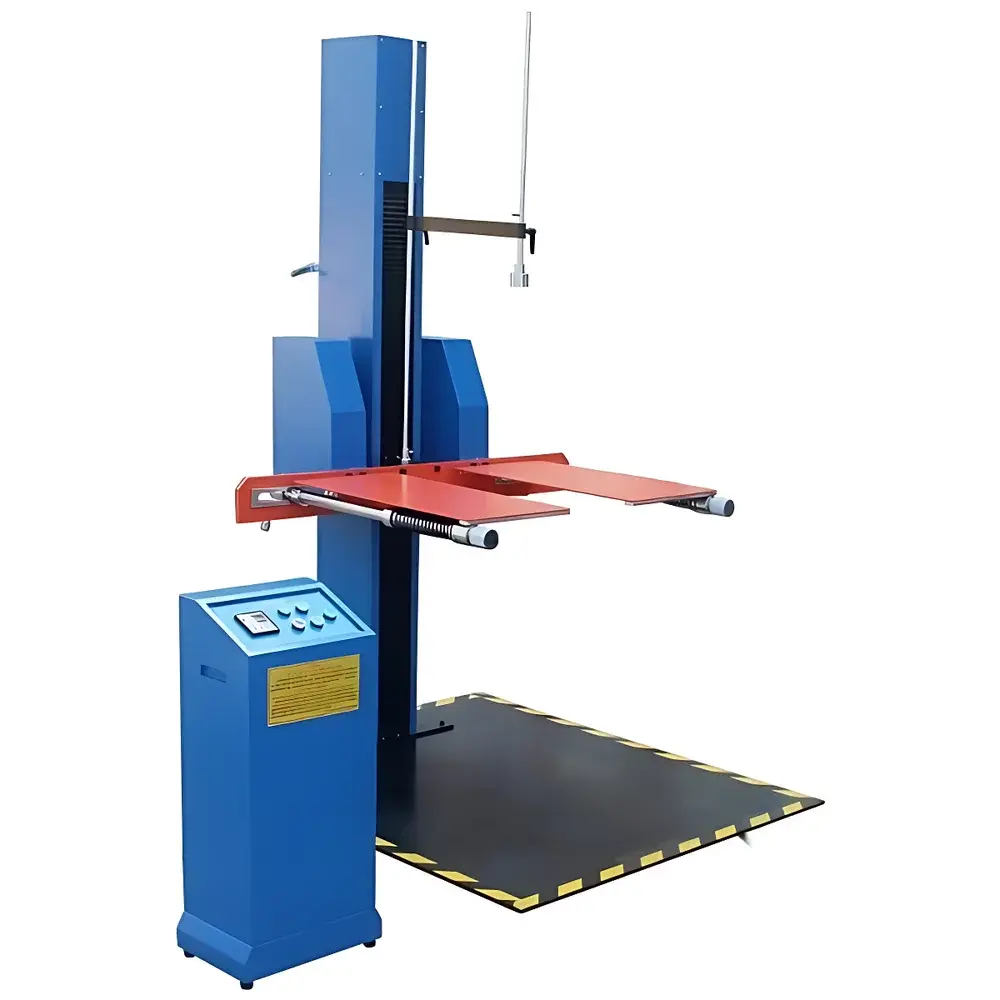
The Single-Arm Drop Testing Machine is a standardized mechanical impact tester engineered for evaluating the structural integrity and packaging robustness of finished goods under controlled vertical free-fall conditions. It operates on the principle of gravitational acceleration, enabling precise simulation of real-world shipping and handling impacts—specifically face, edge, and corner drops—as defined in international transport packaging standards. Designed for laboratory and quality assurance environments, this machine subjects packaged units to repeatable, traceable drop events from user-defined heights, generating objective data on shock resistance, cushioning performance, and package failure modes. Its core function supports iterative packaging optimization aligned with regulatory and industry requirements for distribution integrity.
Key Features
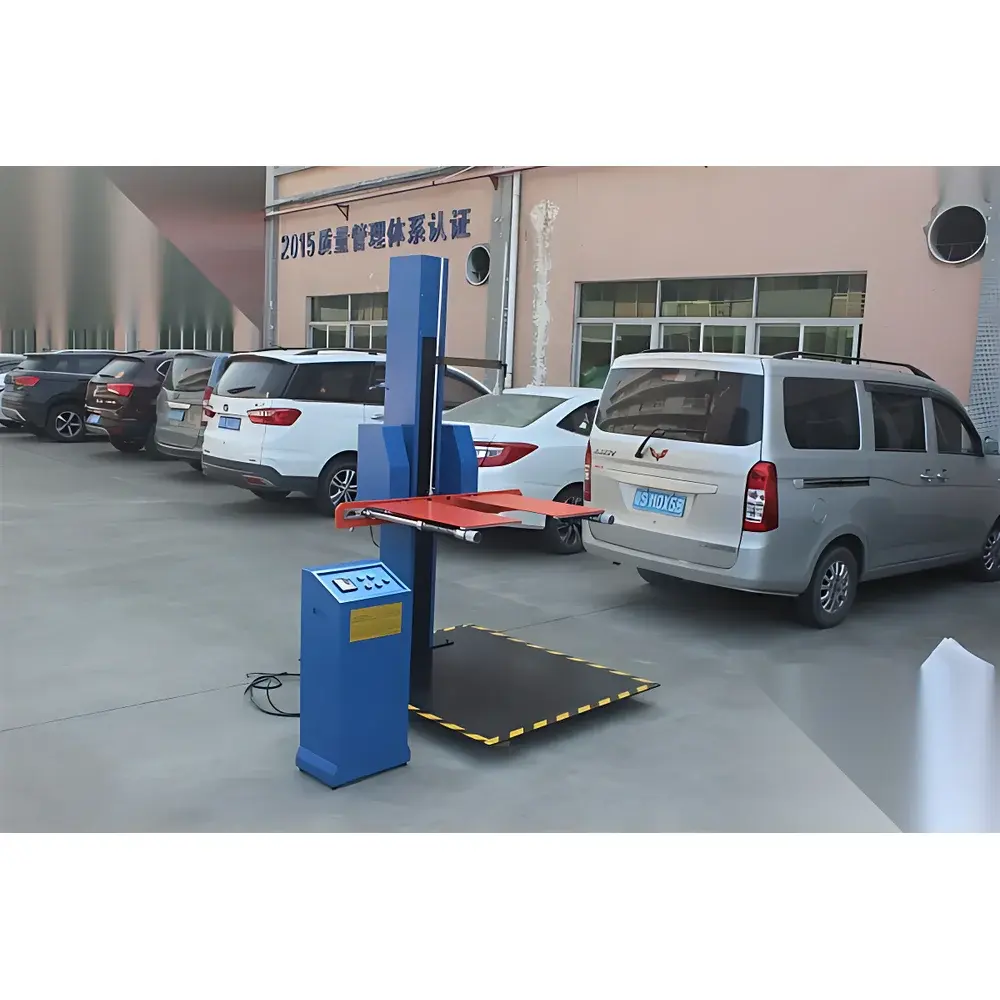
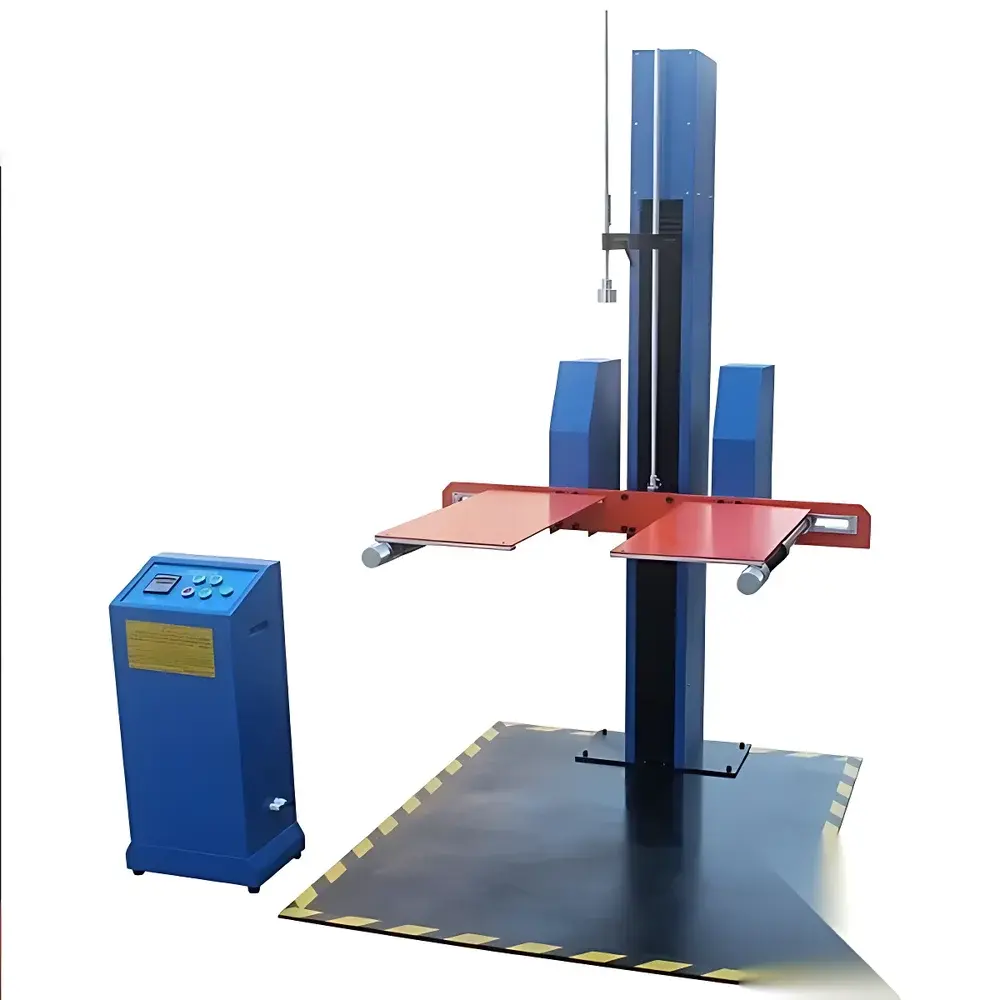
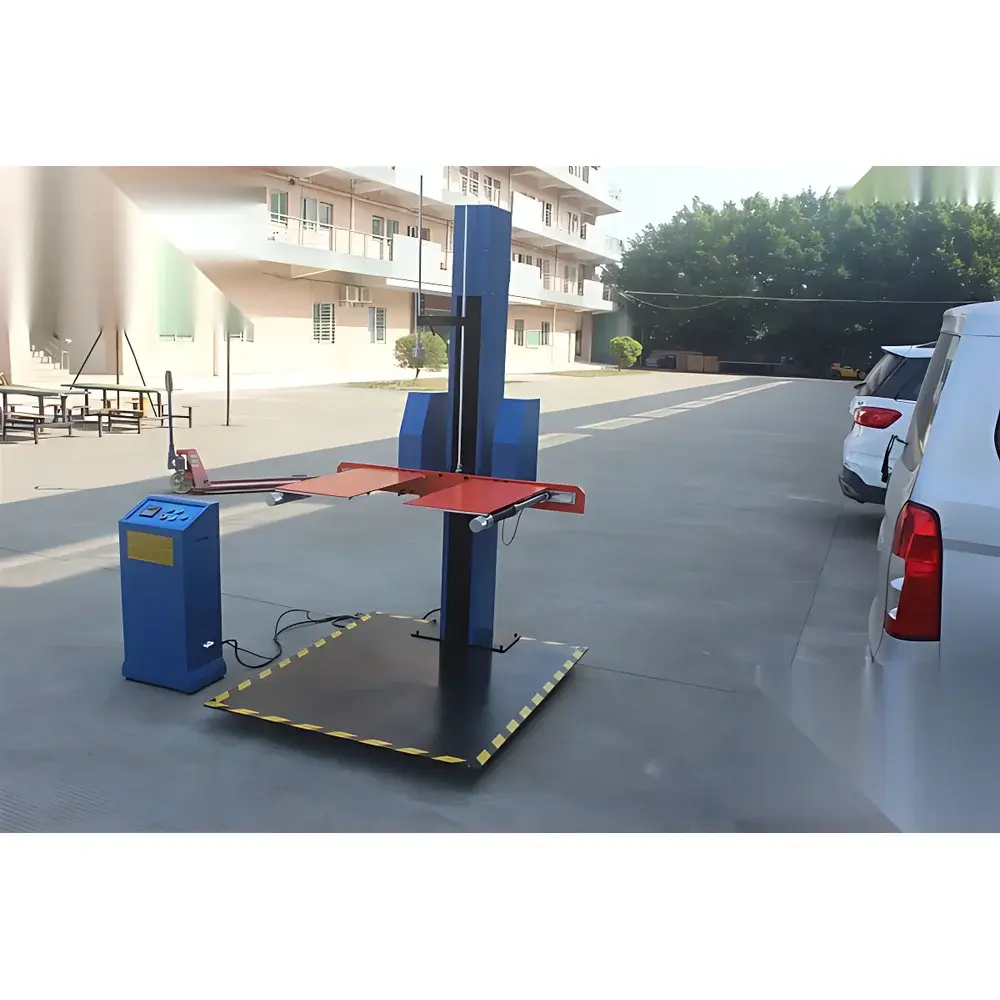
- Single-arm, dual-column rigid frame architecture ensures stable alignment and minimal lateral deflection during drop execution.
- Electric motor-driven vertical lift system with programmable height positioning, coupled with high-resolution rotary encoder feedback for closed-loop height tracking.
- Digital height display with real-time readout and preset capability; height repeatability maintained within ±2% or ±10 mm (whichever is greater) across the operational range.
- Electromagnetic release mechanism guarantees consistent, zero-delay drop initiation without mechanical hysteresis or pre-release vibration.
- Hydraulic damping system integrated into the base structure absorbs residual kinetic energy post-impact, reducing mechanical stress on load-bearing components and extending service life.
- Adjustable product support platform accommodates variable package dimensions; single-arm configuration allows unobstructed loading/unloading and rapid orientation changes for face/edge/corner impact testing.
- Drop surface angle deviation strictly controlled to ≤5° relative to the horizontal reference plane, ensuring compliance with angular tolerance requirements in ISO 2248 and GB/T 4857.5.
Sample Compatibility & Compliance
This drop tester accommodates a broad range of packaged products—including consumer electronics, medical devices, pharmaceutical secondary packaging, e-commerce parcels, and industrial components—provided dimensional and mass constraints fall within standard test chamber limits (typical max load: 100 kg; max footprint: 800 × 800 mm). It fully conforms to the procedural and metrological requirements of GB/T 4857.5–2008 (“Packaging — Basic tests for transport packages — Part 5: Vertical impact drop test”) and its harmonized international counterpart, ISO 2248:1985 (“Packaging — Complete, filled transport packages — Vertical impact drop test”). Supporting standards referenced include GB/T 4857.1 (marking conventions), GB/T 4857.2 (conditioning protocols), and GB/T 4857.17/18 (test plan formulation and quantitative parameter selection). The machine’s design facilitates audit-ready documentation for GLP and GMP-aligned quality systems.
Software & Data Management
While the base configuration operates via standalone electromechanical controls, optional digital interface modules enable integration with external PCs for automated test logging. Height setpoints, drop count, orientation mode (face/edge/corner), and timestamped event records can be exported in CSV format. For regulated environments, optional firmware upgrades support 21 CFR Part 11-compliant electronic signatures, audit trails, and user access control—ensuring traceability and data integrity throughout the testing lifecycle. All firmware and calibration parameters are stored in non-volatile memory to prevent configuration drift between sessions.
Applications
- Validation of corrugated box compression strength and edge crush resistance under dynamic impact.
- Evaluation of foam, molded pulp, and air-filled cushioning materials’ energy absorption characteristics.
- Verification of closure integrity for retail-ready packaging subjected to warehouse drop scenarios.
- Pre-shipment qualification testing for medical device kits requiring ISO 11607–2 packaging validation inputs.
- Root-cause analysis of field damage reports by replicating suspected impact vectors in controlled conditions.
- Supporting ISTA 1A, 1B, and 2A test protocols through manual height and orientation configuration.
FAQ
What standards does this machine directly support?
It is mechanically and procedurally compliant with GB/T 4857.5–2008 and ISO 2248:1985, with auxiliary support for GB/T 4857.1, GB/T 4857.2, GB/T 4857.17, and GB/T 4857.18.
Is calibration certification included?
Factory calibration is performed prior to shipment; NIST-traceable calibration certificates are available as an optional add-on with annual recalibration services.
Can the machine perform sequential multi-drop tests without manual reset?
Yes—electric auto-reset functionality returns the arm to the preset height after each drop, enabling unattended execution of multi-cycle test sequences.
What maintenance is required for long-term accuracy?
Routine inspection of hydraulic dampers, encoder coupling integrity, and electromagnetic release coil resistance is recommended quarterly; full mechanical verification annually per ISO/IEC 17025 guidelines.
Is operator safety interlocked?
Yes—the machine incorporates light-curtain sensing and emergency stop circuitry compliant with IEC 61508 SIL2, preventing actuation when the test zone is occupied.



