
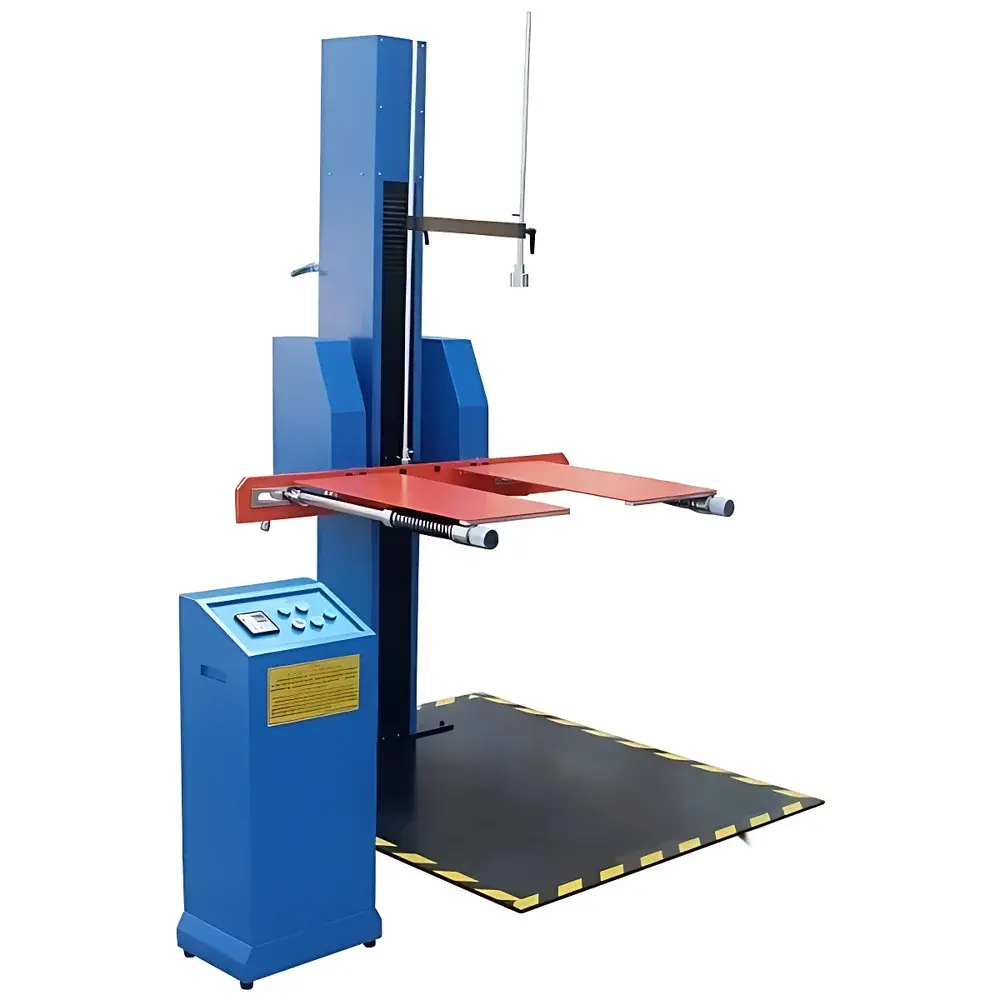
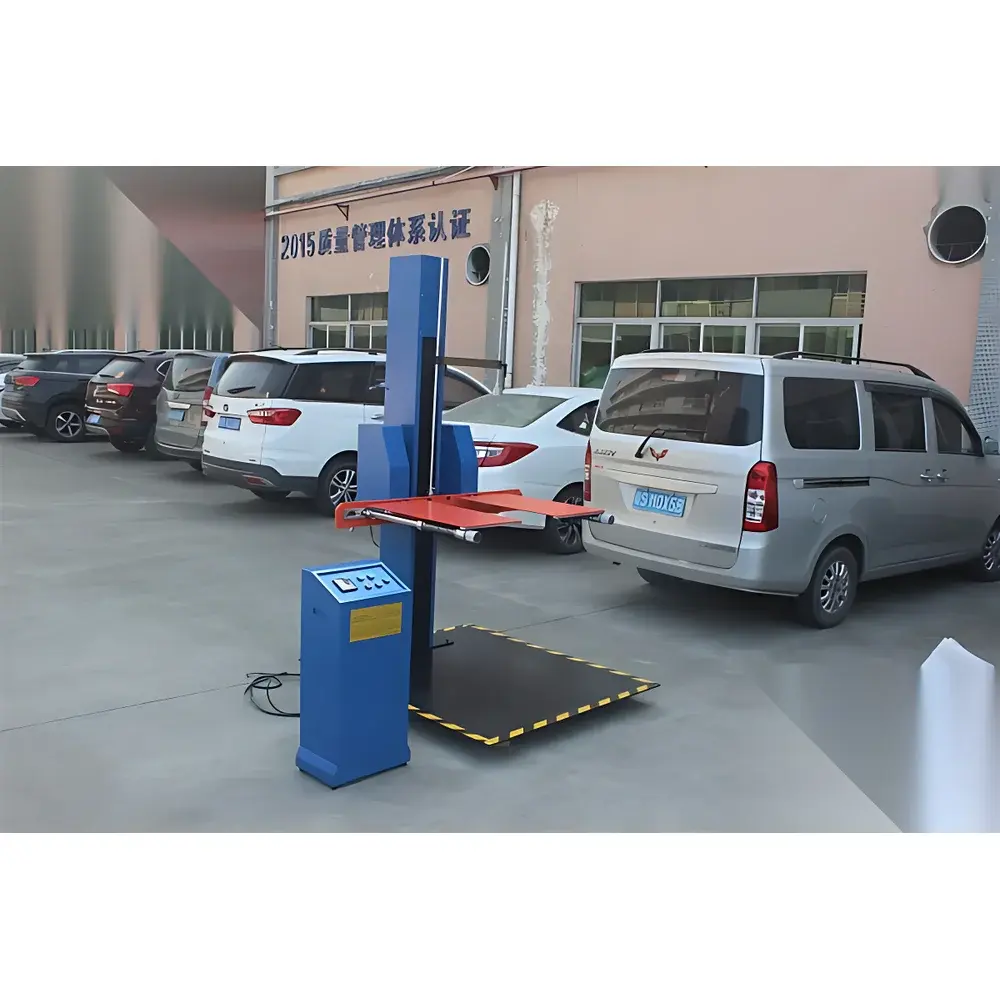
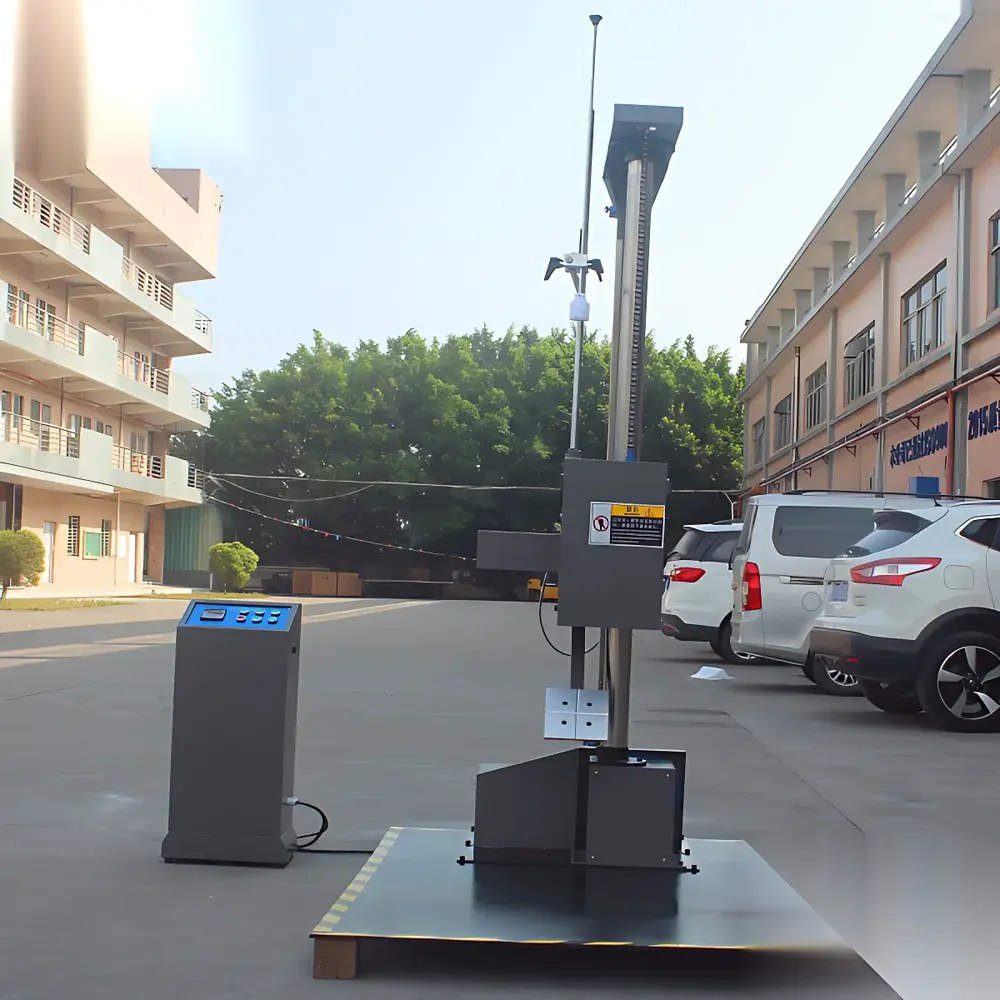
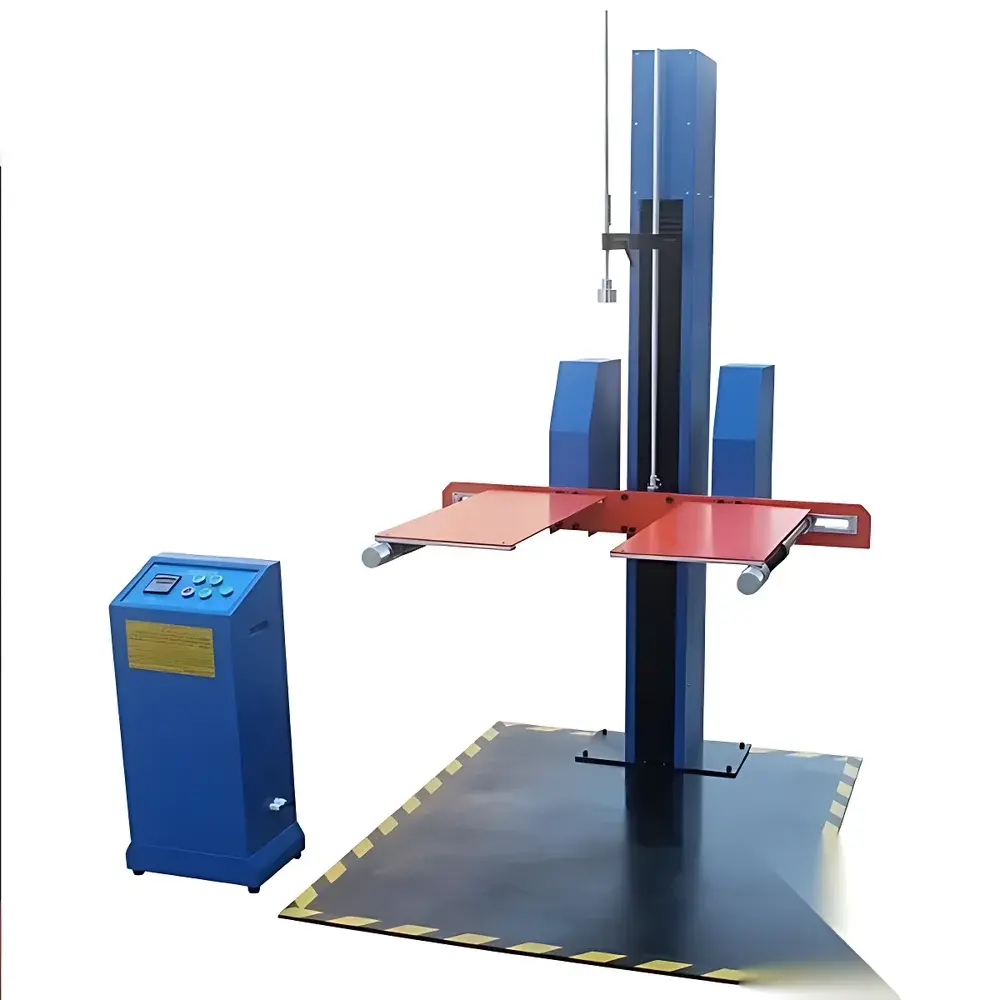
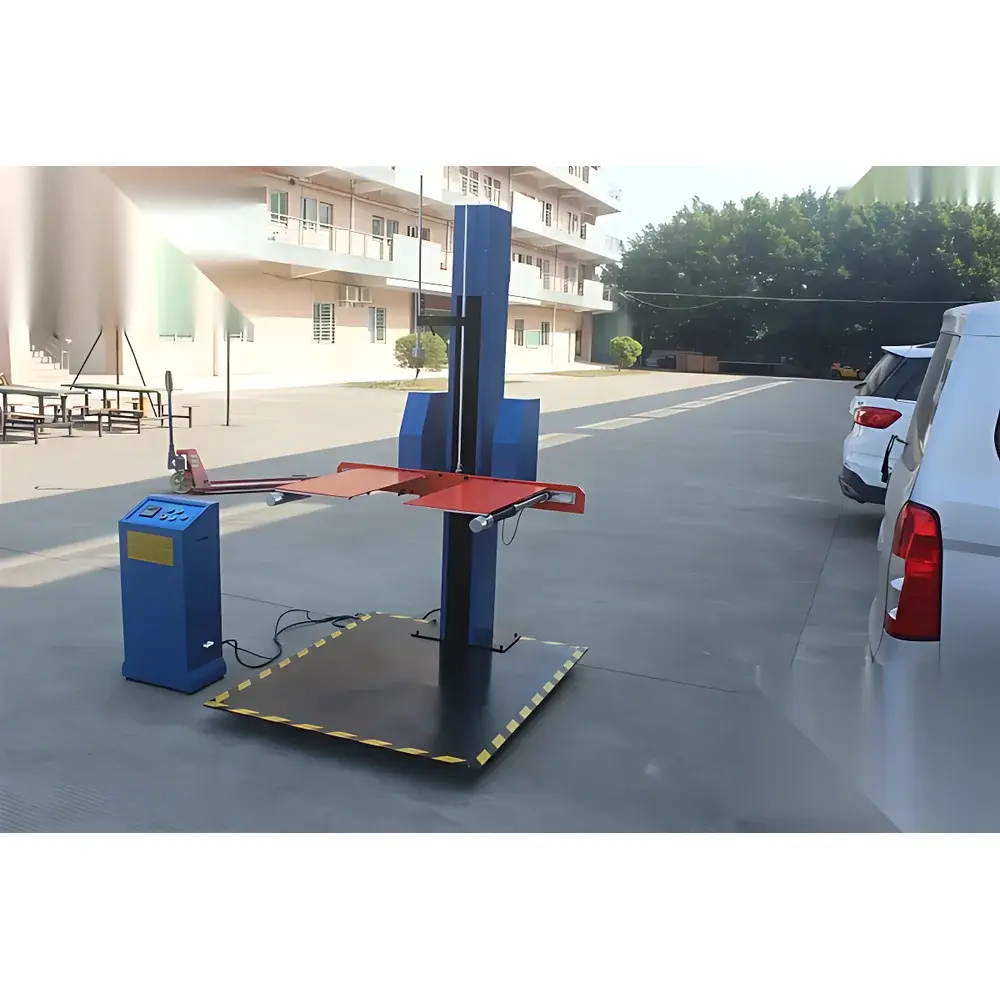
Single-Wing Drop Tester
| Brand | Other Brands |
|---|---|
| Origin | Imported |
| Manufacturer Type | General Distributor |
| Price | USD 1,700 (approx.) |
| Height Accuracy | ±2% or ±10 mm |
| Drop Angle Tolerance | ≤5° |
| Frame Material | Precision-Ground Chrome-Plated Steel Columns |
| Drive System | Electric Lift & Release with Hydraulic Damping |
| Drop Modes | Face, Edge, Corner |
| Height Display | Digital Counter with Rotary Encoder Feedback |
| Compliance | Designed per ISO 2248, ASTM D5276, GB/T 4857.5 |
Overview
The Single-Wing Drop Tester is an electromechanical impact testing instrument engineered for standardized evaluation of packaging integrity under controlled free-fall conditions. It operates on the principle of gravitational acceleration to simulate real-world handling hazards—specifically, uncontrolled drops during transportation and logistics where packages may impact surfaces on their faces, edges, or corners. Unlike dual-arm configurations, the single-wing design features a cantilevered support arm mounted on dual precision-ground, chrome-plated steel columns, enabling unobstructed placement and release of test specimens. The system delivers repeatable, operator-independent drop events by eliminating manual lifting and relying on programmable electric lift, encoder-synchronized height positioning, and solenoid-actuated release. Its mechanical architecture incorporates hydraulic damping to absorb residual kinetic energy after impact, thereby reducing structural fatigue, minimizing vibration transmission to adjacent equipment, and extending service life without compromising drop fidelity.
Key Features
- Single-arm, dual-column rigid frame constructed from high-tensile steel, precision-turned and electroplated for corrosion resistance and dimensional stability.
- Electric motor-driven vertical lift mechanism with integrated rotary encoder for closed-loop height tracking—ensuring positional repeatability within ±2% or ±10 mm of setpoint.
- Electromagnetic release system synchronized with height control to guarantee zero-delay, friction-free detachment of the test specimen from the support arm.
- Hydraulic shock absorbers installed at base level to dissipate post-impact energy, enhancing machine longevity and operational safety while maintaining floor-level stability.
- Digital height display with real-time feedback; user-configurable preset heights accessible via front-panel interface.
- Adjustable orientation fixture enabling precise alignment of face, edge, or corner contact geometry relative to the impact surface—angular deviation limited to ≤5° per test setup.
Sample Compatibility & Compliance
The tester accommodates packaged units up to 100 kg (customizable) with footprint dimensions compatible with standard shipping cartons, palletized loads, and consumer product bundles. Specimen mounting utilizes non-intrusive clamping or cradling fixtures to preserve original package configuration. The instrument is designed and validated in accordance with international packaging test standards including ISO 2248 (Packaging—Complete, filled transport packages—Vertical impact test by dropping), ASTM D5276 (Standard Test Method for Drop Testing of Loaded Containers by Free Fall), and China’s GB/T 4857.5 (Packaging—Basic Tests for Transport Packages—Part 5: Vertical Impact Test). While not certified as GLP/GMP-compliant hardware per se, its traceable height control, audit-ready operation logs (when integrated with optional data acquisition modules), and mechanical reproducibility support compliance workflows required under FDA 21 CFR Part 11–aligned quality systems.
Software & Data Management
The base unit operates via embedded microcontroller logic with no onboard software stack; however, it supports analog/digital I/O interfaces (0–10 V, RS-232, or optional USB) for integration into laboratory information management systems (LIMS) or custom test automation platforms. When paired with third-party data acquisition software (e.g., LabVIEW, MATLAB, or Python-based DAQ frameworks), users can log timestamped drop events, correlate height settings with pass/fail visual inspection outcomes, and generate statistical summaries of cumulative impact performance across lot batches. All height presets, actuation timestamps, and encoder-derived position traces are exportable as CSV for archival, trending, and root-cause analysis in packaging validation reports.
Applications
- Validation of primary and secondary packaging designs for e-commerce fulfillment, pharmaceutical cold-chain shippers, and electronics logistics.
- Comparative assessment of cushioning materials (foam, molded pulp, air pillows) under standardized drop severity profiles.
- Design verification testing prior to ISTA 1A, 1B, or 2A certification submissions.
- Root-cause investigation of field damage patterns—mapping observed failure modes (e.g., seam rupture, corner crush, lid separation) to specific drop orientations and heights.
- Supplier qualification audits requiring objective, repeatable evidence of packaging robustness beyond subjective visual checks.
FAQ
What standards does this drop tester comply with?
It is mechanically engineered to meet the physical test requirements of ISO 2248, ASTM D5276, and GB/T 4857.5. Calibration and validation documentation must be performed by the end user or accredited third party to assert formal conformance.
Can the tester handle irregularly shaped packages?
Yes—its open single-arm architecture and adjustable support fixtures allow secure mounting of asymmetrical, oversized, or protruding packages, provided center-of-gravity remains within the stability envelope defined by the support arm’s moment capacity.
Is height calibration traceable to national metrology institutes?
The rotary encoder and digital display system permit external verification using Class II tape measures or laser distance meters traceable to NIST or BIPM standards; full calibration certificates require on-site service by qualified metrology providers.
Does the machine include impact force measurement?
No—this is a kinematic drop tester, not a dynamic force analyzer. Impact energy is derived from mass × gravity × height; direct force or acceleration profiling requires integration with external piezoelectric load cells or accelerometers.
What maintenance intervals are recommended?
Monthly visual inspection of chain tension, hydraulic damper fluid level, and encoder coupling integrity; annual lubrication of lift gear train and verification of release solenoid response time per manufacturer technical bulletin.



