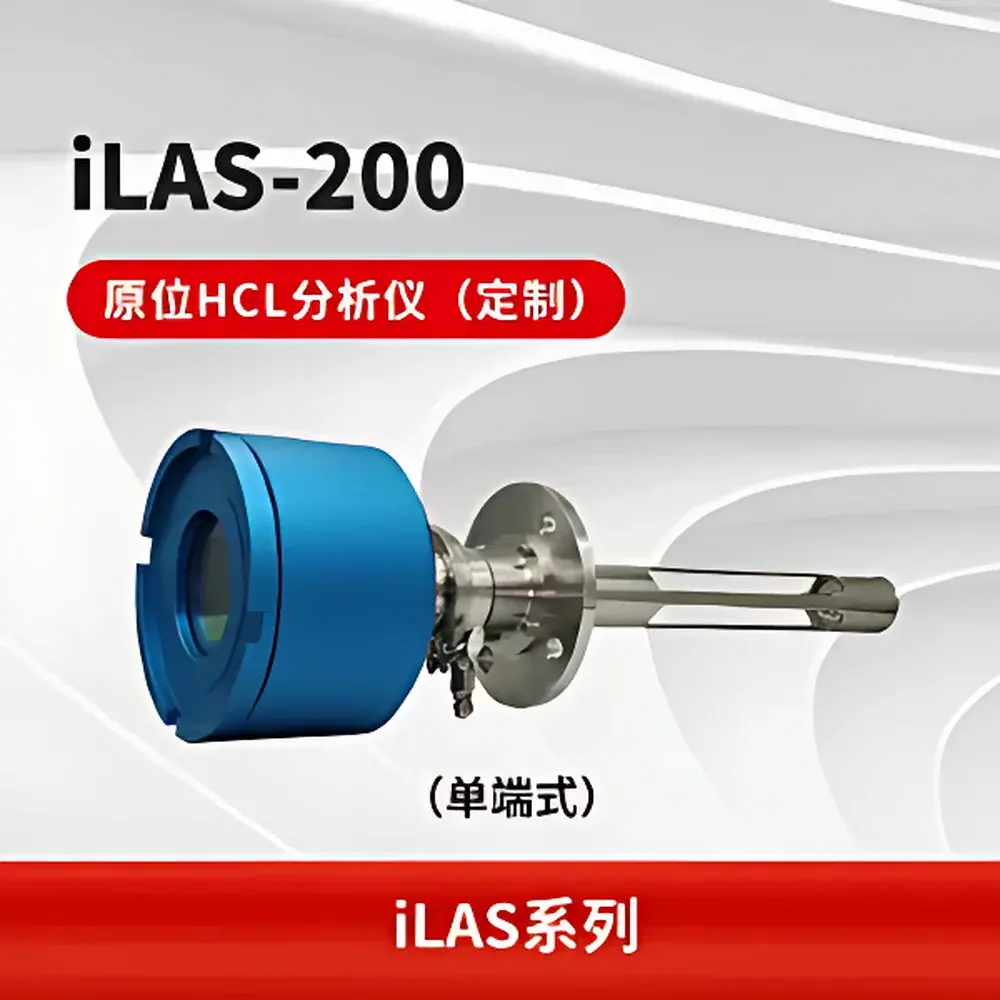
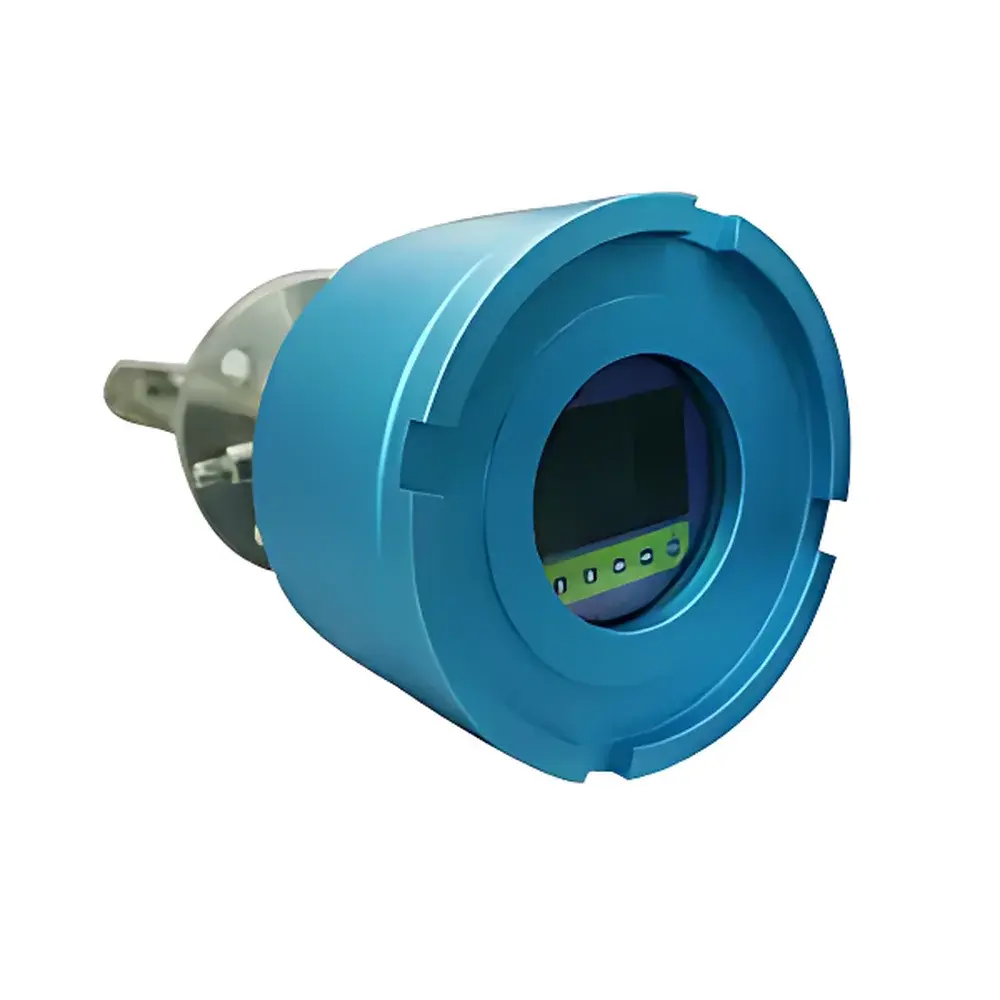
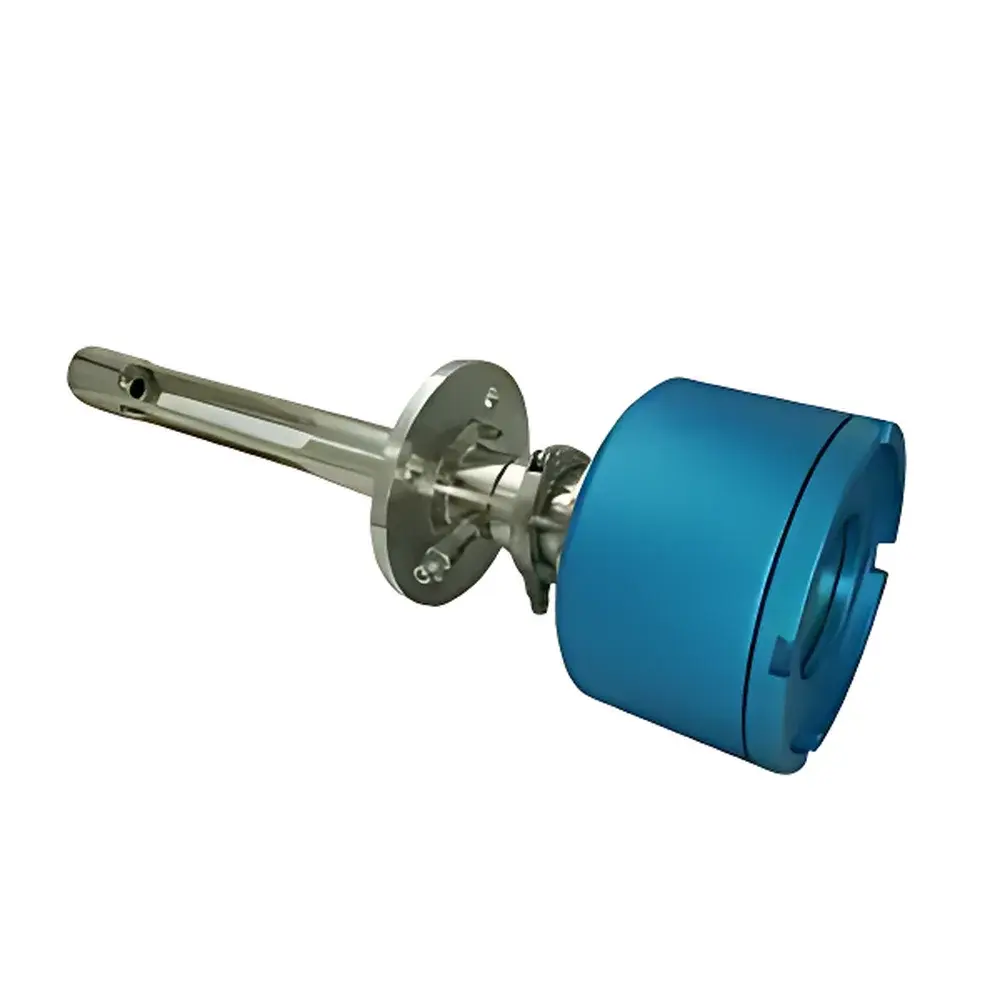
Sinoptic iLAS-200 In-Situ Tunable Diode Laser Absorption Spectroscopy (TDLAS) Gas Analyzer
| Brand | Sinoptic |
|---|---|
| Origin | Hubei, China |
| Manufacturer Type | OEM Manufacturer |
| Country of Origin | China |
| Model | iLAS-200 |
| Pricing | Upon Request |
Overview
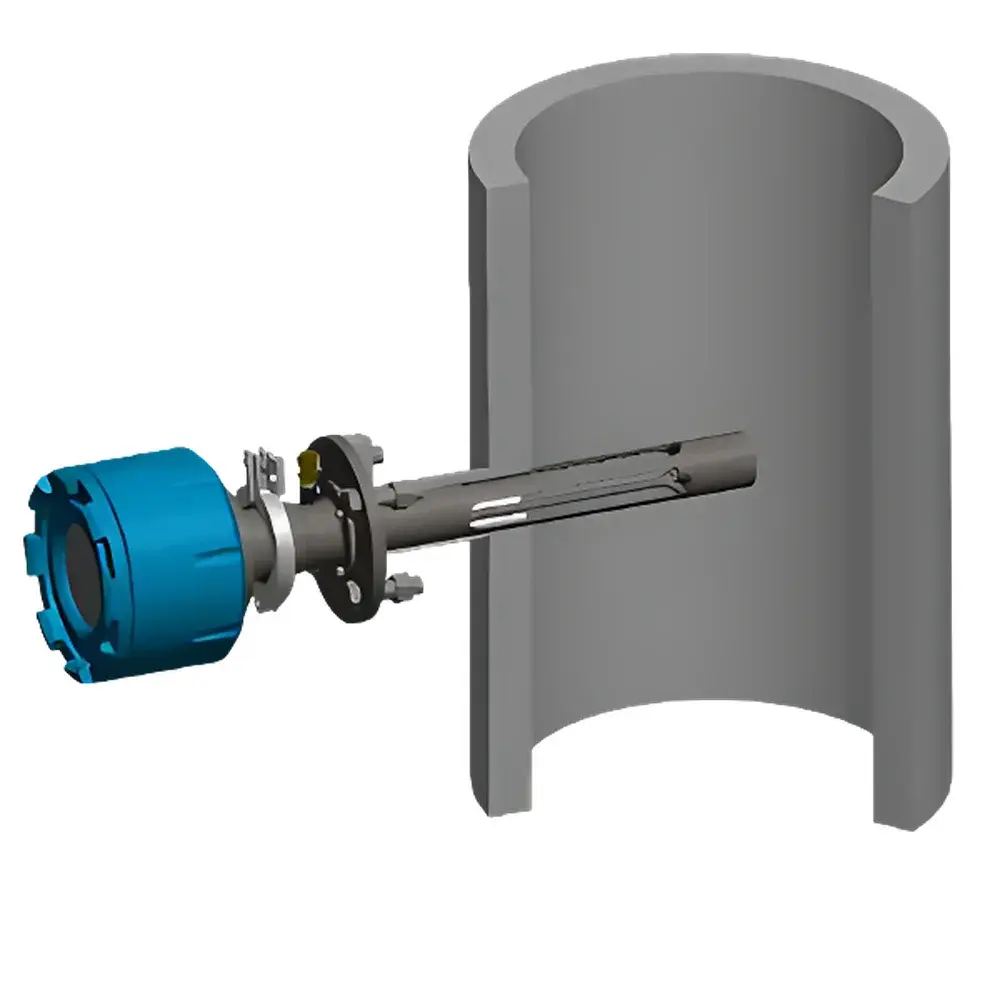
The Sinoptic iLAS-200 is an in-situ, single-ended tunable diode laser absorption spectroscopy (TDLAS) gas analyzer engineered for real-time, non-intrusive concentration measurement of key process gases in demanding industrial environments. Unlike extractive systems requiring sample conditioning, the iLAS-200 performs direct optical measurement across the process stream—eliminating transport delay, condensation loss, catalytic conversion, and filter clogging risks. Its core principle relies on wavelength-modulated absorption spectroscopy: a narrow-linewidth distributed feedback (DFB) laser is precisely tuned across a ro-vibrational absorption line of the target gas species (e.g., CO at 1567 nm, NH₃ at 1531 nm, O₂ at 760 nm). The resulting attenuation—governed by the Beer–Lambert law—is quantified using second-harmonic detection (2f-WMS), delivering high selectivity and immunity to broadband interference from particulates, water vapor, or other molecular absorbers. Designed for continuous operation in flue ducts, combustion chambers, and reactor headers, the iLAS-200 supports stable measurement under temperatures up to 200 °C, pressures up to 5 bar(g), and dust loadings exceeding 10 g/Nm³—without optical window fouling mitigation hardware.
Key Features
- In-situ single-ended configuration: eliminates alignment complexity associated with dual-path (transmission) TDLAS; only one optical interface required per measurement point
- “Single-line spectroscopy” architecture: targets isolated, isolated absorption transitions to ensure zero cross-sensitivity from background gases (e.g., CO measurement unaffected by CO₂, H₂O, or NO)
- No sample extraction or pre-treatment: avoids dilution, adsorption, or chemical alteration—preserving true in-process concentration dynamics
- Sub-second response time (T₉₀ < 1 s): enables closed-loop combustion control and rapid emission event detection
- Modular laser/detector head with hermetically sealed optics: rated IP66, compatible with CIP washdown and explosive atmospheres (optional ATEX/IECEx certification)
- Embedded temperature and pressure compensation: corrects for thermodynamic broadening and density effects using integrated Pt100 and piezoresistive sensors
Sample Compatibility & Compliance
The iLAS-200 is validated for quantitative analysis of O₂, CO, NH₃, CO₂, CH₄, H₂O, HCl, and HF—with each unit configured for 1–2 analytes to maximize signal-to-noise ratio and long-term stability. It meets functional safety requirements per IEC 61508 SIL 2 for use in safety instrumented systems (SIS) when deployed with redundant controllers. Data integrity complies with FDA 21 CFR Part 11 through optional audit-trail-enabled firmware, including electronic signatures, user access tiers, and immutable raw spectral logging. Calibration traceability follows ISO/IEC 17025 via NIST-traceable reference gas certificates (certified to ±1% of reading for CO at 10–100 ppm range). The analyzer satisfies EN 15267-3 for automated emission monitoring systems (CEMS) and supports EPA Method 3A / EN 14181 QAL1/QAL2 validation protocols.
Software & Data Management
The embedded Linux-based firmware provides web-accessible configuration via HTTPS (TLS 1.2), supporting Modbus TCP, Profibus DP, and OPC UA (UA PubSub over MQTT) for seamless integration into DCS/SCADA platforms. Real-time spectral visualization, baseline drift diagnostics, and automatic zero/span verification logs are accessible through the browser interface. Raw absorbance spectra (16-bit, 1024-point) and processed concentration time-series (1 Hz resolution) are exportable in CSV or HDF5 format. Optional cloud gateway enables remote health monitoring, predictive maintenance alerts (e.g., laser output power decay >5% over 30 days), and over-the-air firmware updates compliant with IEC 62443-4-2 security requirements.
Applications
- Steelmaking: Blast furnace top-gas O₂/CO ratio monitoring for safety interlock; basic oxygen furnace (BOF) CO recovery optimization
- Power generation: Coal-fired boiler flue gas NH₃ slip control in SCR systems; HCl/HF monitoring for corrosion risk assessment
- Cement kilns: In-situ CO measurement in calciner and preheater for combustion efficiency tuning
- Chemical reactors: Real-time O₂ concentration tracking in exothermic oxidation processes (e.g., ethylene oxide synthesis)
- Waste incineration: Continuous HCl and HF emissions compliance reporting per EU Directive 2010/75/EU (IED)
- Hydrogen production: Trace CO detection (<1 ppm) in PEM electrolyzer feed gas to prevent catalyst poisoning
FAQ
Does the iLAS-200 require periodic calibration with certified gases?
Yes—initial factory calibration is performed with NIST-traceable standards. Field verification is recommended every 3–6 months depending on operating conditions; full recalibration is required after optical head replacement or laser module swap.
Can it measure multiple gases simultaneously?
No—each iLAS-200 unit is configured for 1 or 2 target gases during manufacturing to optimize laser wavelength selection, detector bandwidth, and signal processing algorithms. Multi-gas capability requires parallel analyzers or system-level integration.
Is the optical path susceptible to fouling in high-dust applications?
The single-ended design uses forward-scatter compensation and active purge air (0.5–1.0 L/min, instrument air) to maintain optical interface clarity. No wiper or ultrasonic cleaning is needed under typical cement or metallurgical dust loads.
What is the minimum detectable concentration for HCl at 1750 nm?
At standard path length (1–2 m) and 1-s averaging, the limit of detection (LOD) is 0.2 ppmv with a precision of ±0.5 ppmv (1σ) over 24 hours.
Does it support hazardous area installation?
Yes—ATEX II 2G Ex db IIB T4 Gb and IECEx DBTA20.0029X certifications are available for Zone 1 installations; explosion-proof housing and intrinsically safe laser driver comply with EN 60079-0/11.