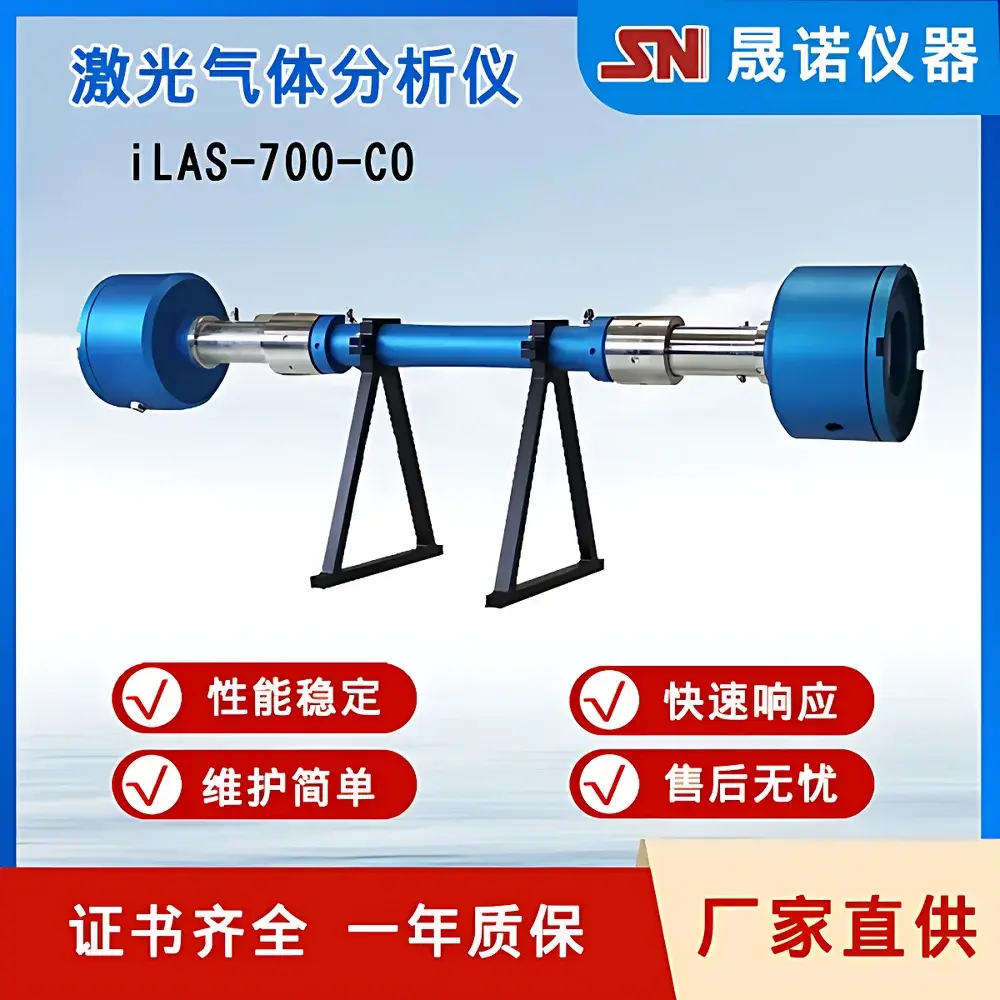
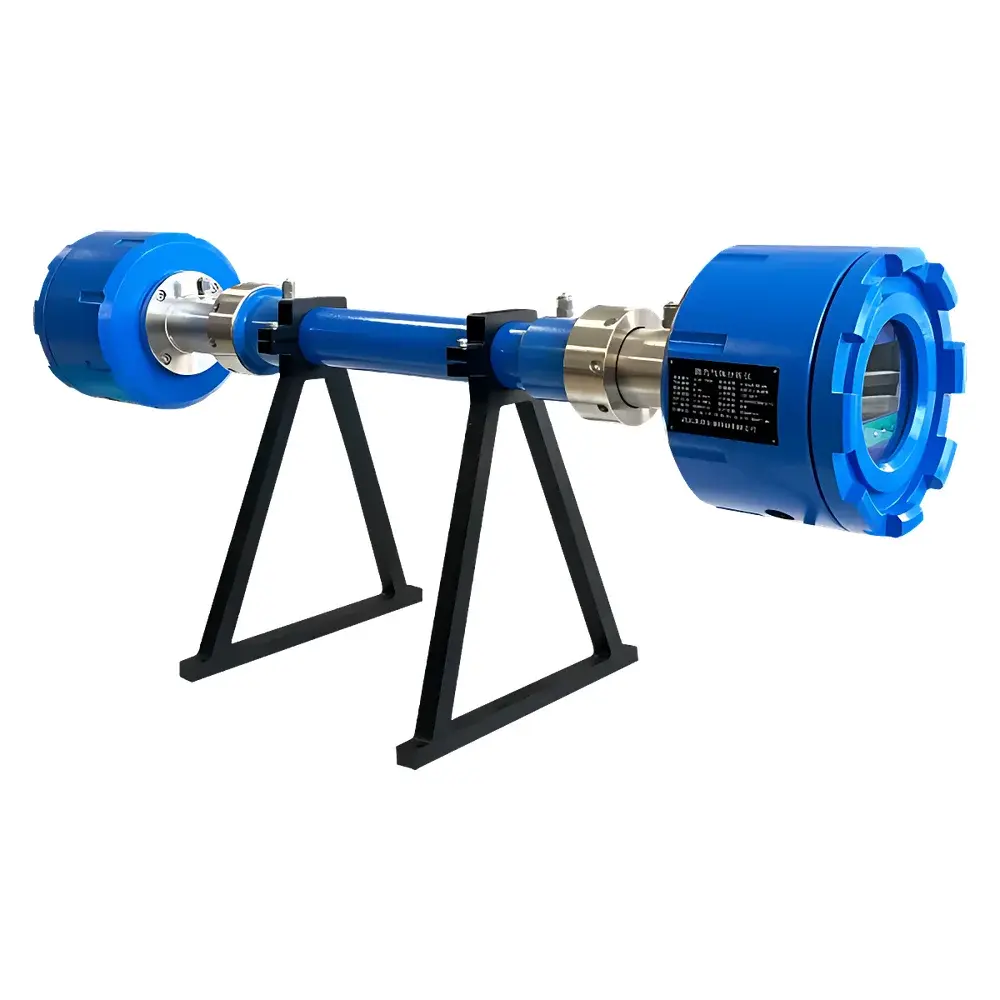
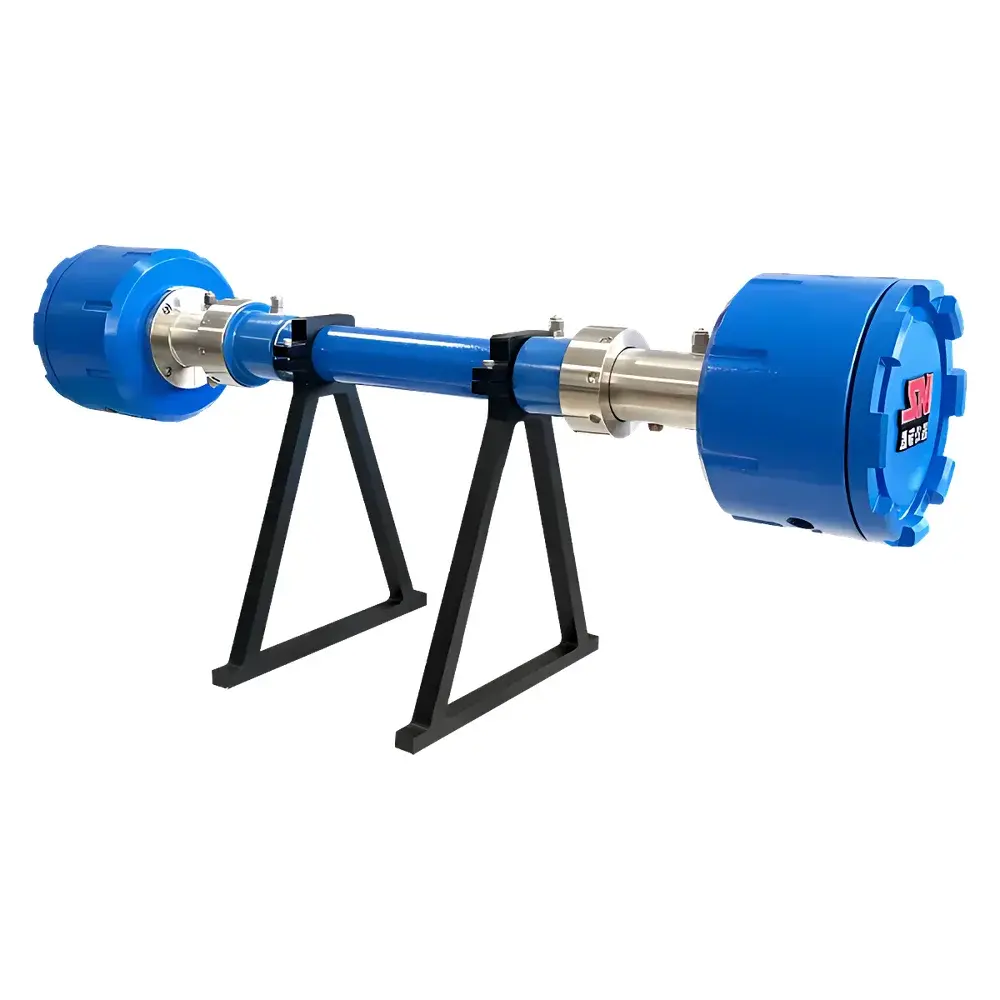
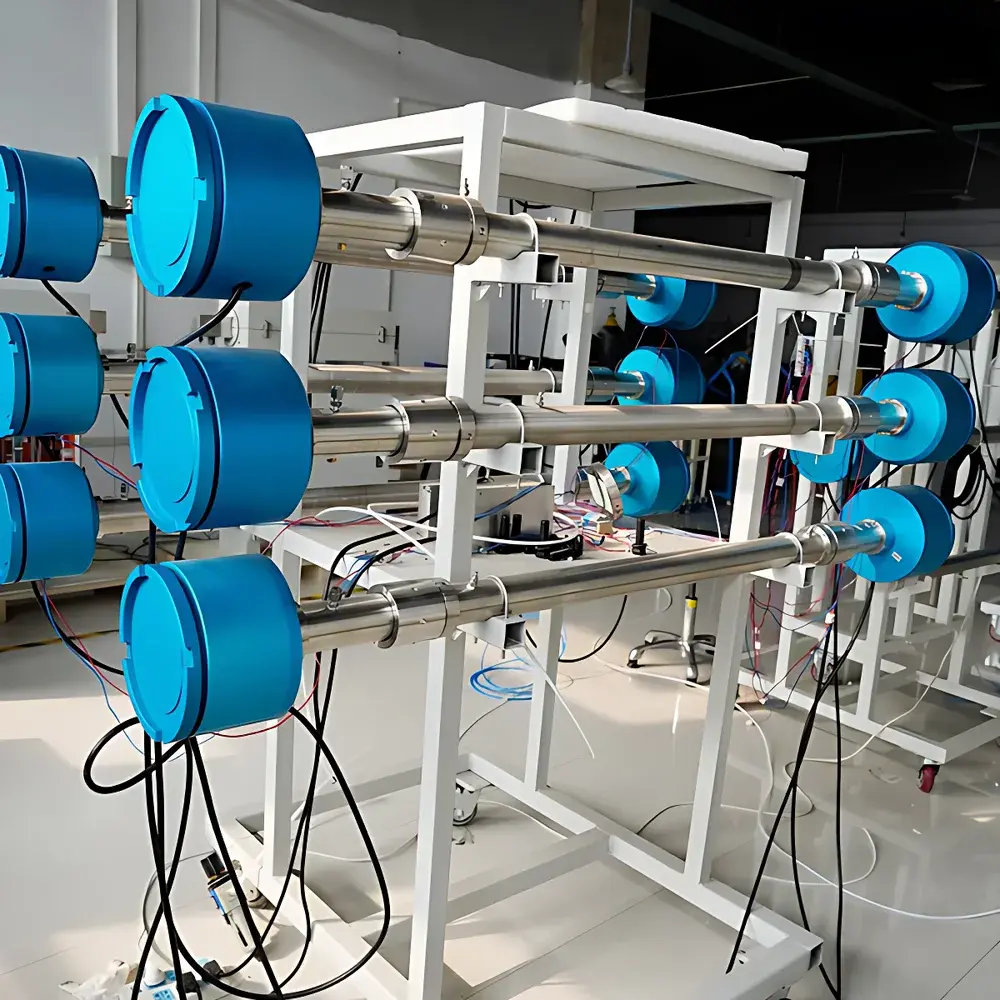
Sinoptic iLAS Series In-Situ Cross-Stack Laser Gas Analyzer
| Brand | Sinoptic |
|---|---|
| Model | iLAS |
| Type | In-Situ Cross-Beam Tunable Diode Laser Absorption Spectroscopy (TDLAS) Gas Analyzer |
| Origin | Hubei, China |
| Manufacturer | Sinoptic Instrument Co., Ltd. |
| Explosion Protection | Exd II CT6 |
| IP Rating | IP66 |
| Optical Path Length | ≤15 m |
| Sample Gas Temperature | ≤800 °C |
| Ambient Temperature | −30 to 55 °C |
| Humidity | ≤90% RH (non-condensing) |
| Power Supply | AC 220 V / DC 24 V |
| Analog Inputs | 2 × 4–20 mA |
| Analog Outputs | 2 × 4–20 mA (max. load 750 Ω) |
| Digital Interface | RS485, MODBUS RTU |
| Relay Outputs | 3 × (24 V, 1 A) |
| Purge Gas | N₂, 0.4–0.6 MPa |
| Measurable Gases | O₂, CO, CO₂, CH₄, NH₃, HCl, HF, H₂S, C₂H₆, HCN, H₂O (customizable) |
| Detection Limit | 0.01% vol |
| Full Scale Range | 0–99.99% vol |
| Operating Pressure | Atmospheric ±5 kPa |
Overview
The Sinoptic iLAS Series is an in-situ cross-stack laser gas analyzer engineered for continuous, real-time measurement of specific gas species in harsh industrial process streams using Tunable Diode Laser Absorption Spectroscopy (TDLAS). Unlike extractive sampling systems, the iLAS operates via a non-contact, optical transmission path directly across the process duct or stack—eliminating sample transport delays, condensation losses, catalytic degradation, and filter clogging. Its core measurement principle relies on the Beer–Lambert law: a narrow-linewidth tunable diode laser scans over a ro-vibrational absorption line unique to the target analyte (e.g., O₂ at 760 nm, CO at 2.3 µm, CO₂ at 2.0 µm), enabling highly selective detection even in complex, high-dust, high-temperature matrices. Designed for integration into safety-critical and process-optimization loops, the iLAS delivers trace-level sensitivity (0.01% vol detection limit), sub-second response time (T90 < 1 s), and long-term stability without routine calibration drift—critical for compliance with emission monitoring standards and closed-loop combustion control.
Key Features
- In-situ cross-beam configuration eliminates sampling system complexity, maintenance, and measurement lag
- Robust optical architecture with hermetically sealed transmitter/receiver units rated IP66 and Exd II CT6 for Zone 1 hazardous areas
- High-temperature capability: direct measurement of gases up to 800 °C without active cooling or dilution
- Multi-gas platform: standardized models for O₂, CO, CO₂, and CH₄; optional configurations for NH₃, HCl, HF, H₂S, C₂H₆, HCN, and H₂O
- Real-time averaging across full duct cross-section—providing representative volumetric concentration, not point sampling
- Integrated magnetic-touch graphical interface for local operation, diagnostics, and zero/span verification
- Comprehensive I/O suite: dual 4–20 mA inputs/outputs, three programmable relays, and MODBUS RTU over RS485 for PLC/DCS integration
- Automatic baseline correction and dynamic compensation for dust scattering, window fouling, and thermal lensing effects
Sample Compatibility & Compliance
The iLAS is validated for use in high-particulate, high-moisture (non-condensing), and high-temperature environments typical of metallurgical, cement, chemical, and power generation processes. It meets international explosion protection requirements per IEC 60079-1 (Exd II CT6) and ingress protection standard IEC 60529 (IP66). While not certified to UL or ATEX as a complete system, its intrinsic design supports integration into SIL2-capable safety instrumented systems (SIS) when deployed with appropriate logic solvers. The analyzer complies with key performance criteria referenced in EPA Method 3A (for O₂), EN 15267-3 (QAL1 certification framework), and ISO 14064-1 (GHG monitoring). Data integrity aligns with GLP/GMP expectations through timestamped event logging, audit-trail-enabled configuration changes, and non-volatile memory retention—supporting traceability under FDA 21 CFR Part 11 where electronic records are governed by quality management systems.
Software & Data Management
The embedded firmware provides configurable measurement cycles, user-defined alarm thresholds, and automatic purge synchronization with nitrogen supply pressure monitoring. Local data storage retains 30 days of 1-second resolution concentration logs, accessible via USB export or MODBUS polling. Remote access is enabled through optional Ethernet gateway modules supporting Modbus TCP or OPC UA (UA PubSub over UDP). All configuration parameters—including laser wavelength tuning offsets, gain coefficients, and temperature compensation tables—are password-protected and version-controlled. Firmware updates follow a signed binary verification protocol to ensure field integrity. No cloud dependency or proprietary software installation is required for basic operation, ensuring operational continuity in air-gapped industrial networks.
Applications
- Hot blast stove flue gas O₂ monitoring for combustion efficiency optimization and NOx minimization
- Blast furnace top gas analysis (CO, CO₂, CH₄) for safety interlock and energy recovery control
- Converter off-gas composition tracking during steelmaking for real-time slag control and gas recovery scheduling
- Furnace air-to-fuel ratio adjustment via in-situ O₂ feedback in reheating and annealing lines
- Reactor headspace O₂ monitoring in pharmaceutical and fine chemical synthesis for inertization validation
- Biogas upgrading plant CH₄ purity verification pre- and post-membrane separation
- Waste incinerator HCl and HF monitoring for acid gas abatement system control and regulatory reporting
FAQ
What gases can the iLAS measure out-of-the-box?
The standard iLAS-700 series supports O₂, CO, CO₂, and CH₄. Additional gases—including NH₃, HCl, HF, H₂S, C₂H₆, HCN, and H₂O—are available as factory-configured options with wavelength-specific laser modules and spectral calibration certificates.
Is calibration required during operation?
No routine calibration is needed. The system employs reference absorption features and internal wavelength stabilization to maintain accuracy. Optional zero/span verification using certified span gases may be performed quarterly or per site QA/QC protocols.
How is optical alignment maintained in vibrating or thermally expanding ducts?
The transmitter and receiver housings incorporate passive kinematic mounts and thermal expansion compensators. Alignment tolerance is ±2° angular deviation; automatic beam centering algorithms adjust signal processing to maintain measurement fidelity without manual re-alignment.
Can the iLAS be installed on rectangular ducts or irregular stacks?
Yes. Optical path length is configurable from 0.5 m to 15 m. Custom mounting brackets and adjustable flange kits accommodate round, rectangular, and refractory-lined stacks per ANSI/ISA-77.41 and EN 15267-3 mechanical installation guidelines.
Does the system support redundant communication or fail-safe outputs?
The relay outputs are independently configurable for fault signaling (e.g., loss of beam, purge failure, temperature exceedance). Dual analog outputs can be assigned to primary/backup DCS channels. MODBUS RTU supports cyclic redundancy check (CRC) and configurable timeout handling for robust serial communication integrity.