
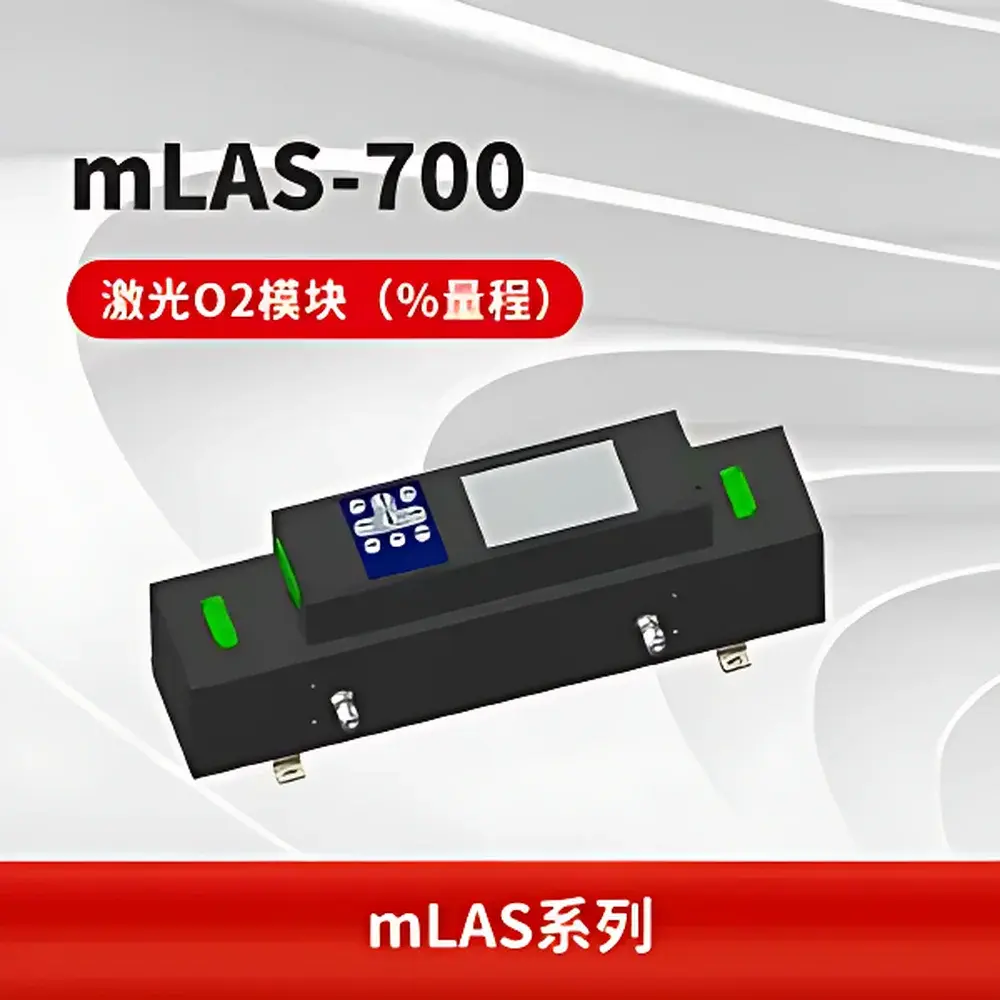
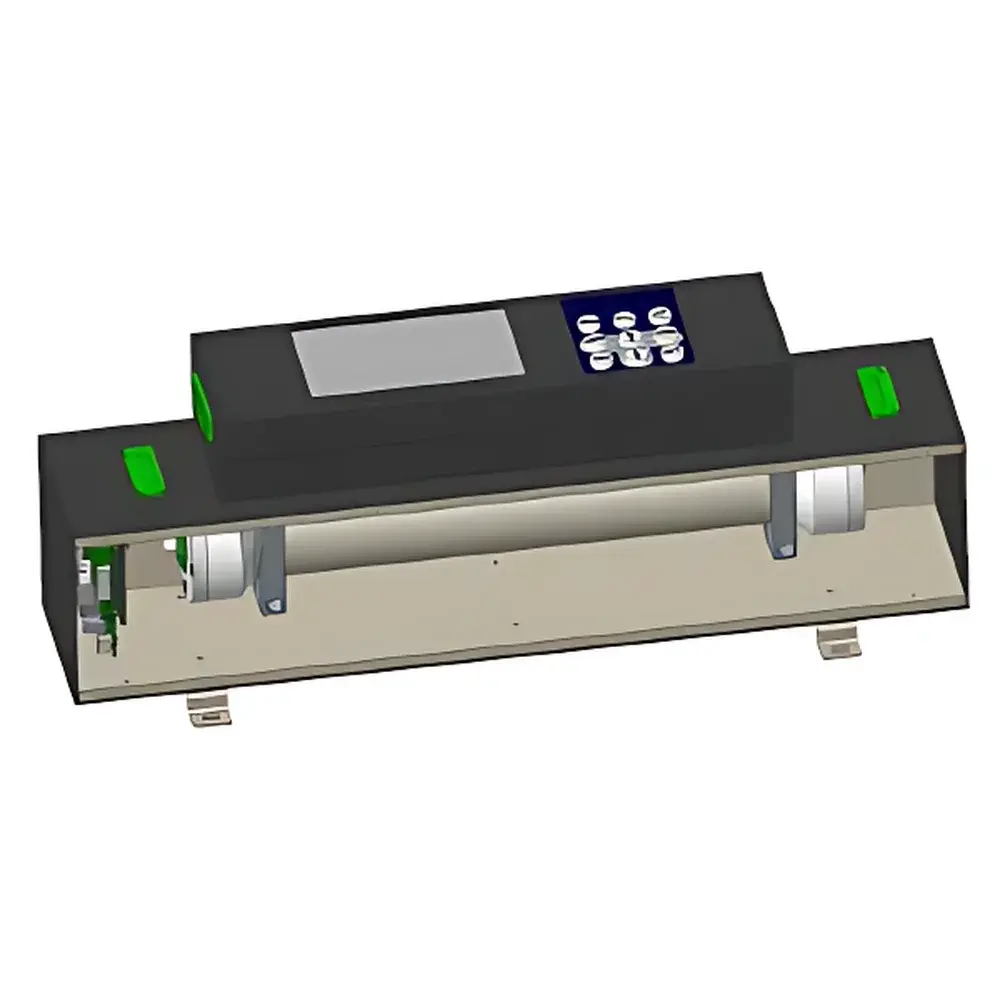
Sinoptic mLAS-700 Tunable Diode Laser Absorption Spectroscopy (TDLAS) Ammonia Gas Sensing Module
| Brand | Sinoptic |
|---|---|
| Model | mLAS-700 |
| Measurement Range | 0–20 ppm NH₃ |
| Accuracy | ±0.1 ppm |
| Response Time | ≤15 s |
| Repeatability | ±0.5% FS over 30 min |
| Operating Temperature | −20 to +55 °C |
| Output Interface | MODBUS RTU (RS-485) |
| Optical Path | Single-pass, Reference-free |
| Customization Options | High-temperature optical cell |
Overview
The Sinoptic mLAS-700 is a high-performance, industrial-grade tunable diode laser absorption spectroscopy (TDLAS) ammonia gas sensing module engineered for continuous, in-situ monitoring of NH₃ concentration in demanding process and environmental applications. Unlike conventional electrochemical or metal oxide semiconductor sensors, the mLAS-700 employs near-infrared (NIR) laser absorption at a specific rotational-vibrational transition line of ammonia (typically ~1531 nm or ~2004 nm, depending on configuration), enabling species-selective detection with inherent immunity to cross-interference from CO₂, H₂O, NOₓ, SO₂, and other common flue or ambient gases. Its single-pass, reference-free optical architecture eliminates the need for dual-beam referencing or complex alignment procedures—reducing mechanical drift, calibration frequency, and long-term maintenance overhead. Designed for integration into larger analyzer systems or distributed emission monitoring systems (CEMS), the mLAS-700 delivers stable baseline performance across wide ambient temperature fluctuations (−20 to +55 °C), making it suitable for both indoor control rooms and outdoor stack-mounted installations.
Key Features
- True TDLAS-based detection with wavelength-scanned laser diode and photodetector assembly, ensuring high spectral selectivity and minimal zero drift
- Single-beam, single-pass optical path design—no reference channel required, simplifying mechanical integration and reducing optical alignment sensitivity
- High-resolution measurement capability with ±0.1 ppm accuracy and sub-ppm detection limit (LOD < 0.05 ppm, typical)
- Rapid response time of ≤15 seconds (T₉₀), enabling real-time feedback for SCR (Selective Catalytic Reduction) ammonia injection control
- Robust thermal management system supporting operation from −20 to +55 °C without external heating or cooling
- Standard MODBUS RTU (RS-485) digital interface with configurable baud rate, slave ID, and register mapping for seamless PLC, DCS, or SCADA integration
- OEM/ODM-ready platform with mechanical, electrical, and firmware-level customization options—including high-temperature optical cells (up to 200 °C process gas exposure) and multi-gas variants (HCl, HF, H₂S)
Sample Compatibility & Compliance
The mLAS-700 is optimized for direct sampling of hot, humid, and particulate-laden gas streams typical of coal-fired, biomass, or waste-to-energy boiler exhausts. Its optical window materials (fused silica or sapphire, optional) resist corrosion from acidic condensates. The module complies with IEC 61000-6-2 (immunity) and IEC 61000-6-4 (emissions) standards for industrial environments. While not certified as standalone safety equipment, its output signals are compatible with SIL-2-rated control systems when integrated per IEC 61511. For regulatory reporting, data generated by systems incorporating the mLAS-700 align with EPA Method 320 and EN 15267-3 requirements for automated NH₃ monitoring in CEMS applications.
Software & Data Management
The mLAS-700 operates autonomously without embedded software or user interface—it functions as a smart transducer delivering calibrated NH₃ concentration values via MODBUS registers. Integration partners may implement full data logging, alarm management, and audit trail functionality within their host system. When deployed in GxP-regulated environments (e.g., pharmaceutical cleanroom HVAC or bioreactor off-gas monitoring), the host system can be configured to meet FDA 21 CFR Part 11 requirements—including electronic signatures, change control, and secure audit trails—provided the MODBUS communication layer is secured via isolated RS-485 networks and timestamped data acquisition.
Applications
- Ammonia slip monitoring downstream of SCR reactors in power plants and industrial boilers
- Process gas analysis in fertilizer production, caprolactam synthesis, and nitric acid manufacturing
- Real-time NH₃ leak detection in refrigeration facilities and cold storage logistics
- Environmental air quality monitoring near agricultural operations and wastewater treatment plants
- OEM integration into portable gas analyzers, drone-mounted emission survey platforms, and fixed-site fence-line monitoring stations
FAQ
Does the mLAS-700 require periodic zero/span calibration?
Yes—though significantly less frequently than electrochemical sensors. Recommended calibration interval is every 3–6 months under stable operating conditions, using certified NH₃ span gas (e.g., 10 ppm in N₂) and zero air.
Can the module operate in high-humidity or corrosive flue gas?
Yes—the optical path is sealed and purged internally; optional heated sample probe and sapphire windows enable reliable operation in dew-point conditions up to 90% RH and trace acid vapor environments.
Is firmware update supported in-field?
Firmware updates are performed via UART interface using proprietary utility software provided under NDA; remote updates are not supported for security and integrity reasons.
What is the expected service life of the laser diode?
Based on accelerated lifetime testing per Telcordia GR-468-CORE, the laser diode is rated for >25,000 hours of continuous operation at nominal drive current and temperature.
Do you provide traceable calibration certificates?
Yes—NIST-traceable calibration certificates (ISO/IEC 17025 accredited, issued by third-party labs) are available upon request for individual units or batch calibration verification.
Related Products







