
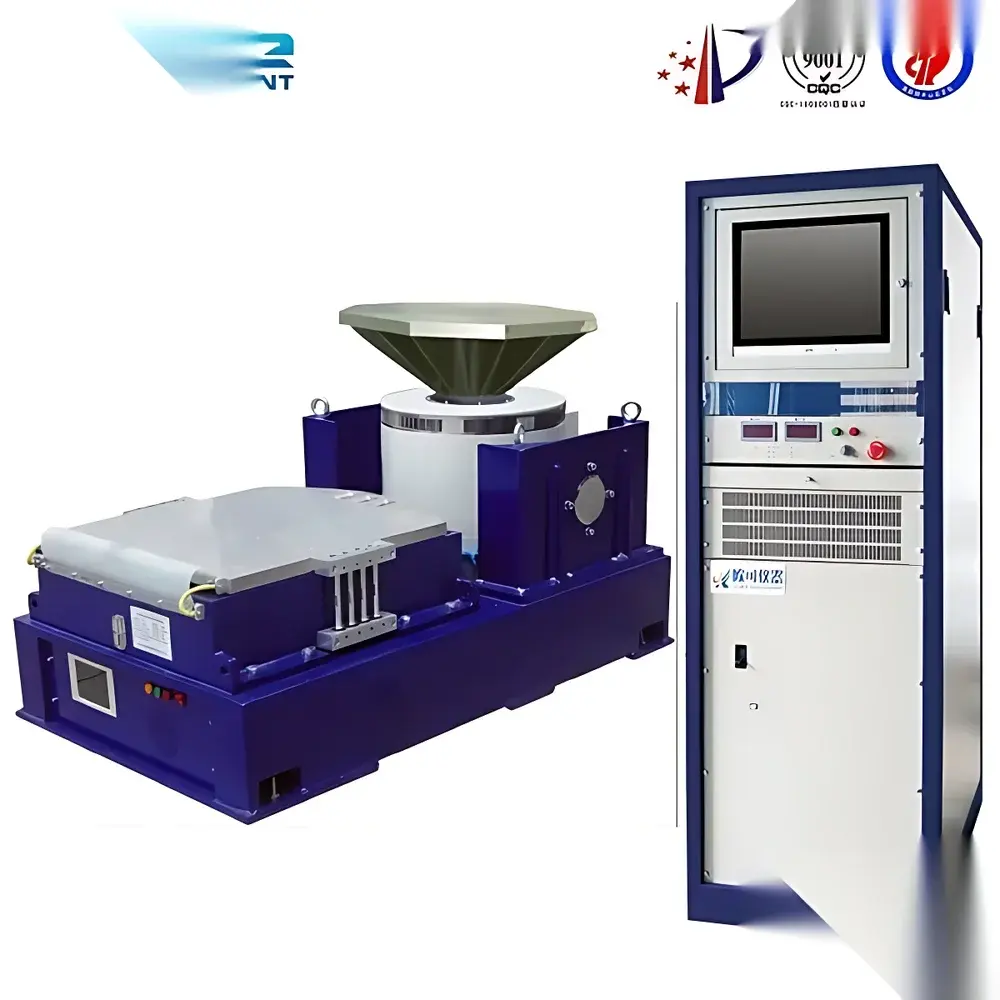
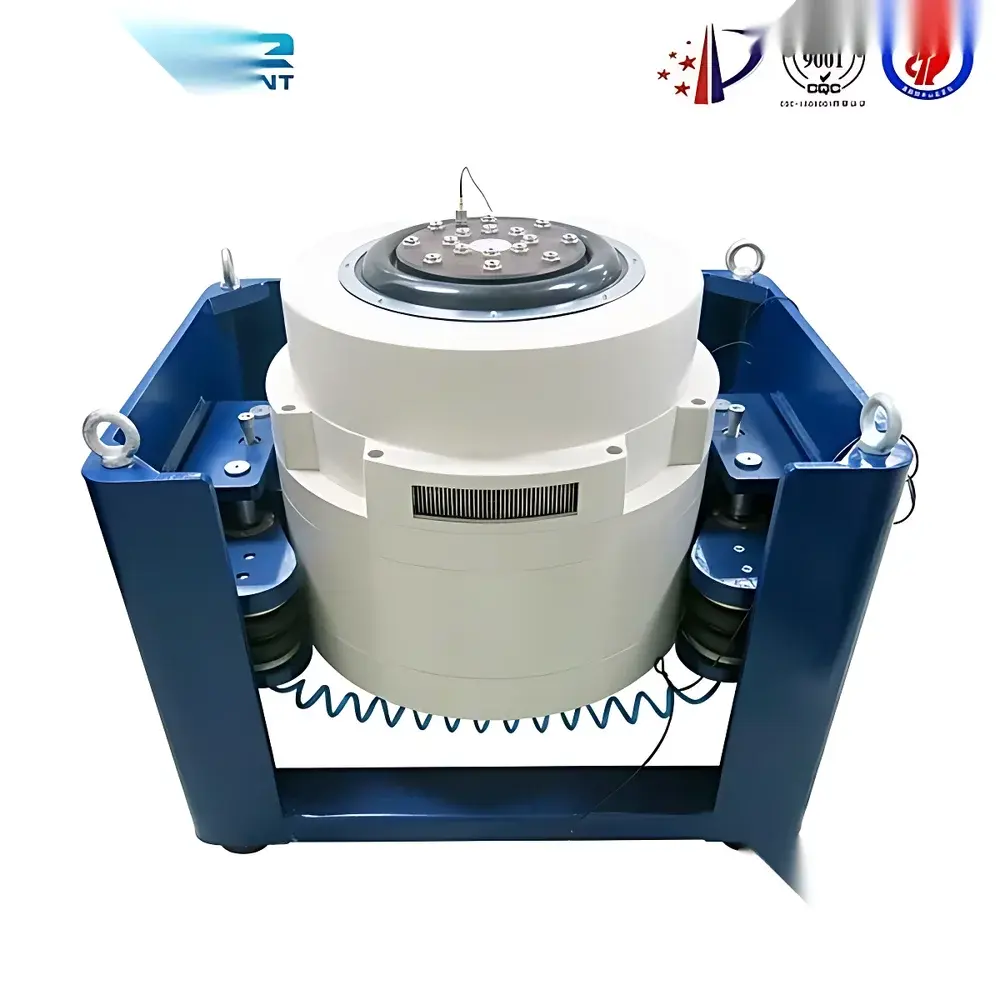
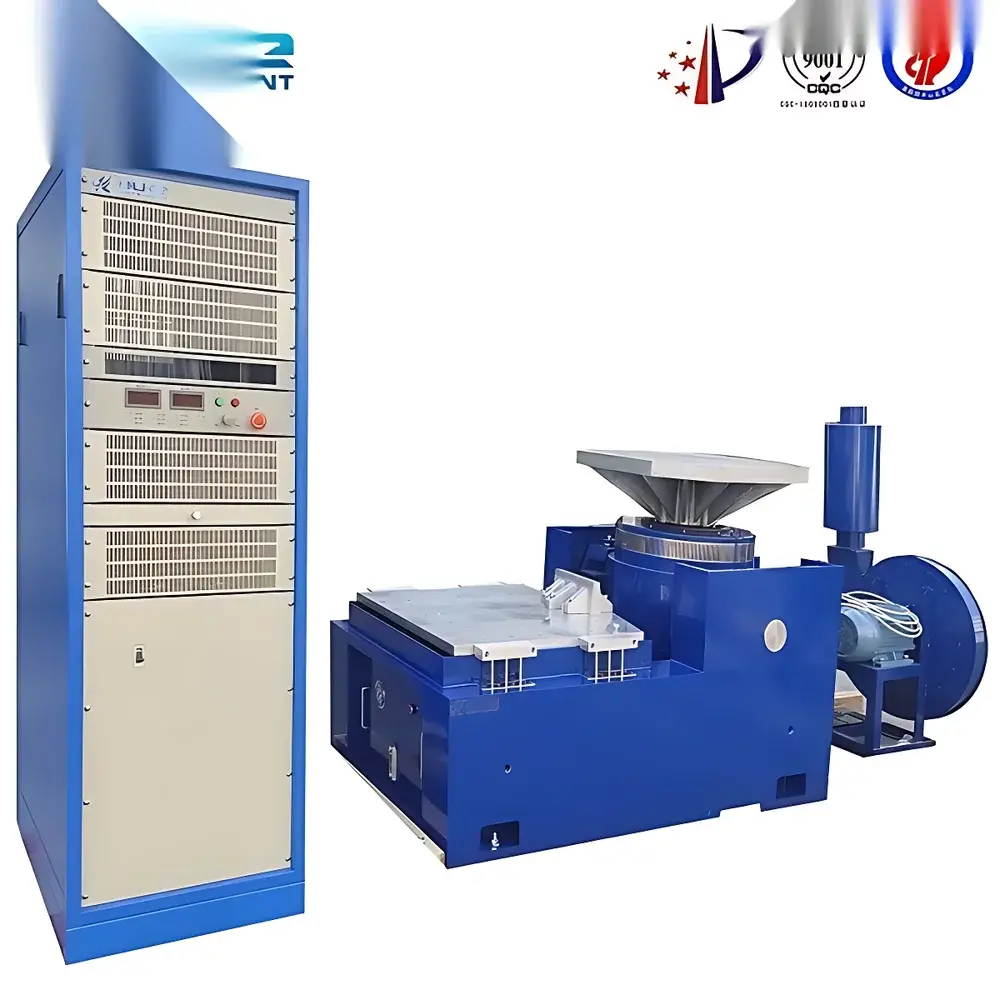
Sinusoidal Electromagnetic Vibration Testing System
| Brand | OEM |
|---|---|
| Origin | Imported |
| Manufacturer Type | Authorized Distributor |
| Price | USD 13,800 (FOB) |
| Frequency Range | 100–300 RPM (continuous adjustment) |
| Amplitude | 25.4 mm (1 inch, peak-to-peak) |
| Maximum Load Capacity | 100 kg (customizable up to 200 kg) |
| Timer Range | 0–9999 hours/minutes/seconds |
| Motor Power | 1 HP (746 W) |
| Rated Current | 4 A |
| Test Table Dimensions | 1000 mm × 1200 mm (customizable) |
| Drive Mechanism | Synchronous low-noise belt transmission |
| Compliance | ASTM D999, ASTM D3580, ISTA 1A/2A/3A, EN 1181, ANSI MH1, UL 60950-1, ISO 13355 |
Overview
The Sinusoidal Electromagnetic Vibration Testing System is an electromechanically actuated shaker platform engineered for controlled, repeatable sinusoidal vibration exposure in laboratory and quality assurance environments. It operates on the principle of electromagnetic force generation—where a precisely regulated AC current drives a linear motion coil within a permanent magnetic field—producing smooth, low-distortion harmonic displacement at user-defined frequencies and amplitudes. Unlike hydraulic or servo-hydraulic systems, this electromagnetic design delivers high waveform fidelity, minimal phase lag, and exceptional long-term stability—critical for evaluating packaging integrity, component fatigue resistance, solder joint reliability, and mechanical fastener retention under transport-simulated conditions. The system replicates the dominant low-frequency oscillatory components observed in road, rail, and maritime freight environments, making it indispensable for pre-shipment validation per global distribution standards.
Key Features
- Digitally calibrated frequency display with ±0.5% full-scale accuracy, enabling traceable setup and audit-ready documentation.
- Synchronous belt-driven electromagnetic actuator with precision-machined aluminum armature—ensuring <45 dB(A) operational noise and eliminating gear backlash or oil contamination risks.
- Modular rail-mounting interface on the test table surface, accommodating fixtures from standard ISTA-compliant pallet clamps to custom vacuum chucks and multi-axis restraints.
- Structural base constructed from reinforced C-channel steel with bonded high-damping elastomeric isolation pads—achieving <0.05 g residual vibration transmission to floor mounting points.
- Integrated timer with programmable countdown, pause/resume functionality, and non-volatile memory retention—supporting unattended operation over extended qualification cycles.
- Front-panel emergency stop with hardwired cut-off circuitry compliant with IEC 60204-1 safety requirements.
Sample Compatibility & Compliance
The system accommodates packaged units ranging from small consumer electronics (e.g., smartphones in retail boxes) to large furniture assemblies (e.g., flat-packed cabinets on double-wall corrugated pallets). Load distribution must remain within 10% center-of-gravity deviation from the table’s geometric center; optional load-spreading plates are available for irregular geometries. All mechanical interfaces comply with ISO 22320:2021 (vibration fixture mounting tolerances) and ASTM D4169 Annex A2 (fixture rigidity verification protocol). The unit is supplied with factory calibration certificates traceable to NIST standards and conforms to the mechanical testing clauses of FDA 21 CFR Part 11 (electronic record integrity), GLP Annex 11 (audit trail logging), and EU Machinery Directive 2006/42/EC (CE marking documentation package).
Software & Data Management
While the base configuration operates via standalone front-panel controls, optional USB/RS-232 connectivity enables integration with PC-based data acquisition platforms. The included Windows-compatible utility supports automated test sequencing, real-time frequency/amplitude logging, and export of CSV-formatted reports aligned with ISTA 3A test plan templates. Audit trails—including operator ID, start/stop timestamps, parameter deviations, and calibration history—are stored locally with SHA-256 hashing for tamper-evident integrity. For regulated industries, optional 21 CFR Part 11 compliance modules provide electronic signatures, role-based access control, and revision-controlled SOP linking.
Applications
- Transportation simulation for e-commerce packaging per ISTA 3A and Amazon APASS requirements.
- Pre-release screening of automotive ECUs, infotainment modules, and sensor housings against MIL-STD-810H Method 514.8 low-frequency sweep profiles.
- Validation of medical device packaging per ISO 11607-1 Annex B (vibration-induced seal integrity assessment).
- Reliability stress testing of printed circuit board assemblies under combined thermal cycling and sinusoidal vibration per IPC-9701A.
- Material fatigue evaluation of polymer composites used in aerospace interior panels (ASTM D3479 tension-tension fatigue reference).
FAQ
What standards does this system directly support for certification reporting?
It meets all mechanical execution requirements of ASTM D999 (flexible packaging), ASTM D3580 (freight container vibration), ISTA 1A/2A/3A, EN 1181 (wooden pallet durability), and ANSI MH1—enabling direct use in third-party lab submissions.
Can the system perform swept-sine or resonance dwell tests?
Yes—the analog control architecture supports manual frequency sweeps; for automated sweep/dwell protocols, the optional PC software module provides programmable rate control, dwell duration, and amplitude ramping per ISO 10816-3.
Is calibration documentation provided with shipment?
Each unit ships with a NIST-traceable calibration certificate covering frequency linearity, amplitude repeatability (±1.2% at 25.4 mm), and timer accuracy (±0.1 s/hour), valid for 12 months from date of manufacture.
What maintenance intervals are recommended?
Belt tension inspection every 500 operating hours; electromagnetic gap clearance verification annually; full recalibration recommended biannually or after any mechanical impact event to the actuator assembly.



